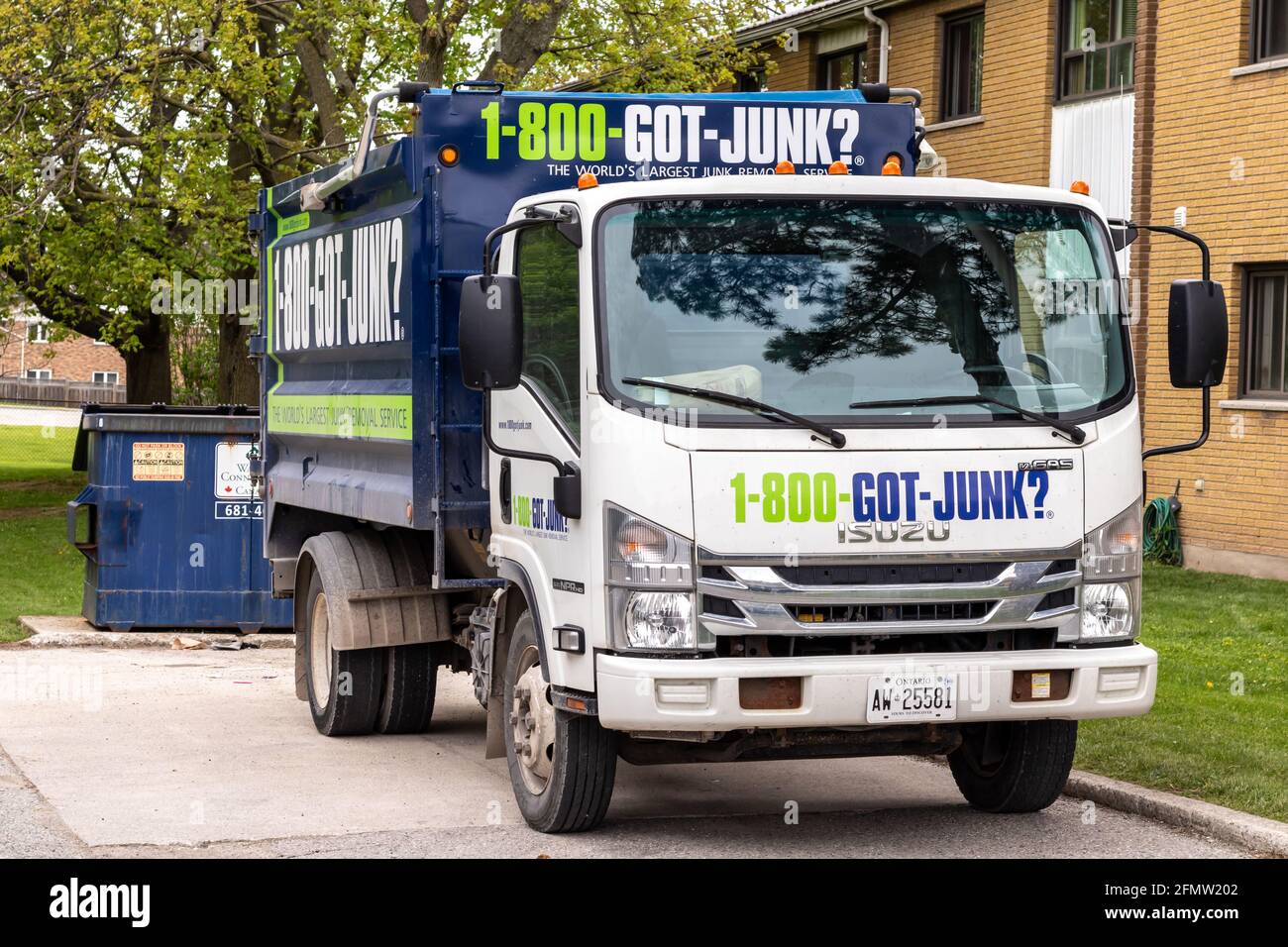
1-800-GOT-JUNK? utilizes standardized custom-built trucks designed to maximize hauling efficiency while accommodating diverse residential and commercial cleanout needs. Each truck measures approximately 10 feet long, 8 feet wide, and 5 feet high, offering a total capacity of 425 cubic yards—roughly equivalent to six standard pickup truck loads. Because they do not offer fractional truck sizes like half-trucks or quarter-trucks physically, pricing is calculated by the precise fraction of space your items consume within that single, uniform truck bed.
Understanding how junk removal services structure their vehicle dimensions, volumetric capacity, and pricing models is essential before booking a bulky item pickup or a whole-house cleanout. Navigating the logistics of junk hauling often brings up questions regarding truck limitations, weight restrictions, and how volume-based rates compare to standard dumpster rentals. This comprehensive guide breaks down everything you need to know about the 1-800-GOT-JUNK? truck size options, loading mechanics, cost considerations, and alternative disposal methods.
The Standard 1-800-GOT-JUNK? Truck Dimensions and Capacity
Unlike traditional moving companies or commercial freight carriers that offer an array of vehicle classes—such as 10-foot, 16-foot, or 26-foot box trucks—1-800-GOT-JUNK? relies on a standardized fleet. This operational uniformity simplifies dispatching, ensures predictable loading parameters, and allows field teams to handle both small furniture pickups and massive estate clearances using the exact same equipment configuration.
The physical dimensions of a standard 1-800-GOT-JUNK? truck are engineered specifically for urban maneuverability and residential driveway access.
Key Specifications of the Fleet
- Bed Length: Approximately 10 feet.
- Bed Width: Approximately 8 feet.
- Bed Height: Approximately 5 feet.
- Total Volume: 425 cubic feet of usable storage space.
- Load Equivalency: Up to 6 standard pickup truck beds.
This volume allows crews to stack items systematically, utilizing vertical and horizontal space to minimize wasted gaps between irregularly shaped objects like mattresses, appliances, and boxed clutter.
How Volume-Based Pricing Works
Because the company utilizes a single truck size, pricing is not determined by renting a larger or smaller vehicle. Instead, it is calculated based on volume—specifically, how much space your junk occupies inside the 425-cubic-foot truck bed.
When the two-person crew arrives at your location, they assess the items you want removed and provide an upfront, all-inclusive price quote. This estimate is broken down into fractional increments of the truck load.
Understanding Truck Load Fractions
- Minimum Load: The base rate for hauling just a single item or a very small collection of items (such as a mattress, a single dresser, or a television) that takes up a tiny fraction of the truck.
- Incremental Tiers: Pricing scales upward based on the proportion of the truck filled—ranging from 1/6th, 1/4th, 1/3rd, 1/2, 2/3rds, 3/4ths, up to a full 8/8ths (100%) load.
- Multiple Trucks: If your project exceeds 425 cubic feet—such as a major commercial cleanout or a multi-room hoarding clearance—the crew will price the job based on multiple full truckloads.
This pricing model ensures you only pay for the exact space your materials occupy, rather than paying a flat rate for a half-empty container.
1-800-GOT-JUNK? Truck vs. Dumpster Rental vs. Pickup Truck
Choosing the right waste disposal method depends heavily on labor availability, project duration, and the total volume of debris. The following comparison highlights how the standard 1-800-GOT-JUNK? truck stacks up against alternative options.
| Disposal Method | Average Capacity | Labor Included? | Best Used For |
|---|---|---|---|
| 1-800-GOT-JUNK? Truck | 425 cubic feet (~6 pickup loads) | Yes (Full-service loading & sweep-up) | Quick single-item pickups, estate sales, heavy furniture, no-hassle cleanouts |
| Standard Roll-Off Dumpster | 10 to 40 cubic yards (270–1,080 cu. ft.) | No (DIY loading) | Long-term remodeling projects, demolition debris, roofing work |
| Personal Pickup Truck | ~70 to 100 cubic feet | No (DIY loading & unloading) | Small trunk loads, single yard waste trips, local donations |
While a roll-off dumpster provides more total volume for multi-month construction projects, it requires DIY loading, potential municipal permits, and driveway space. Conversely, a junk removal service provides physical labor, sorting, and immediate removal without leaving a large steel container parked outside your home for days.
What Fits Inside a Single Truck?
Visualizing 425 cubic feet can be challenging when you are standing in a cluttered garage or basement. To help you estimate your required truck share, consider how standard household items scale within the 1-800-GOT-JUNK? vehicle bed:
- 1/4 Truck Load: Equivalent to a small bedroom set, including a mattress, box spring, nightstand, and a few medium moving boxes.
- 1/2 Truck Load: Equivalent to clearing out a living room—a sofa, an armchair, a coffee table, an entertainment center, and a television with peripheral cords and speakers.
- 3/4 Truck Load: Equivalent to a combination of multiple rooms, such as old kitchen appliances (refrigerator and stove), dining room table with chairs, and various basement storage bins.
- Full Truck Load: Equivalent to clearing out a densely packed multi-room apartment, a large garage, or a combination of bulky furniture and heavy yard waste across an entire property.
Weight Limits and Heavy Materials
While volume is the primary metric for pricing, weight remains a critical factor due to Department of Transportation (DOT) regulations and landfill safety limits.
Heavy, dense materials—such as concrete, brick, dirt, gravel, asphalt, and ceramic tile—weigh significantly more per cubic foot than household furniture, mattresses, or cardboard boxes. If a truck were filled entirely to its 425-cubic-foot brim with solid concrete, it would severely exceed the vehicle's maximum legal payload capacity and risk axle damage.
How Heavy Materials Are Handled
- Tiered Loading Rules: For extremely dense, heavy materials, crews will typically limit how high up the truck bed they can safely load the debris (often restricting it to a lower fraction, such as 1/4 or 1/3 of the bed height) to stay within safe weight limits.
- Specialized Quotes: It is vital to inform the dispatcher if your project involves heavy construction debris, wet sod, or dense masonry so they can provide an accurate quote and ensure the right equipment is dispatched.
Items Accepted vs. Restricted by Truck Crews
Before scheduling a pickup, verifying what the service can and cannot legally load into their trucks prevents delays on removal day.
Generally Accepted Items
- Furniture: Couches, mattresses, tables, dressers, desks, filing cabinets.
- Appliances: Refrigerators, washers, dryers, dishwashers, stoves (freon removal protocols may apply in certain municipalities).
- Electronics: Televisions, computers, monitors, printers, audio gear.
- Yard Waste: Branches, leaves, sod, fencing, patio furniture, lumber.
- General Clutter: Books, toys, clothes, boxes of household goods, old sporting equipment.
Restricted Hazardous Materials
For environmental safety and legal compliance, junk removal franchises generally cannot transport hazardous, toxic, or regulated waste. This includes:
- Asbestos and asbestos-containing materials.
- Industrial chemicals, solvents, and liquid paint.
- Propane tanks and compressed gas cylinders (unless certified empty and valves are removed).
- Biological medical waste and biohazards.
- Automotive fluids, motor oil, and unsealed car batteries.
Frequently Asked Questions
Can I request a smaller or larger truck if I only have one item?
No, 1-800-GOT-JUNK? dispatches the exact same standard-sized truck for every job. If you only have a single item—such as an old armchair—you will be charged the minimum load rate, which accounts for a fractional portion of the standard 425-cubic-foot vehicle.
Do I need to move my junk to the curb before the truck arrives?
No, the core value proposition of a full-service junk removal company is that their two-person crew handles all the heavy lifting, carrying, and loading from wherever the items are located—whether that is an upstairs bedroom, a tight basement, or a backyard shed.
How is the final price determined if my items take up an odd amount of space?
The on-site crew will inspect your items before starting any work and provide a firm, no-obligation quote based on visual estimation of the truck bed fraction (e.g., 3/8ths or 5/8ths of a load). Work only begins once you approve this price.
Are tipping fees and disposal costs included in the quote?
Yes, the upfront quote provided by the team is all-inclusive. It covers labor, transportation, municipal disposal fees, recycling sorting, and a final sweep-up of the area where the junk was stored.
What happens to the items once they are loaded into the truck?
The company prioritizes diversion strategies. Crews actively sort through the loaded items to donate reusable goods to local charities and route recyclable materials—such as scrap metal, electronics, and cardboard—to appropriate recycling facilities before taking the remaining non-recyclable refuse to transfer stations.
Summary and Next Steps
Evaluating the 1-800-GOT-JUNK? truck size options boils down to recognizing that a single, uniform 425-cubic-foot vehicle handles all project scales, with pricing scaled directly to the volume your items consume. To prepare for your pickup, organize your belongings into distinct piles, separate any hazardous materials that cannot be hauled, and request an on-site, no-obligation visual estimate from the arriving crew. For multi-room cleanouts or single bulky items alike, understanding these volumetric tiers ensures a smooth, predictable, and efficient disposal process.