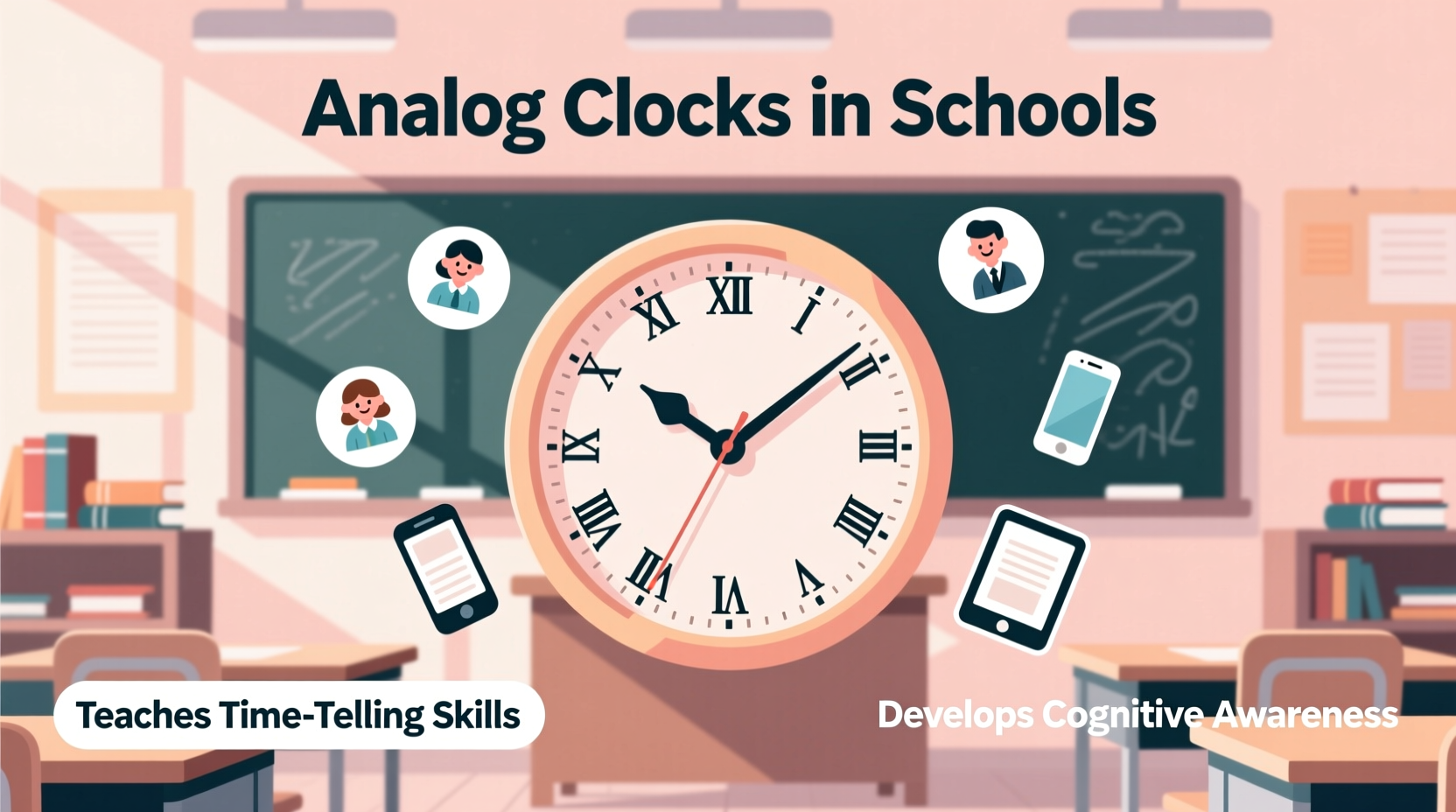
Schools are not broadly mandating the removal of analog clocks, though many educational institutions are increasingly transitioning to digital timekeeping systems. This shift is driven by the integration of centralized, synchronized network clocks rather than a deliberate effort to phase out circular clock faces for pedagogical reasons. The transition is primarily a matter of infrastructure modernization, maintenance efficiency, and administrative convenience within modern school facilities.
The Evolution of School Infrastructure
For decades, the analog clock—often a classic circular face with sweeping hands—served as the standard for classroom timekeeping. These devices were typically hardwired into a master clock system, which sent an electrical pulse to keep all clocks in a building synchronized. However, the maintenance of these legacy systems has become increasingly difficult as the original components age and specialized parts become harder to source.
In 2026, when school districts undertake renovations or new construction projects, the standard practice has moved toward Power-over-Ethernet (PoE) or Wi-Fi-enabled digital clock systems. These modern systems offer several operational advantages over their mechanical predecessors. They are inherently synchronized through the school’s network time protocol (NTP), ensuring that every clock in the building displays the exact same time to the millisecond. This prevents the "clock drift" often seen in older, mechanical analog systems where individual units would slowly lose or gain time over the course of a school year.
The Myth of Pedagogy vs. Technology
A common point of contention appearing in public discourse is whether schools are removing analog clocks because students can no longer "read" them. While some educators have observed that younger students, particularly those who have grown up exclusively with digital displays on tablets and smartphones, sometimes struggle with the mechanics of analog time, this is rarely the primary driver for school board decisions regarding facility upgrades.
Facility managers prioritize reliability and cost-effectiveness. When a school district decides to replace its clock systems, the decision is almost always based on:
- Unified Management: Digital systems allow administrators to manage all clocks from a single dashboard.
- Reduced Maintenance: Modern digital clocks lack the moving parts—gears, motors, and springs—that eventually wear down in analog units.
- Multi-Functional Displays: Many digital school clocks are designed to display the time alongside secondary information, such as date, room numbers, or emergency notifications.
While the "inability to read an analog clock" is a valid educational concern for many teachers who still believe that circular clocks provide a better sense of time passage, it is secondary to the technical requirements of operating a large, interconnected facility.
Technical Comparison of Clock Systems
When districts weigh the pros and cons of upgrading their timekeeping infrastructure, they generally evaluate the following criteria:
| Feature | Legacy Analog System | Modern Digital Network System |
|---|---|---|
| Synchronization | Hardwired pulses (often prone to drift) | NTP (Network Time Protocol) exactness |
| Maintenance | High (mechanical wear, parts scarcity) | Low (solid-state electronics) |
| Power Supply | Hardwired AC or Battery | PoE (Power over Ethernet) or AC |
| Additional Data | Time only | Date, scrolling alerts, room labels |
| Installation | Complex wiring | Simplified Ethernet integration |
The Role of Synchronization in School Operations
The critical importance of synchronized time in a school cannot be overstated. A modern school day is a series of precise transitions. When a school operates on a multi-bell schedule, synchronization ensures that the transition between classes occurs simultaneously in every room.
In older systems, it was common for a student in one wing of a high school to be two minutes ahead of a teacher in another wing. This discrepancy creates friction during exam periods, lunch transitions, and dismissal. Digital systems eliminate this variance entirely. By moving to a network-based system, the school effectively ties its timekeeping to the same backbone that supports its computing and communication services, making the management of the school day more cohesive and less prone to the mechanical failures that plagued the analog systems of the late 20th century.
Addressing the Educational Value of Analog Clocks
Despite the technical benefits of digital systems, the pedagogical argument for retaining at least one analog clock in a classroom remains strong. Many math and primary education teachers advocate for the presence of analog clocks as a learning tool. Understanding the division of a circle into 60 minutes and 12 hours helps students visualize fractions and intervals.
Some school districts, in response to parental and teacher feedback, have adopted a hybrid approach. They may install a digital system for the primary timekeeping needs of the school while retaining a decorative or educational analog clock at the front of the room. This approach satisfies the need for high-level infrastructure synchronization while preserving the analog interface that is useful for developmental learning.
Challenges in Legacy Removal
Transitioning from an analog system to a digital one is not always a simple "swap out." The primary challenge is the existing infrastructure. Legacy systems are often wired into old building management systems that may not easily integrate with modern, IP-based networks. Consequently, many schools face significant upfront costs in rewiring classrooms to support PoE clocks.
In many cases, if the existing analog system is functional, districts opt to keep it for as long as possible to avoid the capital expenditure. The "removal" of analog clocks is therefore a gradual, piecemeal process, occurring primarily during major building renovations rather than a sudden, district-wide replacement initiative.
Frequently Asked Questions
Are students failing to learn how to read analog clocks because of schools? While some students struggle with reading analog faces, this is largely attributed to the prevalence of digital devices in daily life rather than institutional policy. Schools are not necessarily removing analog clocks to prevent this learning; rather, they are updating systems for reliability. Many schools continue to use analog clocks as teaching aids in early grade levels.
Does an analog clock have any functional advantage over a digital one? Some psychologists argue that analog clocks provide a better representation of "time remaining" or "duration" compared to the static numbers of a digital display. Seeing the hand move across the face allows for a visceral understanding of how much time has passed, which some students find more intuitive for managing their pace during tasks.
If a school removes analog clocks, can I request one be put back? Requests for changes to classroom hardware are typically handled at the principal or school board level. If you believe an analog clock is essential for a specific curriculum, such as a math or special education classroom, it is best to present a formal request to school administration, noting the pedagogical benefits rather than the aesthetic ones.
Is it cheaper to stick with old analog systems? No. While there is no immediate cost to keeping an old system, the long-term cost of maintaining aging, proprietary hardware often exceeds the cost of a modern, standardized digital network. Parts for older master clock systems are often discontinued, forcing schools to pay premium prices for refurbished units or expensive third-party repairs.
Are there hybrid clock options available? Yes. Some modern manufacturers produce digital displays that feature an analog clock face overlay, or they allow for the installation of dual systems. These setups use the precision of digital networking while maintaining the familiar interface of the analog clock face for instructional use.
Final Recommendations
If you are a parent, teacher, or administrator concerned about the disappearance of analog clocks, the most effective path forward is to advocate for a hybrid classroom environment. Rather than pushing for a system-wide retention of aging, high-maintenance mechanical clocks, encourage the administration to treat "timekeeping" as both a technical utility and an educational tool.
If you find that a classroom lacks an analog clock that you believe is necessary for instruction, investigate whether the school’s technology department allows for the installation of secondary, non-networked clocks that do not interfere with the school's master time system. Most administrators are open to suggestions that support learning outcomes, provided they do not compromise the technical reliability of the school’s daily schedule.