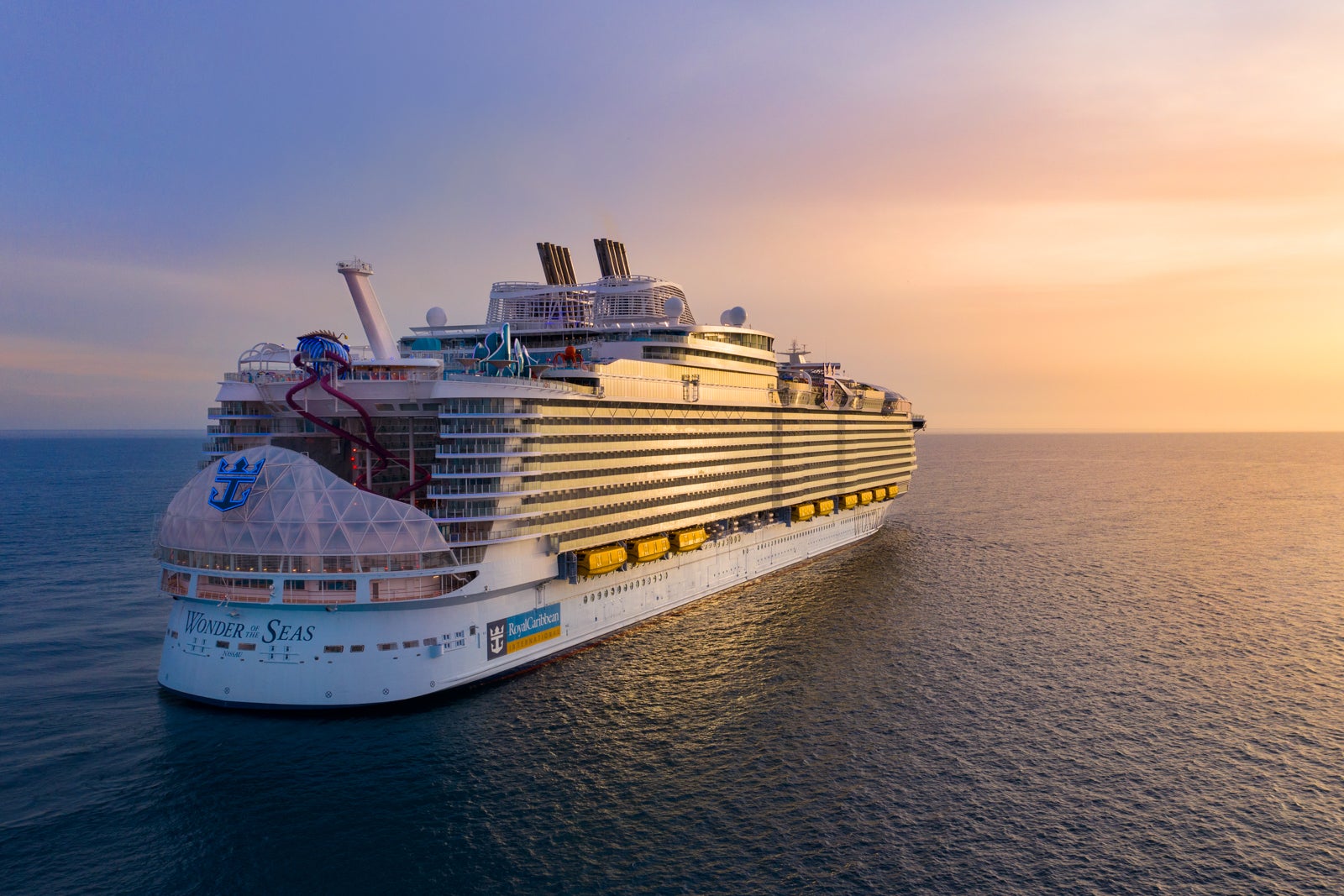
Royal Caribbean’s newest Icon-class vessel, debuting in 2026, represents the pinnacle of maritime engineering and vacation design. Following the success of Icon of the Seas and Star of the Seas, this third giant continues the brand's shift toward LNG-powered, neighborhood-centric mega-ships that redefine the boundaries of sea-based entertainment and family travel.
The cruise industry has witnessed a paradigm shift over the last decade, moving away from ships that merely transport passengers to destinations, toward ships that are the destination. As we move through 2026, Royal Caribbean International has once again pushed the envelope of naval architecture. The arrival of the third Icon-class ship—a sister to the groundbreaking Icon of the Seas—solidifies the company’s dominance in the "mega-ship" category. These vessels are not just larger; they are fundamentally different in how they manage flow, provide entertainment, and utilize green technology.
The Dawn of the Third Icon: Engineering a Modern Marvel
The 2026 arrival of the third Icon-class ship (part of a multi-ship order that began with the original Icon in 2024) marks a significant milestone. These ships are approximately 250,800 gross tons, making them the largest passenger vessels in the world. However, the "giant" status is not merely about sheer volume. The engineering behind these ships involves a sophisticated "parabolic bow," a design choice that enhances stability and provides a smoother ride by cutting through waves rather than riding over them.
In 2026, the focus has shifted toward refining the "neighborhood" concept that Royal Caribbean pioneered with the Oasis class but perfected with the Icon class. By dividing the ship into distinct zones, the cruise line manages the movement of over 7,600 passengers (at maximum capacity) so effectively that the ship rarely feels "crowded" in the traditional sense. This is achieved through data-driven architectural planning, where elevators, stairwells, and transition zones are strategically placed to prevent bottlenecks during peak hours, such as dinner seatings or show exits.
Technical Specifications and Comparison
To understand the scale of this new giant, it is helpful to compare it against its predecessors and the industry standard.
| Feature | Oasis Class (e.g., Wonder/Utopia) | Icon Class (2024–2026) |
|---|---|---|
| Gross Tonnage | ~236,000 GT | ~250,800 GT |
| Length | 1,188 feet | 1,198 feet |
| Passenger Capacity (Max) | ~7,000 | ~7,600 |
| Primary Fuel | Marine Gas Oil | Liquefied Natural Gas (LNG) |
| Key Innovation | Split Superstructure | The AquaDome & Category 6 Waterpark |
| Number of Neighborhoods | 8 | 8 (Enhanced) |
Navigating the Giant: The Eight Neighborhoods of 2026
The success of Royal Caribbean’s newest giant lies in its departmentalization. For a traveler in 2026, understanding where to spend time is the key to a successful vacation. Each neighborhood is designed with a specific demographic or "vibe" in mind.
Thrill Island and the Waterpark Revolution
Thrill Island is home to Category 6, currently the largest waterpark at sea. As of 2026, these facilities have been upgraded with advanced slide technology, including the "Frightening Bolt," the tallest drop slide at sea, and "Pressure Drop," the industry's first open free-fall slide. The engineering required to place thousands of tons of water and structural steel at the top of a moving vessel is immense. The ship utilizes a complex ballast system to offset the weight of the waterpark, ensuring that even when the slides are in full use, the ship remains perfectly level.
Surfside: The Sanctuary for Young Families
Unlike previous ship designs where "kids' zones" were tucked away in the interior, Surfside is an open-air neighborhood dedicated entirely to families with young children. Positioned at the aft of the ship, it allows parents to lounge at the Water's Edge pool while children play in the Splashaway Bay and Baby Bay areas. In 2026, this neighborhood has become the gold standard for multi-generational travel, featuring "stay-all-day" eateries and arcade spaces that keep families together rather than separating them by age group.
The AquaDome: An Engineering Masterpiece
Located at the very front and top of the ship, the AquaDome is perhaps the most complex structure ever built for a cruise ship. It is a massive glass and steel dome that serves as a tranquil lounge by day and a high-tech theater by night. The 2026 iteration features enhanced robotic arms and 4D projection mapping, which complement the high-divers and synchronized swimmers. The dome itself is a feat of material science, utilizing specialized glass that can withstand the extreme pressure of high-seas winds while providing 220-degree views of the ocean.
Accommodation Innovations: Beyond the Standard Cabin
Royal Caribbean has recognized that the modern traveler in 2026 demands more than just a place to sleep. The new giant offers 28 different stateroom categories.
The most notable is the Ultimate Family Townhouse. Spanning three levels, this "ship-within-a-ship" accommodation includes an in-suite slide, a cinema room, and a private patio with direct access to the Surfside neighborhood. For the luxury-tier traveler, the Royal Loft Suite and the Icon Loft provide two-story living spaces with floor-to-ceiling windows.
Sustainability has also entered the cabin space. Rooms on the 2026 ships are equipped with smart-room technology that automatically adjusts the air conditioning and lighting when the balcony door is opened or when the guest leaves the room. This contributes to the ship's overall energy efficiency goals, reducing the carbon footprint per passenger significantly compared to the ships of the previous decade.
Powering the Giant: The Transition to LNG
The most important aspect of the new giant setting sail in 2026 isn't what is visible to the passengers, but what lies in the engine room. This ship is powered by Liquefied Natural Gas (LNG).
LNG is the cleanest-burning fossil fuel currently available for large-scale maritime use. By utilizing LNG, Royal Caribbean has virtually eliminated sulfur dioxides (SOx) and significantly reduced nitrogen oxides (NOx) and particulate matter. Furthermore, the ship incorporates fuel cell technology, which allows it to generate electricity for hotel operations (lighting, kitchens, and climate control) without running the main engines while in port.
This shift is part of the International Maritime Organization (IMO) standards for 2030 and 2050, aiming for a net-zero cruise industry. The 2026 giant also features an advanced waste-to-energy system known as MAPS (Microwave-Assisted Pyrolysis), which converts on-board waste into synthesis gas that can be used for energy, further reducing the ship's environmental impact.
Culinary Excellence: A World of Flavors
Dining on a ship of this scale is a massive logistical undertaking. The 2026 Icon-class giant features over 40 restaurants, bars, and lounges. Royal Caribbean has moved away from the traditional "Main Dining Room only" model, offering a mix of complimentary and specialty options that cater to the "foodie" culture of the mid-2020s.
- The Empire Grill: An upscale, multi-course dining experience that mimics a high-end New York steakhouse.
- Celebration Table: A private dining concept designed for groups, offering a customizable menu and panoramic views.
- AquaDome Market: The cruise line's first food hall, featuring five unique stalls ranging from Mediterranean pitas to Asian street food.
The logistics of feeding 7,000+ people daily involve a "just-in-time" inventory system and massive on-board hydroponic gardens that provide fresh herbs and microgreens, reducing the need for shore-side resupply for certain perishables.
Logistics and Planning for 2026 Voyages
If you are planning to sail on the newest giant in 2026, early booking is no longer just a suggestion—it is a requirement. Demand for the Icon class has remained consistently high since the first ship launched.
Itineraries and Homeports
The 2026 giant primarily operates out of Port Canaveral and Miami, focusing on 7-night Eastern and Western Caribbean itineraries. These routes are specifically designed to include a stop at Perfect Day at CocoCay, Royal Caribbean's private island in the Bahamas. The island underwent a significant expansion in late 2025 to accommodate the increased passenger volume from the Icon-class ships, including the addition of "Hideaway Beach," an adults-only escape.
Cost Considerations
Sailing on the newest ship in the fleet comes with a price premium. As of 2026, average prices for an interior cabin start around $1,500 per person for a 7-night sailing, while balcony rooms frequently exceed $2,200. Suites and the Ultimate Family Townhouse can command prices upwards of $20,000 to $80,000 per week, depending on the season.
Pro-Tip: Travelers should look for "Shoulder Season" sailings in late September or early January (post-holiday) to find the best value on these mega-ships.
Common Mistakes to Avoid
- Ignoring the App: In 2026, the Royal Caribbean app is essential. It is used for everything from the mandatory safety briefing (e-Muster) to booking show times and making specialty dining reservations. Failure to book shows early often results in missing out on the high-demand AquaDome performances.
- Overpacking: These ships are enormous. While you may want to dress up for formal nights, remember that you will be doing a significant amount of walking. Comfortable footwear is the most important item in your suitcase.
- Staying on the Ship at CocoCay: While the ship is a destination itself, Perfect Day at CocoCay is an extension of the ship’s amenities. Many of the experiences on the island are included in your cruise fare, and it offers some of the best beach access in the Caribbean.
FAQs: Sailing with the New Giant
Is the ship too big for people with mobility issues?
Despite its size, the Icon-class ships are designed with accessibility in mind. There are more elevators than on the Oasis-class ships, and they use "destination-based" dispatch systems to reduce wait times. Accessible staterooms are available in almost every category, and the ship is fully wheelchair and scooter friendly.
How does Royal Caribbean handle 7,600 passengers at once?
The ship uses a "distributed flow" model. By having multiple "hubs" (The Royal Promenade, Central Park, Surfside, and the AquaDome), the population is naturally spread out. Additionally, the app-based reservation system for shows and dining ensures that thousands of people aren't trying to enter the same venue at the same time.
Are the 2026 sailings environmentally friendly?
While no large-scale vessel is entirely impact-free, the 2026 Icon-class ship is among the most sustainable ever built. Between the LNG propulsion, the waste-to-energy systems, and the elimination of single-use plastics across the fleet, the ship represents a 30% increase in energy efficiency over the ships of a decade ago.
What is the best age for children on this ship?
The ship is designed for all ages, but the Surfside neighborhood is specifically tailored for children ages 0-6, while Thrill Island and the Social 020 teen club are perfect for older children and teenagers. It is widely considered the most "all-ages" friendly ship in the world as of 2026.
Next Steps for Prospective Travelers
If you are ready to experience the new giant, the first step is to visit the Royal Caribbean International official website to check cabin availability for the 2026 and 2027 seasons. Due to the complexity of the 28 stateroom categories, many travelers find value in consulting a certified cruise planner who specializes in mega-ship logistics.
Prepare for your voyage by downloading the Royal app at least 90 days before sailing. This allows you to check in early, select your preferred boarding window, and secure reservations for the "AquaAction" show and the "Wizard of Oz" (or its 2026 successor) in the Royal Theater. The era of the mega-ship has reached its zenith with the Icon class; witnessing the engineering of this giant first-hand is an experience that transcends traditional cruising.