Whether a private graduate loan is more expensive than a federal loan depends entirely on your credit profile and the specific federal loan type you are comparing. While federal Direct Unsubsidized loans are generally more affordable, private loans can offer lower interest rates than federal Grad PLUS loans for borrowers with excellent credit or a strong cosigner.
In the 2026 lending environment, graduate students face a complex decision-making process. The cost of education continues to rise, and the methods used to finance that education have become increasingly nuanced. To determine if private loans are "really" more expensive, one must look beyond the advertised interest rate and consider origination fees, repayment flexibility, and long-term financial protections.
The Landscape of Graduate Student Debt in 2026
As of 2026, the federal government remains the largest lender for graduate education, but private markets have become more aggressive in targeting high-earning professionals in fields like medicine, law, and business. The "expense" of a loan is no longer just the sum of the principal and interest; it includes the opportunity cost of lost benefits, such as federal forgiveness programs, and the literal cost of borrowing fees.
Federal loans for graduate students are split into two primary categories: Direct Unsubsidized Loans and Direct PLUS Loans (commonly known as Grad PLUS). Private loans, conversely, are offered by banks, credit unions, and online lenders who use risk-based pricing. This means that while federal rates are set by statute and applied uniformly regardless of credit history, private rates are tailored to the individual borrower's financial health.
The Federal Options: Direct Unsubsidized vs. Grad PLUS
Before comparing private loans to federal options, it is essential to distinguish between the two types of federal debt available to graduate students. They are not created equal, and their "expensiveness" varies significantly.
Direct Unsubsidized Loans: The Gold Standard
For most students, the Direct Unsubsidized Loan is the most affordable starting point. These loans do not require a credit check and have the lowest interest rates among federal graduate options. In 2026, these rates continue to be tied to the 10-year Treasury note plus a margin of 3.6%.
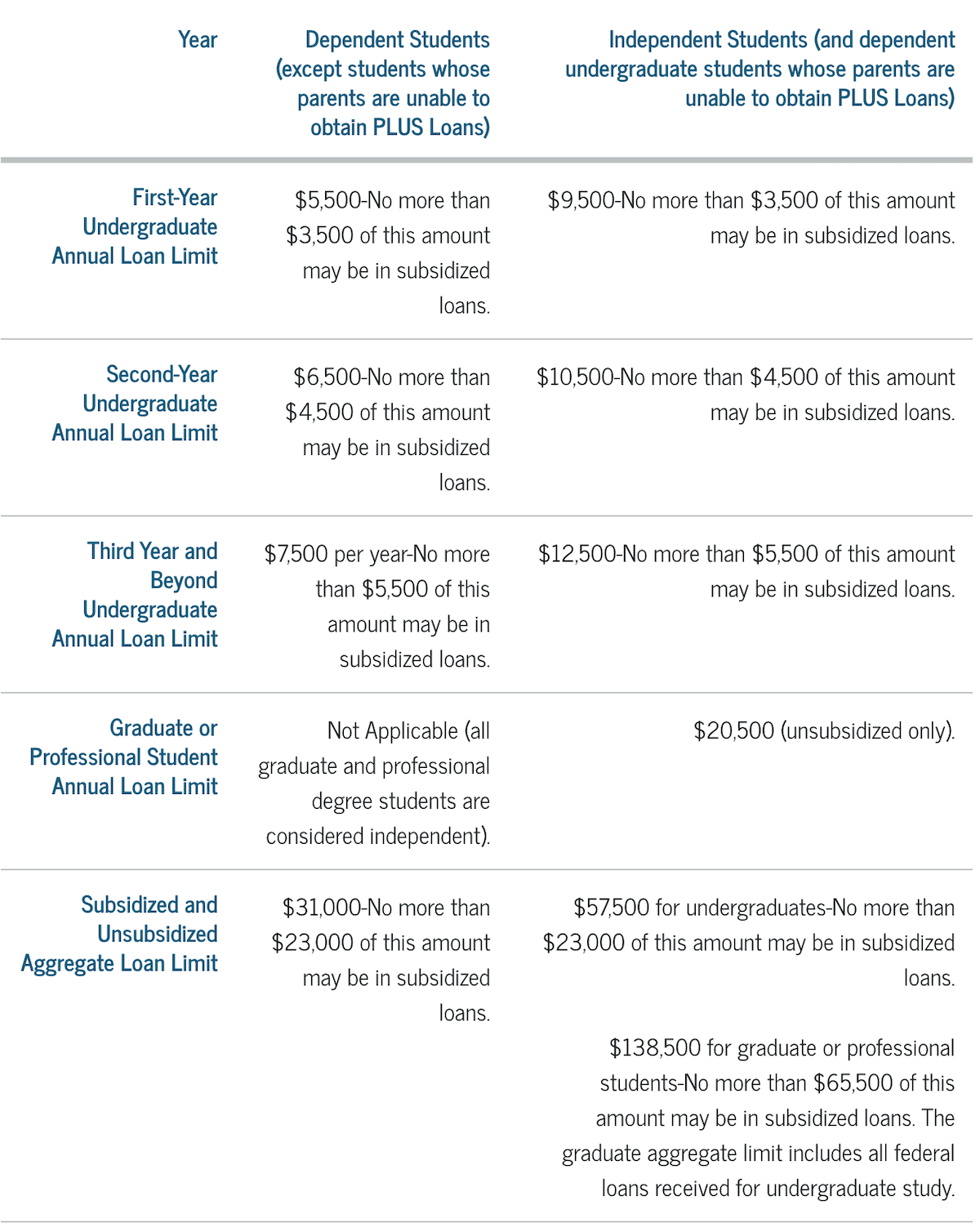
However, Direct Unsubsidized Loans have strict annual and aggregate limits. Most graduate students can only borrow up to $20,500 per year. For many programs, especially at private universities or in professional tracks, this amount does not cover the full cost of attendance. When students exhaust this limit, they must choose between Grad PLUS loans and private loans.
Direct PLUS Loans: The Expensive Federal Tier
Direct PLUS Loans are designed to cover the gap between other financial aid and the total cost of attendance. While they offer the same robust protections as Unsubsidized loans, they are significantly more expensive. The interest rate is typically 1% higher than the Unsubsidized rate (a margin of 4.6% over the 10-year Treasury).
The most substantial hidden cost of the Grad PLUS loan is the origination fee. For several years leading into 2026, this fee has hovered around 4.228%. This means that for every $10,000 you borrow, approximately $422 is deducted before the money ever reaches your school account. You are responsible for paying back the full $10,000 plus interest, even though you only received roughly $9,578. When you factor this fee into the annual percentage rate (APR), the Grad PLUS loan often becomes more expensive than high-tier private loans.
The Private Loan Alternative: When Credit Scores Matter
Private lenders do not operate under the same statutory mandates as the Department of Education. They are profit-driven entities that reward "low-risk" borrowers with lower rates. If you are a graduate student with a credit score above 750 or if you have a cosigner who does, private loans may not be more expensive; they may actually be the cheaper path.
Fixed vs. Variable Rates
One area where private loans can appear cheaper—but carry more risk—is through variable interest rates. In the 2026 market, some private lenders offer variable rates that start 2% to 3% lower than federal fixed rates. While this reduces the immediate monthly payment, it exposes the borrower to market fluctuations. If the economy experiences inflation and the Federal Reserve raises rates, a "cheap" private loan can quickly become more expensive than a fixed federal loan.
The Role of a Cosigner
Most graduate students, even those with work experience, may not qualify for the absolute lowest private rates on their own. However, adding a cosigner with a stable income and a high credit score can drastically reduce the APR. Private lenders often view a professional-degree student with a solid cosigner as an extremely low-risk investment, leading to offers that undercut the Grad PLUS loan by several percentage points.
Direct Cost Comparison: Federal vs. Private
To visualize the difference, consider the following comparison based on typical 2026 lending standards for a student borrowing $30,000 for one year of a Master’s program.
| Feature | Direct Unsubsidized | Direct PLUS (Grad PLUS) | Private Loan (Excellent Credit) |
|---|---|---|---|
| Typical Interest Rate (2026) | 7.5% - 8.5% | 8.5% - 9.5% | 6.0% - 10.0% |
| Origination Fee | ~1.057% | ~4.228% | Typically 0% |
| Credit Requirement | None | Minimal (No adverse history) | Rigorous (Score-based) |
| Interest Accrual | At disbursement | At disbursement | At disbursement |
| Effective APR Impact | Low | High (due to fees) | Low (if fee-free) |
| Repayment Flexibility | High (IDR/PSLF) | High (IDR/PSLF) | Low (Lender-specific) |
In this scenario, a student with a 780 credit score might secure a private loan at 6.8% with no origination fee. Compared to a Grad PLUS loan at 9% with a 4.2% fee, the private loan is objectively less expensive in terms of raw dollars spent over the life of the loan.
Beyond the APR: Why "Expensive" Includes Risk and Flexibility
If private loans can have lower interest rates and no fees, why are they often labeled as more "expensive" or "risky"? The answer lies in the value of federal protections, which act as a form of insurance.
Income-Driven Repayment (IDR) and Forgiveness
Federal loans offer access to Income-Driven Repayment plans, such as the SAVE plan or its successors available in 2026. These plans cap monthly payments at a percentage of your discretionary income. If your income drops or you face unemployment, your federal payment could drop to $0. Furthermore, after 20 or 25 years of payments, the remaining balance is forgiven.
Public Service Loan Forgiveness (PSLF) is another massive factor. For students entering the non-profit or government sectors, federal loans are almost always "cheaper" because the borrower may only pay back a fraction of the principal before the rest is forgiven tax-free after 10 years of service. Private loans are never eligible for PSLF.
Discharge in Case of Death or Disability
Federal loans are discharged if the borrower dies or becomes permanently disabled. While some private lenders (like Sallie Mae or SoFi) have adopted similar policies, they are not legally required to do so. In many cases, a private loan could still be sought from a borrower’s estate or a cosigner, making it a more "expensive" risk for the borrower’s family.
Scenarios Where Private Loans May Be Cheaper
Despite the loss of federal protections, there are specific situations in 2026 where choosing a private loan is a mathematically superior decision:
- The "Gap" Funding for High Earners: If you have already maxed out your Direct Unsubsidized loans and need an additional $20,000 for an MBA or Medical degree, and you have a high-paying job offer lined up, a private loan with a 6% rate will save you thousands compared to a Grad PLUS loan at 9% plus fees.
- The Refinancing Strategy: Some students take federal loans during school for the security, then immediately refinance into private loans after graduation once they have a steady paycheck. This allows them to "capture" the lower interest rates of the private market while they are in the high-interest repayment phase.
- Borrowers with Substantial Assets: If you have a significant inheritance or savings but prefer to keep that money invested in the stock market (averaging 8-10% returns), taking a low-interest private loan at 6% is cheaper than liquidating your assets or taking a 9% federal loan.
Scenarios Where Federal Loans Are Always Better
Conversely, federal loans are the safer and often "cheaper" choice in the long run for these individuals:
- Public Service Workers: If you are a teacher, social worker, public defender, or government researcher, the potential for PSLF makes the interest rate almost irrelevant. The total out-of-pocket cost will likely be lower with federal debt.
- Borrowers with Unstable Income: If your career path has a high "boom or bust" potential, the safety net of IDR plans is worth the extra 1-2% in interest.
- Those Without a Cosigner: If you do not have an established credit history or a willing cosigner, private lenders will charge you "predatory" rates—sometimes 12% to 15%—making federal loans significantly cheaper by comparison.
Common Pitfalls and How to Choose
A common mistake graduate students make is looking only at the monthly payment. A private loan might offer a 20-year term that makes the monthly payment look smaller than a federal 10-year Standard plan. However, extending the term increases the total interest paid over time, making the loan much more expensive.
Another pitfall is the capitalization of interest. In 2026, many private loans require "interest-only" payments while in school, or they allow interest to capitalize (be added to the principal) upon graduation. Because federal Grad PLUS loans also accrue interest during school, you must compare the frequency of capitalization between the two. Federal loans generally capitalize only when you leave a grace period or change repayment plans, whereas some private loans may capitalize more frequently.
How to Decide:
- Fill out the FAFSA: Always secure your Direct Unsubsidized federal loans first.
- Compare APRs: Look at the Grad PLUS rate + the 4.228% fee. If a private lender offers an APR (not just an interest rate) that is at least 1.5% to 2% lower, it is worth considering.
- Assess Your Career Path: If PSLF is even a 20% possibility, stay federal.
- Check for "Death and Disability" Clauses: If going private, ensure the lender offers a discharge in case of tragedy.
FAQ
1. Are private student loan interest rates fixed or variable?
Private lenders offer both fixed and variable rates. Fixed rates remain the same for the life of the loan, providing predictable payments. Variable rates are usually lower initially but can increase if market benchmarks (like SOFR) rise. In 2026, most financial advisors recommend fixed rates unless you plan to pay the loan off in less than three years.
2. Does a federal Grad PLUS loan require a credit score?
No, federal Grad PLUS loans do not use a standard credit score. Instead, they check for "adverse credit history," such as recent foreclosures, bankruptcies, or tax liens. This makes them accessible to students who have a "thin" credit file but no major negative marks, whereas private lenders would reject such applicants or charge them very high rates.
3. Can I consolidate private loans into federal loans?
No. You can never move a private loan into the federal system. Once you go private, you lose access to all federal repayment plans and forgiveness programs. You can, however, consolidate multiple federal loans into a single federal Direct Consolidation Loan, or refinance federal loans into a private loan.
4. Why is the Grad PLUS origination fee so high?
The origination fee is set by federal law and serves as a way for the government to offset the costs of the loan program, including the costs of defaults and forgiveness programs. While it feels like a hidden tax, it is the price paid for the flexibility and safety nets that private lenders do not provide.
5. Is there a limit to how much I can borrow in private loans?
Most private lenders allow you to borrow up to the "Cost of Attendance" (COA) as determined by your school, minus any other financial aid received. This is the same limit as the Grad PLUS loan. However, private lenders will also apply a "debt-to-income" check, meaning they may deny you if they believe your future salary cannot support the total debt load.
Practical Recommendation
For the average graduate student in 2026, the best strategy is a "Federal-First" approach. Maximize your Direct Unsubsidized loans first because they offer the best balance of low interest and high protection.
If you still have a funding gap, only choose a private loan over a Grad PLUS loan if you meet three criteria: you have a credit score above 750 (or a strong cosigner), you are entering a high-paying field with stable employment (e.g., Big Law, specialized medicine), and you have no intention of seeking public service forgiveness. If you do not meet all three, the federal Grad PLUS loan—despite its higher fees—is usually the more "valuable" and ultimately less expensive choice due to the insurance it provides against life's uncertainties.