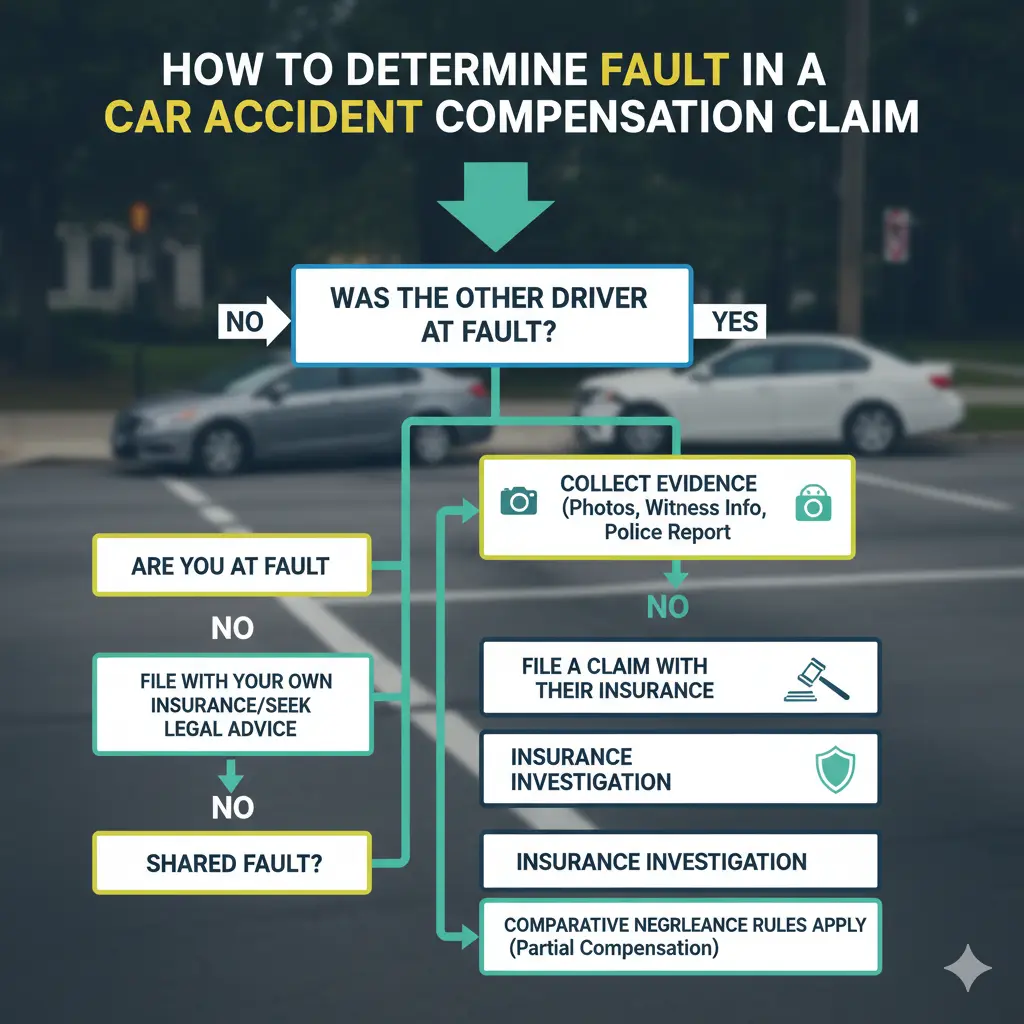
An at-fault auto accident attorney is a legal professional who specializes in defending drivers accused of causing a motor vehicle collision. These attorneys protect your financial assets, challenge disputed liability claims, and navigate the complexities of litigation when insurance coverage is insufficient or denied. While insurance companies typically provide a defense, private counsel is often necessary when facing personal lawsuits or "excess" judgments that exceed policy limits.
Determining who is "at fault" in a car accident is rarely a simple matter of one driver’s word against another. As we move through 2026, the integration of advanced vehicle telematics, autonomous driving assists, and complex state-specific negligence laws has made the role of a specialized defense attorney more critical than ever. Whether you have been served with a summons or your insurance company is signaling a potential coverage gap, understanding the nuances of legal defense in at-fault scenarios is the first step toward protecting your future.
The Dual Role of Defense: Insurance-Appointed vs. Private Counsel
In the vast majority of auto accidents where you are deemed at fault, your first line of defense is your liability insurance provider. Most standard auto policies include a "Duty to Defend" clause. This means that if you are sued for a covered accident, the insurance company has a contractual obligation to hire an attorney for you and pay their legal fees.
However, the insurance company’s duty to defend is tied directly to the limits of your policy. If you carry a $50,000 bodily injury limit and are being sued for $500,000, your insurance company's interests may diverge from your own. The attorney they provide is focused on resolving the claim within the policy limits. If the plaintiff (the person suing you) refuses to settle for the policy amount, you may face an "excess judgment" where your personal assets—such as your home, savings, and future wages—are at risk.
In these high-stakes scenarios, many drivers choose to hire an independent at-fault auto accident attorney. This private counsel works exclusively for you, ensuring that the insurance-appointed lawyer is acting in your best interest and pressuring the insurer to settle the claim within policy limits to prevent a personal judgment against you.
Understanding Negligence Standards in 2026
The definition of "at fault" varies significantly depending on the jurisdiction where the accident occurred. An experienced attorney evaluates your case based on the specific negligence framework of the state.
Comparative Negligence (Pure and Modified)
Most states currently follow some form of comparative negligence. This system recognizes that more than one party can be responsible for an accident.
- Pure Comparative Negligence: Even if you are 90% at fault, you could technically recover 10% of your damages from the other party. Conversely, you are liable for 90% of their damages.
- Modified Comparative Negligence: This is the most common system. You can only recover damages if you are less than 50% or 51% at fault (depending on the state). If you are found to be more than 50% responsible, you are barred from seeking recovery, and you (or your insurer) must pay for the other party's losses.
Contributory Negligence
A handful of jurisdictions still follow the strict "contributory negligence" rule. In these areas, if a driver is even 1% at fault for an accident, they are completely barred from recovering any damages. An at-fault auto accident attorney in these states focuses heavily on proving that the other driver shared even a tiny fraction of the blame to shield their client from paying a full claim.
How Fault is Determined: The Evidence Trail
In 2026, the "he-said, she-said" era of accident investigation has largely been replaced by data-driven forensics. An attorney defending an at-fault driver will scrutinize several layers of evidence to mitigate liability or shift the blame.
- Event Data Recorders (EDR): Modern vehicles are equipped with "black boxes" that record speed, braking patterns, steering input, and seatbelt usage in the seconds leading up to a crash. An attorney can use this data to prove that you were not speeding or that the other driver failed to brake.
- Dashcam and Surveillance Footage: With the ubiquity of dashcams and municipal "smart city" cameras, video evidence is often the deciding factor in liability disputes.
- Telematics Data: If you or the other driver use insurance-linked apps or "black box" devices for premium discounts, that data can be subpoenaed to show driving behavior over time.
- Accident Reconstruction Experts: Attorneys often hire specialized engineers to recreate the physics of the crash. These experts can determine if a mechanical failure (such as a defective tire or brake system) contributed to the accident, potentially shifting fault to a manufacturer or maintenance facility.
When Should You Hire a Private At-Fault Attorney?
While your insurance company provides a lawyer for standard claims, there are specific "red flag" situations where you should seek independent legal advice:
- Damages Exceed Policy Limits: If the medical bills and property damage of the other party clearly exceed your coverage limits, you need a private attorney to protect your personal assets.
- Reservation of Rights: If your insurance company sends you a "Reservation of Rights" letter, they are telling you they might not cover the claim because of a policy violation (like intentional acts or undisclosed commercial use of the vehicle). You need your own lawyer immediately to challenge this.
- Multiple Claimants: If an accident involves several injured parties and your policy limits are not enough to cover everyone, a private attorney can help manage how those funds are distributed to minimize your personal exposure.
- Bad Faith Claims: If your insurance company fails to settle a claim that clearly should have been settled within policy limits, they may be acting in "bad faith." A private attorney can help you sue your own insurance company for the resulting excess judgment.
| Feature | Insurance-Appointed Attorney | Private Defense Attorney |
|---|---|---|
| Who Pays the Fees? | The Insurance Company | You (The Client) |
| Primary Goal | Minimize Insurer's Payout | Protect Client's Personal Assets |
| Control Over Settlement | High (Controlled by Insurer) | Advisory (Focuses on Client's interest) |
| When to Use | Standard claims within policy limits | High-value claims, policy disputes, excess liability |
| Loyalty | Dual (to Client and Insurer) | Solely to the Client |
The Legal Process: What to Expect
If you are sued following an auto accident, the legal process generally follows a structured timeline. An at-fault auto accident attorney guides you through each phase to ensure you do not inadvertently admit liability or jeopardize your defense.
1. The Discovery Phase
This is the longest part of the litigation. Both sides exchange documents, answer written questions (interrogatories), and conduct depositions. A deposition is a formal interview under oath. Your attorney will prepare you for this, ensuring you answer questions accurately without offering unnecessary information that the plaintiff’s lawyer could use against you.
2. Pre-Trial Motions
Attorneys may file motions to dismiss certain parts of the lawsuit or to exclude specific evidence. For example, if the plaintiff tries to introduce evidence of a previous speeding ticket that is irrelevant to the current crash, your lawyer will move to have it suppressed.
3. Mediation and Settlement Negotiations
Most auto accident cases—over 90%—settle before reaching a jury. Mediation involves a neutral third party helping both sides reach an agreement. Your defense attorney’s role here is to convince the plaintiff that their case has weaknesses, thereby lowering the settlement amount.
4. Trial
If a settlement cannot be reached, the case goes to trial. A jury or judge will hear the evidence and determine the percentage of fault for each driver and the total amount of damages. Your attorney’s goal at trial is to keep your fault percentage as low as possible.
Protecting Your Assets from "Nuclear Verdicts"
In recent years, the legal landscape has seen a rise in "nuclear verdicts"—jury awards that far exceed the typical value of a claim, often reaching millions of dollars. These are frequently driven by "reptile theory" tactics used by plaintiff attorneys to provoke fear and anger in a jury.
A skilled at-fault auto accident attorney is trained to counter these tactics. They focus the jury on the facts of the accident rather than emotional appeals. They also work to humanize the defendant, ensuring the jury views the incident as an unfortunate accident rather than an act of negligence deserving of punishment.
Furthermore, an attorney can help you explore "judgment proofing" strategies or navigate the post-judgment process, such as negotiating a payment plan or filing for bankruptcy if an overwhelming judgment is entered against you.
Frequently Asked Questions
Can I be sued personally if I have car insurance?
Yes. Insurance is a contract where the company pays up to a certain limit. If the damages you caused are $250,000 and your insurance limit is $100,000, the plaintiff can sue you personally for the remaining $150,000. Your personal assets like bank accounts and property can be seized to satisfy this debt.
What if the police report says I am at fault, but I disagree?
A police report is a significant piece of evidence, but it is not the final word in a civil lawsuit. Police officers are rarely witnesses to the actual crash and base their reports on post-accident observations. An at-fault auto accident attorney can challenge the report using expert testimony, dashcam footage, and inconsistent witness statements.
Does hiring my own lawyer make me look guilty?
In the civil legal system, hiring an attorney is seen as a prudent step to protect your rights, not an admission of guilt. In fact, most sophisticated litigants and insurance companies expect parties to have representation. It has no bearing on the jury’s determination of fault.
How much does an at-fault auto accident attorney cost?
If provided by your insurance company, it costs you nothing out of pocket. If you hire a private defense attorney, they typically charge an hourly rate (ranging from $250 to $600+ per hour depending on the region) or a flat fee for specific stages of the case. Unlike personal injury lawyers, defense lawyers rarely work on a contingency fee basis because there is no "win" that results in a cash payout from which to take a percentage.
What is the "Statute of Limitations" for being sued?
The statute of limitations varies by state, typically ranging from two to four years from the date of the accident. However, in 2026, some jurisdictions have updated these rules for accidents involving autonomous vehicles or specific government entities. Your attorney will verify that any lawsuit against you was filed within the legal timeframe.
Practical Recommendations
If you believe you may be at fault in a serious accident, or if you have already been served with legal papers, take the following actions immediately:
- Notify Your Insurer Immediately: Failure to report an accident promptly can result in a denial of coverage, leaving you to pay for your own defense from the start.
- Do Not Admit Fault at the Scene: While you should be polite and exchange information, avoid saying "I'm sorry" or "I didn't see you," as these statements can be used as admissions of liability in court.
- Document Everything: Save all photos from the scene, repair estimates, and any correspondence from the other driver's attorney.
- Request Your Claim File: If your insurance company is handling the case, you have a right to know the status of negotiations and whether the other party has made a "policy limits demand."
- Consult Private Counsel Early: If there is any indication that the injuries are "catastrophic" (e.g., spinal cord injuries, traumatic brain injuries, or wrongful death), consult an independent at-fault auto accident attorney to evaluate your personal financial exposure before the case progresses too far.
Note: This article is provided for informational purposes only and does not constitute legal advice. Jurisdictional rules vary significantly; always consult with a licensed attorney in your area regarding your specific legal situation.