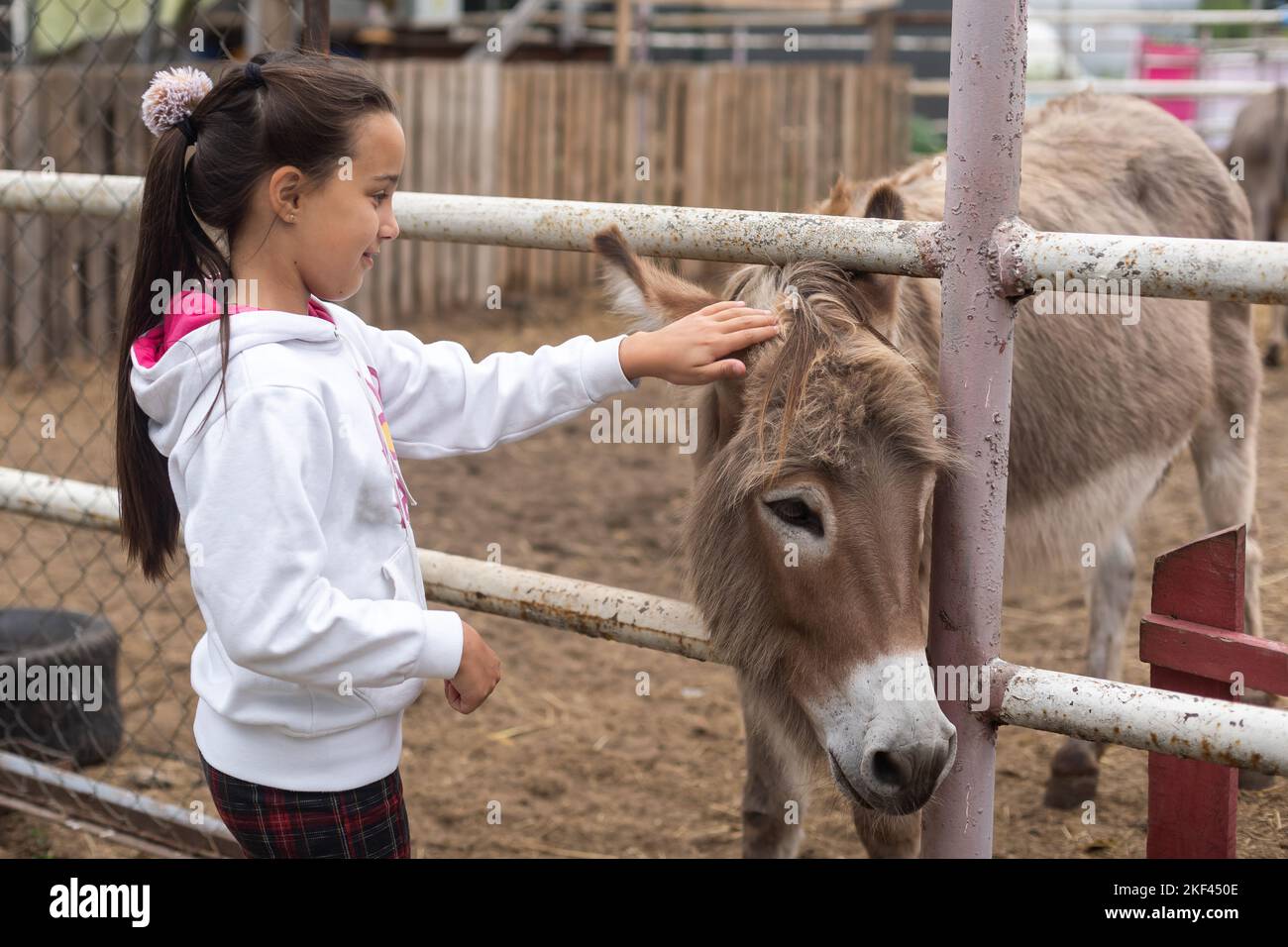
A donkey reunited with a little girl demonstrates the profound long-term memory and emotional capacity of equines. These reunions, often marked by the donkey's vocalizations and "hugging" behaviors, occur because donkeys possess a highly developed hippocampus, allowing them to recognize familiar faces and voices even after years of separation.
The sight of a donkey rushing toward a young child, braying with what sounds like a sob, has become a recurring viral phenomenon on social media. While these videos are often viewed through a lens of pure sentimentality, they represent a complex intersection of animal behavior, neurological science, and the unique history of the human-equine bond. As of 2026, researchers in animal cognition continue to use these documented reunions to better understand how non-human animals experience social attachment and grief.
The Viral Phenomenon: Why These Stories Resonate
Stories of animal reunions frequently capture global attention, but the specific dynamic of a donkey and a little girl carries a unique weight. Unlike the high-energy, often frantic reunions seen with dogs, donkey reunions are characterized by a poignant, almost "human" display of emotion.
In the most famous instances—such as the 2020 reunion between Ismara and her donkey Baldomera in Spain, or similar events in the UK and US—the donkey often exhibits a physical reaction that mirrors human crying. They may lower their heads, lean their weight into the child, and produce a bray that fluctuates in pitch, signaling high emotional arousal.
These events resonate because they challenge the historical perception of donkeys as "stubborn" or "unintelligent" beasts of burden. Instead, they showcase a creature capable of profound loyalty. For the little girl involved, the reunion is often a formative life event, reinforcing the concept of animals as sentient companions rather than mere pets or livestock.
Understanding Donkey Cognition and Long-Term Memory
To understand why a donkey can recognize a little girl after months or years apart, one must look at the specific evolutionary biology of the species. Donkeys (Equus africanus asinus) evolved in harsh, arid environments where resources were scarce. In such settings, remembering the location of water, food sources, and—most importantly—the members of one’s social group was a matter of survival.
The Role of the Hippocampus
The equine brain features a well-developed hippocampus, the region responsible for spatial memory and the conversion of short-term memories into long-term ones. Studies have shown that equines can remember individual humans for over 25 years. This memory is not merely visual; it is multisensory. A donkey utilizes a combination of the following to identify "their" human:
- Olfactory Recognition: Donkeys have a highly sensitive sense of smell. They can distinguish the unique scent profile of a specific person, which remains relatively consistent over time.
- Auditory Cues: The specific pitch and cadence of a child’s voice are etched into the donkey’s memory. In many reunion videos, the donkey begins to react the moment the child calls its name, even before visual contact is fully established.
- Visual Patterning: While their depth perception differs from humans, donkeys are excellent at recognizing silhouettes and movement patterns.
Social Hierarchy and "Bonded Pairs"
Donkeys are inherently social animals. In the wild, they form strong pair bonds known as "buddies." When a donkey is raised alongside a human child, the donkey often categorizes that child as its primary social partner. This bond is frequently stronger than those formed with adult humans, possibly due to the more frequent and gentle nature of a child’s interactions. When that "buddy" is removed, the donkey experiences a measurable physiological stress response, which is only relieved upon the eventual reunion.
Case Study: The Reunion of Ismara and Baldomera
Perhaps the most definitive example of this phenomenon occurred in Málaga, Spain. After the mandatory COVID-19 lockdowns prevented Ismara from visiting her donkey, Baldomera, for several months, their eventual reunion was captured on video.
The footage showed Baldomera braying in a manner that many observers described as "weeping." This was not a projection of human emotion but a documented behavioral state. When donkeys are reunited with a bonded partner, they undergo a surge in oxytocin, often referred to as the "bonding hormone." This chemical release facilitates the physical "leaning" behavior where the donkey presses its body against the person, seeking tactile comfort.
This case study is significant because it provided clear evidence of "separation anxiety" in donkeys. During the months apart, Baldomera had shown signs of lethargy and decreased appetite—symptoms that vanished immediately upon seeing Ismara.
The Psychology of the Human-Equine Bond in Children
The relationship between a little girl and a donkey is often more than just a friendship; it is a therapeutic interaction. This is why donkeys are the preferred animal for many types of Equine-Assisted Therapy (EAT).
Why Donkeys?
Donkeys possess a "stoic" nature. Unlike horses, which have a strong flight reflex and may bolt when startled, a donkey’s natural instinct is to freeze and assess the situation. This makes them significantly safer for children. Their slower pace and smaller stature (in the case of miniature or standard donkeys) are less intimidating, allowing a child to build confidence.
Emotional Mirroring
Donkeys are highly sensitive to human emotional states. They can detect changes in human heart rates and cortisol levels. When a little girl is calm and affectionate, the donkey mirrors that state. Conversely, if a child is distressed, a bonded donkey will often approach and offer physical closeness as a form of "buffering" against the child's stress. This mutual regulation of emotions forms the bedrock of the intense bond seen in reunion stories.
Identifying "Grief" and "Joy" in Donkeys
Critics sometimes argue that attributing "joy" to a donkey is anthropomorphism. However, ethologists (scientists who study animal behavior) distinguish between human-like emotions and "affective states."
When a donkey is reunited with a little girl, several objective physiological markers indicate a positive affective state:
- Lowered Head Carriage: A sign of relaxation and trust.
- Softened Eye Expression: The tension around the orbital muscles relaxes.
- Specific Vocalization: The "bray-whinny" hybrid used specifically for greeting bonded individuals.
- Nuzzling: The donkey uses its sensitive muzzle to "check" the person, verifying their identity through touch and smell.
Comparison of Social Traits: Donkey vs. Horse vs. Mule
Understanding why these reunions are so potent requires comparing the donkey to its close relatives.
| Trait | Donkey (Equus asinus) | Horse (Equus ferus caballus) | Mule (Hybrid) |
|---|---|---|---|
| Memory Duration | Exceptionally Long (25+ years) | Long (10-15+ years) | High (Combines both) |
| Primary Stress Response | Freeze/Assess (Stoicism) | Flight (Running) | Variable (Often Freeze) |
| Social Bonding | Strong Pair Bonds ("Buddies") | Large Herd Dynamics | Can be solitary or bonded |
| Recognition Cues | Multimodal (Voice/Scent/Visual) | Primarily Visual/Scent | Highly intelligent/Cunning |
| Vocalization | Complex, multi-tonal bray | Whinny/Nicker | Variable bray/whinny mix |
Safety Guidelines for Facilitating a Reunion
If a child and a donkey have been separated for a significant period, the reunion should be handled with care to ensure the safety of both parties. While the donkey is likely to be happy, its sheer size and strength can lead to accidental injury.
Step 1: Controlled Environment
The reunion should take place in a familiar, enclosed space like a paddock or stable. This prevents the donkey from becoming overwhelmed by external stimuli.
Step 2: Allow the Donkey to Initiate
The child should be instructed to stand still and call the donkey’s name. It is vital to let the donkey approach the child at its own pace. This allows the animal to process the olfactory and auditory cues necessary for recognition.
Step 3: Monitor Body Language
Adults should look for signs of over-excitement. A donkey that is "play-charging" or tossing its head might accidentally knock a small child over. If the donkey appears too high-energy, it is best to have a fence or gate between the two until the initial excitement subsides.
Step 4: Tactile Reconnection
Once the donkey has calmed down, allow the child to pet the donkey on the neck or shoulders—areas that donkeys find soothing. Avoid the "startle zones" near the hindquarters or directly under the chin until the bond is re-established.
The Lasting Impact of the Reunion
For the donkey, a reunion marks the end of a period of social isolation or "grief." For the little girl, it is a lesson in empathy and the enduring nature of love. These events highlight the necessity of recognizing animals as individuals with their own social needs and histories.
In the context of 2026, where digital interactions often replace physical ones, the "donkey reunited with a little girl" narrative serves as a powerful reminder of the tangible, biological connections that exist between species. It reinforces the importance of animal welfare, particularly for "companion livestock" that may not receive the same legal protections as household pets but clearly possess the same emotional depth.
Frequently Asked Questions
Can a donkey really "cry" tears of joy?
While donkeys do have tear ducts that produce moisture to protect the eye, they do not produce "emotional tears" in the way humans do. The "crying" seen in videos is typically a combination of vocalizations (brays) and a specific facial expression involving the flattening of ears and drooping of the lower lip, which signifies deep emotional relief.
How long can a donkey remember a person?
Research indicates that donkeys can remember individuals—both other donkeys and humans—for their entire lives, often exceeding 25 to 30 years. This memory is reinforced every time they interact with the person, creating a permanent neurological map.
Are donkeys safer for children than horses?
Generally, yes. Because donkeys have a "freeze" instinct rather than a "flight" instinct, they are less likely to bolt or kick in panic when a child makes a sudden movement. Their smaller size also makes them more manageable for young children, though adult supervision is always required.
Why do donkeys lean into people during a reunion?
Leaning is a sign of extreme trust and affection. In donkey social structures, leaning against a "buddy" is a way to share warmth, provide security, and reinforce the bond. When a donkey leans into a little girl, it is literally placing its weight and safety in her hands.
What should I do if my donkey doesn't recognize me immediately?
Don't be discouraged. Recognition can sometimes take a few minutes as the donkey processes different sensory inputs. Try using a familiar call, wearing a piece of clothing you wore often when you were together (for the scent), or offering a familiar treat. Once the "scent-voice" connection clicks, the recognition is usually immediate.
Practical Recommendation for Animal Owners
If you are a parent or guardian overseeing a donkey-child relationship, prioritize consistency. Donkeys thrive on routine and "ritualized" interactions. If a separation is inevitable (due to school, travel, or relocation), try to maintain a connection by playing recordings of the child’s voice for the donkey or providing the donkey with a piece of the child's clothing. This can mitigate the stress of separation and ensure that when the eventual reunion occurs, it is as seamless and joyful as the stories that capture the world's heart.