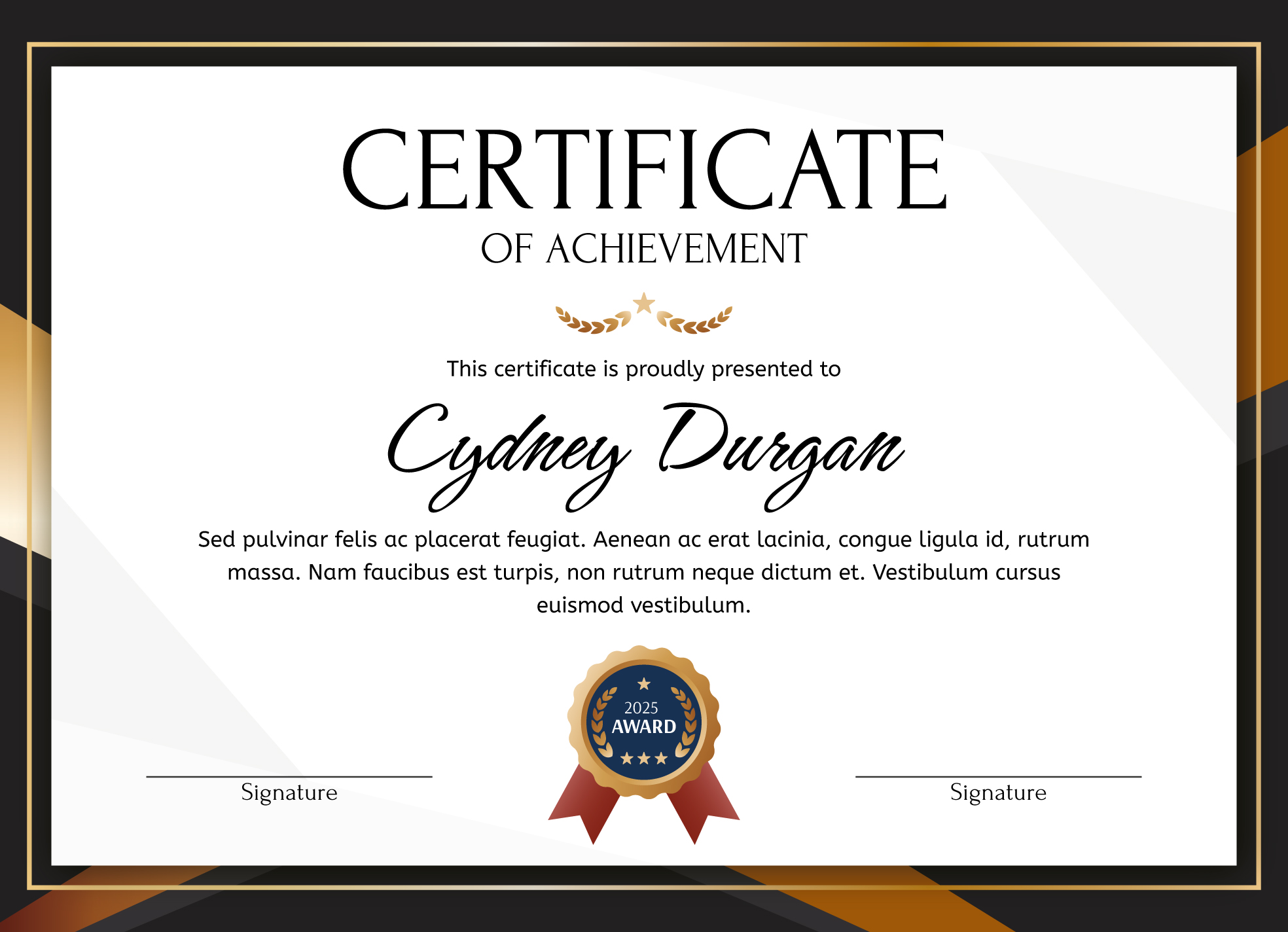
A certificate functions as a formal document verifying the completion of a specific course, program, or competency, whereas an award is a token of recognition, honor, or merit bestowed for achievement, performance, or contribution. While both serve as tangible proof of an event, their legal, professional, and functional implications differ significantly in educational and workplace settings.
The Functional Definition of a Certificate
In professional and academic contexts, a certificate is a credential. It serves as evidence that an individual has undergone a prescribed process of learning and met specific, measurable standards. Whether it is a professional certification, a certificate of completion, or a technical qualification, the primary purpose is validation.
When you earn a certificate, you are demonstrating that you possess the requisite knowledge or skills defined by a third party—often an accrediting body, an educational institution, or a regulatory agency. For example, in 2026, obtaining a Project Management Professional (PMP) certificate indicates that the holder has passed rigorous testing and meets defined experience requirements. The document itself is merely the physical or digital manifestation of that verified state.
The value of a certificate lies in its utility. It is often a prerequisite for employment, licensure, or promotion. Employers view certificates as "de-risking" tools; they provide confidence that a candidate has reached a baseline level of proficiency. Because of this, certificates are frequently tied to expiration dates, continuing education requirements, and periodic renewal processes to ensure the holder’s skills remain relevant and aligned with current standards.
The Nature of an Award
Conversely, an award is fundamentally distinct in its origin and intent. An award is an honorific. It is given to recognize excellence, achievement, or a specific contribution that stands out from the norm. While a certificate tracks progress, an award tracks status.
Awards are often subjective or competitive. An "Employee of the Month" award or a "President’s Award for Innovation" recognizes an individual for surpassing expectations. Unlike a certificate, which you typically "earn" by fulfilling a set of objective, predefined requirements, an award is often "bestowed" upon you by an organization, a jury, or a governing board.
The social and psychological value of an award is its primary utility. Awards build reputation, boost morale, and serve as markers of prestige. While a certificate answers the question, "Are you qualified to do this job?", an award answers the question, "How well did you perform in your role?" Because awards are recognitions of past performance rather than qualifications for future activity, they do not have expiration dates, nor do they typically require maintenance or renewal.
Comparing Credentials and Recognitions
To navigate the differences between these two concepts, it is helpful to categorize them based on their intent, requirement, and lifecycle. The following table delineates the core disparities:
| Feature | Certificate | Award |
|---|---|---|
| Primary Goal | Validation of skills or knowledge | Recognition of achievement or merit |
| Prerequisites | Defined curriculum or competency standards | Subjective selection or performance threshold |
| Nature | Objective, verifiable credential | Subjective, honorific recognition |
| Maintenance | Often requires renewal or continuing education | Permanent record; no maintenance required |
| Lifecycle | May expire or become obsolete | Fixed point in time (Historical event) |
| Professional Impact | Often mandatory for specific roles | Beneficial for career advancement and visibility |
The Legal and Professional Implications of the Distinction
Confusion between a certificate and an award can lead to misrepresentation in professional documentation. For example, on a resume or curriculum vitae (CV), listing an award under the "Certifications" section is technically inaccurate and may be viewed as an attempt to pad one’s credentials with items that do not signify verified competency.
In regulated industries—such as healthcare, engineering, or aviation—the distinction is even more pronounced. In these fields, a certificate (or license) is a legal requirement. Operating without the appropriate certificate may lead to professional censure or legal liability. An award, while prestigious, holds no weight in terms of professional compliance or authorization to practice.
When document verification occurs during a background check or credentialing process, the auditor is looking specifically for certificates. They are assessing whether you have met the objective threshold required by the industry. If you provide an award where a certificate is requested, the verification process will fail because an award does not provide the systematic proof of training or examination required by institutional standards.
How to Properly Represent Both in Your Career Portfolio
Since certificates and awards serve different purposes, they should be presented distinctly in your professional profile or digital resume.
- Categorization: Create separate sections on your CV or LinkedIn profile. One section should be titled "Certifications and Professional Qualifications," where you list documents that prove your competency in specific skills. Another section, such as "Awards and Honors," should be reserved for acknowledgments of performance.
- Detailing Certificates: When listing a certificate, include the issuing organization, the date of issuance, and the expiration date if applicable. This provides the reader with the context necessary to verify the credential independently.
- Detailing Awards: When listing an award, emphasize the context. Explain who presented the award, what the specific criteria were (e.g., "for outstanding contribution to operational efficiency"), and the significance of the award (e.g., "selected from a pool of 500 regional managers").
- Verification: Ensure that your certificates can be easily traced. If your certificate has a digital badge or a unique verification ID, include that information. Awards rarely have verification IDs; however, they may have a link to an official announcement or press release, which is sufficient for documenting their authenticity.
Common Pitfalls and Misconceptions
One of the most common mistakes is assuming that an academic degree or a specific achievement constitutes a certificate. In some jurisdictions, a "Certificate of Achievement" is granted for completing a workshop. While this is technically a certificate, it is often confused with an award because it is presented at the end of an event. To avoid this ambiguity, always look for the underlying standard. If the document signifies that you met a learning objective, it is a certificate. If it signifies that you were selected for a specific distinction, it is an award.
Another misconception involves "Honorary Certificates." These are sometimes issued by organizations to commemorate participation. While they may have the word "certificate" on them, they function more like an award—a memento of an experience rather than a validation of proficiency. In a professional context, you should be wary of prioritizing these on your resume; they rarely offer the same weight as a credentialed certificate issued by an accredited body.
Frequently Asked Questions
Can an award ever function as a certificate? No. While both are documents that confer status, an award does not satisfy the educational or technical requirements of a certificate. An award recognizes your past performance; a certificate verifies your current capability to perform a task.
Does a "Certificate of Merit" count as a credential? A Certificate of Merit is usually a hybrid. While it contains the word "certificate," it is generally issued as an award for high performance rather than as a credential for a baseline competency. It should be categorized under honors rather than professional certifications.
Should I list expired certificates on my resume? Generally, no. If a certificate has expired, it no longer represents an active validation of your skills according to current 2026 industry standards. If the certificate expired, you are no longer technically certified, and listing it could be considered misleading.
How do I verify if a certificate is legitimate? Most legitimate certificates are issued by accredited institutions or industry-recognized professional bodies. Look for a verification portal on the issuing body’s website. If you cannot verify the document through an independent registry, its value as a professional credential is significantly diminished.
Is a "Letter of Appreciation" the same as an award? No, a Letter of Appreciation is a form of informal recognition. While it acknowledges your efforts, it does not carry the formal weight of an award, nor does it function as a professional certificate.
Moving Forward with Professional Documentation
The most effective way to manage your portfolio is to prioritize clarity. Always represent your professional journey as a combination of verified capabilities and external validations of excellence. If you are uncertain about how to categorize a specific document, ask yourself whether it represents a skill you have mastered or a moment of recognition you have received. By maintaining this distinction, you provide stakeholders—such as recruiters, managers, or clients—with an accurate and professional view of your qualifications.
If you are currently pursuing new credentials, ensure that the programs you select result in a certificate that is widely recognized within your specific industry. If you are seeking awards, focus on performance metrics that define your value within your organization. Keeping these two paths clear will ensure your professional history is both verifiable and impressive.