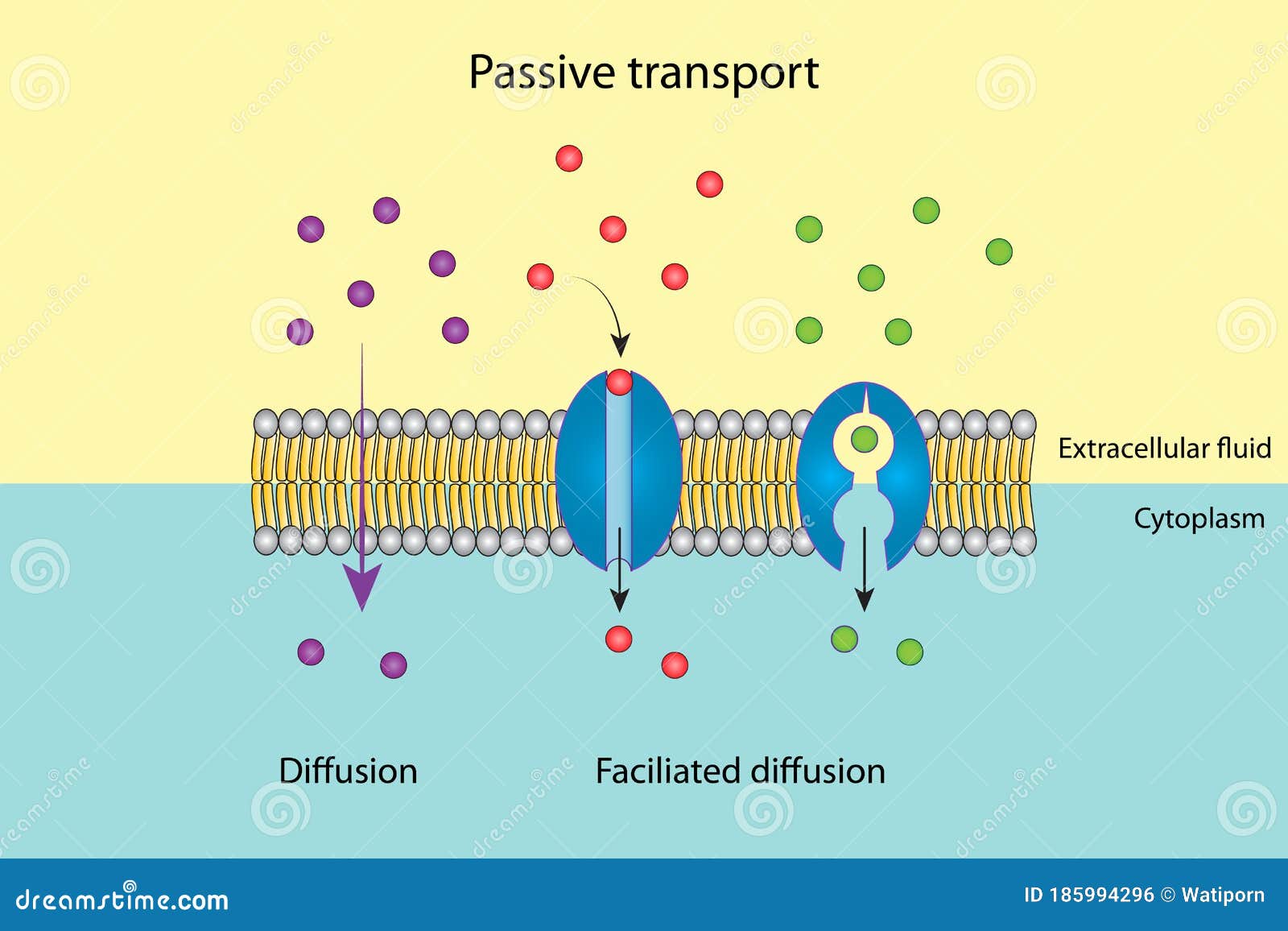
Aquaporins are specialized integral membrane proteins that function as selective channels to facilitate the rapid, passive transport of water across cellular membranes. By enabling the movement of water molecules down their osmotic gradient without requiring metabolic energy, these "plumbing systems of the cell" are essential for maintaining homeostasis, regulating cell volume, and supporting complex physiological processes such as renal filtration and plant transpiration.
The Molecular Architecture of Aquaporins
Aquaporins (AQPs) are evolutionarily conserved proteins found in virtually all domains of life. Their primary role is to overcome the kinetic barrier imposed by the hydrophobic lipid bilayer of the cell membrane. While water can theoretically diffuse through a lipid bilayer, the rate is insufficient for the high-demand physiological processes required by multicellular organisms.
At the molecular level, an aquaporin exists as a homotetramer—a structure composed of four identical subunits. Each individual subunit acts as an independent water channel. The monomeric unit consists of six transmembrane alpha-helices that enclose a narrow central pore. This pore is uniquely designed to be just wide enough for water molecules to pass through in a single-file, highly ordered manner.
A critical feature of the aquaporin channel is its high selectivity. Despite the rapid flux of water—which can reach up to 3 billion molecules per second through a single channel—aquaporins effectively exclude ions, including protons (hydronium ions). This exclusion is vital because the passage of protons would collapse the electrochemical gradients necessary for ATP synthesis and nerve signaling. The selectivity is achieved through two distinct mechanisms:
- Size Exclusion: The narrowest part of the pore, known as the ar/R (aromatic/arginine) selectivity filter, physically restricts the passage of larger solutes.
- Electrostatic Repulsion: A conserved "NPA" (asparagine-proline-alanine) motif creates a positive dipole. This dipole forces water molecules to reorient their hydrogen bonds as they pass, effectively breaking the "proton wire" (the Grotthuss mechanism) that would otherwise allow protons to jump through the water chain.
Understanding Passive Transport
Passive transport is the movement of substances across a cell membrane without the expenditure of metabolic energy (ATP). Aquaporins strictly facilitate passive transport because they operate based on the principles of diffusion and osmosis.
Osmotic Gradients as the Driving Force
For water to move through an aquaporin, there must be a difference in water potential—or osmotic gradient—between the two sides of the membrane. Water naturally moves from a region of higher water potential (lower solute concentration) to a region of lower water potential (higher solute concentration).
Aquaporins do not create this gradient, nor do they "pump" water against a gradient. They simply provide a low-resistance pathway that allows the system to reach equilibrium more rapidly. If the concentration of solutes is equal on both sides of the membrane, there is no net movement of water through the aquaporin.
Facilitated Diffusion
In biological terms, the movement through aquaporins is classified as facilitated diffusion. While it follows the rules of simple diffusion (moving from high to low concentration), the rate is significantly higher due to the presence of the channel protein. This differentiation is essential for tissues that experience rapid fluctuations in fluid availability, such as the kidneys or the guard cells of plant leaves.
Physiological Roles of Aquaporins
The importance of aquaporin-mediated transport is best observed in the human body and botanical systems.
Renal Function and Urine Concentration
In the human kidney, aquaporins (specifically AQP2) are crucial for the reabsorption of water. Under the influence of the hormone vasopressin (antidiuretic hormone), AQP2 channels are translocated from intracellular vesicles to the apical membrane of the collecting duct cells. This increases the membrane's permeability to water, allowing the kidney to concentrate urine and prevent dehydration. A deficiency or mutation in these proteins can lead to conditions like nephrogenic diabetes insipidus, characterized by an inability to concentrate urine.
Plant Water Relations
In plants, aquaporins are abundant in the plasma membrane and the tonoplast (the vacuole membrane). They are critical for hydraulic conductance—the ease with which water moves through plant tissues. During periods of drought, plants can regulate the gating of these channels to prevent water loss, effectively "closing" the valves to preserve internal turgor pressure.
Comparative Overview: Transport Mechanisms
To understand where aquaporins fit into cellular transport, it is helpful to compare them to other membrane transport mechanisms.
| Transport Mechanism | Energy Required | Requires Channel/Carrier? | Primary Substance Transported |
|---|---|---|---|
| Simple Diffusion | No | No | Small, non-polar molecules |
| Aquaporin Transport | No | Yes | Water molecules |
| Ion Channels | No | Yes | Specific ions (e.g., K+, Na+) |
| Active Transport | Yes | Yes | Solutes against gradient |
Regulation of Aquaporin Activity
Aquaporins are not always "open." Their activity is subject to sophisticated regulation to ensure the cell does not lose or gain too much water inappropriately.
- Gating: Some aquaporins can be "gated" in response to environmental stimuli. For example, phosphorylation of specific amino acid residues can induce a conformational change that physically blocks the pore.
- Trafficking: As seen with the renal AQP2, cells can control the number of channels present in the membrane. By sequestering aquaporins into storage vesicles, the cell can rapidly "turn on" water permeability when a signal is received, or "turn off" permeability by internalizing the channels.
- pH Sensitivity: Certain aquaporins exhibit sensitivity to changes in cytoplasmic pH. A decrease in pH can cause the protein to close, which may serve as a protective mechanism for the cell during metabolic stress or hypoxia.
Common Misconceptions
A frequent error in understanding passive transport is the belief that aquaporins are "water pumps." In biology, the term "pump" is reserved for active transport mechanisms that use ATP to move substances against an electrochemical gradient (such as the sodium-potassium pump). Aquaporins function as gates or tunnels that allow water to follow the path of least resistance. They are entirely dependent on the presence of an existing osmotic gradient.
Furthermore, it is sometimes assumed that all aquaporins transport only water. While this was the initial belief following their discovery, it is now established that some members of the aquaporin family, known as aquaglyceroporins, also transport small uncharged solutes such as glycerol, urea, and arsenite.
Frequently Asked Questions
Do aquaporins require ATP to move water?
No, aquaporins do not require ATP. They function through facilitated diffusion, which relies on the kinetic energy of the water molecules moving down their existing osmotic gradient. The protein serves only to lower the activation energy required for water to cross the hydrophobic core of the cell membrane.
Why do cells need aquaporins if water can pass through the membrane anyway?
While water molecules can pass through the lipid bilayer via simple diffusion, the process is too slow to support the physiological needs of complex organs. Aquaporins increase the hydraulic conductivity of the membrane by several orders of magnitude, allowing for the rapid fluid shifts necessary for survival.
What happens if a person has defective aquaporins?
Defective aquaporins can result in significant clinical issues. For example, mutations in the AQP2 gene prevent the kidneys from concentrating urine, leading to massive water loss. Other aquaporins are linked to cerebral edema (brain swelling) and cataracts, highlighting the critical nature of these proteins in maintaining fluid balance.
Can aquaporins transport ions?
No, they cannot. The ar/R selectivity filter and the NPA motif specifically prevent ions and protons from passing through. This selectivity is crucial; if aquaporins allowed ions to pass, the cell would be unable to maintain the ionic gradients required for membrane potential and cellular communication.
Are aquaporins found in all organisms?
Yes, they are highly conserved across almost all life forms, including bacteria, fungi, plants, and animals. Their fundamental role in water management is considered a hallmark of biological evolution, reflecting the universal necessity of maintaining osmotic balance in an aqueous environment.
Conclusion and Next Actions
Aquaporins represent one of the most efficient examples of protein-mediated transport in biological systems. By understanding that these proteins facilitate passive transport rather than active pumping, one gains a clearer picture of how cells manage water balance under changing environmental conditions.
For those conducting further research, it is recommended to examine the structural biology of the aquaporin tetramer using high-resolution cryo-electron microscopy images provided by databases such as the Protein Data Bank (PDB). Understanding the specific gating mechanisms of tissue-specific aquaporins—such as AQP0 in the eye lens versus AQP2 in the kidney—provides deeper insight into how cellular water regulation supports complex organ function.