To meet approved pet carrier requirements for air travel in 2026, a container must comply with the International Air Transport Association (IATA) Live Animals Regulations (LAR). In-cabin carriers must be leak-proof, well-ventilated, and fit under the seat, while cargo crates must be rigid, secured with metal hardware, and allow the pet to stand, turn, and lie down naturally.
Understanding the Regulatory Landscape of Pet Travel
Navigating the complexities of pet travel requires understanding that two distinct sets of rules apply: those set by the International Air Transport Association (IATA) and those dictated by individual airlines. As of 2026, the IATA Live Animals Regulations (LAR) remain the global standard for ensuring animals are transported safely and humanely. These regulations are not merely suggestions; they are the baseline requirements used by ground handlers and flight crews to determine if your pet is fit for flight.
The primary goal of these requirements is the safety of the animal. In the pressurized environment of a cargo hold or the cramped space under a cabin seat, a carrier is the only thing protecting your pet from shifting luggage, temperature fluctuations, and the stress of movement. Failure to comply with these specifications usually results in a "refusal to transport," which can disrupt travel plans and lead to significant financial loss.
In-Cabin Pet Carrier Requirements
For small dogs and cats, traveling in the cabin is often the preferred method. However, "in-cabin" does not mean "anything goes." Airlines have strict constraints based on the specific aircraft's under-seat dimensions.
Dimensions and Construction
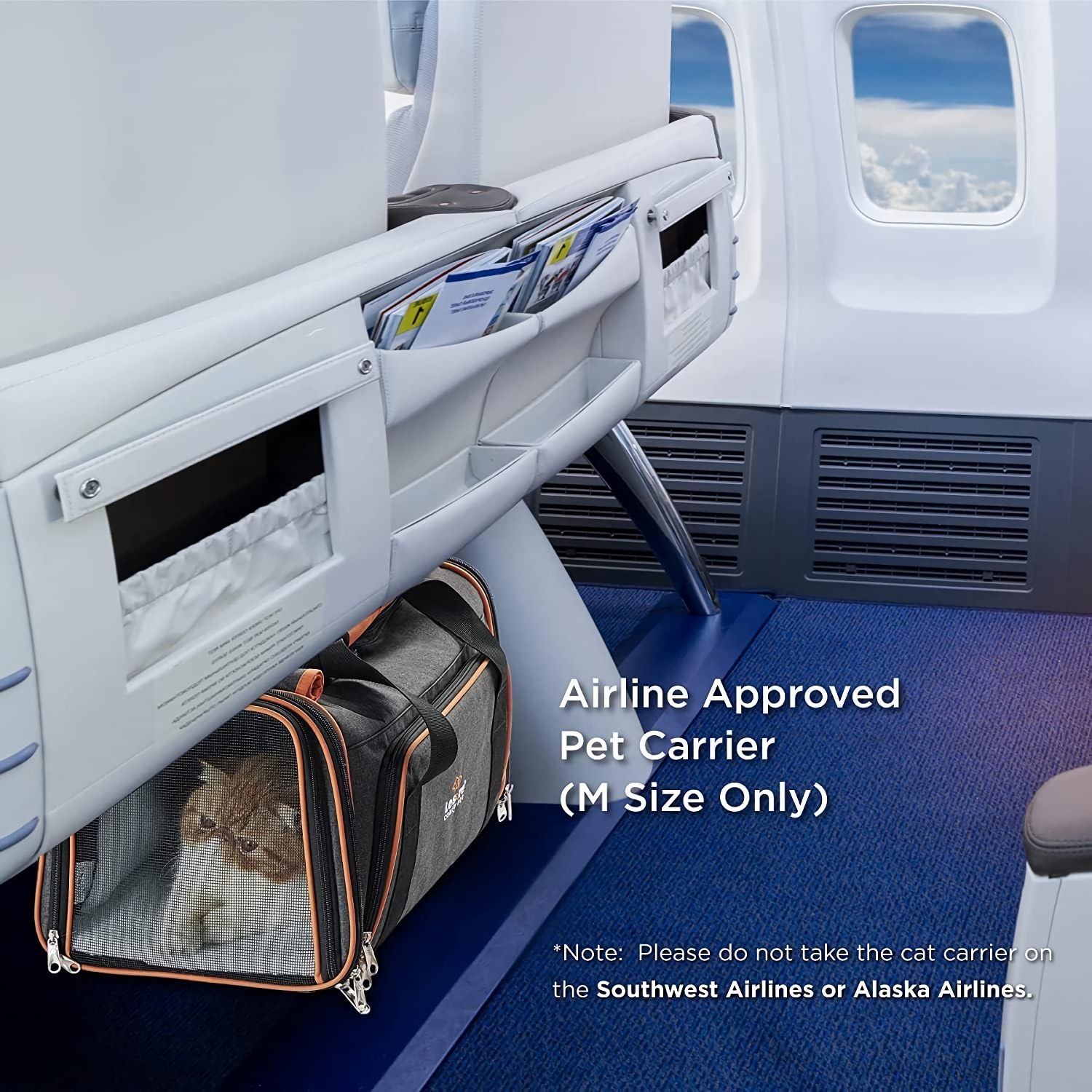
Most airlines require that the carrier be small enough to fit under the seat in front of you. While these dimensions vary by aircraft type (e.g., a Boeing 737 vs. an Airbus A321), the standard maximum is typically around 18 x 11 x 11 inches (45 x 28 x 28 cm).
Soft-sided carriers are generally recommended for in-cabin travel because they are slightly "compressible," allowing them to fit into spaces that a rigid plastic carrier might not. However, the carrier must have a stable frame so that it does not collapse on the pet when not tucked under the seat.
Ventilation and Security
Approved carriers must feature ventilation on at least three sides (though four is preferred). The mesh used for ventilation must be reinforced to prevent claws from tearing through. Security is another critical factor; zippers must be of high quality and, in many cases, "locking" or able to be secured with a cable tie to prevent a stressed pet from nudging them open.
Interior Features
The floor of the carrier must be waterproof and lined with absorbent padding. In 2026, many high-end carriers come with integrated "potty pads" or specialized moisture-wicking fabrics. The pet must be able to stand up and turn around comfortably inside the carrier. If the pet’s head touches the top while standing, the carrier is likely too small, and the airline may deny boarding.
Cargo and Checked Baggage Requirements (IATA CR1)
When a pet is too large for the cabin, they must travel in the cargo hold as "checked baggage" or "manifest cargo." The requirements for these crates, often referred to as Container Requirement 1 (CR1), are significantly more stringent than those for cabin carriers.
Structural Integrity
A cargo-approved crate must be constructed of rigid plastic, wood, or metal. The most common are high-impact plastic. Crucially, the two halves of the crate must be fastened together by metal nuts and bolts. In 2026, many airlines have strictly banned crates that use plastic "side latches" or "dial-up" fasteners, as these are prone to breaking under the stress of rapid pressure changes or accidental drops.
The Door and Locking Mechanism
The door must be made of heavy-gauge metal mesh. Plastic doors or doors with plastic components are strictly prohibited for cargo travel. The locking pins must extend at least 1.6 cm (5/8 inch) beyond the door frame both above and below the door. This ensures that even if the crate is jostled, the door cannot be forced inward or outward by the animal.
Ventilation for Cargo Crates
For international travel, IATA requires ventilation on all four sides of the crate. For domestic travel, some airlines may accept ventilation on three sides, but four is the gold standard for safety. The total ventilation area must be at least 16% of the total surface area of the four sides. To prevent injury, the holes in the mesh or the ventilation slits must be small enough that the pet cannot poke its nose or paws through.
No-Wheels Policy
While many modern crates come with wheels for easy transport through the airport, these must be removed or rendered inoperable before the pet is loaded onto the aircraft. A crate on wheels can roll inside the cargo hold during turbulence or takeoff, posing a severe risk to the animal.
Measuring Your Pet for the Correct Carrier Size
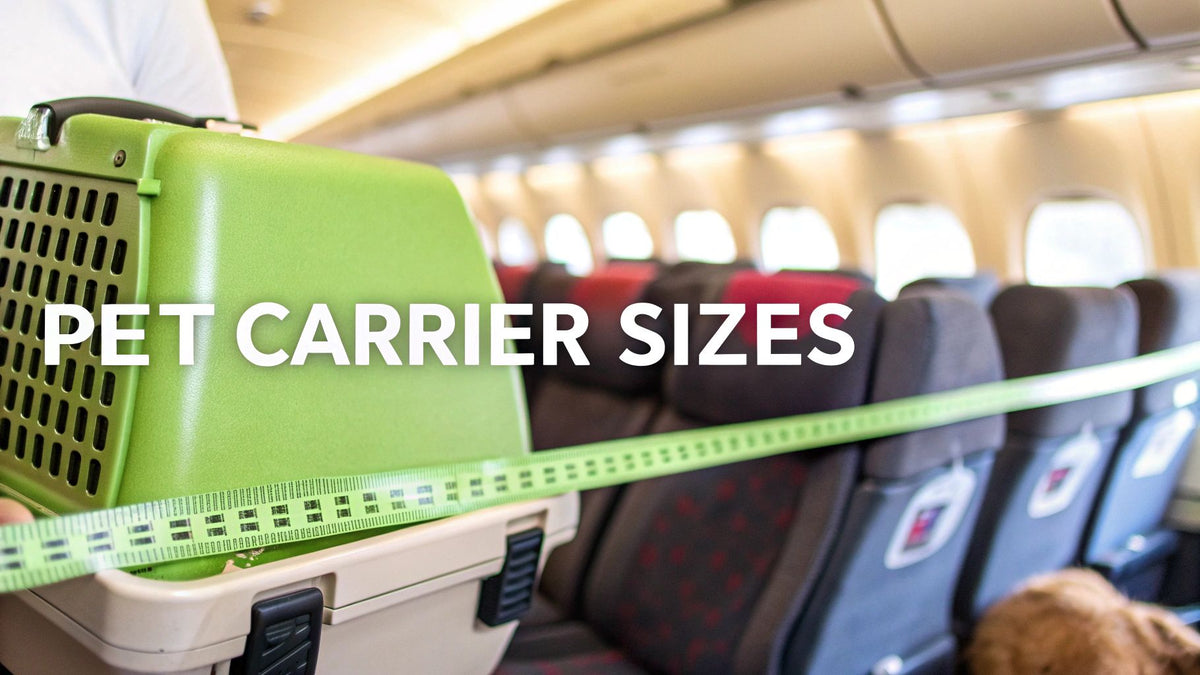
One of the most common reasons for being turned away at the check-in counter is an improperly sized carrier. Both IATA and individual airlines use a specific formula to determine if a crate is large enough.
- Length (A): Measure from the tip of the nose to the base of the tail.
- Width (B): Measure the width of the pet at the widest point (usually the shoulders).
- Height (C): Measure from the floor to the top of the head or the tips of the ears (whichever is higher).
The IATA Formula for Crate Dimensions:
- Length: A + 1/2 of B
- Width: B x 2 (or at least the width of the shoulders plus a margin)
- Height: C (The pet must not touch the roof while standing in a natural position).
For "snub-nosed" (brachycephalic) breeds, such as Bulldogs or Pugs, airlines often require a crate that is one size larger than the formula suggests to ensure maximum airflow and oxygen availability.
Essential Accessories and Documentation
An approved carrier is more than just a box; it must be equipped with specific accessories to be flight-ready.
- Food and Water Bowls: Every cargo crate must have two separate bowls (or one divided bowl) attached to the inside of the metal door. These must be accessible from the outside of the crate so that airline staff can refill them without opening the door.
- Absorbent Bedding: The bottom of the crate must be covered with absorbent material. Straw and hay are prohibited on international flights due to agricultural regulations; most travelers use specialized pet pads or shredded paper.
- Live Animal Stickers: The crate must have "Live Animal" labels (at least 1 inch high) and "This Side Up" orientation arrows on at least two sides.
- Information Packet: A waterproof pouch should be taped to the top of the crate containing the pet's name, the owner's contact information, a recent photo of the pet, and copies of health certificates.
Comparison of Pet Carrier Specifications
The following table summarizes the key differences between in-cabin and cargo-approved containers as of 2026.
| Feature | In-Cabin Requirements | Cargo (CR1) Requirements |
|---|---|---|
| Primary Material | Soft-sided (nylon/mesh) or plastic | Rigid plastic, metal, or wood |
| Fasteners | Zippers (preferably locking) | Metal nuts and bolts only |
| Ventilation | Minimum 2-3 sides | 4 sides (International) |
| Floor | Waterproof & absorbent | Waterproof & absorbent |
| Door Type | Zippered mesh | Heavy-duty metal mesh |
| Wheels | Allowed (if retractable) | Must be removed or taped |
| Water/Food | Not strictly required in-unit | Must be attached to door |
| Maximum Size | Approx. 18" x 11" x 11" | Determined by pet's measurements |
Species-Specific and Breed-Specific Variations
While the CR1 requirement covers most dogs and cats, certain breeds require specialized containers.
"Dangerous" or Strong Breeds
Breeds classified by airlines as "strong" or "aggressive" (such as Pit Bull Terriers, Mastiffs, or Rottweilers) often require a CR82 reinforced container. These crates are typically made of solid wood or heavy-duty metal and do not have any plastic components. The mesh on the door must be even thicker, and the locking mechanisms are usually reinforced with additional bolts.
Brachycephalic Breeds
Snub-nosed pets are at a higher risk of respiratory distress during flight. In 2026, many airlines have specific bans on these breeds in the cargo hold. If they are allowed, the carrier must be significantly larger than standard to provide a greater volume of air.
Cats and Small Animals
Cats generally follow the same rules as small dogs. However, for cargo travel, it is vital to ensure that the mesh on the crate door is small enough that a cat cannot squeeze its head through. For very small animals like rabbits or ferrets, the ventilation holes must be covered with a fine wire mesh to prevent escape.
Common Mistakes to Avoid
Even with a high-quality carrier, small errors can lead to a rejection at the airport.
- Plastic Nuts: Many crates are sold with plastic wing nuts. These are almost universally rejected for cargo travel. You must replace them with metal hardware.
- Incorrect Labeling: Labels that are peeling or illegible can cause delays. Use permanent markers and high-quality adhesive.
- Late Acclimation: A pet that is terrified of its carrier will be more stressed during the flight. IATA recommends starting the acclimation process at least 4-6 weeks before the flight so the carrier becomes a "safe space."
- Over-padding: While you want your pet to be comfortable, filling the crate with too many blankets or toys can reduce the available head space and interfere with ventilation.
Costs and Procurement
Buying an IATA-compliant carrier is an investment. In 2026, a high-quality, in-cabin soft-sided carrier typically costs between $50 and $150. For cargo crates, the price varies significantly by size:
- Small/Medium: $100 – $250
- Large/Extra Large: $300 – $600
- Custom CR82 (Metal/Wood): $800 – $1,500+
It is often cheaper to purchase these online or from a pet specialty store rather than at the airport, where prices are inflated and stock is limited.
Frequently Asked Questions
Can I use a backpack-style carrier for my pet in the cabin?
Yes, backpack carriers are generally allowed for in-cabin travel, provided they meet the airline's height and width requirements when placed horizontally under the seat. The carrier must still have a waterproof bottom and adequate ventilation on at least three sides. However, some airlines may restrict these if they lack a structured frame that maintains its shape.
Does the pet carrier count as my carry-on bag?
On most airlines, a pet carrier is considered either your one allowed carry-on bag or your personal item. This means you will likely have to pay a pet cabin fee (ranging from $95 to $200) and may be restricted from bringing additional overhead luggage without paying extra fees.
What happens if my carrier is slightly larger than the airline's published dimensions?
If you are using a soft-sided carrier, there is usually some flexibility because the material can compress. However, if a rigid carrier exceeds the dimensions by even half an inch, the gate agent has the authority to deny boarding. For cargo, there is no flexibility; if the pet's head touches the ceiling, they will not fly.
Are "expansible" carriers (with fold-out sides) approved for air travel?
Expansible carriers are excellent for use in the terminal or during a layover to give your pet more room. However, while the aircraft is in motion (takeoff, landing, and flight), the expansions must be zipped shut to fit within the required footprint under the seat. Ensure the carrier is IATA-compliant in its "closed" state.
Do I need a different carrier for international flights?
The core IATA requirements remain consistent, but international flights often have stricter enforcement of the "four-sided ventilation" rule for cargo. Additionally, some countries (like the UK or Australia) have specific arrival requirements that may dictate how the carrier is sealed or labeled.
Final Recommendations for Travelers
Before purchasing a carrier, the first step should always be to confirm the specific requirements of your operating airline, as they can be more restrictive than IATA standards. Once you have the carrier, replace all plastic fasteners with metal bolts and begin crate training immediately. Ensure you have all necessary "Live Animal" stickers and that your pet has been measured accurately to avoid last-minute stress at the terminal.