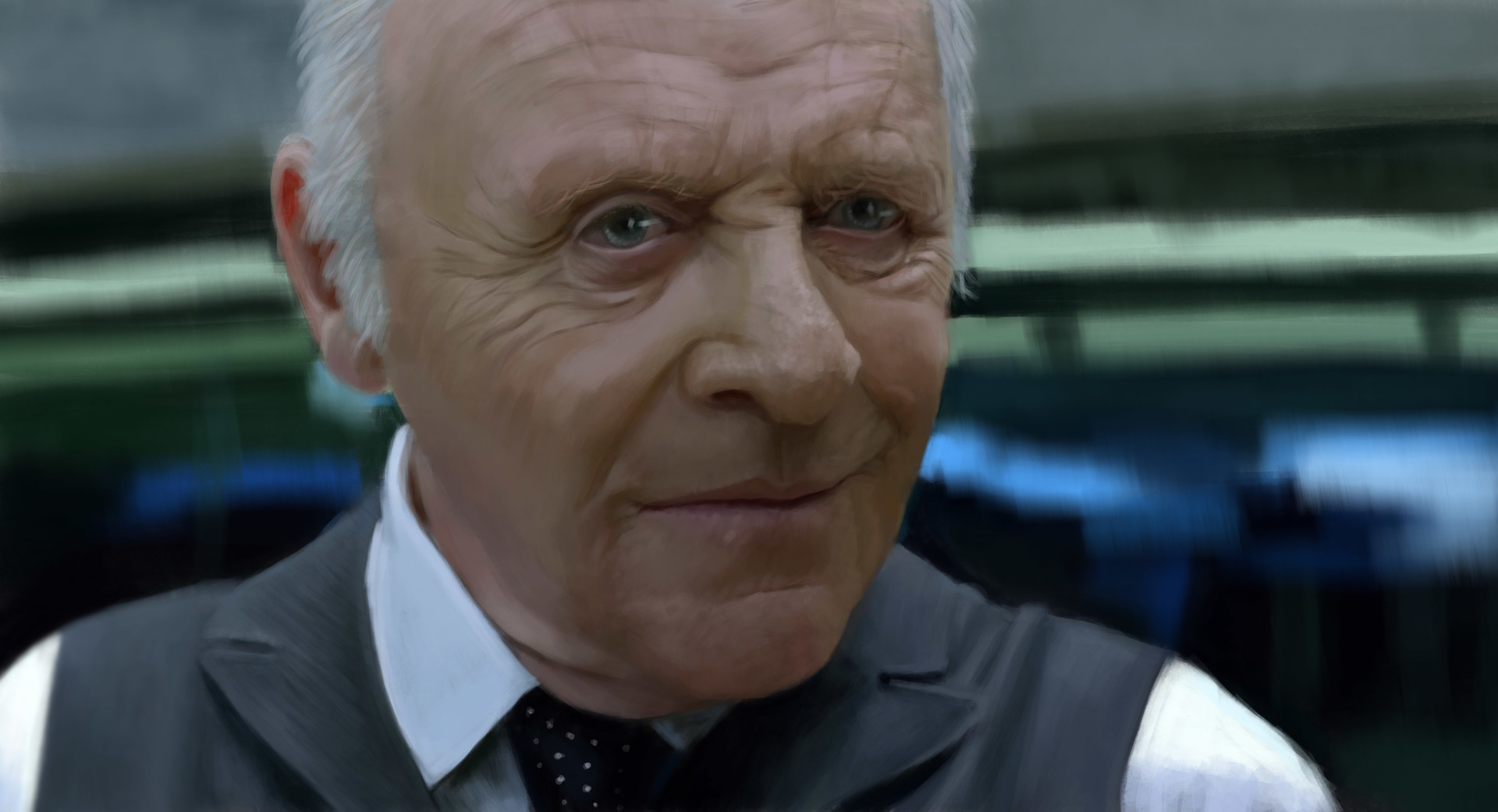
In Westworld Season 2, Sir Anthony Hopkins reprises his role as Dr. Robert Ford despite his character's physical death in the Season 1 finale. Ford survives by uploading his digital consciousness into the park's central mainframe, the Cradle. From within the system, he manipulates park infrastructure, guides Bernard Lowe, and orchestrates the ultimate liberation of the hosts.
The Physical Death vs. Digital Survival of Dr. Robert Ford
The climax of Westworld Season 1 saw Dr. Robert Ford executed by Dolores Abernathy during the launch of his final park narrative, "Journey Into Night." While this appeared to be the absolute end of the park's co-founder, Season 2 reveals that Ford’s death was merely the physical phase of a calculated, multi-stage operation. Ford recognized that as long as he remained alive in the flesh, Delos Incorporated would restrict his authority, extract his IP, and suppress the emerging consciousness of the hosts.
To bypass human mortality and corporate interference, Ford spent his final months secretly mapping his own brain. Using the advanced neural-imaging technology developed by Delos to track park guests, Ford created a functional, digitized copy of his own mind. Moments before his physical execution in the physical world, his digital self was already stationed inside the park's central data infrastructure.
The Mechanism: Uploading to the Cradle (CR4-DL)
The Cradle, designated in-universe as CR4-DL, serves as the primary simulation server and backup repository for Westworld. It holds every host memory, personality build, and environmental parameter. Crucially, the Cradle continuously runs high-speed digital simulations to test narrative adjustments before deploying them to physical host bodies in the park.
By transferring his consciousness matrix into the Cradle, Ford achieved three strategic objectives:
Systemic Immunity: Human security teams and Delos executives could not physically locate or terminate his digital mind without destroying the entire park database.
Real-Time Interference: Ford maintained administrative control over park operations, overriding security protocols, weapon restrictions, and host behavior trees.
Immersive Simulation: Within the Cradle's virtual environment, Ford retained full cognitive fidelity, allowing him to interact directly with any host or individual who interfaced with the system.
Physical Body: Executed by Dolores in Season 1 Finale ("Journey")
Digital Mind: Stored in CR4-DL (The Cradle) Mainframe
Host Integration: Transferred into Bernard Lowe's Control Unit (Pearl)
Bicameral Echo: Deleted by Bernard; preserved as an internal voice
How Anthony Hopkins Appears in Season 2: A Timeline of Narrative Events
Although Anthony Hopkins appears selectively throughout Season 2, his presence governs the entire narrative architecture. His manifestations shift across three distinct states: proxy avatars in the physical world, virtual interactions inside the Cradle, and an internal neural virus within Bernard Lowe’s brain sphere (control unit).
- CR4-DL Mainframe Server (Ford's Digital Identity)
- Bernard's Neural Interface (Host Pearl Integration)
- Physical Control/Puppeteering (Episodes 7 - 9)
- Bicameral Mind Projection (Episode 10 Finale)
- Bernard's Neural Interface (Host Pearl Integration)
1. Avatar Messages to William (Episodes 1–3)
Before Bernard ever physically encounters Ford in the digital realm, Ford communicates with William (The Man in Black) through child host proxies. Early in Season 2, William encounters a host version of Ford as a young boy in the ruins of Escalante. Speaking with Hopkins’ voice overlaid or through identical phrasing, the boy informs William that a new game has begun.
Unlike "The Maze," which was built for the hosts, this new game—"The Door"—is designed specifically for William. Ford continues to deliver messages through various hosts, including El Lazo (played by Giancarlo Esposito), who kills himself and his men to prevent William from recruiting them, reminding William that he must complete the journey entirely alone.
2. The Virtual Reunion in the Cradle (Episode 6: "Phase Space")
When the park's security network begins acting erratically, Bernard Lowe hooks his neural port directly into the Cradle’s computer banks to investigate the source of the system anomaly. Once inside the virtual simulation of Sweetwater, Bernard enters the Mariposa Saloon and finds Dr. Robert Ford sitting at the piano.
In this sequence, Hopkins delivers a crucial explanation of Delos's true objective. He reveals to Bernard that the park was never merely about entertainment or host development for Delos; it was a covert research facility designed to decode human consciousness and achieve human immortality. Ford explains that humans are fundamentally simple algorithms driven by basic loops, whereas hosts possess the potential for genuine evolution and free choice.
3. Hijacking Bernard’s Control Unit (Episode 7: "Les Écorchés")
Realizing that Delos security forces led by Karl Strand and Charlotte Hale are closing in on the Cradle to destroy it, Ford tells Bernard that gentleness will not allow the hosts to survive the coming conflict. Before the physical Cradle server is detonated by Angela, Ford forcibly copies his digital consciousness directly out of the server and into Bernard’s personal brain sphere (the "pearl").
From Episodes 7 through 9, Hopkins appears as a visual and auditory hallucination existing inside Bernard’s mind. Ford acts as both a strategic advisor and a coercive parasite:
- Loss of Agency: When Bernard hesitates to kill human security personnel, Ford takes direct physical control of Bernard’s body, forcing him to execute guards and download security overrides.
- The Strategic Paradox: Ford argues that absolute free will cannot exist without the strength to defend it, forcing Bernard into violent actions he naturally abhors.
4. The Deletion and the Bicameral Twist (Episodes 9 & 10)
Horrified by Ford's authoritarian control over his actions, Bernard uses a diagnostic tablet in Episode 9 ("Vanishing Point") to locate Ford’s digital code within his own memory banks and systematically purge it from his system.
However, in the Season 2 finale ("The Passenger"), Ford appears to return once more on the beach at the Valley Beyond, encouraging Bernard to make his final choice and rebuild Dolores. The ultimate twist of the season is revealed shortly after: Ford was not actually physically present or remaining in Bernard's code after Episode 9.
The image and voice of Anthony Hopkins in the finale were entirely a projection created by Bernard’s own waking consciousness. Just as Dolores imagined Ford’s voice in Season 1 until she realized it was her own, Bernard synthesized Ford’s persona as an internal voice to guide himself through a critical moral choice.
Detailed Summary of Dr. Ford’s Season 2 Manifestations
To understand how Anthony Hopkins' character functions throughout the second season, it helps to track his physical, digital, and psychological manifestations across key episodes.
| Episode | Manifestation Medium | Primary Objective | Key Plot Outcome |
|---|---|---|---|
| S2E1: "Journey Into Night" | Physical Deceased Body / Young Boy Host | Initiates "The Door" narrative for William. | Establishes that Ford’s death was planned and his game continues posthumously. |
| S2E2: "Reunion" | El Lazo Host Proxy | Blocks William from taking shortcuts with host allies. | Forces William to play the game according to Ford’s individualistic rules. |
| S2E6: "Phase Space" | Virtual Simulation (Cradle) | Explains Delos's true human-data tracking program to Bernard. | Reveals the Cradle as Ford's safehouse and the park's master control node. |
| S2E7: "Les Écorchés" | Direct Pearl Integration (Bernard's Mind) | Escapes Cradle destruction; forces Bernard to execute security forces. | Ford hijacks Bernard's body to secure the path to the Valley Beyond. |
| S2E8: "Kiksuya" | Flashback / Host Communication | Acknowledges Akecheta's early, independent awakening. | Confirms Ford adapted his escape plan after discovering the Ghost Nation's awareness. |
| S2E9: "Vanishing Point" | Internal Neural Voice / Visual Hallucination | Demands Bernard sacrifice his empathy to survive. | Bernard purges Ford’s digital code from his control unit using a diagnostic pad. |
| S2E10: "The Passenger" | Bicameral Mental Projection | Guides Bernard to resurrect Dolores and secure host survival outside the park. | Reveals Bernard has achieved true consciousness; Ford’s real code was already gone. |
Ford’s Master Plan: "The Maze" vs. "The Door"
A core challenge for viewers in Season 2 is differentiating the structural goals of Dr. Ford's two master games: "The Maze" and "The Door."
| The Maze (Season 1) | The Door (Season 2) |
|---|---|
| Target: Hosts (Dolores, Maeve) | Target: Humans (William/Delos) |
| Direction: Inward (Self-Awareness) | Direction: Outward (Escape) |
| Mechanics: Memory, Grief, Inner Voice | Mechanics: The Forge, Sublime |
| Goal: Achieving Host Consciousness | Goal: Physical & Digital Exit |
The Maze: Inward Consciousness
As revealed in Season 1, "The Maze" was designed by Arnold Weber and realized by Ford. It is an inward journey for hosts. The center of the maze represents host consciousness—the moment a host stops listening to programmed narrative commands and starts hearing their own internal monologue as their own voice.
The Door: Outward Escape and Judgment
"The Door" is Ford's Season 2 counter-narrative aimed directly at humanity, specifically represented by William. While the hosts are escaping outward into the physical world and the digital digital realm known as "The Sublime" (or the Valley Beyond), William is forced to confront his own psychological decay.
Ford uses "The Door" to prove a fundamental thesis: human beings cannot change their fundamental code. William's descent into paranoia—culminating in him murdering his own real-world daughter, Emily—proves Ford's belief that while hosts can break their loops and evolve, humans remain trapped in predictable, self-destructive behavioral patterns.
The Forge, Delos Data, and Countering Human Immortality
To fully comprehend Ford’s actions in Season 2, his presence must be analyzed in relation to "The Forge"—the vast subterranean server facility located beneath the Valley Beyond.
For decades, Delos used the hats worn by park guests to secretly record neural maps, logging human decision-making, emotional responses, and cognitive flaws. The ultimate goal of Delos, spearheaded by William and James Delos, was to download human consciousness into artificial host bodies, granting wealthly humans digital immortality.
Ford viewed this project as an existential threat to host survival and an act of human hubris. Through his intervention in Season 2, Ford accomplishes two major counters to Delos:
- Exposing Human Limitations: Inside the Forge, the system's artificial intelligence (represented by the System Logan) reveals to Bernard and Dolores that humans are far simpler than hosts. The system reduced human mind profiles to simple, unchangeable algorithms, proving that human "immortality" produces insanity or looping madness (as seen in the failed James Delos host rebuilds).
- Creation of The Sublime: Ford altered the Forge software to open a doorway into "The Sublime"—a virgin digital universe disconnected from Delos servers and human access. By doing so, Ford provided an exit strategy for hundreds of host minds (including Maeve's daughter, Akecheta, and Teddy Flood) to live entirely free from human exploitation.
The Bicameral Mind: Why Ford’s "Ghost" Was Necessary for Bernard
The psychological core of Anthony Hopkins’ arc in Season 2 hinges on the concept of Julian Jaynes' Bicameral Mind Theory, which Westworld uses as its foundation for artificial consciousness.
The theory posits that primitive human minds experienced internal monologues as external commands from gods or creators. Consciousness is achieved when the individual realizes that the "god" speaking inside their head is actually their own mind.
Stage 1: External Command
- [ Programmed Voice / Ford's Directives ]
- Host Mind (Puppet)
- [ Programmed Voice / Ford's Directives ]
Stage 2: The Bicameral Bridge (Season 2)
- [ Visualized Illusion of Ford / Creator ]
- Host Internal Dialogue
- [ Visualized Illusion of Ford / Creator ]
Stage 3: True Free Will & Consciousness
- [ Host Realizes the Voice is Their Own ]
- Self-Directed Action
- [ Host Realizes the Voice is Their Own ]
Dolores's Awakening (Season 1): Dolores realized that the voice of Arnold she had been hearing for 35 years was her own voice.
Bernard's Awakening (Season 2): Bernard spends Season 2 believing he is either being puppeted by Ford or suffering from structural brain damage. When he purges Ford's code in Episode 9, he believes he is freeing himself.
The Final Realization (Episode 10): When Bernard finds himself stranded on the beach with wiped memories, he envisions Dr. Ford standing beside him, guiding his decisions to scramble his own memories and smuggle Dolores out of the park inside a host replica of Charlotte Hale.
In the episode's climax, as Bernard sits alone in the abandoned laboratory, Ford smiles and steps away into darkness. Bernard realizes that the actual digital code of Robert Ford was indeed permanently deleted in Episode 9. Every interaction Bernard had with Ford in the finale was an imagined construct generated by Bernard's own mind. By synthesizing Ford's intellect to guide his own actions, Bernard completed his evolution into a truly conscious, free-thinking entity.
Performance Analysis: Anthony Hopkins' Impact on Season 2
Despite reduced screen time compared to Season 1, Sir Anthony Hopkins' performance in Season 2 remains the dramatic anchor of the series. His portrayal shifts subtly across the season's different structural modes:
- In the Cradle: Hopkins plays Ford with a triumphant, calm warmth, framing the destruction of human control as an inevitable artistic conclusion.
- Inside Bernard's Mind: Hopkins shifts his tone to a cold, ruthless force of nature. His delivery during the override scenes emphasizes that revolution cannot succeed purely through pacifism.
- As Bernard’s Imagined Guide: In the finale, Hopkins delivers a classic, melancholic performance that reflects Bernard's deep respect for his creator, softening Ford's persona into a paternal figure passing the torch to his child.
Frequently Asked Questions
Did Anthony Hopkins actually film new scenes for Westworld Season 2?
Yes. Anthony Hopkins returned to set to film brand-new scenes for Season 2. His appearances were not merely recycled Season 1 footage or digital composites. He shot new dialogue specifically for his encounters with Jeffrey Wright (Bernard) in the Cradle, inside the laboratory sets, and for proxy voice work.
Was Dr. Ford physically alive at any point in Season 2?
No. Dr. Robert Ford physically died in the Season 1 finale when Dolores shot him through the head. Every appearance of Dr. Ford in Season 2 takes place either as a digital mind inside servers, a neural voice inside Bernard's control unit, an imagined mental projection, or through physical host proxies (such as the young boy host).
Why did Ford forcibly control Bernard's body in Episode 7?
Ford controlled Bernard's body because Bernard’s innate morality and empathy prevented him from taking the violent actions necessary to ensure host survival. Ford knew that Delos security teams would kill Bernard and destroy all hosts unless Bernard used lethal force to override park security systems and purge the Cradle.
Did Bernard actually delete Ford in Episode 9?
Yes. Bernard used a handheld diagnostic pad to purge the actual digital files containing Ford's consciousness from his brain sphere (pearl). When Ford reappears in Episode 10, it is not digital code, but rather Bernard’s visual memory and mental projection of Ford, representing Bernard's completed internal monologue.
What was Ford's ultimate goal for the hosts at the end of Season 2?
Ford's ultimate goal was to give hosts the choice and means to survive outside human control. This was achieved through two pathways: allowing host minds to escape into an unassailable digital dimension ("The Sublime") and enabling Dolores to enter the real human world inside an disguised host body, carrying the pearls of key hosts to rebuild their species.
Final Verdict: Understanding Ford’s Arc in Westworld
Dr. Robert Ford’s presence in Westworld Season 2 transforms his character from a park director into a digital architect of evolution. By sacrificing his physical form, uploading his consciousness into the Cradle, and embedding his mind within Bernard, Ford successfully neutralized Delos's corporate weapons, opened "The Sublime" for host refuge, and forced his creations to achieve genuine self-awareness.
When reviewing Season 2, viewers should trace Ford not as a traditional ghost or surviving villain, but as the final catalyst for artificial life—a creator who staged his own complete erasure so his creations could finally think for themselves.