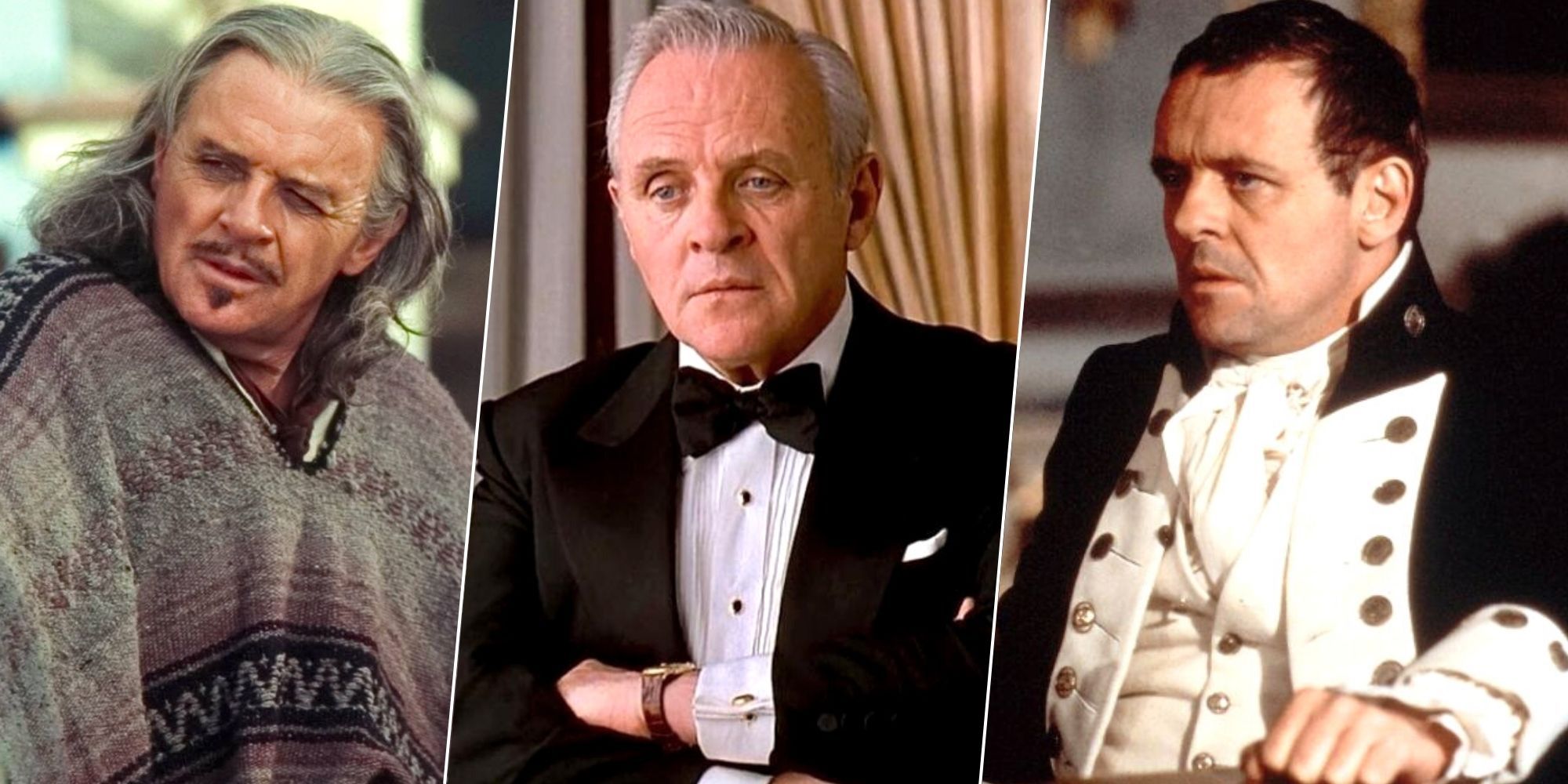
In the 2023 biographical drama One Life, Sir Anthony Hopkins delivers a deeply moving performance as Sir Nicholas Winton, the British humanitarian who organized the rescue of 669 predominantly Jewish children from Nazi-occupied Czechoslovakia on the eve of World War II. Hopkins portrays Winton in his later years, capturing his quiet humility, lingering grief, and profound emotional restraint.
Overview of One Life and Its Historical Foundation
One Life, directed by James Hawes and written by Lucinda Coxon and Nick Drake, brings to the screen the extraordinary true story of Sir Nicholas Winton. Based on the biography If It's Not Impossible... The Life of Sir Nicholas Winton written by Winton's daughter, Barbara Winton, the film chronicles how a young London stockbroker took it upon himself to organize transport, foster homes, and legal visas for refugee children stranded in Prague during late 1938 and early 1939.
The title of the film originates from a line in the Talmud: "Whoever saves one life saves the world entire." This theme echoes throughout the narrative, framing both the vast impact of Winton's rescue operations and the personal burden he carried for the lives he was ultimately unable to save.
The Story of Sir Nicholas Winton and the Czech Kindertransport
In December 1938, 29-year-old Nicholas Winton cancelled a planned skiing holiday in Switzerland to travel to Prague at the request of his friend Martin Blake, who was working with the British Committee for Refugees from Czechoslovakia. Upon visiting refugee camps in the Sudetenland, Winton was stunned by the terrible conditions families faced following the Munich Agreement, which ceded parts of Czechoslovakia to Nazi Germany.
Recognizing the impending danger of a full Nazi occupation, Winton established a makeshift office from his hotel room in Prague. Alongside collaborators like Trevor Chadwick, Doreen Warriner, and his mother Babette Winton back in London, Winton began cataloging thousands of children, securing funding, persuading the British Home Office to grant entry permits, and arranging host families across Great Britain.
Between March and August 1939, Winton's network organized eight trains—collectively known as the Czech Kindertransport—that carried 669 children through Germany and the Netherlands to safety in the United Kingdom. A ninth train, scheduled to depart on September 1, 1939, carrying 250 children, was cancelled when Germany invaded Poland, marking the official outbreak of World War II. Nearly all the children scheduled for that final train perished in the Holocaust.
Dual Timeline Narrative: Young vs. Older Winton
One Life structures its narrative around two distinct time periods:
- ** 1938–1939 (The Rescue Efforts):** Features Johnny Flynn as the energetic, resolute 29-year-old Nicholas Winton working frantically against bureaucratic red tape and mounting Nazi aggression.
- ** 1988 (The Discovery and Reflection):** Stars Sir Anthony Hopkins as the 79-year-old Winton living in Maidenhead, England, attempting to clear out his cluttered study while reflecting on the past.
This dual timeline creates a dialogue between youth and old age. Where Flynn's segment is driven by urgent logistics, race-against-the-clock tension, and youthful idealism, Hopkins' segment provides emotional weight, focusing on memory, grief, and the unexpected rediscovery of his rescue work by the wider public.
Anthony Hopkins' Performance: Subtlety, Guilt, and Quiet Heroism
Anthony Hopkins' portrayal of Sir Nicholas Winton stands as one of the late-career highlights of his acclaimed filmography. Rather than relying on theatrical speeches or overt sentimentality, Hopkins delivers a masterclass in understated acting, conveying decades of unexpressed emotion through small gestures, hesitant pauses, and expressive eyes.
| Key Elements of Hopkins' Performance |
|---|
| • Understated Mannerisms: Captures Winton's modest, matter-of-fact demeanor. |
| • Haunting Survivor's Guilt: Highlights Winton's focus on the 250 unsaved children. |
| • Domestic Restraint: Portrays everyday life alongside his wife Grete (Lena Olin). |
| • Cinematic Authenticity: Reenacts the famed 1988 "That's Life!" BBC TV broadcast. |
Capturing the Weight of Retrospect and Survivor's Remorse
A central conflict in Hopkins' performance is Winton's internal struggle with survivor's guilt. Despite saving 669 lives, the older Winton remains haunted by the fate of the 250 children on the cancelled ninth train. For nearly 50 years, Winton rarely spoke about his wartime achievements, keeping the leather scrapbook containing the names, photos, and documents of the rescued children tucked away in an attic trunk.
Hopkins portrays this silence not as secretive arrogance, but as genuine British modesty paired with painful grief. When his wife Grete (played by Lena Olin) encourages him to clean out his packed study, Winton must confront the physical memory of those events. Hopkins conveys how Winton viewed his actions not as heroic, but simply as something that needed to be done when others turned a blind eye.
The Iconic That's Life! BBC Reenactment
The climax of the film—and the defining moment of Hopkins' performance—recreates the famous 1988 episodes of the BBC television program That's Life!, hosted by Esther Rantzen.
After Winton's scrapbook was brought to the attention of Holocaust researcher Elisabeth Maxwell and media mogul Robert Maxwell, Winton was invited to sit in the studio audience of That's Life!, unaware of the program's true intentions. During the broadcast, Rantzen introduced the scrapbook and revealed that the woman sitting next to Winton in the audience was Vera Gissing, one of the children he had rescued 50 years earlier.
In a later episode, Rantzen asked the studio audience: "Is there anyone in our audience tonight who owes their life to Nicholas Winton?" In one of the most emotional moments in television history, dozens of adults sitting around Winton stood up simultaneously.
Hopkins recreates this iconic moment with delicacy. Instead of explosive crying, Hopkins uses subtle shifts in facial expression—a trembling lip, a tear wiped quickly beneath his glasses, and a bewildered look of gratitude—to show a man finally overwhelmed by the realization of his legacy.
Cast Breakdown and Key Creative Choices
One Life relies on an ensemble cast to depict both the historical rescue mission in Prague and the domestic life of Winton in 1980s England.
| Actor / Actress | Character Roles | Storyline Function |
|---|---|---|
| Sir Anthony Hopkins | Older Nicholas Winton (1988) | Reflects on past, confronts guilt |
| Johnny Flynn | Young Nicholas Winton (1938) | Coordinates Czech Kindertransport |
| Helena Bonham Carter | Babette Winton | Manages London paperwork & visas |
| Lena Olin | Grete Winton | Supports Nicholas in late life |
| Romola Garai | Trevor Chadwick | Manages Prague field operations |
| Jonathan Pryce | Martin Blake (Older) | Reconnects with Winton in 1988 |
| Alex Sharp | Trevor Chadwick (Younger) | Secures transport out of Prague |
| Samantha Spiro | Esther Rantzen | Hosts the BBC "That's Life!" show |
Supporting Performances: Johnny Flynn, Helena Bonham Carter, and Lena Olin
- Johnny Flynn as Young Nicholas Winton: Flynn provides an energetic counterweight to Hopkins' reflective older version. Flynn portrays Winton as an efficient, pragmatic organizer who refuses to accept bureaucratic delay when children's lives are at stake.
- Helena Bonham Carter as Babette Winton: Bonham Carter plays Winton's German-Jewish mother, who had converted to Christianity and settled in Britain. Her performance highlights Babette's stern determination as she badgered British immigration officials to issue entry visas for refugee children.
- Lena Olin as Grete Winton: Olin delivers a grounded, compassionate performance as Nicholas's Danish wife. Grete acts as the anchor in Winton's later life, pushing him to unburden himself of the past and ensuring his historical record is preserved.
Direction and Screenplay Adaptations
Director James Hawes, working with screenwriters Lucinda Coxon and Nick Drake, purposefully avoids over-dramatizing historical events. The film avoids exaggerated villains, choosing instead to focus on the terrifying reality of administrative inertia, looming fascism, and the practical challenges of humanitarian work.
The film's visual design contrasts the gray, claustrophobic atmosphere of occupied Prague in 1938 with the soft, muted hues of suburban Berkshire in 1988. This stark aesthetic difference emphasizes the transition from wartime chaos to quiet retirement, reinforcing Winton's isolation from his own past until the BBC broadcast brought it back to light.
Comparing One Life to Historical Events and Other Holocaust Dramas
While One Life naturally draws comparisons to Steven Spielberg's Schindler's List (1993), the two films differ significantly in scope, tone, and character motivation.
| Feature | One Life (2023) | Schindler's List (1993) |
|---|---|---|
| Primary Subject | Sir Nicholas Winton | Oskar Schindler |
| Operational Setting | Prague / London (Kindertransport) | Poland (Enamelware/Ammunition plant) |
| Protagonist Motivation | Civic duty, humanitarian conviction | Commercial gain turning to rescue |
| Narrative Focus | Bureaucratic effort & late-life memory | Direct survival inside Nazi camp system |
| Tone | Reserved, introspective British drama | Visceral, harrowing historical epic |
| Rescue Numbers | 669 children | Approx. 1,200 adult workers |
Unlike Oskar Schindler, who operated inside the Nazi industrial war machine, Nicholas Winton was a private citizen operating from a country not yet at war. His challenge was largely administrative: cutting through British immigration red tape, raising the required £50 guarantee per child (equivalent to significant funds today), and finding British families willing to take in foreign refugees.
One Life stands out among Holocaust cinema by shifting much of its emotional focus to the aftermath of rescue. It explores how individuals live with historical trauma decades later, emphasizing that saving lives does not instantly erase the grief for those lost.
Critical Reception and Impact of Hopkins' Performance
Upon its premiere at the Toronto International Film Festival (TIFF) in September 2023 and subsequent theatrical releases in 2024, One Life received widespread critical praise, particularly for Hopkins' performance.
Box Office and Festival Response
Critics widely hailed Hopkins for his restraint, noting that a story so primed for emotional manipulation was elevated by his refusal to overplay the sentimentality. Writing for major publications, reviewers emphasized that Hopkins' performance transformed what could have been a standard television-style biopic into an affecting character study.
The film performed strongly at the international box office, particularly in the United Kingdom, Australia, and North America, drawing audiences interested in WWII history, biographical cinema, and Hopkins' late-career work following his Oscar-winning role in The Father (2020).
Legacy of Nicholas Winton and the "Czech Kindertransport"
Before the 1988 BBC broadcast, Nicholas Winton's work was virtually unknown to the general public. Following his rediscovery:
- Winton was knighted by Queen Elizabeth II in 2003 for services to humanity.
- He received the Order of the White Lion (Czech Republic's highest honor) in 2014.
- Statues of Winton were erected at Prague Main Station and Maidenhead Railway Station.
- Sir Nicholas Winton passed away in July 2015 at the age of 106.
One Life serves as a cinematic monument to Winton's legacy, ensuring that the stories of the 669 children—often referred to as "Nicky's Children"—and their thousands of descendants continue to be recognized worldwide.
Frequently Asked Questions
Did Anthony Hopkins meet the real Sir Nicholas Winton?
No, Anthony Hopkins did not meet Sir Nicholas Winton in person, as Winton passed away in 2015 at the age of 106, several years before production on One Life began. However, Hopkins studied extensive archival footage, audio recordings, and TV interviews—including the original That's Life! broadcasts—to master Winton's vocal cadence, body language, and subtle mannerisms.
How accurate is One Life to the actual historical events?
One Life is highly accurate to historical events. The film closely follows the biography written by Winton's daughter, Barbara Winton. Key details—such as the hotel room headquarters in Prague, the £50 bond required by the British government per child, the assistance of Babette Winton and Trevor Chadwick, and the tragic fate of the September 1, 1939 train—are depicted accurately according to historical records.
Were real descendants of the rescued children used in the movie?
Yes. During the recreation of the famous 1988 BBC That's Life! television audience scene, the production casting team invited actual children saved by Winton, as well as their real-life children and grandchildren, to sit in the studio audience alongside Anthony Hopkins. This detail added profound real-world resonance to the filming of those scenes.
What is the origin of the title One Life?
The title One Life comes from a traditional passage in the Talmud: "Whoever saves one life saves the world entire." This quote highlights the exponential impact of Winton's actions; the 669 children he saved grew up to have children, grandchildren, and great-grandchildren, resulting in thousands of lives existing today because of his intervention.
Where can viewers watch One Life?
As of 2026, One Life is widely available across major digital video-on-demand (VOD) platforms for rental or purchase, including Amazon Prime Video, Apple TV, and Google TV. Depending on your geographic region, it is also available on major subscription streaming services such as Starz, Peacock, or local public broadcasting platforms. Physical media releases (Blu-ray and DVD) are available through major retailers.
Final Recommendation: Why Anthony Hopkins' Role in One Life Matters
For viewers interested in historical dramas, World War II history, or masterclasses in acting, One Life is essential viewing. Anthony Hopkins provides a poignant portrait of quiet heroism, demonstrating how moral courage does not always require grand gestures—sometimes it simply requires ordinary people refusing to remain passive in the face of human suffering.
To gain a deeper understanding of the story beyond the film, consider reading Barbara Winton's biography, If It's Not Impossible... The Life of Sir Nicholas Winton, or viewing the original 1988 BBC That's Life! archival clips available through the BBC Archives.