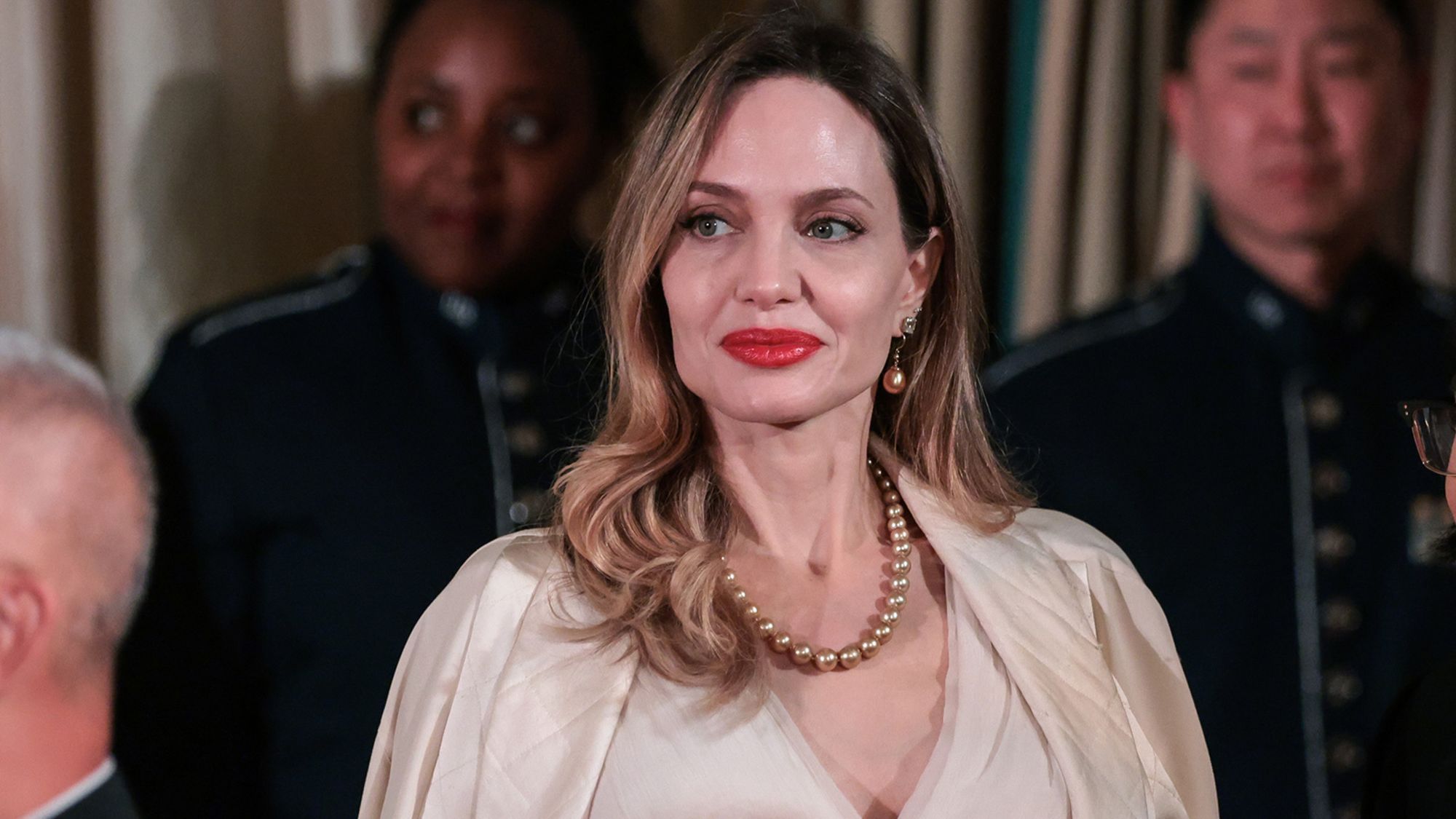
Angelina Jolie has maintained a consistent and highly public position regarding the situation in Palestine, focusing primarily on the humanitarian crisis, the protection of civilian lives, and the necessity of adherence to international law. Her advocacy, expressed through personal statements, social media, and long-standing work with international humanitarian organizations, centers on the rights of children and the immediate need for a ceasefire to prevent further loss of life.
The Evolution of Humanitarian Advocacy
Angelina Jolie’s involvement in global humanitarian issues spans over two decades. Her transition from an award-winning actress to a dedicated activist began in the early 2000s, primarily through her work with the United Nations High Commissioner for Refugees (UNHCR). During her tenure as a Goodwill Ambassador and later as a Special Envoy, she visited dozens of conflict zones, witnessing the direct impact of war on displaced populations.
This background is essential to understanding her commentary on Palestine. For Jolie, the "Palestine issue" is not framed through a purely political or binary lens but is consistently addressed through the lens of international humanitarian law. Her language emphasizes the universality of human rights, arguing that civilian protection is a non-negotiable obligation for all parties involved in an armed conflict.
Analysis of Public Statements and Social Media Engagement
Jolie’s most definitive public interventions regarding the conflict—particularly following the escalation of hostilities in October 2023—have been characterized by a call for systemic humanitarian action. In her public communications, she has frequently cited the scale of the destruction in Gaza as an unprecedented failure of the international community to protect innocent lives.
Her advocacy can be categorized into several recurring themes:
- The Humanitarian Catastrophe: She has frequently highlighted the lack of basic necessities, including food, water, and medicine, framing the humanitarian crisis as a manufactured outcome of the conflict.
- The Rights of Children: As a mother and a long-term advocate for child rights, Jolie often shifts focus toward the specific trauma and casualties suffered by children in conflict zones, labeling the death toll as a tragedy that cannot be justified by any military objective.
- Criticism of International Inaction: She has directed pointed criticism at world leaders, suggesting that the failure to demand a ceasefire makes global powers complicit in the worsening conditions.
Legal and Humanitarian Frameworks
When examining Jolie’s stance, it is important to distinguish between political opinion and humanitarian legal advocacy. Her statements typically reference the Geneva Conventions and the responsibilities of states to protect non-combatants. By grounding her position in international law, she aligns herself with the findings of various human rights watchdogs and international relief agencies.
She has specifically drawn attention to the concept of collective punishment, arguing that the restricted access to aid and the destruction of civilian infrastructure constitute violations of international law. This technical framing is designed to move the discourse beyond ideological disagreement and toward the legal obligations of belligerents and the responsibilities of the international community under the Rome Statute and related frameworks.
Comparison of Key Humanitarian Positions
The following table outlines the key focal points of Jolie’s advocacy in the context of the Gaza conflict compared to her broader humanitarian work.
| Focus Area | Context in Palestine/Gaza | Strategic Approach |
|---|---|---|
| Civilian Protection | High density of population and limited evacuation zones. | Demanding an immediate ceasefire. |
| Aid Delivery | Restricted access and blockade conditions. | Advocacy for unconditional humanitarian corridors. |
| International Law | Alleged violations of humanitarian standards. | Referencing established international legal statutes. |
| Long-term Impact | Generational trauma and infrastructure collapse. | Calling for accountability and international oversight. |
The Role of Public Influence
Jolie’s stature as a globally recognized figure allows her to bypass traditional media gatekeepers, utilizing her social media platforms to reach millions. This has sparked significant debate. Critics of her stance often argue that her comments oversimplify a complex, multi-layered geopolitical conflict. Conversely, her supporters argue that her ability to draw mass-market attention to the humanitarian situation creates necessary pressure on policymakers who might otherwise ignore the severity of the crisis.
Her advocacy also highlights a shift in how celebrities use their platforms to engage with foreign policy. Rather than providing a "both-sides" diplomatic approach, her recent rhetoric has been marked by a shift toward moral urgency. This is a departure from her earlier, more neutral work as a UNHCR envoy, signaling an evolution in her activism toward more explicit, justice-oriented rhetoric.
Challenges and Criticisms
It is essential to acknowledge that Jolie’s views on Palestine have faced scrutiny from various political factions. Those who argue that her perspective ignores the security concerns of the State of Israel view her advocacy as one-sided. Jolie has addressed these criticisms by maintaining that her primary concern is the protection of life on both sides, though her most vocal criticisms have been directed at the specific military actions currently impacting Gaza.
The difficulty in navigating this topic lies in the extreme polarization surrounding the region. For a figure of her profile, any statement is immediately interpreted as a political endorsement, even when that statement is framed in the language of universal human rights. Her refusal to step back from these statements suggests a deliberate decision to prioritize her humanitarian convictions over the preservation of an apolitical public image.
Addressing Common Questions
To better understand the nuances of this subject, it is helpful to look at the most common inquiries regarding her advocacy.
Did Angelina Jolie resign from her UNHCR role because of the Palestine issue? Jolie stepped down as the UNHCR Special Envoy in late 2022. While her departure coincided with a period of intense global conflict, she stated at the time that she wanted to work differently, seeking to engage more directly with refugees and local organizations rather than working within the constraints of a major international body.
How does her stance compare to other public figures? Jolie’s approach is distinct in its focus on the language of international law. While many celebrities have opted for symbolic support, Jolie consistently produces long-form statements that interrogate the legal failures of the international community.
What is the core of her message regarding the civilian population? Her central argument is that no amount of geopolitical disagreement justifies the starvation, displacement, or mass killing of civilian populations. She treats humanitarian aid as an entitlement of existence rather than a diplomatic negotiation point.
Has she proposed a solution to the conflict? Jolie generally avoids prescribing political borders or governance models, as those are the domains of diplomats. Her "solution" is almost exclusively focused on the cessation of hostilities and the fulfillment of basic humanitarian mandates.
Practical Implications of Her Advocacy
For those studying the impact of celebrity advocacy, Jolie represents a study in the power of moral authority. Her engagement serves to validate the concerns of those who feel the mainstream media coverage has been insufficient. Furthermore, her influence has arguably helped keep the humanitarian crisis at the forefront of the news cycle, forcing media outlets to dedicate space to the specifics of aid distribution and legal interpretations of the war.
Her actions highlight a broader trend in 2026: the increasing expectation for high-profile individuals to use their platform as a mechanism for international accountability. For students of political science or communications, her work on the Palestine issue provides a clear example of how personal branding and international law can intersect in the digital age.
Next Steps for Research and Engagement
Those interested in exploring this topic further should prioritize the following actions:
- Review Official Statements: Consult primary sources, such as her verified social media posts and official press releases from her production or humanitarian offices, to ensure you are reading her exact words rather than second-hand interpretations.
- Monitor Humanitarian Reporting: Cross-reference her claims with reports from organizations like the Office for the Coordination of Humanitarian Affairs (OCHA) to understand the technical data behind the humanitarian claims she highlights.
- Analyze the Legal Arguments: Research the specific articles of the Geneva Conventions she references to understand the legal foundations of her advocacy.
By focusing on these primary materials, one can move past the noise of social media commentary and gain a grounded, fact-based understanding of Angelina Jolie’s perspective on the Palestine issue. Her influence remains a notable aspect of the public dialogue, serving as a reminder of the enduring tension between high-profile activism and the realities of geopolitical conflict.