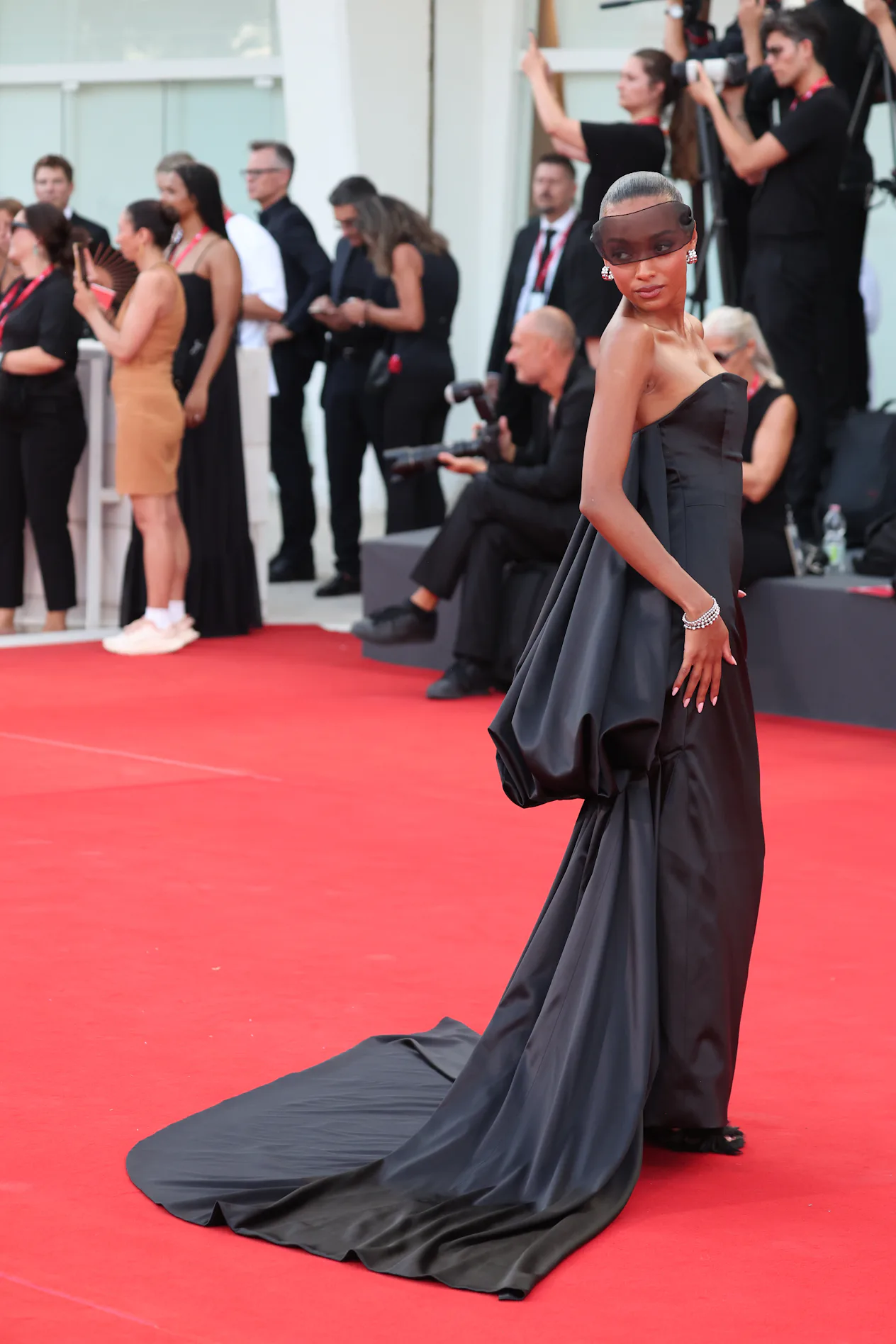
Angelina Jolie’s attendance at the 81st Venice International Film Festival in 2024 marked a significant moment in cinema, centered on the premiere of her biographical film Maria. Her presence revitalized the festival's red carpet, drawing massive crowds and underscoring her enduring status as a globally influential figure in both acting and international advocacy.
The Context of the 81st Venice International Film Festival
The Venice International Film Festival, organized by La Biennale di Venezia, is one of the "Big Three" film festivals alongside Cannes and Berlin. Held annually on the Lido di Venezia, the festival serves as a premier launchpad for global cinema, particularly for projects aiming for awards-season recognition.
In 2024, the festival returned with its characteristic blend of high-concept auteur cinema and major Hollywood spectacles. The 81st edition was characterized by intense anticipation for films featuring A-list talent, and Angelina Jolie’s return to the festival circuit served as a cornerstone of the event’s prestige. Her arrival was not merely a personal appearance; it acted as a barometer for the industry's focus on the biopic genre and the continued commercial viability of prestige dramas in a changing theatrical landscape.
Angelina Jolie and the Premiere of Maria
The primary driver of the buzz surrounding Jolie at the 2024 festival was the world premiere of Maria, a biographical drama directed by Pablo Larraín. In the film, Jolie portrays the legendary opera singer Maria Callas during the final days of her life in 1970s Paris.
Larraín, known for his work on Jackie (2016) and Spencer (2021), has developed a reputation for dissecting the lives of iconic women during their most vulnerable or transitional moments. By choosing Jolie for the role of Callas, the production created a convergence of two global icons. The film explores the intersection of Callas’s public persona and her private isolation, a theme that critics noted resonated with the intensity of Jolie’s own experience under the global spotlight.
The premiere at the Sala Grande was a high-profile affair, receiving an extended standing ovation. This response underscored the technical rigor Jolie brought to the role, particularly her vocal training to capture the essence of an opera diva, and cemented Maria as a major contender in the year’s awards cycle.
Red Carpet Influence and Cultural Impact
Beyond the cinematic contribution, the festival was a display of fashion and star power. The "star-studded" nature of the event was amplified by the presence of high-profile actors, directors, and industry titans, but Jolie’s red carpet appearances were singled out for their influence.
Her fashion choices, often minimalist yet dramatic, utilized the historical architecture of Venice as a backdrop. For the industry, this visibility is essential. The festival operates as a massive marketing machine where public image directly correlates to the perceived value of a film. When a figure of Jolie’s stature participates, it generates organic media coverage that spans traditional press and digital social platforms, effectively providing millions of dollars in marketing exposure for the film.
Comparison of Key Festival Elements
To understand the scale of the 2024 festival, it is useful to look at the factors that contributed to its success compared to general international film festival standards.
| Factor | Venice Film Festival 2024 Relevance | Industry Impact |
|---|---|---|
| Premiere Type | World Premiere (Global Debut) | High, drives critical consensus |
| Star Presence | High (Including Angelina Jolie) | Crucial for media circulation |
| Awards Trajectory | Significant (Academy Award precursor) | Sets tone for spring awards |
| Critical Focus | Auteur-driven biographies | Validates niche artistic choices |
The Mechanics of the Festival Experience
For those following the festival from an outside perspective, the "star-studded" label often obscures the rigorous technical and logistical operations required to run such an event. The Venice Film Festival is held primarily at the Palazzo del Cinema. For attendees and industry professionals, the experience is defined by a strict hierarchy of access:
- Press Accreditation: Journalists and critics are granted access based on their publication's reach and thematic focus.
- Industry Accreditation: Buyers, agents, and producers use the festival to negotiate distribution rights.
- The Red Carpet Protocols: Access to the red carpet is highly controlled. The arrival of talent like Angelina Jolie involves precise choreography between film security, publicists, and event coordinators to manage the throng of photographers and fans.
- Press Conferences: These sessions allow the media to engage with the cast and director, clarifying the artistic intent behind the film. For Maria, this provided a venue for Jolie to discuss the preparation required for such a demanding vocal role.
Technical Depth: The Biopic Genre in 2024
The success of Maria highlights a broader trend in 2024 filmmaking: the "deconstructionist biopic." Unlike traditional biographical films that move chronologically through a subject's life, films like Maria focus on a specific, dense temporal window.
From an industry standpoint, this format is highly efficient for performance-based awards. It requires the lead actor to carry the film almost entirely on their own, allowing for a concentrated "actor’s showcase." For Jolie, this role represented a pivot from the action-oriented or ensemble roles of her earlier career into a more internal, psychologically complex territory. Analysts pointed to this as a strategic career move, establishing her capability to lead high-stakes, character-driven dramas that appeal to both critics and niche audiences.
Addressing Common Questions
How does an appearance at the Venice Film Festival affect a film's distribution? A strong reception at Venice—particularly a long standing ovation—acts as a stamp of approval for international distributors. It signifies that the film has cultural cachet, making it easier to secure theatrical releases in major markets like North America, Europe, and Asia.
Why was Angelina Jolie’s role in Maria considered a technical challenge? The role required Jolie to sing using the actual voice of Maria Callas in certain sequences, requiring months of intense vocal training. This level of dedication is frequently recognized by award bodies as a benchmark of excellence, distinct from mere character acting.
What is the significance of the "Sala Grande" for films like Maria? The Sala Grande is the main theater at the Venice Film Festival. Premiering a film here is the ultimate validation for a director and cast. It ensures the film is screened in the best possible technical conditions, which is vital for films that rely on sound design and cinematography—essential for an opera-centric film.
How do celebrities manage the high-pressure environment of the festival? Celebrities are supported by teams consisting of publicists, stylists, and security detail. The festival experience is not merely an appearance; it is a series of promotional obligations, including photo calls, round-table interviews, and galas, all performed under a strict timeline.
What does the 2024 festival schedule tell us about industry trends? The 2024 schedule demonstrated that the festival remains committed to the "prestige" model. Even with the rise of streaming, the festival continues to be the primary platform for theatrical-first films, showing that there is still a significant market for big-screen drama.
Looking Beyond the Spotlight
While the public sees the red carpet glamour, the 2024 Venice Film Festival was fundamentally a business operation. The presence of figures like Angelina Jolie provided the necessary draw to keep the focus on traditional film exhibition. The success of her performance in Maria served to prove that there remains a strong appetite for high-quality, singular performances that challenge the boundaries of the biopic genre.
For filmmakers and industry observers, the event was a reminder that festivals like Venice are not just about the films shown, but about the ecosystem of talent that sustains the cinematic medium. As the industry moves forward, the template established by the 2024 festival—combining high-concept artistic storytelling with the powerful drawing force of global icons—will likely remain the benchmark for success in international cinema.
Recommendation for Further Engagement
For readers looking to engage deeper with the outcomes of the 2024 Venice Film Festival, it is recommended to review the post-festival critical analysis provided by the official La Biennale di Venezia archives. These records provide a clearer picture of which films moved from the festival to wider distribution and which performances garnered subsequent critical awards. Following the specific distributors of films like Maria will also offer insight into how prestige films are marketed to global audiences in the current economic environment.