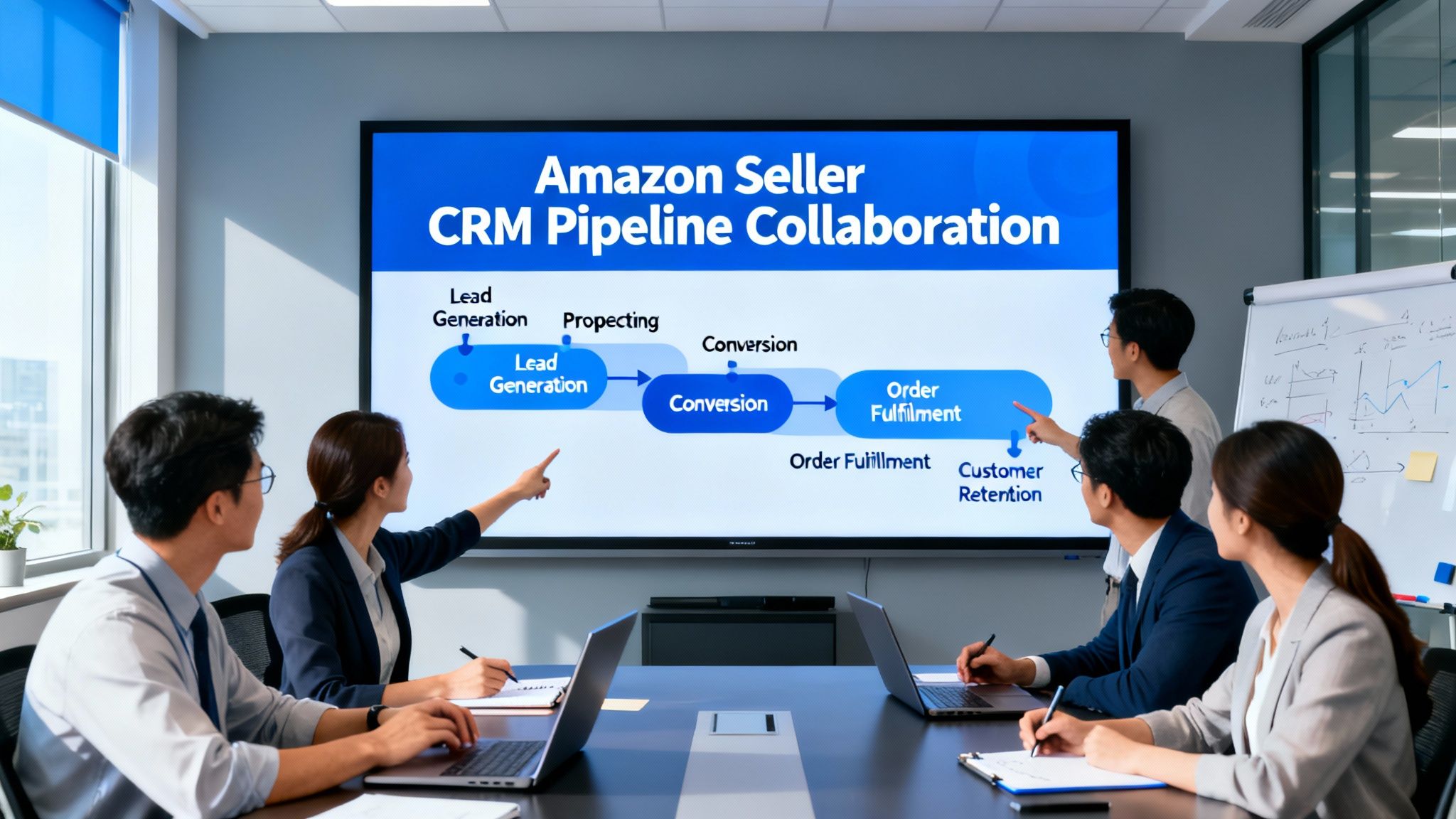
In 2026, Amazon and Facebook email CRM software serves as a vital bridge for e-commerce brands, enabling the synchronization of customer data from Meta Lead Ads and Amazon Seller Central into a unified dashboard. These systems allow sellers to capture off-platform leads, automate post-purchase follow-ups, and build a proprietary audience while remaining compliant with strict marketplace communication policies and global data privacy regulations.
Understanding the Synergy Between Amazon Sales and Facebook Marketing
For the modern e-commerce entrepreneur, the term "Amazon and Facebook email CRM software" (often searched with the common "Faceboom" typo) refers to a specialized category of marketing technology. This software is designed to solve the "Walled Garden" problem. Historically, Amazon has restricted seller access to customer contact information, such as personal email addresses, to maintain control over the customer experience. Simultaneously, Facebook (Meta) provides powerful targeting tools but requires a destination to capture user data.
A specialized CRM (Customer Relationship Management) system for these platforms acts as an intermediary. It allows brands to run Facebook Ads that lead to a landing page where a customer exchanges their email for a coupon code or warranty registration. Once that email is in the CRM, the software tracks whether that customer eventually completes a purchase on Amazon. This integration is essential for building a brand that exists independently of a single marketplace, providing a "safety net" of first-party data.
In 2026, this synergy is more critical than ever. With the total phase-out of third-party cookies across all major browsers, the ability to collect and utilize first-party data—information given directly by the customer—is the only way to maintain high-precision targeting on Facebook while scaling an Amazon business.
Essential Features of a Modern E-commerce CRM
When evaluating software that claims to integrate Amazon and Facebook workflows, certain technical capabilities are non-negotiable. The landscape has shifted from simple list-building to complex, AI-driven automation.
Multi-Channel Data Attribution
The CRM must be able to link a Facebook Ad click to an Amazon order ID. In 2026, this is primarily achieved through Amazon Attribution API integration. The software generates unique tracking tags that follow the user journey. Without this, you are "flying blind," unable to determine which ad creative actually resulted in a sale on the Amazon platform.
Automated Review Management
While Amazon has strict rules regarding "Review Manipulation," the right CRM helps you stay within the lines. Modern software uses the Amazon Selling Partner API (SP-API) to trigger the official "Request a Review" button automatically. This ensures you are not sending prohibited marketing language in your review requests, which could lead to account suspension.
Advanced Audience Segmentation
A high-quality CRM allows you to segment your Facebook-acquired leads based on their Amazon buying behavior. For example, you can create a segment for "Customers who bought a coffee machine on Amazon but haven't bought filters in 30 days." You can then sync this segment back to Facebook as a Custom Audience to show them highly relevant ads, or trigger an automated email sequence.
Navigating Amazon’s Policy Landscape for Email Communication
One of the most significant challenges in using CRM software with Amazon is the Communication Guidelines. As of 2026, Amazon continues to limit the types of messages sellers can send to buyers through the Buyer-Seller Messaging service.
- Permitted Messages: You can send "Necessary" messages regarding order fulfillment, delivery issues, or requests for missing information.
- Prohibited Content: You cannot include links to your own website, marketing or promotional messaging, or incentives for reviews (like discounts or gift cards).
The CRM software navigates this by focusing on off-Amazon communication. By capturing the email via a Facebook Lead Ad or a product insert (QR code) that leads to a warranty registration page, the customer becomes your customer, not just Amazon's. At this point, the restrictive Amazon policies no longer apply to those specific email communications, provided you comply with standard anti-spam laws like CAN-SPAM and the GDPR.
Top CRM Software Options for Amazon and Facebook Sellers
The market in 2026 features a mix of broad-market CRM giants and niche e-commerce tools. The choice depends largely on the scale of your operation and your technical expertise.
| Software Name | Best For | Key Integration Feature | Pricing (2026 Est.) |
|---|---|---|---|
| Klaviyo | Advanced Email Automation | Direct Amazon SP-API and Meta Ads Manager sync. | $45/mo (starts at 1k contacts) |
| Helium 10 (Alta) | Amazon-First Sellers | Integrated "Request a Review" automation and landing pages. | Included in Platinum/Diamond plans |
| HubSpot | Enterprise Brands | Deep CRM history with sophisticated Facebook Lead Ad mapping. | $800/mo+ for Professional tier |
| Gorgias | Customer Support CRM | Syncs Amazon order history with Facebook Messenger queries. | $50/mo (basic tier) |
| ManyChat | Chatbot Integration | Bridges Facebook Messenger leads to Amazon discount delivery. | $15/mo (Pro version) |
Klaviyo: The Data Powerhouse
Klaviyo has solidified its position as the leader for brands that want to own their data. Its 2026 updates include enhanced AI "Predictive Analytics," which can forecast the Lifetime Value (LTV) of a customer acquired via Facebook before they even make their second Amazon purchase.
Helium 10: The Amazon Specialist
For sellers who spend 90% of their time within the Amazon ecosystem, Helium 10’s CRM tools are often the most convenient. They offer "Portals," which are pre-built landing page templates designed specifically to capture Facebook traffic and funnel it to Amazon, automatically handling the email capture and coupon distribution.
Technical Prerequisites and API Configuration
Integrating these platforms is not a "one-click" process. It requires proper configuration of APIs (Application Programming Interfaces) to ensure data flows securely and accurately.
- Amazon Selling Partner API (SP-API) Authorization: You must grant your CRM software permission to access your Seller Central data. This allows the CRM to see when an order is placed, shipped, or returned.
- Meta Conversions API (CAPI): Since traditional browser pixels are less reliable in 2026, most CRMs now require a server-to-server connection. When someone signs up for your email list via a Facebook ad, the CRM sends a signal back to Meta's servers to confirm the conversion.
- Webhook Configuration: To get real-time updates (e.g., an email being sent the moment a customer signs up), you must ensure your CRM supports webhooks. This prevents delays that could lead to a poor customer experience, such as a customer waiting 20 minutes for a discount code they were promised in an ad.
Implementing a Cross-Channel Strategy: From Facebook Ad to Amazon Sale
To successfully use Amazon and Facebook email CRM software, follow this standard operational workflow:
Step 1: The Lead Magnet
Create a Facebook Lead Ad. Instead of sending users directly to an Amazon listing (where you can't track them well), offer a "Lead Magnet." This could be a 20% discount code, a free "Usage Guide" PDF, or an extended warranty. The user provides their email address directly within the Facebook interface.
Step 2: The CRM Capture
The CRM software automatically pulls that email from Facebook. It sends an immediate "Welcome" email containing the Amazon discount code and a link to the product listing. This link should be an Amazon Attribution link so you can track the result.
Step 3: The Purchase Sync
When the customer uses that code on Amazon, the Amazon SP-API notifies your CRM that "Order #123" has been placed by a user matching that attribution tag. The CRM then moves that user from the "Prospect" list to the "Customer" list.
Step 4: Post-Purchase Automation
Seven days after the Amazon delivery date (tracked via the CRM), the software triggers an automated email. This email can provide value (e.g., "How to clean your new product") and, if the user opted in, a polite request to share their experience on Amazon using the official "Request a Review" link.
The Cost of Integration: Budgeting for 2026
Operating a high-level CRM stack for Amazon and Facebook involves several cost centers. Sellers should budget not just for the software licenses, but for the "data tax" of moving information between platforms.
- Software Subscriptions: A mid-tier setup (Klaviyo + Helium 10) typically costs between $150 and $300 per month.
- Ad Spend: Facebook Ads require a consistent budget to "feed" the CRM with new leads. In 2026, the average Cost Per Lead (CPL) for high-quality e-commerce emails ranges from $1.50 to $4.00, depending on the niche.
- Middleware Fees: If your chosen CRM doesn't have a native integration, tools like Zapier or Make.com might be needed to connect the APIs. These can add $20–$50 to your monthly overhead.
Troubleshooting Common Sync Issues
Even with the advanced technology available in 2026, data discrepancies can occur.
- Attribution Gaps: Sometimes Amazon does not report a sale back to the CRM. This often happens if the customer clears their cache or uses a different device to complete the purchase. Most experts suggest a 10-15% "dark social" margin where sales happen but aren't tracked.
- API Throttling: If you are sending thousands of requests per hour, Amazon may "throttle" your connection. Ensure your CRM is configured to handle large batches of data during high-traffic events like Prime Day or Black Friday.
- Email Deliverability: Because your emails are sent from a CRM and not Amazon's servers, you must properly configure your DKIM and SPF records on your domain. If not, your "Welcome" emails with the discount codes will end up in the spam folder, leading to high ad costs and zero sales.
Frequently Asked Questions
Can I export my Amazon customer list directly into a CRM?
No. Amazon does not provide customer email addresses in their standard reports to protect buyer privacy. To get Amazon customers into your CRM, you must use external methods like Facebook Ads, landing pages, or product inserts that encourage customers to sign up for your own mailing list voluntarily.
Is it legal to use Facebook data for Amazon marketing?
Yes, as long as you comply with Meta's terms and privacy laws like the GDPR or CCPA. When a user submits their email through a Facebook Lead Ad, they are explicitly giving you permission to contact them. You can then use that information to direct them to your Amazon store.
Does Amazon penalize sellers for using external CRM software?
Amazon does not penalize the use of CRMs for managing off-platform marketing. However, they do penalize sellers who use that data to send prohibited messages through the Amazon Buyer-Seller Messaging system. As long as your marketing emails are sent through your CRM (using your own email service provider) and not through Amazon’s system, you are safe.
How do I handle "Faceboom" or Facebook Lead Ad errors in my CRM?
If leads are not appearing in your CRM from your Facebook ads, the most common culprit is an "App Permission" error in the Meta Business Suite. Ensure that your CRM has been granted "Lead Access" in the integrations settings of your Facebook Business page.
What is the most important metric to track in an Amazon CRM?
The most important metric is Customer Acquisition Cost (CAC) vs. Lifetime Value (LTV). The CRM allows you to see how much you spent on Facebook ads to get one customer and how many times that customer returns to buy from you on Amazon over 12 months.
Practical Recommendation and Next Actions
To successfully implement an Amazon and Facebook email CRM strategy in 2026, start by auditing your current customer journey. Do not attempt to sync everything at once.
First, select a CRM that offers a native Amazon SP-API integration (like Klaviyo or Helium 10) to minimize technical friction. Second, set up a simple Facebook Lead Ad campaign offering a "Digital Bonus" for your top-selling product. Third, monitor the "Open Rate" of your automated welcome emails; if it is below 40%, adjust your subject lines or check your domain authentication settings. By building this "owned" audience, you insulate your business against future Amazon algorithm changes and rising ad costs.