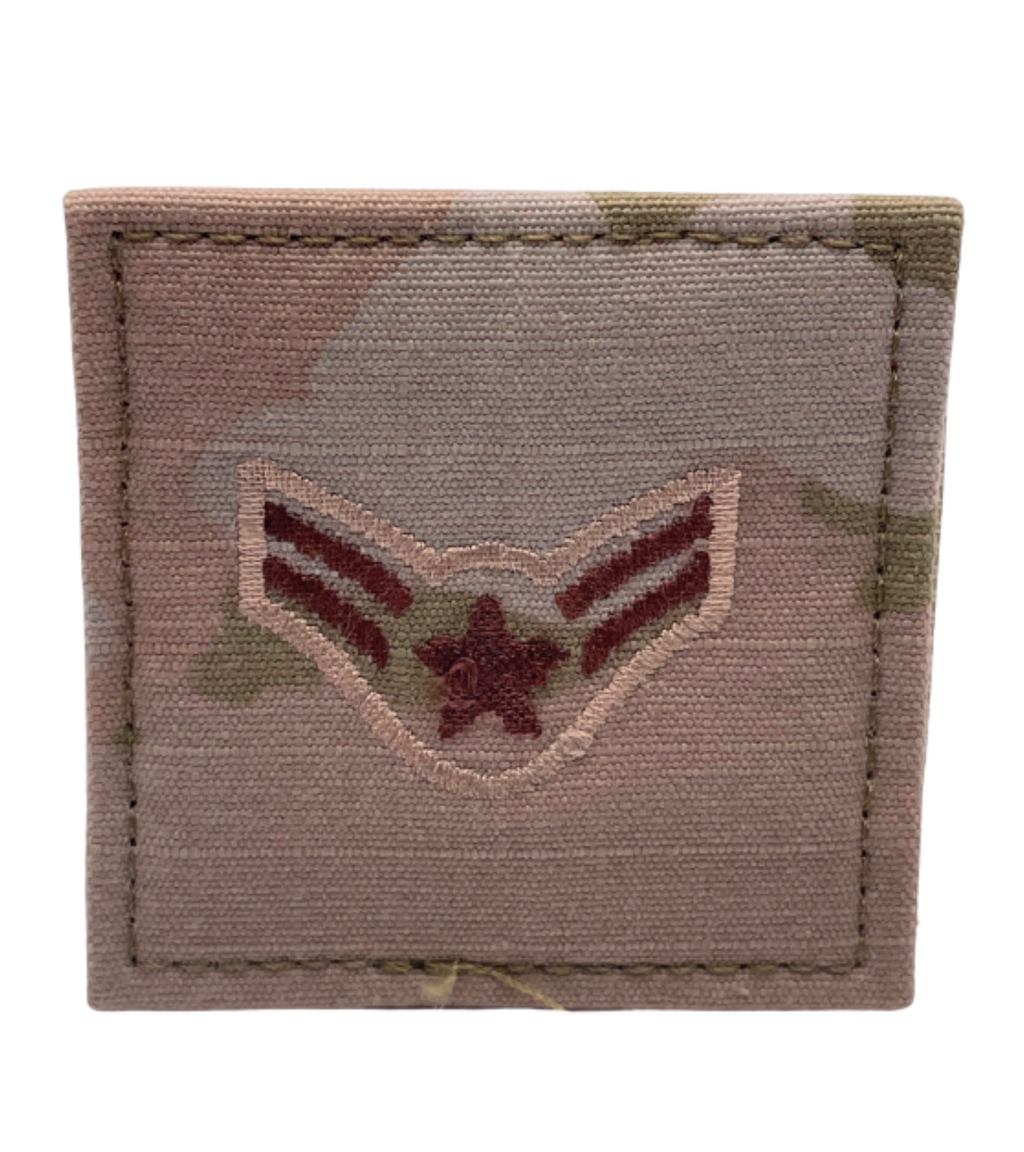
An Airman First Class (A1C) is the third enlisted rank (E-3) in the United States Air Force and the United States Space Force. This rank marks a critical transition from the entry-level learning phase to becoming a skilled technician. Airmen First Class are expected to master their specific job skills while adhering to the highest standards of military conduct and beginning to mentor their junior peers.
In the hierarchy of the Air Force, the A1C rank sits above Airman (E-2) and below Senior Airman (E-4). As of 2026, the Air Force continues to place significant weight on this rank as the "backbone of the junior enlisted tier," where the bulk of technical proficiency is developed. While an Airman Basic (E-1) and Airman (E-2) are primarily focused on learning how to be a member of the military, the Airman First Class is the level where the Airman is expected to contribute meaningfully to the mission of their respective unit.
The Significance of the E-3 Pay Grade
The E-3 pay grade is a pivotal point in an Airman’s first term of enlistment. At this stage, the individual has typically completed Basic Military Training (BMT) and their initial Technical School. They have moved from the controlled environment of a training wing to an operational squadron, where their actions have a direct impact on aircraft maintenance, cyber security, medical support, or any of the hundreds of Air Force Specialty Codes (AFSCs).
Reaching the rank of A1C is not merely a matter of time in service; it represents a level of trust. The Air Force views an A1C as someone who has demonstrated the maturity to handle more complex equipment and responsibilities. While they still operate under the supervision of Non-Commissioned Officers (NCOs), they are often given the autonomy to complete tasks independently once they have achieved their 5-level (Journeyman) rating.
Paths to Attaining the Rank of Airman First Class
There are several ways an individual can earn the rank of Airman First Class. While most reach this rank through standard time-in-service progression, many enter the Air Force with the rank already secured through various commissioning or enlistment programs.
Standard Promotion
For those who enter as an Airman Basic (E-1), the path to A1C involves a step-by-step progression. An Airman (E-2) is typically eligible for promotion to A1C after 10 months of time-in-grade as an E-2. This is an automatic promotion, provided the Airman meets the standards of conduct and performance required by their commander.
Enlistment Incentives and Advanced Rank
The Air Force offers several avenues for recruits to start their careers as an A1C on their first day of active duty. This provides a significant financial and career advantage, as it places the individual closer to the NCO tiers from the start.
- College Credits: Recruits who have earned 45 or more semester hours (or 67 quarter hours) of credit from an accredited college or university can enlist as an A1C. This acknowledges the discipline and maturity required to complete higher education.
- JROTC Participation: High school students who have completed at least three years of Junior ROTC are often eligible to enlist at the E-3 grade.
- Civil Air Patrol (CAP): Achieving the Billy Mitchell Award in the Civil Air Patrol allows a recruit to enter the Air Force as an Airman First Class.
- Eagle Scout or Gold Award: Members of the Boy Scouts of America who have attained the rank of Eagle Scout, or Girl Scouts who have earned the Gold Award, are eligible for enlistment as an E-3.
The Six-Year Enlistment Contract
One of the most common ways to secure A1C is through a six-year enlistment contract. Under this agreement, the recruit enlists as an Airman Basic but is guaranteed a promotion to Airman First Class upon completion of either technical training or 20 weeks of technical school, whichever comes first. This "accelerated" promotion is a major recruiting tool for high-demand or high-skill technical fields.
Roles and Responsibilities of an A1C
The primary role of an Airman First Class is to master their Air Force Specialty Code (AFSC). This period of a career is defined by "The 5-Level Upgrade."
Technical Proficiency and Upgrade Training
Upon arriving at their first duty station, an A1C is considered a "3-level" (Apprentice). They must undergo rigorous On-the-Job Training (OJT) and complete Career Development Courses (CDCs) to earn their "5-level" (Journeyman) status. This process usually takes 6 to 12 months. During this time, the A1C is expected to spend every available hour learning the technical nuances of their equipment, whether that involves turning wrenches on an F-35 or managing complex logistics databases.
Compliance and Standards
As an A1C, the individual is expected to be a model of the Air Force Core Values: Integrity First, Service Before Self, and Excellence in All We Do. Because they are often the most visible members of a squadron in day-to-day operations, their adherence to dress and appearance standards (AFI 36-2903) and customs and courtesies is paramount.
Peer Leadership
While not an NCO, an A1C is often expected to lead by example for Airmen (E-2) and Airmen Basic (E-1). In many shops, an experienced A1C will be tasked with showing a new arrival how to navigate the base, complete their initial check-in procedures, and begin their training tasks. This is the "pre-leadership" phase that prepares the Airman for the eventual responsibilities of a Senior Airman and Staff Sergeant.
Compensation, Pay, and Benefits in 2026
The compensation for an Airman First Class is comprised of basic pay and various allowances. As of 2026, military pay scales have been adjusted to reflect inflation and the cost of living, making the E-3 grade a livable and competitive wage for young adults.
Basic Pay
Basic pay is determined by the individual’s rank and years of service. An A1C with less than two years of service earns a set monthly rate, which increases slightly once they hit the two-year mark. While basic pay is the core of the salary, it is only a portion of the total "Regular Military Compensation" (RMC).
Housing and Subsistence (BAH and BAS)
Most Airmen First Class live in the dormitories (barracks) on base. In this case, the Air Force provides housing and meals at no cost to the member. However, if an A1C is married or has dependents, they are eligible to live off-base and receive:
- Basic Allowance for Housing (BAH): A non-taxable monthly payment to cover rent and utilities, calculated based on the local cost of living and the member's rank.
- Basic Allowance for Subsistence (BAS): A monthly payment to cover the cost of food.
2026 E-3 Pay Comparison Table
The following table outlines the estimated monthly basic pay for an E-3 in 2026. Note: These figures are based on projected annual budgetary adjustments.
| Years of Service | Monthly Basic Pay (Est. 2026) | Annual Basic Pay | Common Allowances (If Off-Base) |
|---|---|---|---|
| Less than 2 years | $2,580.00 | $30,960.00 | BAH (Varies), BAS (~$470) |
| Over 2 years | $2,740.00 | $32,880.00 | BAH (Varies), BAS (~$470) |
| Over 3 years | $2,910.00 | $34,920.00 | BAH (Varies), BAS (~$470) |
Insignia and Uniform Appearance
The Airman First Class insignia is recognizable by its distinctive "stripes." In the Air Force, the A1C wears a chevron consisting of two stripes (commonly referred to as "wings") with a silver star in the center.
- OCP Uniform: On the Operational Camouflage Pattern (OCP) uniform, the rank is worn as a spice-brown patch on the center of the chest.
- Service Dress: On the blue service dress uniform, the insignia is a large, colorful patch worn on both sleeves, centered between the shoulder and the elbow.
The transition to the OCP as the primary utility uniform has simplified rank identification, but the Air Force still maintains strict heritage standards for how these ranks are displayed. An A1C must ensure their rank is always clean, properly attached, and consistent with the current Air Force Instruction regarding uniforms.
Living as an Airman First Class: The "Dorm Life"
For the majority of single Airmen at the E-3 level, life revolves around the base dormitories. This is a unique cultural aspect of the Air Force. Unlike the "open bay" barracks often seen in movies, modern Air Force dorms usually provide a private room with a shared kitchen or bathroom.
Living in the dorms allows the A1C to save a significant portion of their income. Since housing and meals are provided, many A1Cs find themselves with more disposable income than their civilian counterparts. However, this environment also requires maintaining "inspection-ready" living quarters. First Sergeants and Commanders conduct periodic inspections to ensure the health, safety, and morale of the residents.
The Path to Senior Airman (SrA)
The next milestone for an A1C is the promotion to Senior Airman (E-4). This is the final rank in the "Airman" tier before entering the Non-Commissioned Officer (NCO) ranks.
To promote to Senior Airman, an A1C must typically meet the following requirements:
- 36 Months Time-in-Service (TIS): With 20 months Time-in-Grade (TIG).
- 28 Months Time-in-Grade (TIG): Whichever occurs first.
- Commander's Recommendation: The commander must verify that the Airman is performing at a level consistent with the E-4 grade.
Senior Airman Below-the-Zone (BTZ)
High-performing Airmen First Class have the opportunity to promote to Senior Airman six months early through a program called Below-the-Zone (BTZ). This is a competitive process where A1Cs are evaluated by a board based on their job performance, leadership potential, and community involvement. Winning a BTZ board is a prestigious achievement that sets an Airman on a fast track for leadership roles.
Comparing A1C to Other Military Branches
While the pay grade (E-3) is standardized across the U.S. Armed Forces, the title and responsibilities can vary.
- Army: Private First Class (PFC). Similar to an A1C, the Army PFC is a primary worker bee but often has more emphasis on physical field tasks.
- Marine Corps: Lance Corporal (LCpl). This is often considered one of the most difficult ranks in the Marines, as LCpls hold significant responsibility without the authority of an NCO.
- Navy/Coast Guard: Seaman (SN). In the Navy, an E-3 is often still a "striker," working toward a specific rating or job specialty.
The Air Force's A1C rank is unique in its focus on high-level technical training early in the career. Because of the technical nature of air and space platforms, an A1C often handles multi-million dollar equipment that would be reserved for higher ranks in other branches.
Frequently Asked Questions
Can I be demoted from Airman First Class?
Yes. Under the Uniform Code of Military Justice (UCMJ), an Airman can be demoted for misconduct, failure to maintain standards, or legal infractions. Common reasons for administrative demotion include failure to maintain fitness standards or repeated minor disciplinary issues. Demotion is typically handled through Article 15 proceedings.
Do A1Cs get to choose their first duty station?
While the Air Force uses a "Dream Sheet" where Airmen can list their preferred locations, the final decision is based on the "Needs of the Air Force." However, certain AFSCs have more limited geographic options, which may make an assignment more predictable.
What is the difference between an Airman and an Airman First Class?
The primary difference is seniority and experience. An Airman (E-2) is usually still in a learning phase, while an Airman First Class (E-3) is expected to be an active contributor to the mission. Financially, an A1C earns higher basic pay and has a higher priority for certain specialized training slots.
Is an A1C considered an NCO?
No. Non-Commissioned Officer (NCO) status begins at the rank of Staff Sergeant (E-5). The ranks of E-1 through E-4 are considered the "Airman Tier," although Senior Airmen (E-4) can serve as supervisors after completing Airman Leadership School (ALS).
How long does it take to go from A1C to Staff Sergeant?
Typically, it takes about 4 to 5 years. An Airman must first reach Senior Airman (E-4) and then compete for Staff Sergeant (E-5) through the Weighted Airman Promotion System (WAPS), which tests job knowledge and professional military education.
Professional Recommendation for Success
For those currently serving as or entering as an Airman First Class, the key to a successful tenure at this rank is proactive learning. Do not wait for a supervisor to tell you to study your CDCs; seek out the most experienced technicians in your shop and ask for mentorship.
The reputation you build as an A1C follows you into your NCO years. Focus on achieving your 5-level as quickly as possible, volunteer for the difficult shifts where the most learning occurs, and maintain a high level of physical fitness. In 2026, the Air Force is more competitive than ever, and those who distinguish themselves early—specifically by winning Below-the-Zone or earning early "Excellent" ratings on their fitness assessments—will have the most options for career advancement, specialized assignments, and reenlistment bonuses.