AIG commercial auto insurance provides specialized liability and physical damage coverage designed for mid-to-large businesses and complex fleets. It emphasizes risk management through telematics and data analytics to mitigate rising litigation costs and operational hazards, primarily distributed through a global network of independent brokers to ensure tailored risk placement.
Navigating the landscape of commercial vehicle protection requires more than just standard policies. In 2026, the complexity of supply chains, the rise of autonomous driver-assistance systems, and the increasing frequency of high-value litigation have made the choice of an insurance carrier a strategic business decision. American International Group (AIG) remains a dominant player in the commercial insurance sector, offering high-limit capacity and sophisticated risk engineering services that cater to corporations with diverse and challenging automotive exposures.
The Strategic Role of AIG in Commercial Auto Insurance
AIG does not typically compete in the high-volume, low-margin "small business" segment for single-vehicle operations. Instead, its commercial auto division is structured to handle mid-market enterprises, large national fleets, and multinational corporations. The value proposition of an AIG policy lies in its financial strength and its ability to absorb "excess" risks—those layers of insurance that sit above primary policies to protect a company’s balance sheet from catastrophic losses.
The 2026 market for commercial auto continues to be defined by "social inflation," a term used to describe the rising costs of insurance claims resulting from societal trends such as increased litigation and larger jury awards. AIG addresses this by integrating robust claims defense strategies with proactive loss-prevention technology. Their approach is less about providing a commodity product and more about partnering with clients to reduce the frequency and severity of accidents before they occur.
Core Coverage Components and Policy Structures
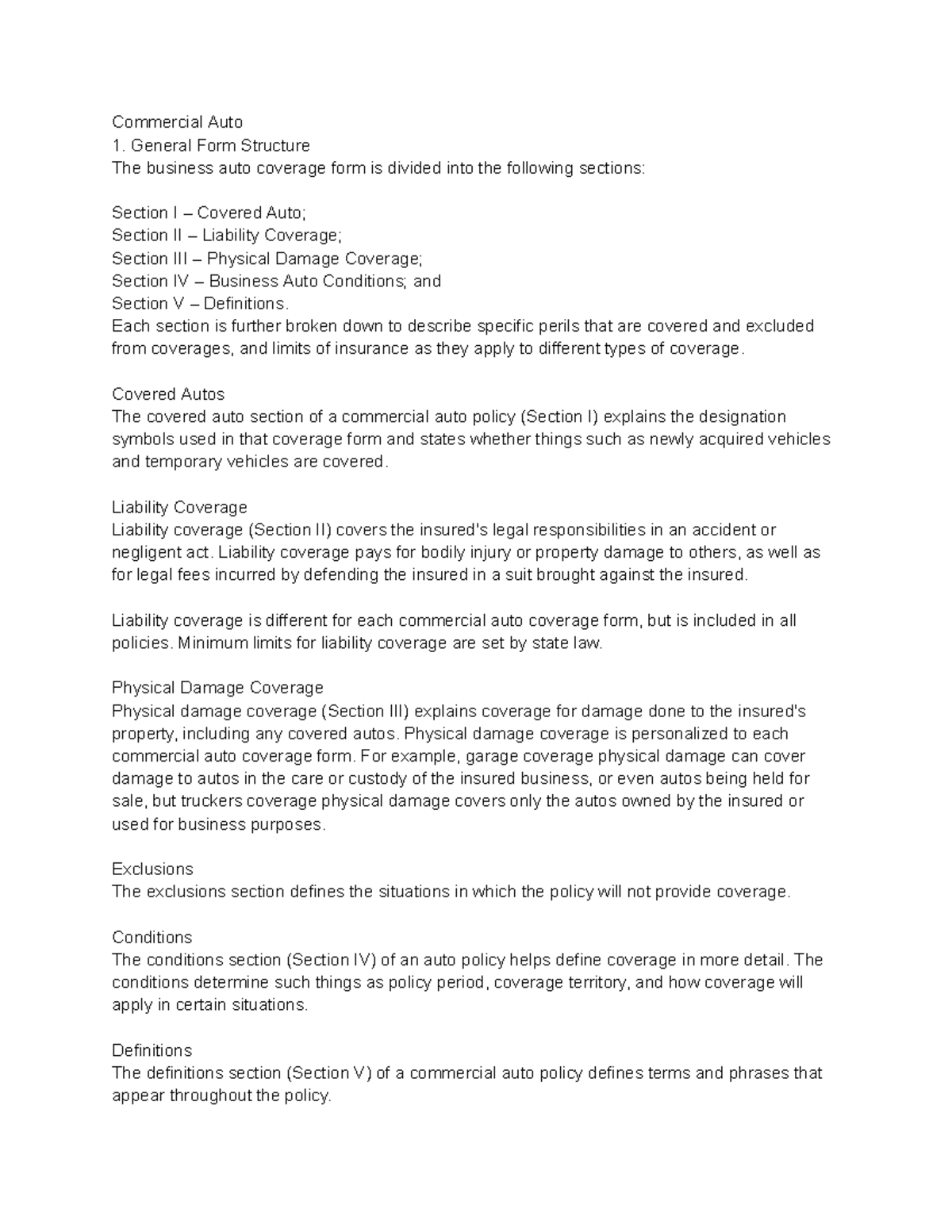
AIG’s commercial auto offerings are generally categorized into primary and excess layers. For businesses seeking a comprehensive solution, the following core components form the foundation of a standard AIG policy:
Liability Coverage
This is the most critical element of any commercial auto policy. It covers bodily injury to third parties and damage to the property of others caused by an accident involving a company-owned or operated vehicle. Given AIG's focus on larger entities, they often provide significantly higher limits than standard retail carriers, which is essential for businesses operating heavy-duty trucks or transporting hazardous materials.
Physical Damage Coverage
This provides protection for the insured’s own vehicles. It includes Collision Coverage, which pays for damage resulting from an accident with another vehicle or object, and Comprehensive Coverage, which covers non-collision events such as theft, fire, vandalism, or natural disasters. For 2026, AIG has refined its physical damage valuation to account for the high cost of repairing advanced sensor arrays and electric vehicle (EV) battery systems common in modern fleets.
Hired and Non-Owned Auto (HNOA)
Many businesses rely on vehicles they do not own—such as employees using their personal cars for company errands or the business renting vehicles for short-term projects. HNOA coverage protects the company if it is held liable for an accident occurring in these third-party vehicles. This is a vital inclusion for professional service firms and tech companies that may not own a traditional fleet but still face significant road-related liability.
Medical Payments and Uninsured/Underinsured Motorist
These coverages ensure that the driver and passengers of the insured vehicle are protected regardless of who is at fault. In the event of a collision with a driver who lacks sufficient insurance, AIG’s Underinsured Motorist coverage bridges the gap, ensuring the business does not have to absorb medical costs or lost productivity internally.
Specialized Solutions for Large Fleets and High-Risk Industries
AIG distinguishes itself through its appetite for "Heavy Wheels" and specialized industrial applications. While many carriers shy away from heavy trucking or construction fleets due to the inherent risk, AIG utilizes a data-driven underwriting process to provide sustainable coverage options.
Excess Casualty and Umbrella Layers
One of AIG's strongest market positions is in the "Excess" space. Even if a company has a primary auto policy with another carrier, they may look to AIG for an Umbrella policy that provides an additional $5 million, $10 million, or even $50 million in coverage. In an era where "nuclear verdicts" (jury awards exceeding $10 million) are becoming more common, this high-limit capacity is a prerequisite for corporate stability.
Multinational Programs
For businesses with operations spanning several countries, AIG’s global network is a significant advantage. They can issue local policies in hundreds of jurisdictions while maintaining a "master policy" that ensures consistent coverage standards across the entire global organization. This eliminates gaps in coverage that can occur when dealing with differing international regulations.
Industry-Specific Focus Areas:
- Construction and Contracting: Handling the specific risks of heavy machinery and on-site transit.
- Energy and Utilities: Providing coverage for fleets operating in remote or hazardous environments.
- Retail and Wholesale Distribution: Tailoring policies for large-scale delivery networks and last-mile logistics.
Integrating Risk Management and Technology
In 2026, an insurance policy is no longer just a legal requirement; it is a technological partnership. AIG heavily promotes the use of Telematics and In-Cab Video Analytics. By collecting data on braking patterns, speed, and driver fatigue, AIG’s risk engineers can help fleet managers identify "at-risk" drivers before an accident happens.
AIG’s Client Risk Solutions (CRS) team works directly with policyholders to implement safety protocols. These services often include:
- Driver Safety Training: Digital modules and workshops focused on defensive driving.
- Route Optimization Analysis: Helping businesses avoid high-accident corridors.
- Accident Reconstruction: Using telematics data to provide an objective account of an incident, which is crucial for defending against fraudulent or exaggerated claims.
| Feature | Standard Commercial Auto | AIG Commercial Auto Solution |
|---|---|---|
| Target Audience | Small local businesses | Mid-market to Global 500 |
| Typical Limits | $1M - $2M | High-limit Primary & Excess ($10M+) |
| Risk Engineering | Basic safety brochures | Advanced Telematics & Data Analytics |
| Geographic Scope | Domestic/Regional | Global Master Programs |
| Claims Handling | Generalist adjusters | Specialized Fraud & Litigation units |
| Fleet Size | 1-10 vehicles | 25+ vehicles (specializing in large fleets) |
The Claims Process and Financial Reliability
The true value of AIG commercial auto insurance is realized during a claim. AIG employs specialized adjusters who understand the nuances of commercial vehicle litigation and the specific mechanical complexities of heavy-duty trucks.
AIG’s financial strength, consistently rated highly by agencies like A.M. Best and Standard & Poor’s, ensures that they have the capital reserves to pay out large settlements. This stability is vital for businesses that require "Proof of Insurance" to secure large contracts; clients and partners are more likely to trust a business backed by a top-tier global insurer.
The claims process typically follows these steps:
- Immediate Notification: Drivers or managers report the incident via AIG’s 24/7 claims intake portal.
- Evidence Collection: AIG leverages dashcam footage and telematics data provided by the insured.
- Triage and Assignment: The claim is assigned to a specialist (e.g., a "Heavy Wheels" adjuster for truck accidents).
- Litigation Management: If a lawsuit is filed, AIG’s legal team works to settle the case or defend the insured in court, focusing on minimizing "social inflation" impacts.
Requirements and Prerequisites for Coverage
Securing a policy with AIG is a rigorous process compared to personal auto insurance. Because AIG focuses on complex risks, they require extensive documentation to provide an accurate quote.
- Fleet Schedules: A detailed list of all vehicles, including VINs, usage types, and garaging locations.
- Driver MVRs: Motor Vehicle Records for all employees authorized to drive company vehicles. AIG typically looks for clean records over a three-to-five-year period.
- Loss Runs: At least five years of "loss runs" (prior claims history) from previous insurers. This data helps AIG identify patterns of risk.
- Safety Manuals: Evidence of a formal safety program, including policies on cell phone use while driving and substance abuse testing.
- Broker Representation: AIG primarily works through licensed commercial insurance brokers. A business cannot typically buy a policy directly from AIG’s website; instead, a broker must submit an application on the company’s behalf.
Frequently Asked Questions
Does AIG offer commercial auto insurance for small businesses?
AIG generally focuses on mid-sized to large commercial enterprises. While they have various programs, a business with only one or two local delivery vans may find more competitive rates and streamlined service through small-business specialists or "Main Street" insurers. AIG is best suited for businesses with 25 or more vehicles or those with high-risk profiles requiring specialized underwriting.
How does telematics impact AIG insurance premiums?
In 2026, telematics is a primary driver of premium adjustments. Businesses that implement AIG-approved telematics systems and demonstrate a commitment to improving driver behavior can often secure more favorable renewal rates. Conversely, a lack of data or evidence of poor driving habits can lead to significant premium increases or non-renewal of the policy.
Can AIG cover specialized vehicles like cranes or tankers?
Yes. AIG is a leader in the specialized transport and construction sectors. They have the technical expertise to underwrite "Over-the-Road" (OTR) exposures for tankers, hazardous material haulers, and heavy construction equipment, provided the business meets their safety and risk management standards.
What is the difference between AIG's Primary and Excess Auto coverage?
Primary coverage is the "first dollar" insurance that responds to an accident, typically up to a limit of $1 million. Excess Auto coverage (or Umbrella) sits on top of that primary layer. If a catastrophic accident results in a $5 million judgment, the primary policy pays the first $1 million, and the AIG Excess policy pays the remaining $4 million.
Is AIG commercial auto insurance available internationally?
One of AIG's core strengths is its global reach. They can provide commercial auto coverage in over 200 countries and jurisdictions. This is particularly valuable for multinational companies that need to comply with local insurance laws in various countries while maintaining a centralized global risk management strategy.
Final Recommendation for Business Leaders
For organizations managing significant vehicle fleets or high-liability exposures in 2026, AIG represents a premium choice that emphasizes long-term stability over the lowest initial price. When evaluating AIG, focus on their Risk Engineering capabilities and Excess Casualty limits.
Businesses should work closely with an experienced commercial broker to prepare a comprehensive "submission" that highlights safety technologies and clean driving records. By leveraging AIG’s data-driven insights and financial depth, companies can not only protect their assets but also foster a culture of safety that reduces the total cost of risk over time.