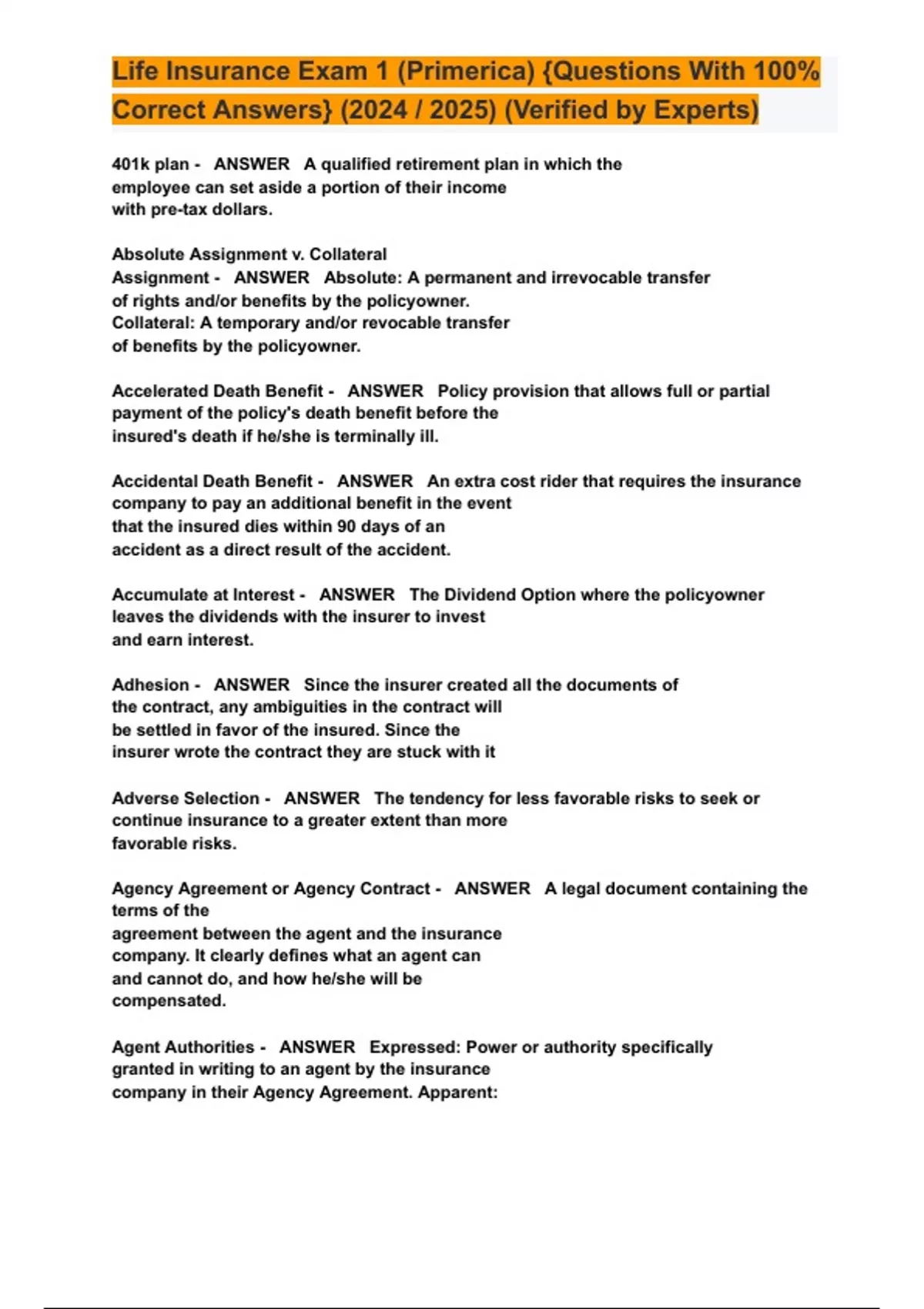
An absolute assignment in life insurance is a permanent legal transfer of all ownership rights, control, and benefits of a policy from the current policyowner to a new third party, stripping the original owner of any future claim to the contract.
Navigating the complexities of life insurance requires more than just choosing a term or whole life policy and paying the monthly premiums. Policyholders frequently encounter situations where they need to transfer ownership of their policy to a family member, a business partner, a trust, or a charitable organization. Understanding how this transfer functions legally, financially, and logistically is critical for anyone considering altering the structure of their life insurance contract.
An absolute assignment is one of the most powerful mechanisms available in insurance law. Because its effects are permanent, policyholders must evaluate the mechanics, implications, and long-term consequences before signing any legal documentation with an insurance carrier.
What Is an Absolute Assignment?
An absolute assignment is a legally binding contract provision that completely transfers ownership of a life insurance policy from the assignor (the current owner) to the assignee (the new owner). This transaction is fundamentally different from a collateral assignment, which serves as a temporary security interest for a loan.
When an absolute assignment is executed, the original owner relinquishes every single right associated with the policy. The new owner steps into the shoes of the original policyholder, acquiring complete dominion over the contract. This includes the legal right to surrender the policy for its cash value, change the beneficiaries, take out policy loans, assign the policy to someone else, or stop paying premiums.
Crucially, the life insurance company must formally record and acknowledge the assignment for it to take legal effect. Once the carrier processes the paperwork, the original owner has no remaining legal standing regarding the policy, even if they continue to pay the premiums out of pocket.
Absolute Assignment vs. Collateral Assignment
Distinguishing between an absolute assignment and a collateral assignment is essential to avoid unintended legal and financial consequences. While both involve transferring certain policy rights to a third party, their scopes and purposes are polar opposites.
A collateral assignment is conditional. It is typically used when a policyholder uses their cash-value life insurance policy as collateral for a bank loan or business debt. Under a collateral assignment, the lender receives a limited, prioritized claim against the policy’s death benefit or cash value up to the amount of the outstanding debt. Once the underlying debt is fully repaid, the collateral assignment is released, and full control reverts to the policyholder. The original owner retains all other policy rights, such as changing beneficiaries or altering coverage amounts, subject to the lender's veto power.
An absolute assignment, by contrast, is unconditional and permanent. There is no underlying debt being secured, and the transfer is not designed to revert back to the original owner. The assignee becomes the absolute master of the contract. The table below outlines the core differences between these two legal instruments.
| Feature | Absolute Assignment | Collateral Assignment |
|---|---|---|
| Nature of Transfer | Complete and permanent ownership transfer. | Conditional transfer for security/debt. |
| Duration | Permanent unless the new owner transfers it back. | Temporary; ends when the underlying debt is paid. |
| Control of Cash Value | Transferred entirely to the assignee. | Retained by the owner, subject to lender restrictions. |
| Right to Change Beneficiary | Transferred to the new assignee. | Retained by the owner, though usually restricted. |
| Tax Implications | May trigger gift tax or transfer-for-value rules. | Generally does not trigger taxable events. |
Common Reasons for Using an Absolute Assignment
Policyholders choose to execute absolute assignments for various estate planning, business, and personal reasons. Because the transfer is permanent, these decisions are usually driven by long-term strategic goals rather than short-term convenience.
Estate Planning and Tax Reduction
High-net-worth individuals often use absolute assignments to remove the death benefit of a life insurance policy from their taxable estate. If an individual owns a life insurance policy at the time of their death, the proceeds are generally included in their gross estate for federal estate tax purposes. By transferring the policy absolutely to an Irrevocable Life Insurance Trust (ILIT) or an adult child well before death, the insured removes the asset from their taxable estate, potentially saving substantial estate taxes. However, the transfer must comply with Internal Revenue Service (IRS) look-back rules, such as the three-year rule under Internal Revenue Code Section 2035, which dictates that if the insured dies within three years of transferring the policy, the proceeds may still be pulled back into the taxable estate.
Business Continuity and Buy-Sell Agreements
In corporate settings, absolute assignments are frequently used to manage key-person insurance or cross-purchase buy-sell agreements. For example, if a business partner previously purchased a policy on their own life to fund a business succession plan, they might absolutely assign that policy to the business entity or to the co-owners. This ensures that the entity paying the premiums holds the legal right to the death benefit when a triggering event occurs, streamlining the execution of the buy-sell agreement.
Divorce Settlements and Family Law
Family law courts sometimes order a divorcing spouse to transfer ownership of an existing life insurance policy via an absolute assignment to secure child support or alimony obligations. Making the former spouse the absolute owner ensures they have guaranteed control over the policy, preventing the insured ex-spouse from altering beneficiaries, borrowing against the cash value, or letting the policy lapse.
Charitable Giving
Donors wishing to make a substantial philanthropic gift can absolutely assign a paid-up life insurance policy to a qualified charity. This transfers both the ownership and the right to the death benefit to the organization. Depending on the jurisdiction and the specific tax year guidelines enforced by the IRS, the donor may be eligible for a charitable income tax deduction based on the replacement cost or the cost basis of the policy.
Step-by-Step Process to Execute an Absolute Assignment
Executing an absolute assignment requires strict adherence to legal and administrative protocols. Failing to follow the insurance company's exact requirements can render the transfer invalid or delay its processing.
- Review the Policy Contract: Examine the policy provisions regarding assignments. Some older or specialized contracts may carry restrictions or require specific endorsements.
- Consult Legal and Financial Professionals: Because absolute assignments have irreversible tax and legal consequences, consult an estate planning attorney or a certified financial planner before drafting documents.
- Obtain the Carrier's Assignment Form: Contact the life insurance company to request their proprietary absolute assignment form. Using the insurer's specific document prevents formatting errors and legal ambiguities.
- Complete the Documentation: Fill out the form accurately, providing full legal names, addresses, and taxpayer identification numbers (SSN or EIN) for both the assignor and the assignee. Both parties must typically sign in the presence of a notary public.
- Submit to the Insurance Company: Mail or securely upload the completed, notarized form to the insurer's home office.
- Receive Confirmation: Wait for the insurance company to issue a formal endorsement or written acknowledgment confirming that the absolute assignment has been officially recorded in their registry.
Legal and Tax Implications of Absolute Assignment
The permanence of an absolute assignment means that the transaction carries significant tax and legal ramifications that demand careful scrutiny.
The Transfer-for-Value Rule
Under Internal Revenue Code Section 101(a)(2), if a life insurance policy is transferred for valuable consideration (such as cash, debt relief, or other property), a portion of the death benefit may become subject to federal income tax when the insured dies. This is known as the transfer-for-value rule. However, transfers made purely as a gift (without valuable consideration) to the insured, a partner of the insured, a partnership in which the insured is a partner, or a corporation in which the insured is a shareholder or officer are generally exempt from this rule.
Gift Tax Consequences
From the perspective of the IRS, transferring ownership of a life insurance policy as a gift constitutes a taxable transfer. The value of the gift is not the face amount of the policy, but rather the interpolated terminal reserve value (roughly equivalent to the cash surrender value) plus any unearned premiums at the time of the transfer. If this value exceeds the annual gift tax exclusion limit established by the IRS, the assignor must file a gift tax return (Form 709) and potentially utilize a portion of their lifetime estate and gift tax exemption.
Loss of Control
The most profound legal consequence is the complete loss of autonomy. Once the assignment is processed, the original owner cannot demand the policy back, change the beneficiary, or prevent the new owner from surrendering the contract for cash. If the new owner experiences financial distress, creditors of the new owner could potentially seize the policy's cash value.
Common Mistakes to Avoid
Misunderstandings surrounding absolute assignments can lead to unexpected tax liabilities, lost coverage, or unintended beneficiaries. Avoiding these common errors protects the interests of both parties.
- Confusing Absolute and Collateral Assignments: Using an absolute assignment when the intent is merely to secure a bank loan permanently strips the borrower of their asset. Always use a collateral assignment for temporary debt security.
- Failing to Notify the Insurance Company: An unrecorded assignment is legally ineffective against the insurer. If the insurance company pays out a death benefit to the original beneficiary because the paperwork was never formally logged, resolving the dispute can require protracted litigation.
- Ignoring the Three-Year Rule: Transferring a policy within three years of the insured's death can cause the proceeds to be included back into the gross estate for tax purposes. Early planning is essential.
- Overlooking Premium Payment Responsibilities: Clarify who is responsible for paying future premiums. Even though the new owner holds all rights, the insurance company will still bill the designated party, and a failure to pay will cause the policy to lapse regardless of who owns it.
Frequently Asked Questions
Can an absolute assignment be reversed?
No, an absolute assignment is permanent and irrevocable once processed by the insurance company. The new owner cannot simply hand the policy back via a verbal agreement; it would require a completely new absolute assignment transferring ownership back to the original party, which carries its own set of tax and legal implications.
Does the insured have to be the owner of the life insurance policy?
No. The insured and the policyowner can be two different people. For example, a business can own a policy on the life of an employee, or a spouse can own a policy on the life of their partner. An absolute assignment simply changes who that owner is.
Will an absolute assignment change the premium rates or policy terms?
No. The underlying terms of the life insurance contract, including the premium schedule, death benefit face amount, and cash value growth rate, remain entirely unchanged. Only the identity of the person holding the legal rights to the contract is modified.
Can an absolute assignment be used to protect a policy from personal creditors?
In some cases, transferring a policy absolutely to an irrevocable trust or another individual can remove the asset from the original owner's estate and protect it from their personal creditors. However, if the transfer is deemed a fraudulent conveyance intended to defraud creditors, the courts can set the assignment aside.
Do I need a lawyer to execute an absolute assignment?
While insurance companies provide the necessary forms, consulting an estate planning attorney or tax professional is strongly recommended. Because absolute assignments trigger complex federal tax laws and gift tax reporting requirements, professional guidance ensures compliance and prevents costly mistakes.
Conclusion and Next Actions
An absolute assignment is an advanced financial and legal maneuver that permanently transfers every right and benefit of a life insurance contract to a new owner. While it serves as an effective tool for estate tax reduction, business succession planning, and family law compliance, its irreversible nature demands meticulous execution. Anyone contemplating this step should first review their policy contract, consult with a qualified tax professional or estate planning attorney, and obtain the precise assignment documentation directly from their insurance carrier to ensure the transfer aligns seamlessly with their long-term financial strategy.