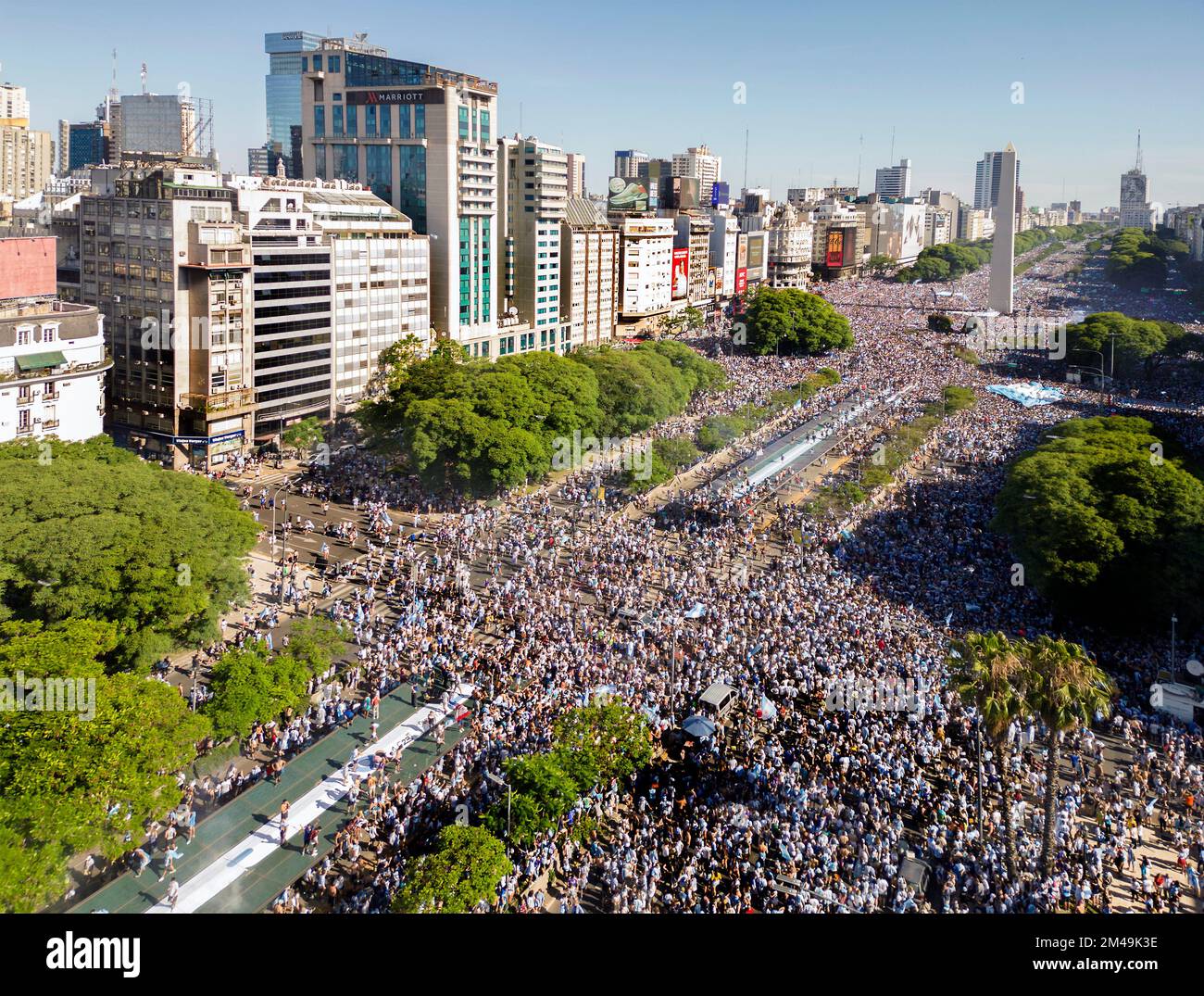
Every 9 July, Argentina commemorates its Independence Day (Día de la Independencia), the most significant patriotic date in the nation’s calendar. In 2026, this holiday marks the 210th anniversary of the formal break from Spanish rule. It is a day characterized by massive military parades, traditional winter gastronomy like "locro," and deep national reflection on the sovereignty established at the Congress of Tucumán in 1816.
The Historical Significance of 9 July 1816
To understand the weight of 9 July in Argentina, one must look back to the early 19th century. While the revolutionary process began on 25 May 1810, it took six more years of internal conflict and regional warfare to formalize a declaration of independence. By 1816, the political landscape was precarious. King Ferdinand VII had returned to the Spanish throne and was determined to reclaim his colonies in the Americas.
The Congress of Tucumán was convened in a small house in the city of San Miguel de Tucumán. Representatives from various provinces of the "United Provinces of the Río de la Plata" gathered to decide the future of the territory. The choice of Tucumán as a venue was a strategic move to distance the congress from the centralist influence of Buenos Aires, which was already causing friction with the interior provinces.
On 9 July 1816, the delegates, presided over by Narciso Laprida, signed the Act of Independence. This document declared the provinces free from the Spanish monarchs and their "metropolis." A few days later, on 19 July, a crucial amendment was added to the act, clarifying that the independence was also from "any other foreign domination," ensuring that the territory would not fall under the influence of the British or Portuguese empires.
9 July vs. 25 May: Understanding the Difference
A common point of confusion for those outside Argentina is the distinction between 25 May and 9 July. Both are major national holidays, but they represent different stages of the nation-building process.
The May Revolution (25 May 1810) was the first step toward autonomy. It involved the removal of the Spanish Viceroy, Baltasar Hidalgo de Cisneros, and the establishment of the Primera Junta (the first local government). However, at that time, the revolutionaries still claimed to be governing on behalf of the captive King Ferdinand VII. It was a "masked" independence.
In contrast, 9 July 1816 was the definitive break. It was the moment when the mask was dropped and the United Provinces declared themselves a sovereign nation to the world. For the Liberator José de San Martín, this declaration was a legal necessity. He argued that he could not lead an army across the Andes to liberate Chile and Peru as a rebel; he needed to represent a sovereign state.
Celebrating the 210th Anniversary in 2026
In 2026, 9 July falls on a Thursday. According to the Argentine holiday calendar, this is a non-transferable holiday. However, the national government frequently designates the following Friday as a "tourist bridge holiday" (feriado puente) to create a four-day long weekend. This encourages domestic tourism and allows families to gather for traditional festivities.
National Parades and Official Acts
The primary official celebration usually takes place in San Miguel de Tucumán, the "Cradle of Independence." The President of Argentina typically travels there to lead the ceremony at the Casa Histórica de la Independencia. The event includes a flag-raising ceremony, a "Te Deum" mass at the local cathedral, and a massive parade featuring military personnel, veterans of the Malvinas War, and traditionalist "gaucho" groups on horseback.
In Buenos Aires, the celebrations center on the Avenida de Mayo and the Plaza de Mayo. Large-scale military parades often showcase historical regiments, such as the Regimiento de Granaderos a Caballo, founded by San Martín himself.
The Role of School Acts
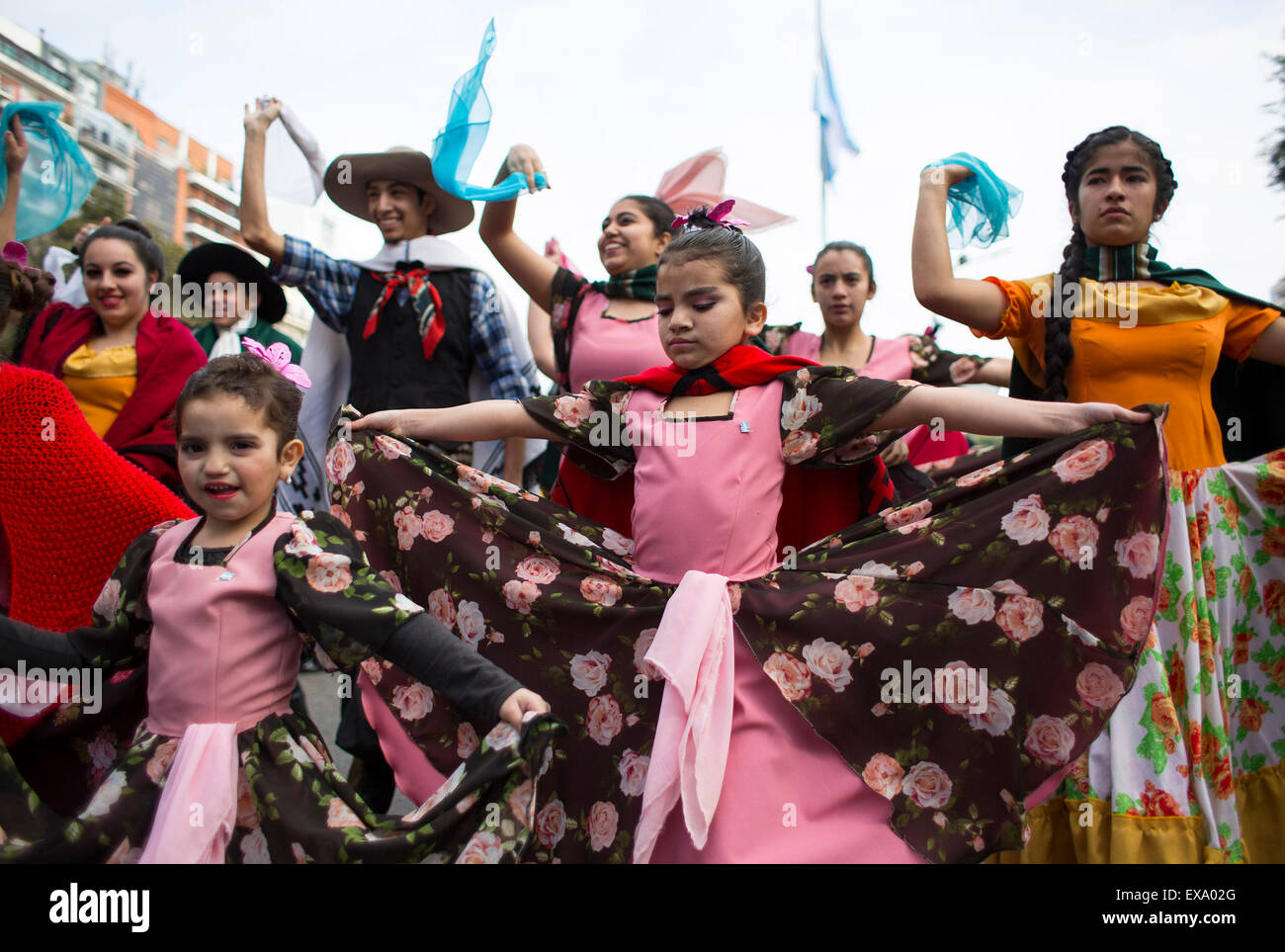
For Argentine children, 9 July is synonymous with school performances (actos escolares). In the weeks leading up to the date, students rehearse plays depicting the Congress of Tucumán. It is traditional for children to dress as "damas antiguas" (colonial ladies), "caballeros" (gentlemen), or vendors selling "empanadas" and "velas" (candles). The "escarapela" (the blue and white cockade) is worn proudly on the lapel of every student and teacher.
Gastronomy: The Flavors of Independence
Because July is mid-winter in the Southern Hemisphere, the 9 July celebrations are deeply tied to hearty, warm, and traditional foods. Sharing a meal is the most common way for Argentine families to celebrate the holiday.
Locro: The National Dish
The undisputed king of 9 July is Locro. This is a thick, nutritious stew of pre-Columbian origin, primarily consisting of white corn (maíz blanco), beans (porotos), and various types of meat.
- Ingredients: Authentic locro includes "falda" (flank steak), pork rinds, chorizo colorado (spiced sausage), and "patitas de chancho" (pork trotters). The orange color comes from the addition of squash (zapallo plomo), which dissolves during the long cooking process to create a creamy texture.
- The Sauce: It is always served with a side of "quiquirimichi," a spicy oil-based sauce made with paprika, chili flakes, and green onions.
- Significance: Preparing locro is often a communal activity, cooked in large iron pots over several hours. Many social clubs, fire stations, and community centers sell portions of locro to raise funds on this day.
Pastelitos and Churros
For dessert, Argentines turn to fried pastries. Pastelitos criollos are star-shaped puff pastries filled with either quince paste (dulce de membrillo) or sweet potato paste (dulce de batata). They are deep-fried and glazed with sugar syrup and colorful sprinkles.
Another staple is Churros with hot chocolate. On a cold 9 July afternoon, it is customary to drink thick, Spanish-style hot chocolate (submarino), where a bar of dark chocolate is melted into a glass of steaming milk, accompanied by crispy churros.
Visiting San Miguel de Tucumán for 9 July
If you are planning to experience 9 July in Argentina in 2026, the city of San Miguel de Tucumán is the essential destination. The city undergoes a complete transformation during the "Semana de Tucumán."
The Casa Histórica (The House of Tucumán)
The most visited site is the Casa Histórica de la Independencia. Although most of the original house was demolished in the late 19th century, the "Sala de la Jura" (the room where the independence was sworn) remained intact. The house was later reconstructed using original photographs and plans.
In 2026, visitors can expect:
- Light and Sound Shows: A nightly multimedia presentation that narrates the history of the independence through projections on the walls of the house.
- The Change of Guard: Every day, but with special pomp on 9 July, the historical guard of the house performs a ceremonial change.
- Museum Exhibits: The museum inside the house preserves the original chairs, desks, and the Acta de la Independencia itself.
Regional Festivals
Beyond the city center, the province of Tucumán hosts various "peñas" (folk music gatherings). These events feature live music—specifically zamba and chacarera—and traditional dances. It is an excellent opportunity to try Tucumán empanadas, which are legally distinct from those in other provinces (they traditionally contain 13 "simbólicos repulgues" or folds and are made with hand-cut beef).
Key Events in Argentine Independence
To understand the progression toward 9 July, the following table outlines the critical milestones that led the United Provinces to sovereign status.
| Date | Event | Significance |
|---|---|---|
| May 25, 1810 | May Revolution | First local government established in Buenos Aires. |
| February 27, 1812 | Creation of the Flag | Manuel Belgrano hoists the blue and white flag in Rosario. |
| January 31, 1813 | Assembly of the Year XIII | Defined national symbols and abolished titles of nobility/slavery of the womb. |
| March 1816 | Congress of Tucumán Opens | Delegates from across the territory gather to discuss sovereignty. |
| July 9, 1816 | Declaration of Independence | Formal break from the Spanish Crown is signed. |
| July 19, 1816 | Amendment to the Act | Clarified independence from all foreign powers. |
| January 1817 | Crossing of the Andes | San Martín begins the campaign to secure independence for the region. |
2026 Logistics and Practical Information
If you are a resident or a traveler in Argentina during the 2026 holiday, keep the following logistics in mind:
- Public Services: Since it is a national holiday, banks, government offices, and most schools will be closed. Public transport often operates on a reduced Sunday schedule.
- Shopping: Most major supermarkets and shopping malls remain open, though smaller neighborhood shops may close or have limited hours.
- Reservations: If you plan on eating locro at a restaurant, reservations are highly recommended at least a week in advance. The same applies to booking travel to Tucumán, as flights and buses fill up quickly for the long weekend.
- Weather: July is the heart of winter. In Buenos Aires, temperatures usually range from 8°C to 15°C (46°F to 59°F), while in Tucumán and the North, days can be sunny and mild (up to 20°C/68°F) but nights are very cold.
Frequently Asked Questions (FAQ)
Is 9 July the only Independence Day in Argentina?
Yes, 9 July is the only official Independence Day. While 25 May celebrates the first step toward self-governance, 9 July is the day the country legally declared itself a sovereign nation. Both are treated with equal patriotic fervor, but 9 July is the definitive anniversary of statehood.
What do people wear for 9 July?
In daily life, people wear their normal winter clothing but pin a "la escarapela" (a blue and white cockade) to their coats. In parades and school acts, you will see traditional gaucho attire (bombachas de campo, ponchos, and boots) and colonial-era costumes.
Can I see the original Act of Independence?
The original handwritten Act of Independence signed in 1816 was lost shortly after it was written. Historians believe it may have been stolen or lost during the transport of documents. However, several official copies printed in Spanish, Quechua, and Aymara from that same period exist and are on display at the National Historical Museum in Buenos Aires and the Casa Histórica in Tucumán.
Why was independence declared in Tucumán instead of Buenos Aires?
The choice of Tucumán was largely political. At the time, the interior provinces were suspicious of the centralizing power of Buenos Aires. By holding the congress in the geographic heart of the territory, the organizers aimed to foster national unity and ensure that all provinces felt represented in the new government.
Is the holiday moved if it falls on a weekend?
No. Unlike some "transferable" holidays in Argentina that are moved to a Monday to create long weekends, 9 July is a "feriado inamovible" (non-transferable holiday). It is always celebrated on the day it falls. However, as in 2026, the government often adds a "bridge" holiday if it falls near a weekend.
Expert Recommendation for 210th Anniversary Celebrations
For those wishing to participate in 2026, our recommendation is to engage with local community centers (centros culturales) or traditional "peñas." While the large parades in Buenos Aires are spectacular, the true spirit of 9 July is found in the shared community meals. Look for a local "peña" where you can eat locro, drink Malbec, and watch authentic folk dancing. If you are traveling, the "Noche de Gala" on July 8th in the city of Tucumán, where the city waits for midnight to sing the National Anthem together, is a profound cultural experience that captures the essence of Argentine identity.
For official updates on 2026 schedules and cultural programs, you can consult the Ministerio de Cultura de la Nación or the Turismo Tucumán official portals.