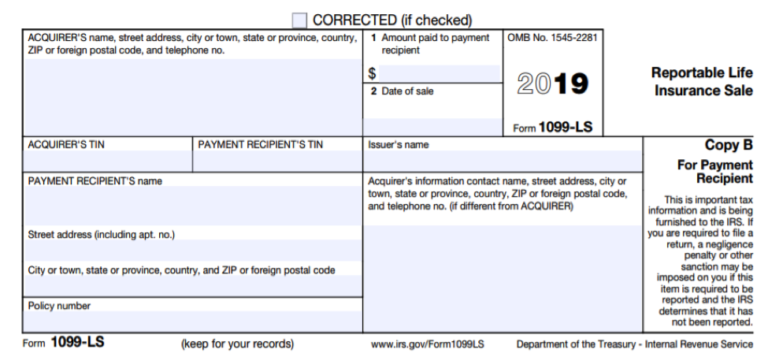
Life insurance 1099 forms, primarily Form 1099-R and Form 1099-INT, are issued when a policy generates taxable income through surrenders, specific loan scenarios, or interest accumulation. While death benefits are generally tax-free, policyholders often receive these forms for "living benefits" or policy changes that exceed the investment's cost basis.
Navigating the tax implications of life insurance can be surprisingly complex. While the general public often views life insurance as a "set it and forget it" tax-free asset, the Internal Revenue Service (IRS) has strict guidelines on when policy growth or distributions become taxable. As we move through the 2026 tax year, policyholders must distinguish between the tax-exempt nature of a death benefit and the taxable events that can occur during the life of a permanent policy.
The issuance of a 1099 form from an insurance carrier does not always mean you owe a fortune in taxes, but it does mean a reportable event has occurred. Understanding the nuances of cost basis, Modified Endowment Contracts (MECs), and the difference between a return of premium and earned interest is vital for any policyholder or beneficiary.
Understanding the Primary Life Insurance Tax Forms
Before debunking common myths, it is essential to identify the documents in question. In the context of life insurance, two specific forms are most prevalent:
- Form 1099-R: This is used to report distributions from pensions, annuities, or insurance contracts. If you surrender a policy for more than you paid in premiums, or if a policy with an outstanding loan lapses, the insurance company will issue a 1099-R.
- Form 1099-INT: This form reports interest income. If a death benefit is paid out late and includes interest, or if you leave policy dividends with the company to accumulate interest, that interest is taxable and reported here.
With these definitions in mind, let’s examine the seven most persistent myths surrounding these forms.
Myth 1: Life Insurance Payouts Are Always Tax-Free
This is perhaps the most dangerous misconception in financial planning. While Section 101(a) of the Internal Revenue Code generally excludes life insurance death benefits from gross income, "living benefits" are treated differently.
When you own a permanent life insurance policy (such as Whole Life or Universal Life), it builds cash value. If you surrender the policy—meaning you cancel it and take the cash—the amount you receive is tax-free only up to your cost basis. Your cost basis is essentially the total amount of premiums you have paid into the policy, minus any previous tax-free withdrawals or dividends received in cash.
Anything received above that cost basis is considered "gain" and is taxed as ordinary income. For example, if you paid $50,000 in premiums over 20 years and surrender the policy for $75,000, the insurance company will issue a 1099-R for the $25,000 gain. This is not capital gains; it is taxed at your standard income tax rate.
Myth 2: Policy Loans Never Trigger a 1099 Form
One of the primary selling points of permanent life insurance is the ability to take a loan against the cash value. Generally, these loans are not considered taxable distributions because they are expected to be repaid. However, a 1099-R will be triggered if the policy lapses or is surrendered while a loan is outstanding.
If a policy terminates while there is an unpaid loan, the IRS treats the outstanding loan balance as a distribution. If the combination of the loan balance and any cash received exceeds the cost basis, the excess is taxable. This is often referred to as a "tax bomb," because the policyholder may owe taxes on money they spent years ago, and they no longer have a policy to cover the tax bill.
Myth 3: If I Don’t Receive a Paper 1099, I Don’t Need to Report the Income
In 2026, digital delivery of tax forms is the standard. Many insurance companies have moved to electronic-only delivery unless a physical copy is specifically requested. Furthermore, the IRS has a $10 threshold for many 1099 forms. Even if the insurance company fails to send you a form—or if it is lost in the mail—the taxpayer is still legally obligated to report all taxable income.
The insurance company sends a copy of the 1099-R or 1099-INT to the IRS electronically. If your tax return does not match the records the IRS has on file, their automated systems will likely flag the discrepancy, leading to a "CP2000" notice, which often includes proposed taxes, interest, and penalties.
Myth 4: All Policy Dividends Result in a 1099-INT
Policyholders of "participating" whole life insurance often receive dividends. There is a common myth that these dividends are always taxable income. In reality, the IRS usually views dividends as a return of premium—essentially a refund of an overpayment.
Dividends are not taxable (and do not trigger a 1099) until the total dividends received exceed the total premiums paid into the policy. However, if you choose to leave your dividends with the insurance company to "accumulate at interest," the interest earned on those dividends is taxable in the year it is credited. In this case, you would receive a 1099-INT for the interest, but not for the dividends themselves.
Myth 5: Modified Endowment Contracts (MECs) Follow Standard Tax Rules
A Modified Endowment Contract (MEC) is a life insurance policy that has been funded too quickly, failing the "7-pay test" established by the Technical and Miscellaneous Revenue Act of 1988 (TAMRA). Once a policy becomes a MEC, it is forever a MEC in the eyes of the IRS.
The myth is that MECs are taxed like regular life insurance. They are not. For a MEC, withdrawals and loans are taxed on a Last-In, First-Out (LIFO) basis. This means the very first dollar you take out is considered taxable gain until all gain has been exhausted. Furthermore, if you take a distribution from a MEC before age 59½, you may face a 10% federal tax penalty on the taxable portion, similar to an early IRA withdrawal. This will be reflected on your 1099-R with a specific distribution code (usually Code 1 or Code L).
Myth 6: 1035 Exchanges are Completely "Invisible" to the IRS
Internal Revenue Code Section 1035 allows for the tax-free exchange of one life insurance policy for another. Many people believe that because this is a non-taxable event, no forms are generated.
While a properly executed 1035 exchange is not a taxable event, the "surrendering" company may still issue a 1099-R. However, the form should indicate that it is a 1035 exchange, often using Distribution Code 6 in Box 7. This tells the IRS that the funds were transferred directly to another carrier and that the tax liability is being deferred, not triggered. If you receive a 1099-R for an exchange that shows a taxable amount in Box 2a, you must contact the carrier immediately to correct the error.
Myth 7: Beneficiaries Never Receive a 1099-INT
While it is true that the core death benefit is tax-free, insurance companies are required to pay interest on the death benefit from the date of the insured's death until the date the claim is paid. In many states, this is a statutory requirement to ensure companies don't profit by delaying payments.
If the interest paid to the beneficiary exceeds $10, the company will issue a Form 1099-INT. The beneficiary must report this interest as taxable income. The large, primary check for the death benefit remains tax-free, but the smaller, secondary interest amount is not.
Comparison of Life Insurance 1099 Triggers
The following table summarizes the most common scenarios where a 1099 form is issued and whether the underlying event is typically taxable.
| Event Type | Form Issued | Taxable Status | Reason for Issuance |
|---|---|---|---|
| Death Benefit Payout | None* | Generally Tax-Free | IRS Section 101(a) exclusion. |
| Interest on Death Benefit | 1099-INT | Taxable | Interest earned after the date of death. |
| Full Policy Surrender | 1099-R | Taxable over Basis | Gain over total premiums paid is ordinary income. |
| Partial Withdrawal | 1099-R | Varies | Usually tax-free up to basis (unless a MEC). |
| MEC Loan/Withdrawal | 1099-R | Taxable (LIFO) | Policies failing the 7-pay test lose FIFO status. |
| Policy Lapse with Loan | 1099-R | Taxable over Basis | Outstanding loan is treated as a distribution. |
| 1035 Exchange | 1099-R | Non-Taxable | Reports the transfer of funds (Code 6). |
| Dividends Left on Deposit | 1099-INT | Taxable | Interest earned on accumulated dividends. |
*Note: A 1099-INT is issued only if the interest portion exceeds $10.
Technical Deep Dive: Cost Basis and 1099-R Box Coding
Understanding your 1099-R requires looking at specific boxes that dictate how the IRS views your income.
- Box 1 (Gross Distribution): This is the total amount of money that moved out of the policy.
- Box 2a (Taxable Amount): This is the amount the insurance company believes is taxable. If this box is empty or says "Taxable amount not determined," the burden of proof is on you to calculate the cost basis.
- Box 7 (Distribution Code): This is the most critical box for technical accuracy.
- Code 7: Normal distribution (generally for those over 59½ or standard surrenders).
- Code 1: Early distribution, no known exception (often triggers the 10% MEC penalty).
- Code L: Treated as a distribution under section 72(p). This usually appears when a policy with a loan lapses.
- Code 6: Section 1035 exchange.
Calculating Your Cost Basis
To verify if your 1099-R is correct, you must calculate your basis manually. The formula is: (Total Premiums Paid) minus (Prior Tax-Free Withdrawals) minus (Dividends Received in Cash) = Cost Basis.
If the amount in Box 1 is higher than your Cost Basis, the difference should match Box 2a.
Frequently Asked Questions
What should I do if my 1099-R from 2026 is incorrect?
If you believe the cost basis or the distribution code on your 1099-R is wrong, contact the insurance company's tax reporting department immediately. You should provide documentation of your premium payments. If the company agrees there is an error, they will issue a Form 1099-R Corrected. Do not simply ignore the form; the IRS will look for the original amount unless a corrected version is filed.
Are life insurance 1099 forms different for group policies?
Group life insurance (often provided by employers) has different rules. If your employer pays for coverage exceeding $50,000, the "imputed income" for that extra coverage is reported on your W-2, not a 1099. however, if a group policy is surrendered for cash or pays out interest to a beneficiary, the standard 1099 rules apply.
Does a policy loan always appear on a 1099?
No. Under normal circumstances, a loan from a non-MEC life insurance policy is not a reportable event and does not trigger a 1099. It only becomes a 1099 event if the policy is terminated (surrendered or lapsed) while the loan is still outstanding, or if the policy is a MEC.
If I receive a 1099-INT for $5, do I have to report it?
Technically, all income must be reported to the IRS. However, financial institutions are generally only required to issue a 1099-INT if the interest is $10 or more. If you earned $5 in interest, the insurance company might not send you a form, but the amount is still technically taxable income that should be included on your Form 1040.
Can I avoid a 1099 by using a 1035 exchange?
A 1035 exchange allows you to move the cash value from an old policy to a new one without triggering an immediate tax liability on the gain. While a 1099-R will still be generated to track the movement of funds, the taxable amount (Box 2a) should be zero, and the distribution code should indicate a tax-free exchange.
Practical Recommendations for 2026
To avoid "tax surprises" and ensure your life insurance 1099 forms are handled correctly, consider the following actions:
- Request a Policy Projection: Before surrendering a policy or allowing one to lapse, ask your insurance carrier for an "in-force illustration" that shows your current cost basis and the potential taxable gain.
- Monitor Loan Balances: If you have an outstanding loan on a permanent policy, ensure the interest isn't causing the loan to exceed the cash value. If the policy "eats itself" and lapses, you will receive a 1099-R for the full amount of the gain.
- Keep Premium Records: While insurance companies track cost basis, errors occur—especially if the policy has been moved between companies through mergers. Keep annual statements that show your total premiums paid.
- Consult a Professional: Life insurance taxation is governed by complex IRC sections (like Section 72 and Section 101). If you receive a 1099-R with a significant taxable amount, consult with a tax advisor who understands the specifics of insurance contracts.