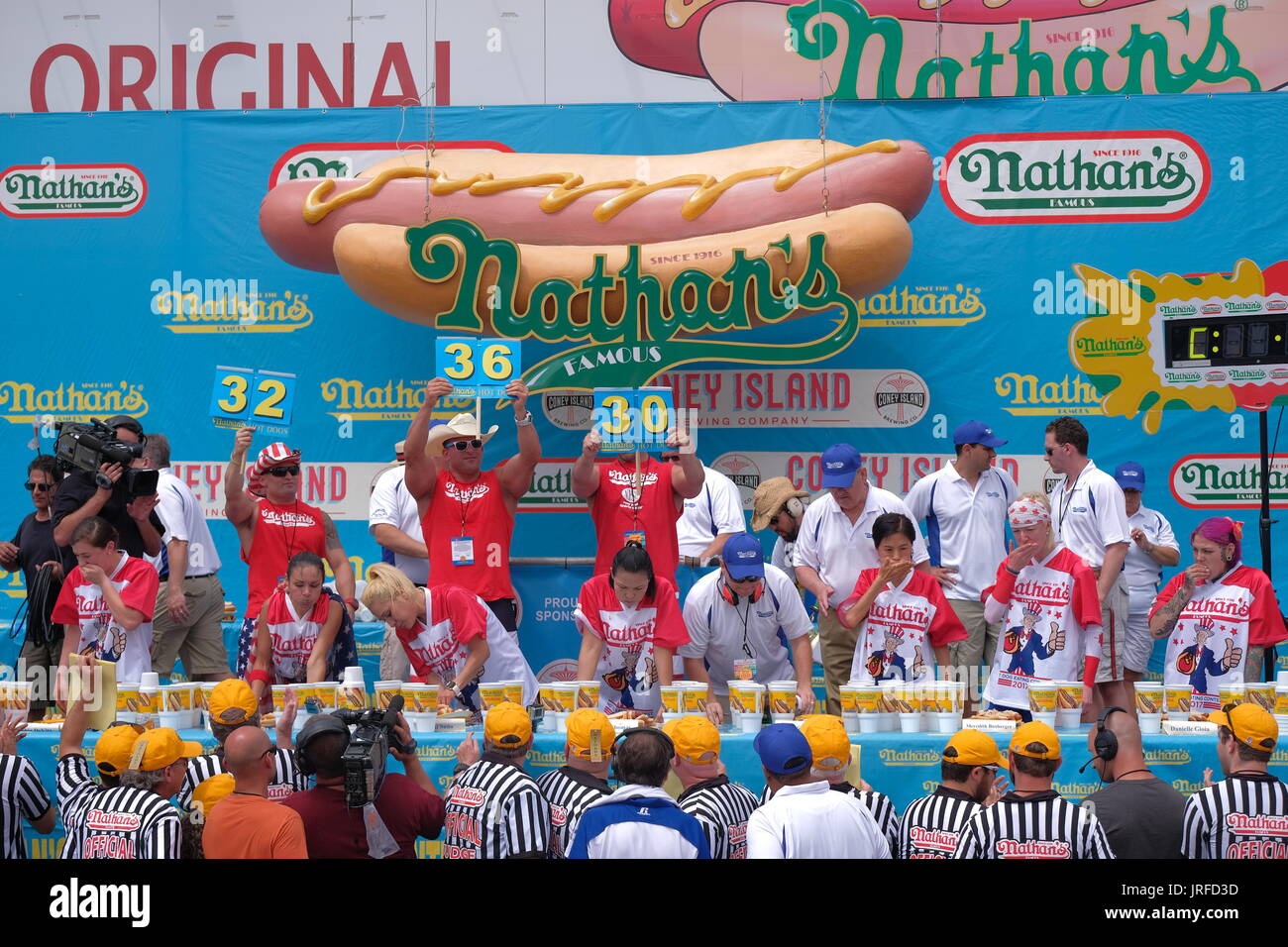
The Nathan’s Famous Fourth of July International Hot Dog Eating Contest is a definitive American summer tradition, blending kitschy Americana with elite professional athleticism. While rooted in a legendary 1916 origin story, the event faces modern tension due to high-stakes exclusivity contracts, athlete-brand rivalries, and the emergence of competing platforms that challenge the contest's long-standing monopoly over competitive eating.
The Foundation of a Holiday Legend: Tradition and Lore
The Nathan’s Famous Fourth of July Hot Dog Eating Contest is more than a display of gluttony; it is a meticulously crafted piece of American folklore. According to company lore, the contest began on July 4, 1916, when four immigrants gathered at Nathan Handwerker’s hot dog stand on Coney Island to settle a dispute over who was the most patriotic. They decided to resolve the argument by eating as many hot dogs as possible. James Mullen was recorded as the inaugural winner, having consumed 13 hot dogs in 12 minutes.
However, historians and PR experts often point to a different reality. The contest as we know it—a televised, sanctioned, and global phenomenon—was largely the brainchild of Mortimer "Morty" Matz, a legendary press agent who sought to drum up publicity for the Coney Island boardwalk in the 1970s. Regardless of whether the 1916 story is fact or fiction, the "tradition" has become an immutable part of the Independence Day experience for millions of viewers.
By the early 2000s, the event transitioned from a local curiosity to a global sporting event. The introduction of the Mustard Yellow Belt and the formalization of rules by Major League Eating (MLE) turned the contest into a legitimate career path for "gurgitators." The tradition now dictates a specific ritual: the noon start time, the weigh-in at City Hall, and the bombastic introductions by George Shea, whose Shakespearean-style hype speeches have become as iconic as the eating itself.
The Mechanics of a Professional Sport
To understand the tension within the sport, one must first understand the technicality required to compete. Competitive eating at this level is not about appetite; it is about physiological manipulation and discipline. In 2026, the records hover at levels that were once considered physically impossible, requiring athletes to treat their bodies like high-performance machines.
The Solomon Method and Water Dunking
The "Solomon Method," popularized by Takeru Kobayashi in the early 2000s, revolutionized the contest. This technique involves breaking the hot dog in half, swallowing the meat first, and then dunking the bun in water. The water serves two purposes: it lubricates the throat for faster transit and breaks down the structural integrity of the bread, allowing it to be compressed into a small, easy-to-swallow ball. This method shifted the contest from a test of chewing speed to a test of esophageal capacity and "active swallowing."
Physiological Adaptation
Top-tier competitors engage in "stomach stretching" leading up to the event. This typically involves consuming massive quantities of low-calorie liquids or fibrous vegetables like cabbage over a short period to expand the stomach's volume without adding significant body fat. Paradoxically, many of the world's best eaters are lean; a "belt of fat" around the midsection can actually impede the stomach’s ability to expand during the ten-minute sprint.
The Core Tension: Exclusivity and the Joey Chestnut Rift
The most significant tension in the history of the contest reached a boiling point in recent years, specifically concerning the relationship between Major League Eating (MLE) and its biggest star, Joey Chestnut. For nearly two decades, Chestnut was the face of the Nathan’s contest, winning 16 titles and setting numerous world records. However, the commercial structure of the sport created a fundamental rift.
The 2024 Exclusion and the Plant-Based Controversy
In 2024, a major controversy erupted when it was revealed that Joey Chestnut would not participate in the Nathan's contest due to a sponsorship conflict. Chestnut had signed a deal with Impossible Foods, a company known for its plant-based meat alternatives. Nathan’s Famous, a brand built on traditional beef frankfurters, and MLE, which manages the athletes' contracts, viewed this as a direct breach of exclusivity.
This created a massive divide in the fanbase. On one side, Nathan’s argued that their brand built the platform and deserved loyalty. On the other, fans and athletes argued that the "monopoly" held by MLE was restrictive, preventing athletes from maximizing their earning potential in a niche sport with a short career lifespan. This tension effectively ended the era of Chestnut at Coney Island and paved the way for a fragmented competitive eating landscape.
The Rise of Alternative Platforms
The fallout from the Chestnut-Nathan's rift led to the 2024 "Chestnut vs. Kobayashi: Unfinished Beef" event, a live special hosted by Netflix. By 2026, this shift has solidified. The tension is no longer just between two athletes, but between traditional broadcast models (ESPN and Nathan's) and modern streaming giants. This competition has forced the Nathan’s contest to re-evaluate its value proposition as it competes for the same set of eyeballs on the same holiday.
Comparing the Giants: Nathan’s Contest Statistics
The following table outlines the historical progression and the dominance of the two most influential figures in the contest's history, highlighting why the tension surrounding their departure was so impactful.
| Feature | Takeru Kobayashi Era (2001-2006) | Joey Chestnut Era (2007-2023) | Post-Exclusivity Era (2024-2026) |
|---|---|---|---|
| Primary Technique | Solomon Method (Break/Dunk) | Power-Chewing & Capacity | Specialized Training/Diversified Events |
| Max Record (Nathan's) | 53.75 Hot Dogs | 76 Hot Dogs | Variable (Post-Chestnut rebuild) |
| Cultural Impact | Internationalized the sport | Americanized the "Hero" narrative | Fragmentation into streaming/PPV |
| Main Rivalry | Kobayashi vs. The Records | Chestnut vs. The Field | Brand vs. Independent Athlete |
| Contractual Status | Event-Specific (Initially) | High Exclusivity (MLE) | Multi-platform / Non-exclusive |
The "Reversal of Fortune" and Regulatory Rigor
A significant source of tension within the contest—and a point of fascination for the audience—is the strict enforcement of rules. The most famous rule is the "Reversal of Fortune," a euphemism for vomiting. If a competitor loses what they have consumed before the end of the ten-minute period or during the one-minute "settling" period after the whistle, they are disqualified.
Judges are assigned to every individual eater to monitor for:
- Debris: Competitors must consume the entire hot dog and bun. Significant crumbs or "mush" left on the table can result in a deduction.
- Double-Dipping: While dunking is allowed, it must be done cleanly.
- Swallowing: The whistle signals the end of eating, but the food in the mouth must be swallowed within the allotted time to count toward the final tally.
These rules create intense pressure in the final 60 seconds of the contest. Competitors often experience "the wall," where the body's natural defense mechanisms attempt to prevent further ingestion. Watching an athlete fight their own biology while the clock ticks down provides the visceral drama that keeps the tradition alive.
The Health Debate and Ethical Tension
As the records have climbed from the 20s and 30s to the 70s and beyond, a secondary tension has emerged regarding the ethics and health implications of the contest. Critics argue that the event glamorizes overconsumption in a world where food insecurity is a global issue. Furthermore, the physical toll on the athletes is a subject of ongoing medical scrutiny.
Medical experts have noted several risks associated with the contest:
- Gastroparesis: The chronic stretching of the stomach can lead to a condition where the stomach muscles no longer function properly, making it difficult to digest regular meals.
- Choking Hazards: The speed of consumption increases the risk of aspiration or blockage.
- Sodium Spikes: Consuming 70+ hot dogs results in a massive, immediate intake of sodium and fats, which puts extreme stress on the cardiovascular and renal systems.
Despite these concerns, the event continues to draw massive crowds. The "tradition" seems to insulate the contest from the type of health-based criticism that might derail other niche sports.
Practical Information for Attendees and Viewers
For those looking to experience the tradition firsthand in 2026, certain logistical realities must be managed.
- Location: The corner of Surf and Stillwell Avenues in Coney Island, Brooklyn.
- Timing: The women’s contest typically begins around 11:00 AM EST, followed by the men’s contest at 12:30 PM EST.
- Arrival: To get a view of the stage, spectators often arrive as early as 8:00 AM. The event is free to the public, meaning space is claimed on a first-come, first-served basis.
- Weather: July in Brooklyn is notoriously humid. Hydration and sun protection are essential, as there is very little shade in the spectator "pit."
FAQ: Understanding the Contest Nuances
Why is it called an "International" contest?
While the event is held in New York, Major League Eating holds qualifying rounds globally. Throughout the year, eaters compete in various countries to earn a seat at the Coney Island table. This ensures the 4th of July event features a diverse field of the world's top-ranked gurgitators.
How many calories are in 70+ hot dogs?
A standard Nathan’s Famous hot dog with a bun is approximately 290 to 300 calories. Consuming 75 hot dogs equates to roughly 22,500 calories in ten minutes. This is more than ten times the recommended daily caloric intake for an average adult.
Can competitors drink anything other than water?
Yes. Competitors are allowed to use the beverage of their choice for dunking and drinking. While most prefer water to avoid the bloating effects of carbonation or the syrupy residue of soda, some have experimented with iced tea or lemonade to help mask the salty flavor of the meat.
Is there a women's division?
Yes, a separate women's division was established in 2011. This was a pivotal moment in the contest's tradition, allowing female athletes like Sonya "The Black Widow" Thomas and Miki Sudo to gain individual recognition and set their own world records, independent of the men's field.
What happens if there is a tie?
In the event of a tie after ten minutes, the contest enters a "five-hot-dog eat-off." The first person to finish five hot dogs and buns wins. This occurred most famously in 2008 between Joey Chestnut and Takeru Kobayashi, a moment often cited as the peak of the sport’s competitive tension.
The Future of the Tradition
As we move through 2026, the Nathan’s Famous Fourth of July Hot Dog Eating Contest remains a paradoxical staple of American culture. It is a tradition that prides itself on being "old-fashioned" while simultaneously navigating the cutting-edge tensions of modern sports marketing and athlete branding.
The departure of legendary figures like Joey Chestnut has forced the contest to market the "event" rather than the "individual." Whether the tradition can maintain its cultural dominance without its most famous stars remains to be seen. However, the allure of Coney Island, the absurdity of the spectacle, and the visceral thrill of the ten-minute clock ensure that as long as there is a Fourth of July, there will likely be people standing on a stage in Brooklyn, pushing the limits of human anatomy for a Mustard Yellow Belt.