Choosing between a 401(k) and a Roth IRA depends on your current tax bracket versus your expected bracket in retirement, the quality of your employer’s plan, and your need for liquidity. A Roth IRA beats a Traditional 401(k) when you anticipate higher future tax rates or when your 401(k) suffers from high administrative fees and limited, expensive investment options.
While the employer-sponsored 401(k) has long been the default vehicle for retirement savings, it is not always the most efficient path to wealth accumulation. As we navigate the financial landscape of 2026, the interplay between tax legislation, rising investment fees, and personal career trajectories has made the Roth IRA a formidable alternative—or at least a necessary priority—for many investors. Understanding the "math of the pivot" is essential for maximizing your after-tax net worth.
The Fundamental Conflict: Tax Arbitrage and Your Future Bracket
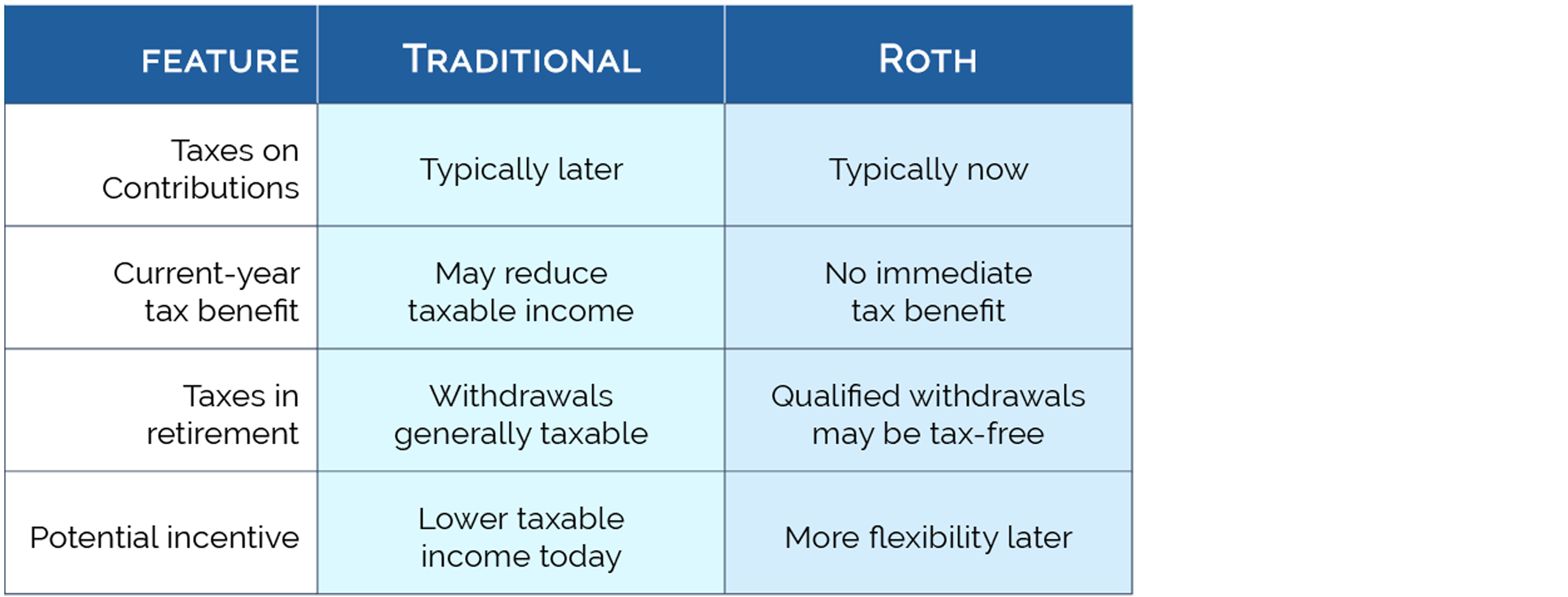
The primary difference between a Traditional 401(k) and a Roth IRA is the timing of the tax hit. With a Traditional 401(k), you receive an immediate tax deduction, but every dollar withdrawn in retirement is taxed as ordinary income. With a Roth IRA, you contribute after-tax dollars, but the growth and subsequent withdrawals are entirely tax-free.
The "Tax Now vs. Tax Later" Calculation
The decision to prioritize a Roth IRA hinges on tax arbitrage. If your marginal tax rate today is lower than what you expect it to be when you retire, the Roth IRA is mathematically superior. In 2026, many professionals find themselves in the 12% or 22% tax brackets. If they expect to be in a higher bracket later due to career progression, the expiration of current tax cuts, or significant RMDs (Required Minimum Distributions) from other accounts, paying the tax now at a "discount" is the logical choice.
Hedge Against Legislative Risk
Tax rates are historically low by mid-century standards. There is no guarantee that the tax brackets we see in 2026 will remain this favorable decades into the future. By utilizing a Roth IRA as a 401(k) alternative, you are essentially buying "tax insurance." You are locking in today’s known rates to protect yourself against the risk of the government raising income taxes to manage national debt or social programs in the future.
When the 401(k) Fails: High Fees and Subpar Options
One of the most compelling reasons to look for a 401(k) alternative is the "hidden" cost of many employer-sponsored plans. While large corporations often negotiate institutional-grade pricing, small to mid-sized businesses frequently offer plans burdened by high administrative costs and expensive mutual funds.
The Impact of Expense Ratios
In an independent Roth IRA, you have access to the entire universe of stocks, bonds, and ETFs. You can easily build a portfolio with a weighted average expense ratio of less than 0.05%. Conversely, many 401(k) plans offer funds with expense ratios exceeding 1.00%, plus an additional "wrap fee" or administrative fee of 0.50%.
A 1.5% total fee might seem small, but over a 30-year career, it can erode nearly 30% of your total potential account balance compared to a low-cost Roth IRA. If your 401(k) does not offer low-cost index funds (like those tracking the S&P 500 or Total Stock Market), the Roth IRA becomes the superior vehicle for any dollars beyond your employer's matching contribution.
Limited Investment Freedom
A 401(k) typically limits you to a menu of 15 to 25 mutual funds. If those funds are poorly managed or lack exposure to specific sectors (like international small-cap or emerging markets), your diversification suffers. A Roth IRA allows you to implement sophisticated strategies, including individual stock selection or specialized REITs, which are rarely available in a standard 401(k).
The Liquidity Advantage: Accessing Your Principal
One of the most misunderstood features of the Roth IRA is its flexibility compared to the rigid structure of a 401(k). Because you have already paid taxes on your Roth contributions, the IRS allows you to withdraw the principal (the original amount you put in) at any time, for any reason, without taxes or penalties.
The Emergency Buffer
While you should view a Roth IRA as a long-term retirement vehicle, it can serve as a "tier two" emergency fund. In a Traditional 401(k), accessing funds before age 59½ usually triggers a 10% penalty plus immediate income taxes. While 401(k) loans exist, they must be repaid—often immediately if you leave your job. The Roth IRA’s ability to provide penalty-free access to contributions offers a level of financial security that a Traditional 401(k) simply cannot match.
Exceptions for Earnings
While earnings on your Roth IRA generally must stay in the account until age 59½ and for at least five years to remain tax-free, there are specific exceptions. In 2026, rules continue to allow for penalty-free (though sometimes taxed) withdrawals of earnings for first-time home purchases (up to $10,000) or qualified higher education expenses. This makes the Roth IRA a versatile tool for young professionals who are balancing retirement savings with major life milestones.
Estate Planning and the Elimination of RMDs
A significant advantage of the Roth IRA over the Traditional 401(k) appears during the "distribution phase" of your life. Under current IRS guidelines, Traditional 401(k)s and Traditional IRAs are subject to Required Minimum Distributions (RMDs). By age 73 or 75 (depending on your birth year per the SECURE Act 2.0), the government forces you to take money out of these accounts and pay taxes on it, whether you need the income or not.
No RMDs for Original Owners
Roth IRAs do not have RMDs during the lifetime of the original owner. This allows your investments to continue compounding tax-free for as long as you live. If you don't need the money to support your lifestyle, you can leave the entire balance to your heirs.
A Tax-Free Gift to Heirs
When you pass a Traditional 401(k) to a non-spouse beneficiary, they are generally required to withdraw the entire balance within 10 years, paying income taxes on every dollar. This often pushes them into their own highest-earning years and a higher tax bracket. A Roth IRA passed to an heir is also subject to the 10-year rule, but the withdrawals are tax-free for them. This makes the Roth IRA one of the most powerful estate-planning tools available in 2026.
Comparison: Roth IRA vs. Traditional 401(k) in 2026
The following table highlights the key differences that influence which account should be prioritized.
| Feature | Roth IRA | Traditional 401(k) |
|---|---|---|
| Tax Treatment | After-tax (Tax-free growth) | Pre-tax (Tax-deferred growth) |
| Contribution Limit (2026) | ~$7,500 ($8,500 if 50+) | ~$24,000 ($31,500 if 50+) |
| Employer Match | None | Common (The "Free Money") |
| Investment Choice | Unlimited (Any broker) | Limited (Employer's menu) |
| RMDs | None (during owner's life) | Required starting at age 73/75 |
| Early Withdrawal | Principal: Always penalty-free | Generally 10% penalty + taxes |
| Income Limits | Yes (Phase-outs apply) | No (Anyone can contribute) |
Note: Contribution limits for 2026 are subject to final IRS inflation adjustments.
The "Waterfall Method": How to Balance Both
It is rarely an "all or nothing" choice. Most financial experts recommend a prioritized sequence, often called the Waterfall Method, to ensure you are getting the best of both worlds.
- 401(k) to the Match: If your employer offers a 100% match on the first 4% of your salary, that is a 100% return on your money. No IRA can beat that. Always contribute enough to the 401(k) to capture the full match.
- Max Out the Roth IRA: Once the match is secured, pivot to the Roth IRA. This allows you to escape the high fees of a 401(k) and gain the tax-free growth and liquidity benefits discussed above.
- Return to the 401(k): If you still have money to invest after maxing out your Roth IRA (the 2026 limit is approximately $7,500), go back to your 401(k) and contribute more there to lower your current year’s taxable income.
- Taxable Brokerage: Only after maxing out both should you look toward standard taxable brokerage accounts.
High Earners and the "Backdoor" Roth Strategy
A common obstacle to using the Roth IRA as a 401(k) alternative is the income limit. In 2026, if your Modified Adjusted Gross Income (MAGI) exceeds certain thresholds, you are legally barred from contributing directly to a Roth IRA.
However, the Backdoor Roth IRA remains a legal and effective strategy. This involves contributing to a non-deductible Traditional IRA (which has no income limits) and then immediately converting that balance to a Roth IRA. Because there are no income limits on conversions, this allows high earners to bypass the restrictions and build a tax-free nest egg.
Caution: When performing a Backdoor Roth, you must be aware of the "Pro-Rata Rule." If you have other pre-tax IRAs (like a Rollover IRA from a previous job), the IRS views all your IRAs as one entity, and the conversion will be partially taxable. Consult a tax professional to ensure this is executed correctly.
Frequently Asked Questions
Is it better to have a Roth 401(k) or a Roth IRA?
If your employer offers a Roth 401(k), you get the high contribution limits of a 401(k) with the tax-free growth of a Roth. However, a Roth IRA is often still superior for the "secondary" benefits: no RMDs and the ability to withdraw original contributions penalty-free at any time. Many investors use the Roth 401(k) for the bulk of their savings and a Roth IRA for flexibility.
What happens to my Roth IRA if I change jobs?
Nothing. Unlike a 401(k), which is tied to your employer, a Roth IRA is an individual account. You keep it regardless of your employment status. If you leave a job where you had a Roth 401(k), you can usually roll that balance into your Roth IRA to consolidate your holdings.
Can I contribute to both a 401(k) and a Roth IRA in the same year?
Yes, as long as you meet the income requirements for the Roth IRA. The contribution limits for these accounts are completely separate. In 2026, a motivated saver could potentially put $24,000 into a 401(k) and another $7,500 into a Roth IRA.
Does the Roth IRA help reduce my taxes this year?
No. Roth IRA contributions are made with after-tax dollars, meaning they do not reduce your taxable income for the current year. The benefit is entirely "back-loaded," focusing on tax-free income during retirement.
What is the "Five-Year Rule" for Roth IRAs?
To withdraw earnings tax-free, the Roth IRA account must have been open for at least five tax years, and you must be at least 59½ years old. This clock starts on January 1st of the year you made your first contribution. Note that this rule does not apply to your original contributions, which can be withdrawn at any time.
Final Recommendation: How to Act in 2026
To determine if a Roth IRA should be your primary 401(k) alternative, perform a quick "Fee and Fund Audit" of your current employer's plan. If your 401(k) lacks index funds with expense ratios under 0.20%, or if the plan adds an administrative fee over 0.50%, you should prioritize the Roth IRA immediately after securing your employer's match.
For those in the early or middle stages of their careers, the tax-free growth of the Roth IRA is almost always the more powerful wealth-building tool. Start by opening a Roth IRA at a low-cost brokerage (such as Vanguard or Fidelity), automate your monthly contributions, and select a diversified total-market index fund. This simple pivot ensures that your future self—and your heirs—will not be burdened by the uncertainty of future tax hikes.