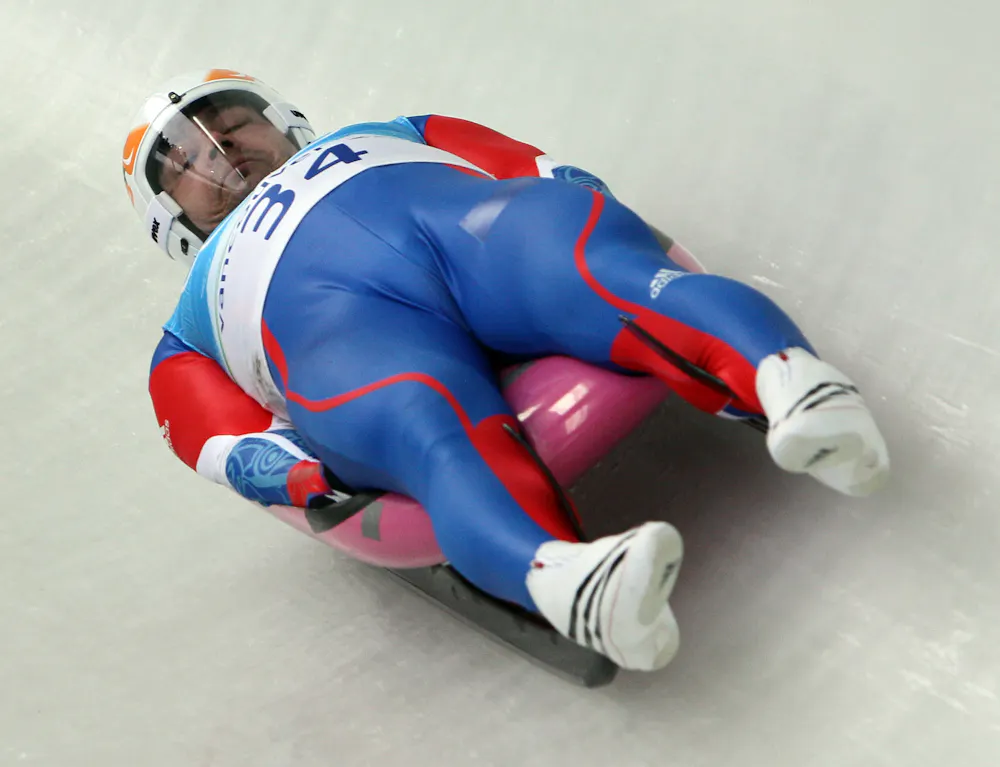
In the Luge Team Relay—the sport's premier four-person competition—balancing speed and team dynamics requires synchronizing three distinct runs (women’s singles, men’s singles, and doubles) into one continuous clock. Success depends on individual aerodynamic precision and a flawless "reaction start" triggered by the previous teammate hitting an overhead touch pad at the finish line.
The sport of luge is often defined by the solitary pursuit of thousandths of a second. However, the Team Relay format, which has become a cornerstone of the FIL (Fédération Internationale de Luge) World Cup and the 2026 Winter Olympic program, transforms this individualistic discipline into a complex exercise in collective timing. While a "4-man luge" sled does not exist in the same way a four-man bobsleigh does, the Team Relay is the definitive four-athlete event, requiring a woman, a man, and a doubles pair to operate as a single unit.
The challenge is twofold: each athlete must push their personal velocity to the absolute limit while managing the unique psychological and technical pressures of a relay transition. Unlike traditional heats, where an athlete starts from a standstill with a "pull-off," the second and third legs of a relay involve a "reaction start" from a gate that opens only when the preceding sled completes its run.
The Architecture of the Luge Team Relay
To understand how speed and dynamics balance, one must first understand the structural flow of the event. The relay follows a specific order of participation: the female singles athlete goes first, followed by the male singles athlete, and finally the doubles sled (consisting of two athletes, typically the "anchor" of the team).
The Sequence of Play
The first athlete begins at the top of the track with a standard pull-start, using spiked gloves to paddle against the ice before settling into the aerodynamic "pod" position. As they cross the finish line, they do not simply stop; they must sit up and strike an overhead touch pad suspended above the track. This contact sends an electronic signal to the start gate at the top, which releases the next teammate.
The Cumulative Clock
In a standard luge race, athletes compete in separate heats, and their times are added together. In the Team Relay, the clock never stops. This creates a "live" pressure environment where a mistake by the first athlete forces the subsequent athletes to take higher risks to recover lost time. Balancing this risk-reward ratio is the primary responsibility of the team's coaching staff and the athletes themselves.
Physics of Velocity: Maximizing Speed on the Ice
Speed in luge is a product of gravity, friction reduction, and aerodynamic profile. In a team setting, these factors must be optimized across three different sled configurations.
Aerodynamics and Body Position
The primary resistance in luge is air. At speeds exceeding 130 km/h (80 mph), even a slightly raised toe or a loose suit can cost the team several hundredths of a second. Athletes must maintain a perfectly flat profile, with their heads back and eyes peering just over the bridge of their nose. In the Team Relay, because the athletes are often pushing to compensate for one another, there is a temptation to "steer too much." Over-steering creates friction between the steels (runners) and the ice, which bleeds kinetic energy.
"Steels" and Ice Chemistry
The runners of the luge sled, known as steels, are the only point of contact with the ice. In 2026, technology in steel preparation has reached a peak, with teams using specific alloys that react differently to various ice temperatures. In a Team Relay, the ice condition changes from the first leg to the third. The female athlete, going first, often encounters the "freshest" ice, while the doubles sled, carrying significantly more weight, must navigate a track that has been slightly more "cut" by previous runners.
The Relay Mechanism: The Critical "Touch" and Transition
The most distinct technical element of the four-person dynamic is the touch-pad transition. This is where most relay races are won or lost.
The Overhead Touch Pad
As the athlete approaches the finish, they must transition from a flat, aerodynamic position to a seated position to hit the pad. If they hit the pad too early (before the finish line), they risk a disqualification or a loss of momentum. If they miss it entirely, the gate at the top remains closed, and the team is disqualified.
The Reaction Start
For the second and third legs, the "pull-start" is replaced by a "reaction start." The athletes sit on their sleds at the top, hands on the handles, waiting for the gate to drop. The moment the gate opens, they must pull with maximum force. Unlike a standard start where the athlete chooses the moment of exertion, the relay start is reactive. This requires a specific type of explosive power and mental focus, as the athlete must "read" the timing of their teammate’s arrival at the bottom of the track via a video monitor or audio cues.
| Feature | Singles Luge | Doubles Luge | Team Relay (4 Athletes) |
|---|---|---|---|
| Athletes per Sled | 1 | 2 | 1, 1, and 2 (3 sleds) |
| Start Type | Manual Pull | Manual Pull | 1 Manual / 2 Reactive |
| Steering | Individual (Legs/Shoulders) | Coordinated (Bottom/Top) | Individual + Sequence Coordination |
| Finish Method | Electronic Light Beam | Electronic Light Beam | Overhead Touch Pad (Transmitter) |
| Pressure Source | Personal Record/Field | Personal Record/Field | Teammate Performance/Cumulative Clock |
Team Dynamics: Synchronization and Psychological Resilience
While the athletes are on the track alone (except for the doubles pair), the "team dynamics" of luge are felt in the preparation and the "box" (the starting area).
The Psychology of the Anchor
The doubles pair acts as the anchor in the Team Relay. By the time they start, the team may be leading or trailing by a margin. If the team is ahead, the dynamic shifts toward "safe" speed—avoiding catastrophic errors. If the team is behind, the anchor must decide whether to take a "tighter" line in the curves, which is faster but significantly more dangerous. This decision-making process is a core component of the team’s internal dynamic.
Communication and Trust
A team consists of four individuals who often have different training regimens. In the leading nations like Germany, Austria, and the USA, these four athletes spend the week prior to a relay event analyzing each other's lines. If the first athlete reports that Curve 14 is "skiddy" or that the ice is running "long," the subsequent athletes must trust that information and adjust their steering inputs accordingly. This verbal data transfer is the "software" that runs the relay.
Equipment and Technical Specifications for 2026
By 2026, luge technology has evolved to allow for minute adjustments to the sled between legs, though the sleds themselves are standardized before the race.
- The Pod: The fiberglass or carbon-fiber shell is custom-molded to the athlete's body. In a relay, there is no sharing of equipment; each of the three sleds is unique to the leg being run.
- The Kufen: The wooden bridges (kufen) that connect the pod to the steels provide the "flex" needed to steer. In 2026, many teams use hybrid materials that maintain flexibility in extreme cold but stiffen under the high G-forces of the lower track.
- Gloves and Spikes: The relay requires spikes that can provide traction for the reaction start but aren't so long that they interfere with the seated "hit" on the touch pad at the finish.
For more technical specifications on equipment standards, the International Luge Federation (FIL) provides updated annual regulatory documents.
Strategic Selection: Building the Ultimate Four-Person Roster
Coaches do not always pick the fastest individual male or female for the relay. They pick the best "relay performers."
- Consistency over Peak Speed: An athlete who consistently finishes within 0.05 seconds of the lead is often preferred over a "flyer" who might win a gold medal one day and crash the next. In a relay, a crash results in a DNF (Did Not Finish) for the entire team.
- The "Doubles" Factor: Because doubles sleds are heavier and more difficult to handle in the lower, higher-speed sections of the track, the team dynamics prioritize a doubles pair with a proven track record of handling "dirty" ice or late-day temperature shifts.
- The Reaction Specialist: Some athletes have naturally faster reaction times. Since the gate opening in the relay is an external stimulus, athletes with backgrounds in sports like sprinting or reactive disciplines may have an edge in the second and third legs.
Common Pitfalls in Team Luge Execution
Despite elite training, the balance between speed and dynamics can collapse under specific circumstances:
- The "Short" Hit: If an athlete sits up too early to hit the touch pad, they lose aerodynamic speed for the final 10-15 meters of the track. This can cost more time than the reaction start saves.
- The Over-Pull: In the second leg, an athlete may pull too hard on the handles during the reaction start, causing the sled to "fishtail" early in the run.
- Communication Breakdown: If the team does not account for changes in track humidity or frost buildup during the interval between the first and last leg (which can be several minutes), the anchor sled will be poorly prepared for the ice's friction level.
FAQ
How does the 4-man luge differ from the 4-man bobsleigh? The 4-man bobsleigh features four athletes inside a single, large sled. The 4-man luge (Team Relay) involves four athletes competing on three separate sleds (two singles and one doubles) in a continuous relay format where one athlete's finish triggers the next athlete's start.
Can the order of the athletes be changed in the relay? No. According to FIL regulations, the order is fixed: Women's Singles, followed by Men's Singles, followed by Doubles. This standardization ensures a predictable rhythm for the broadcast and the technical officials managing the start gates.
What happens if an athlete misses the touch pad at the end? If the athlete fails to hit the overhead touch pad, the start gate for the next teammate will not open. This results in a disqualification or a "Did Not Finish" (DNF) for the entire team. Precision in hitting the pad is just as important as the speed of the run itself.
How is the winner determined in the Team Relay? The winner is the team with the lowest cumulative time from the moment the first athlete starts to the moment the final sled (doubles) crosses the finish line. Because it is a continuous clock, the transitions and reaction times are included in the total time.
Are there mixed-gender requirements for the team? Yes. The Team Relay is a mixed-gender event by design. It requires one female athlete and one male athlete (singles), plus a doubles pair. While doubles can theoretically be of any gender configuration under modern rules, it is usually a men's or women's doubles pair that completes the quartet.
Practical Recommendation for 2026 Competitors
For teams preparing for the 2026 circuit, the focus should shift from individual heat training to simulated transition drills. The "reaction start" is a skill that can be decoupled from full-track runs. Utilizing dry-land start facilities with electronic gates can help athletes synchronize their timing without the physical toll of repeated ice runs. Furthermore, athletes must practice the seated-hit transition on the touch pad until it becomes muscle memory, ensuring they maintain an aerodynamic tuck for as long as possible before the finish.