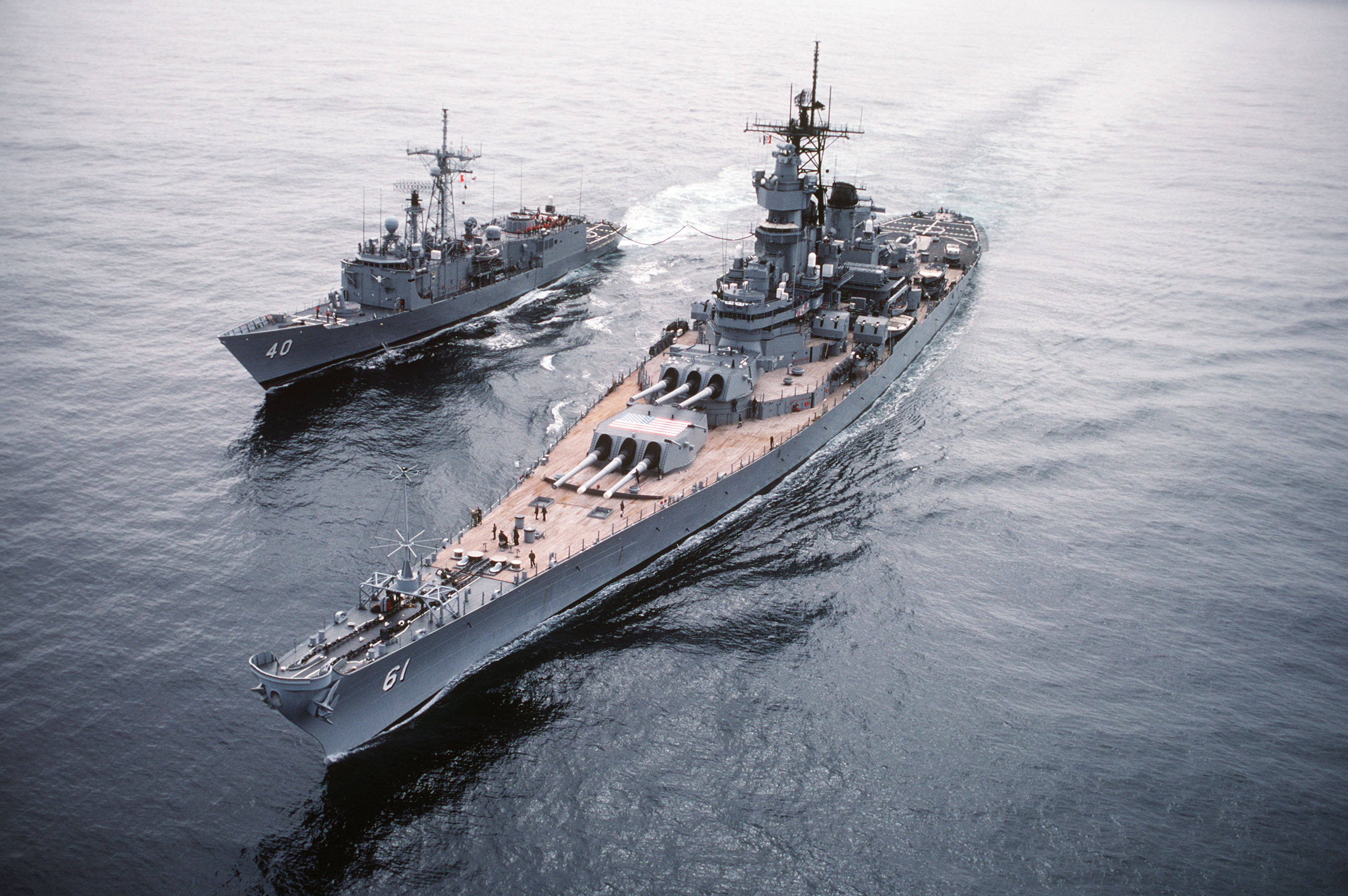
The four Iowa-class battleships—the USS Iowa (BB-61), USS New Jersey (BB-62), USS Missouri (BB-63), and USS Wisconsin (BB-64)—are the most powerful and final class of battleships ever commissioned by the United States Navy. As of 2026, all four vessels are preserved as public museum ships, located in Los Angeles, Camden, Pearl Harbor, and Norfolk, respectively.
The Genesis of the Fast Battleship Concept
The Iowa-class was the culmination of the American "Fast Battleship" design philosophy. Prior to World War II, battleships were often categorized into two camps: those with heavy armor and massive guns but slow speeds (the "Standard" type), and "battlecruisers" that sacrificed protection for mobility. The Iowa-class ended this compromise.
Designed in the late 1930s under the escalating tensions in Europe and the Pacific, these ships were intended to counter the Japanese Kongo-class and eventually the massive Yamato-class. The primary requirement was a speed of at least 32 knots, allowing them to serve as the primary escort for the burgeoning Fast Carrier Task Forces. To achieve this, the hull was designed with a high length-to-beam ratio, featuring a distinctive "bulbous bow" to reduce drag.
The propulsion system was a marvel of 1940s engineering. It consisted of eight Babcock & Wilcox boilers and four Westinghouse geared turbines, generating 212,000 shaft horsepower. This allowed the 45,000-ton (standard displacement) giants to outpace almost every other capital ship on the ocean. By 2026, visitors to these ships can still view the massive engine rooms, which remain some of the most complex mechanical spaces ever put to sea.
Technical Specifications and Armament
The defining feature of the Iowa-class is the 16-inch/50 caliber Mark 7 gun. Each ship carried nine of these guns in three triple turrets (two forward, one aft). Unlike the 16-inch guns on the previous North Carolina and South Dakota classes, the Iowa's guns were five calibers longer, providing greater muzzle velocity and range.
The 16-Inch Main Battery
The Mark 7 guns fired two primary types of projectiles: the 1,900-pound High Capacity (HC) shore bombardment shell and the 2,700-pound Armor Piercing (AP) "Super Heavy" shell. The AP shell was capable of penetrating nearly 30 feet of concrete or 20 inches of face-hardened steel at a range of 20 miles. The precision of these guns was maintained by an analog mechanical computer—the Ford Instrument Company Mark 1A Fire Control Computer—which was so effective it remained in use through the 1991 Gulf War.
Armor and Protection
The Iowa-class utilized an "all-or-nothing" armor scheme. This design concentrated the heaviest protection around the "citadel," the vital core containing magazines and machinery. The main belt armor was 12.1 inches thick, but it was inclined at 19 degrees to increase its relative thickness against horizontal fire.
Secondary and Anti-Aircraft Armament
During World War II, these ships were bristling with secondary weapons. This included twenty 5-inch/38 caliber dual-purpose guns in ten twin mounts, dozens of 40mm Bofors quads, and scores of 20mm Oerlikon cannons. Their primary role during this era was to provide a "wall of steel" against Japanese kamikaze attacks, protecting the vulnerable aircraft carriers they escorted.
The 1980s Modernization: A New Lease on Life
While most battleships from the World War II era were scrapped or sunk as targets by the 1960s, the four Iowa-class ships were uniquely suited for modernization. In the 1980s, under President Ronald Reagan’s "600-Ship Navy" initiative, all four were pulled from the mothball fleet and heavily retrofitted to face the Soviet threat.
The modernization replaced most of the dated anti-aircraft guns with cutting-edge missile technology:
- Tomahawk Cruise Missiles: 32 missiles in armored box launchers for long-range land attack.
- Harpoon Anti-Ship Missiles: 16 missiles for ship-to-ship engagements.
- Phalanx CIWS: Four 20mm Gatling guns for "last-ditch" defense against incoming missiles.
- RQ-2 Pioneer Drones: The ships became the first to utilize Unmanned Aerial Vehicles (UAVs) for spotting naval gunfire.
This upgrade transformed the 4 Iowa-class battleships into multi-mission platforms, capable of launching precision strikes hundreds of miles inland while retaining the terrifying psychological impact of their 16-inch guns.
USS Iowa (BB-61): The Lead Ship
Commonly known as "The Big Stick," the USS Iowa was the lead ship of her class. She is perhaps most famous for her role as the "Ship of State" during World War II. In 1943, she carried President Franklin D. Roosevelt across the Atlantic to the Tehran Conference. To accommodate the President’s needs, a custom bathtub was installed—the only bathtub ever fitted for a U.S. Navy battleship.
The Iowa’s history is also marked by tragedy. In April 1989, during a training exercise off Puerto Rico, an explosion in Turret 2 killed 47 crewmen. The turret was never fully repaired, and today, it serves as a somber memorial to the fallen sailors. Since 2012, she has been berthed in San Pedro, Los Angeles, and serves as the National Museum of the Surface Navy.
USS New Jersey (BB-62): The Most Decorated
The USS New Jersey, known as "Big J," holds the distinction of being the most decorated battleship in U.S. history. She is the only Iowa-class ship to have seen active combat service during the Vietnam War, where she provided crucial fire support along the DMZ. Her presence was so effective that it was often cited as a factor in bringing the North Vietnamese to the bargaining table.
In 2024, the New Jersey underwent a massive drydocking project for maintenance and hull painting—the first time she had been out of the water in over 30 years. By 2026, she is back at her home in Camden, New Jersey, featuring a newly restored teak deck and upgraded museum exhibits. She remains a symbol of the "Black Dragon" nickname she earned for her relentless night-firing missions.
USS Missouri (BB-63): The Surrender Deck
The USS Missouri, or "Mighty Mo," is perhaps the most historically significant of the four. On September 2, 1945, in Tokyo Bay, the official Japanese Instrument of Surrender was signed on her starboard veranda deck, ending World War II.
The Missouri was also the final battleship ever built by the United States and the last to be decommissioned. She played a pivotal role in the 1991 Gulf War, firing both Tomahawk missiles and 16-inch shells at Iraqi targets. Today, she is moored in Pearl Harbor, Hawaii, facing the USS Arizona Memorial. This positioning creates a symbolic "bookend" to the war: the ship where the war began for the U.S. and the ship where it ended.
USS Wisconsin (BB-64): "Temper, Temper"
The USS Wisconsin is celebrated for its longevity and a famous piece of naval lore. During the Korean War, the ship was struck by a North Korean 155mm shell, which caused minor damage but injured several sailors. In response, the Wisconsin trained all nine of its 16-inch guns on the battery's position and fired a full broadside, completely obliterating the hill. An escorting destroyer reportedly signaled the battleship with the message: "Temper, temper."
The Wisconsin was also involved in a major collision with the destroyer USS Eaton in 1956, which crushed her bow. In a remarkable engineering feat, the bow of the unfinished battleship USS Kentucky (BB-66) was grafted onto the Wisconsin in just 16 days. She is currently preserved at Nauticus in Norfolk, Virginia, where her massive scale is a highlight of the city’s waterfront.
Comparison of the 4 Iowa-Class Battleships
The following table compares the current status and key historical roles of the four vessels as of 2026.
| Feature | USS Iowa (BB-61) | USS New Jersey (BB-62) | USS Missouri (BB-63) | USS Wisconsin (BB-64) |
|---|---|---|---|---|
| Hull Number | BB-61 | BB-62 | BB-63 | BB-64 |
| Nickname | The Big Stick | Big J / Black Dragon | Mighty Mo | Wisky |
| Current Location | San Pedro, CA | Camden, NJ | Pearl Harbor, HI | Norfolk, VA |
| Key Historical Event | Carried FDR to Tehran | Only ship in Vietnam | WWII Surrender Site | "Temper, Temper" Incident |
| Museum Focus | Surface Navy History | Naval Technology | The End of WWII | Naval Engineering |
| 2026 Status | Active Museum | Active Museum (Post-Refit) | Active Museum | Active Museum |
Operational Limitations and Decommissioning
The decision to finally retire the 4 Iowa-class battleships was driven by economics and changing naval doctrine rather than a lack of capability. By the early 1990s, the ships required a crew of over 1,500 sailors each—far more than modern Arleigh Burke-class destroyers, which carry similar missile loads with a fraction of the personnel.
Furthermore, the maintenance of the massive steam boilers and the lack of 16-inch shell production made them increasingly difficult to operate. The ships were officially struck from the Naval Vessel Register in the mid-2000s, ensuring they would spend their remaining years as educators rather than combatants. In 2026, the primary challenge for these museums is "ship husbandry"—the constant battle against salt-water corrosion and the need to replace thousands of square feet of teak decking.
Frequently Asked Questions
Are any Iowa-class battleships still in active service?
No. All four Iowa-class battleships have been decommissioned and donated as museum ships. The USS Missouri was the last to be decommissioned in 1992. While they were maintained in a state of "Ready Reserve" for many years, they have all since been struck from the Naval Vessel Register, meaning the Navy no longer intends to reactivate them.
Which Iowa-class battleship is the largest?
All four ships were built to essentially the same dimensions, but the USS Missouri and USS Wisconsin are technically about 4 inches longer than the Iowa and New Jersey. This minor difference was due to design tweaks and the specific shipyards where they were constructed. In terms of displacement, they are virtually identical, though the Missouri is often cited as the "heaviest" due to her 1980s configuration.
Can these battleships still fire their guns?
No. As part of the donation agreement to become museum ships, the firing mechanisms of the 16-inch guns were rendered inoperable. Furthermore, the specialized gunpowder (silk bags of smokeless powder) is no longer manufactured, and the remaining stocks have mostly been disposed of for safety reasons.
Why were there only 4 Iowa-class battleships?
The original plan called for six ships. The USS Illinois (BB-65) and USS Kentucky (BB-66) were both laid down, but their construction was canceled at the end of World War II as the carrier replaced the battleship as the primary capital ship. The Kentucky's bow was famously used to repair the Wisconsin after a collision.
Where can I visit all 4 Iowa-class battleships?
You can visit the ships in the following locations:
- USS Iowa: San Pedro (Port of Los Angeles), California.
- USS New Jersey: Camden, New Jersey (across from Philadelphia).
- USS Missouri: Pearl Harbor, Hawaii (Ford Island).
- USS Wisconsin: Norfolk, Virginia (at the Nauticus maritime center).
Practical Recommendations for Visitors in 2026
If you are planning to visit one of the 4 Iowa-class battleships in 2026, it is highly recommended to book "Behind the Scenes" or "Engine Room" tours in advance. These specialized tours take you deep into the ship’s bowels, where the general public is not typically allowed.
For the best historical experience, the USS Missouri in Pearl Harbor offers the most context regarding the end of WWII, while the USS New Jersey is widely regarded as having the most extensive and interactive tours regarding the 1980s modernization and daily life aboard. Always wear comfortable, closed-toe shoes, as the "knee-knockers" (high door sills) and steep "ladders" (stairs) are original to the ships' military design and can be challenging to navigate.