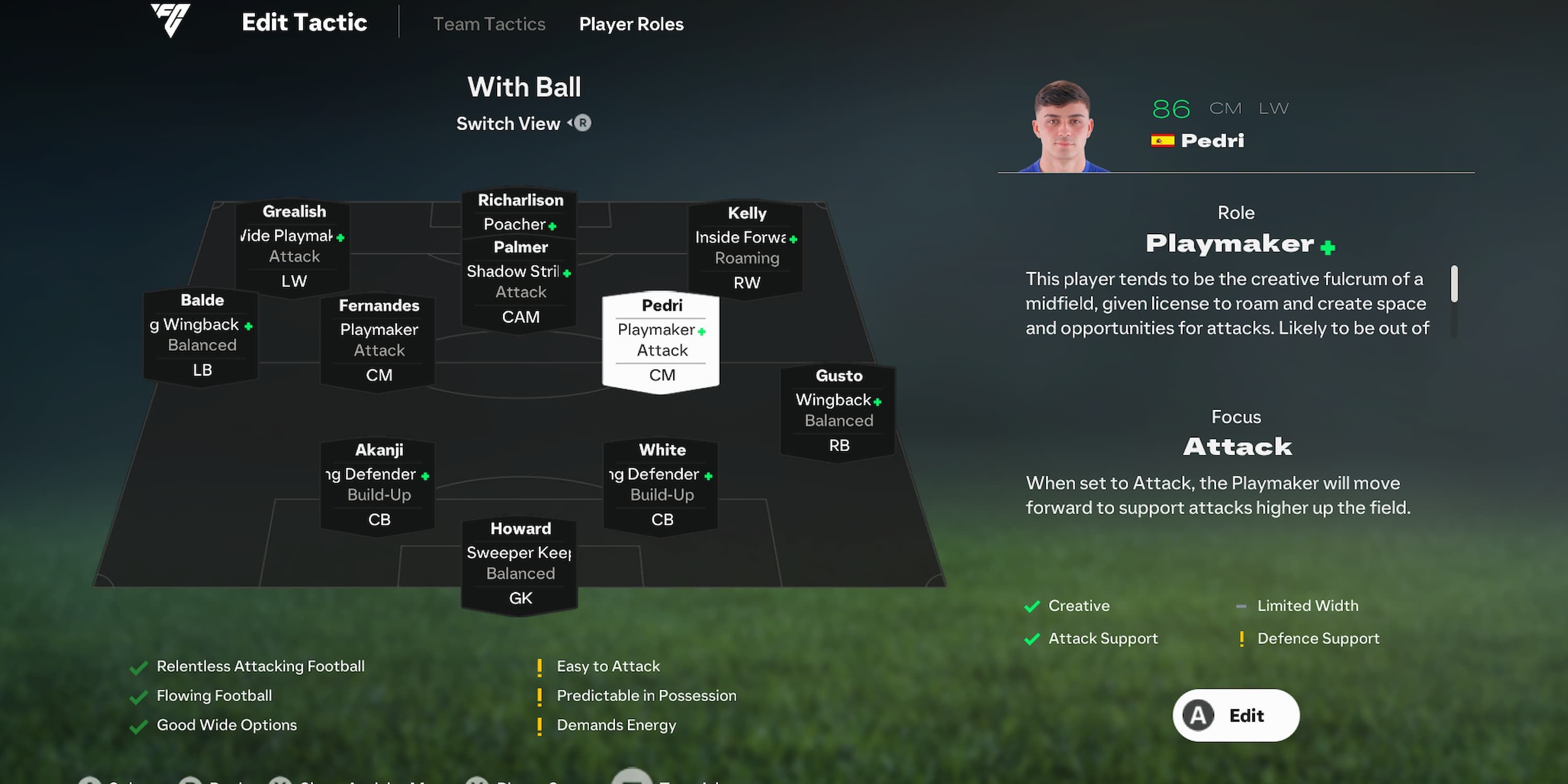
The 4-3-3 formation attacking system relies on width, positional rotation, and numerical superiorities in key zones to break down low blocks and high presses alike. By utilizing a single holding midfielder, two box-to-box central midfielders, two touchline-hugging wingers, and a dynamic center-forward, teams can overload opposing defenses, create vertical passing lanes, and relentlessly probe the final third.
Evolution and Core Philosophy of the 4-3-3 Attack
The modern 4-3-3 system has evolved from rigid, position-bound structures into a fluid, highly coordinated attacking machine. At its core, the tactical philosophy is built on dominance of space and the creation of passing triangles across every horizontal and vertical line of the pitch. When a team transitions into the attacking phase from a medium block or build-up, the objective is to stretch the opponent horizontally with the wide forwards while pinning their backline deep.
Coaches value this tactical shape because it offers natural coverage in all areas. The central corridor features three players who can dictate tempo, protect against counter-attacks, and slip passes through the lines. Meanwhile, the front three provide direct threats running in behind or dropping into pockets to receive the ball under control. This creates a perpetual dilemma for opposing managers: step up to compact the midfield and risk getting exploited in behind, or drop deep and allow the midfield trio to control possession uncontested.
Positional Roles and Responsibilities in the Final Third
Every player in a 4-3-3 attacking system must understand their specific duties when the team crosses the halfway line. Success depends heavily on positional discipline mixed with calculated freedom. Below is a breakdown of how each role functions during sustained attacks.
The Front Three: Wingers and Center-Forward
The success of a 4-3-3 attacking phase is largely dictated by the front line. The two wingers are typically deployed on their "inverted" sides (left-footed player on the right wing, right-footed player on the left wing) to allow them to cut inside and shoot, or they can play as traditional touchline wingers who excel at beating defenders on the outside and delivering crosses. Their primary job is to isolate opposing fullbacks in 1v1 situations and stretch the opponent's defensive width to the maximum legal limits of the pitch.
The center-forward acts as the focal point, but in modern tactical iterations, this player is rarely a static target man. Often functioning as a complete forward or a false nine, they must master dropping deep into the half-spaces to drag central defenders out of position, thereby opening channels for the advancing central midfielders or inverted wingers to exploit.
The Midfield Engine: The 6, 8, and 10 Roles
Behind the front three lies a midfield trio typically arranged as one holding midfielder (Number 6) and two more advanced central midfielders (Numbers 8 and 10).
- The Number 6: Serves as the anchor, recycling possession, stopping counter-attacks at source, and acting as a passing outlet when the attack hits a dead end and needs to be reset.
- The Number 8s: These players are the workhorses of the attack. They must possess exceptional stamina and tactical intelligence to make late runs into the penalty box, support the wide areas during overloads, and provide defensive balance if possession is lost. One Number 8 may push higher up to occupy the half-space, while the other sits slightly deeper to cover the central zone.
Building Attacks from the Back: The First and Second Phases
An effective 4-3-3 attacking strategy begins deep in the defensive third. The build-up phase is designed to bait the opponent into pressing, which subsequently creates space behind their midfield lines.
| Build-Up Phase | Key Objective | Tactical Mechanism |
|---|---|---|
| First Phase (Build-Up) | Safely exit the defensive third | The central holding midfielder drops between or alongside the center-backs to create a numerical superiority against the opponent's press, while fullbacks push high and wide. |
| Second Phase (Progression) | Penetrate the opponent's midfield block | Utilize third-man combinations, quick one-touch passing, and vertical balls into the feet of the central midfielders or the dropping center-forward. |
| Final Phase (Creation) | Create high-quality scoring chances | Isolate wingers in 1v1s, execute underlap/overlap runs with fullbacks, and flood the box with late-arriving midfielders. |
During the progression phase, the single pivot (Number 6) is crucial. If the opponent uses a two-man press against the center-backs, the Number 6 drops into the backline to form a temporary back three, pushing the fullbacks higher up the flank. This shape shift forces the opposing midfield to make difficult choices regarding who to mark.
Key Tactical Mechanisms for Breaking Down Defenses
Coaches utilize specific passing patterns and movement combinations to unlock stubborn defenses using a 4-3-3 framework.
Overloads and Underlaps in Wide Areas
One of the most potent weapons of a 4-3-3 is the wide triangle formed by the winger, the central midfielder (Number 8), and the fullback. When the winger holds the width on the touchline, the fullback can execute an underlap (running inside the winger into the half-space) instead of the traditional overlap. This movement frequently confuses the opposing defense, as the fullback markers must decide whether to track the runner inside or stay with the winger on the touchline.
Half-Space Exploitation and Rotations
Modern defenses are adept at clogging the central corridor. To counter this, 4-3-3 teams heavily exploit the half-spaces—the channels between the opponent's center-backs and fullbacks. The central midfielder on that side will frequently advance into this pocket of space. If the opposing center-back steps out to challenge them, a gap opens for the center-forward or the opposite winger to attack.
Common Challenges and Troubleshooting in the 4-3-3 Attack
While potent, the 4-3-3 formation has distinct structural vulnerabilities that opponents can exploit if the attacking team is not careful.
- Isolation of the Center-Forward: If the wingers fail to tuck inside when the ball is on the opposite flank, or if the central midfielders fail to push high enough, the center-forward becomes entirely isolated against two center-backs. Solution: Ensure the weak-side winger attacks the back post on crosses and that at least one central midfielder pushes up level with the striker.
- Vulnerability to Quick Counter-Attacks: Because the 4-3-3 commits many players forward—including at least one fullback and multiple midfielders—losing possession carelessly leaves the backline exposed. Solution: The holding midfielder (Number 6) must maintain strict positional discipline, refusing to join the attack unless the central defenders have adequate cover.
Frequently Asked Questions
What makes the 4-3-3 formation so effective for attacking?
The 4-3-3 provides natural width through wingers, vertical depth through the center-forward, and central control via a three-man midfield. This balance allows teams to attack through the center, down the flanks, and through half-spaces simultaneously, stretching the opponent's defensive shape horizontally and vertically.
How do you prevent a 4-3-3 from becoming too defensive?
To keep a 4-3-3 attacking, managers must instruct their fullbacks to push high during possession phases and ensure the two central midfielders (the Number 8s) actively crash the penalty box during crosses. Furthermore, wingers must be encouraged to take risks in 1v1 situations rather than simply recycling possession sideways.
What is the role of the false nine in a 4-3-3 attack?
A false nine is a center-forward who drops deep into the midfield during the build-up phase. This movement draws opposing center-backs out of their defensive line, creating massive spaces in behind that the wingers and central midfielders can exploit through aggressive diagonal runs.
How does the 4-3-3 handle a low block defense?
Against a low block, a 4-3-3 relies on rapid ball circulation from side to side to shift the defensive block, quick combination play in the half-spaces, and high-volume crossing paired with late midfield runs into the penalty box to overwhelm the defense.
Practical Next Actions for Coaches and Players
To successfully implement a 4-3-3 attacking system, coaches should focus training sessions on small-sided games that emphasize passing triangles, third-man runs, and wide isolation duels. Players must study match footage of elite teams that use this system, paying close attention to body orientation when receiving the ball under pressure and the timing of runs into the final third. Establishing clear verbal and non-verbal triggers will ensure the entire squad maintains structural balance while maintaining intense offensive pressure.