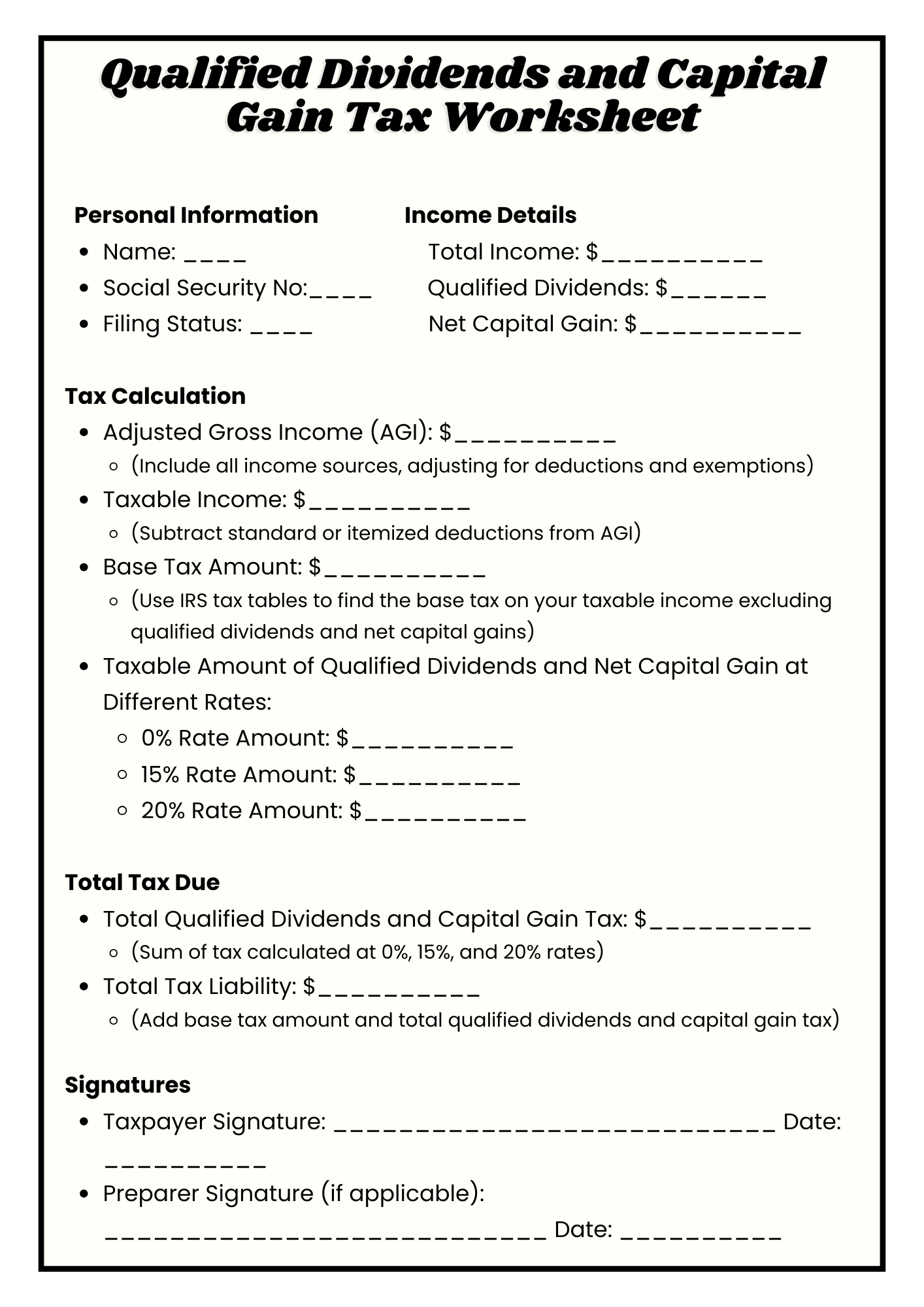
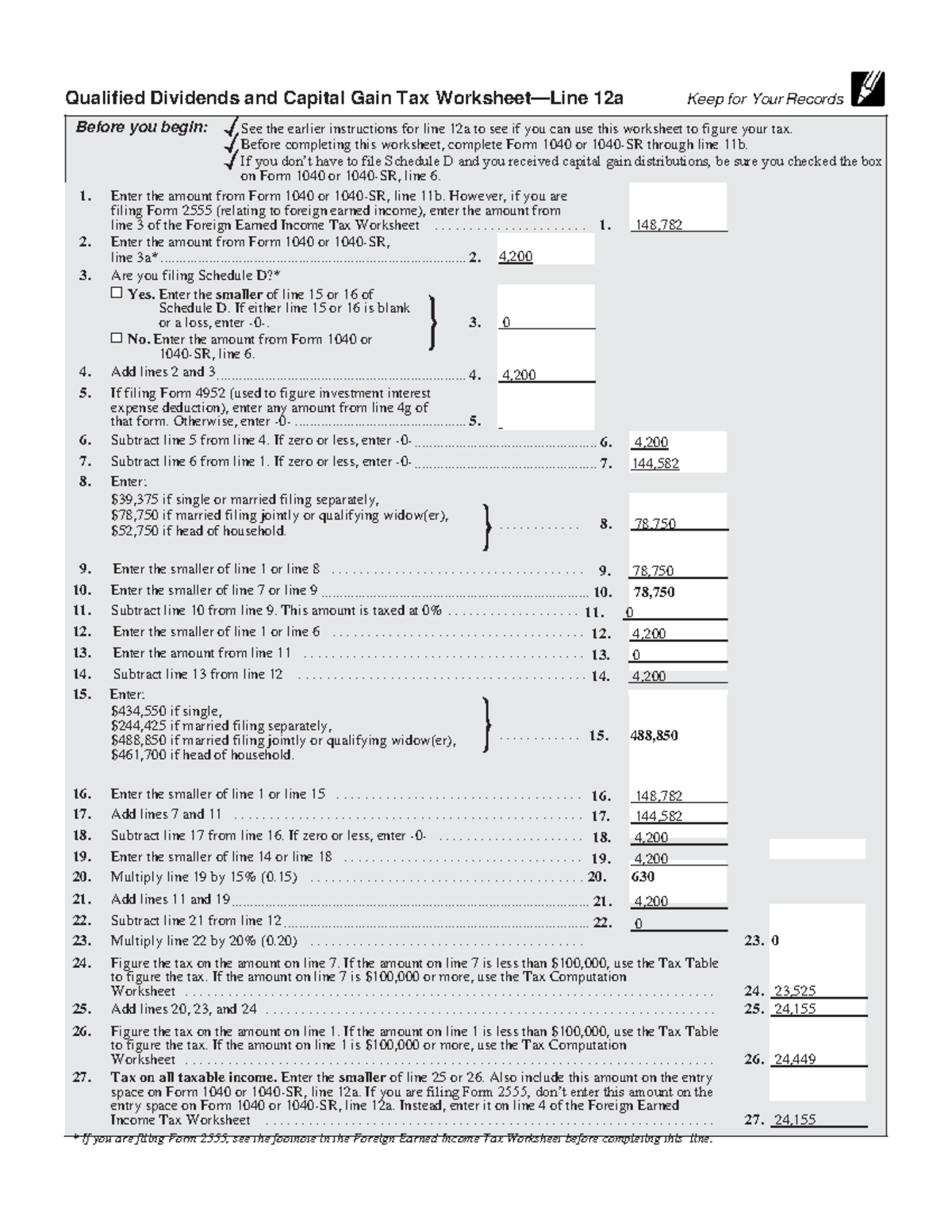
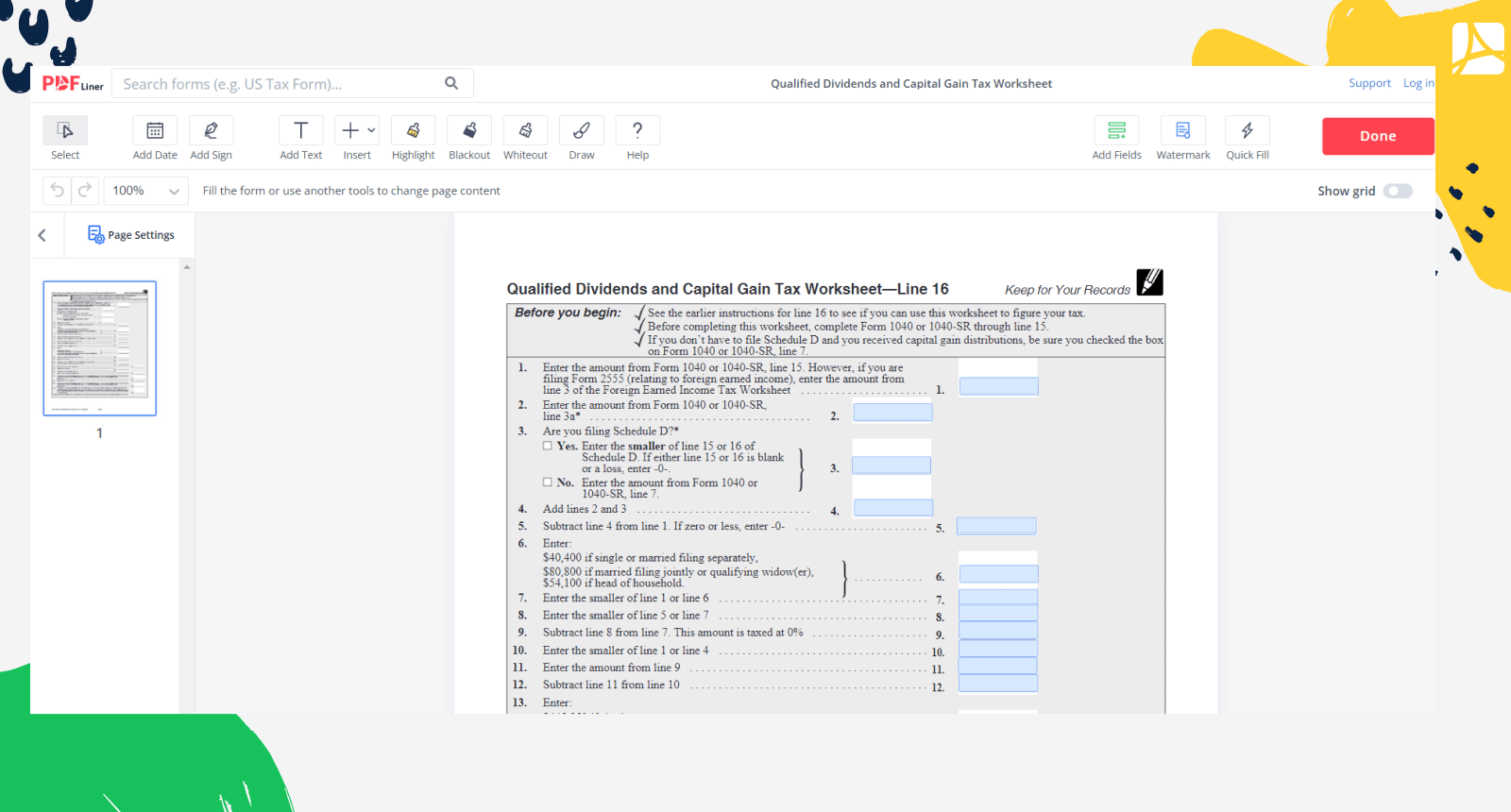
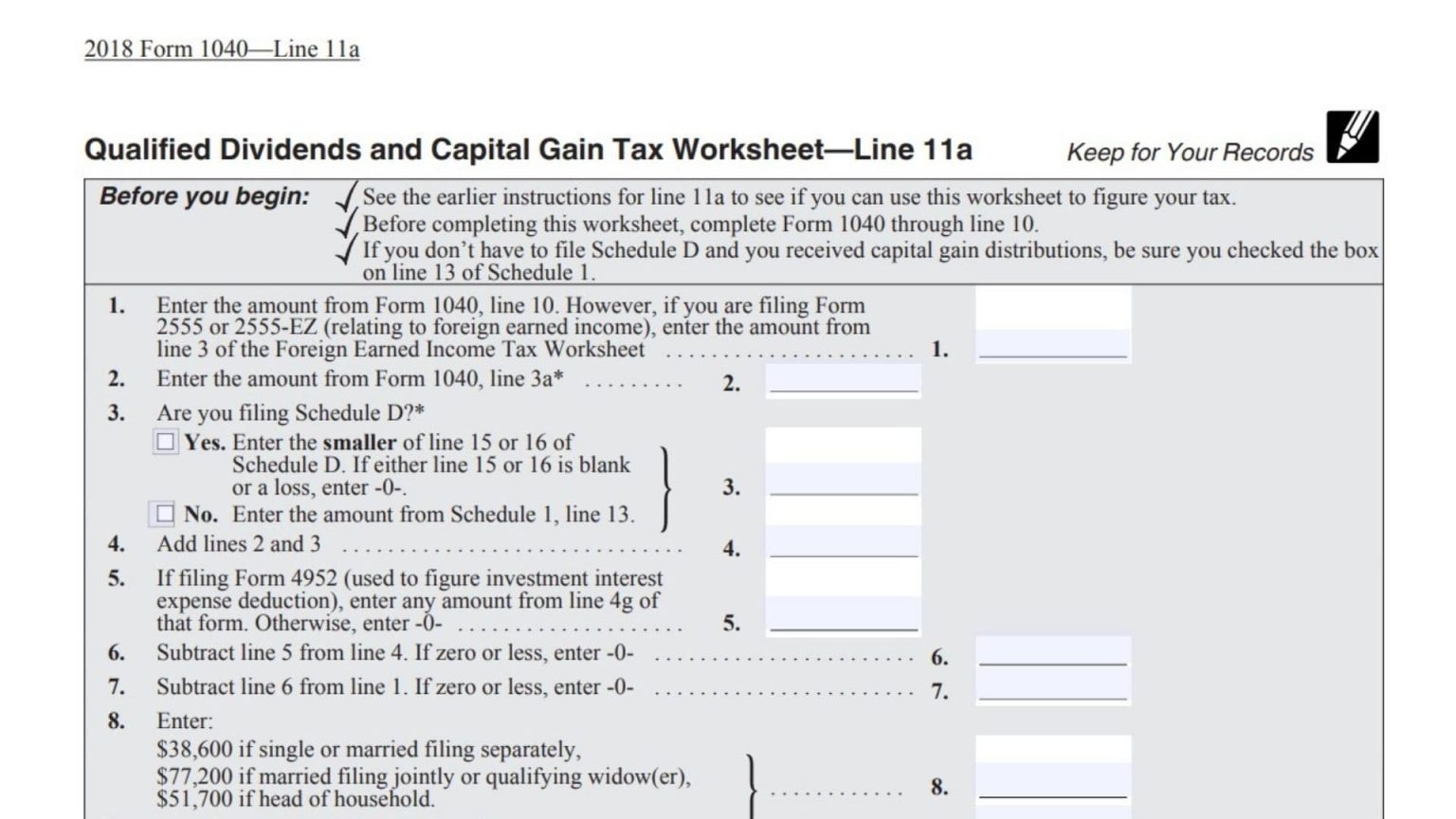
The 2024 Qualified Dividends and Capital Gains Worksheet is a supplementary tax tool provided by the IRS to help taxpayers calculate the specific tax liability on long-term capital gains and qualified dividends. By applying preferential tax rates—often 0%, 15%, or 20%—rather than ordinary income tax brackets, this worksheet ensures that eligible investment income is taxed at a more favorable rate, significantly reducing the total tax burden for many investors.
Understanding the Role of the Worksheet
When you prepare your federal income tax return, most of your income—such as wages, interest, and short-term capital gains—is taxed at your ordinary income tax rates. However, the U.S. tax code provides a special incentive for long-term investments. "Qualified" dividends and "net capital gains" (the excess of net long-term capital gain over net short-term capital loss) are subject to lower capital gains tax rates.
The worksheet serves as the mechanical bridge between your total taxable income and the final tax amount reported on your Form 1040. Because these preferential rates depend on your total taxable income—which determines whether you fall into the 0%, 15%, or 20% bracket—you cannot simply multiply your investment income by a flat percentage. The worksheet guides you through the process of isolating this income and applying the correct tiers based on your filing status and total income levels.
Prerequisites: What You Need to Begin
Before you open the worksheet (which is typically found in the instructions for Form 1040), you must ensure your tax return information is finalized. You will need:
- Form 1040, Line 15: Your taxable income amount.
- Schedule B (if applicable): To confirm the total amount of ordinary dividends.
- Schedule D: Specifically, your Schedule D Tax Worksheet (if you have capital gains) or the primary Schedule D, which details your long-term capital gains and losses.
- Form 1099-DIV and 1099-B: These documents from your brokerage provide the specific figures for qualified dividends (Box 1b) and capital gain distributions.
Without these figures, the calculations on the worksheet will be inaccurate. If you use tax preparation software, the program performs this calculation automatically in the background. However, understanding the process is essential for verifying the output and ensuring that your tax professional or software has categorized your income correctly.
Distinguishing Qualified vs. Non-Qualified Dividends
A common point of confusion is the classification of dividends. Not all dividends are "qualified."
- Qualified Dividends: These are dividends paid by U.S. corporations or qualified foreign entities that meet specific holding period requirements. Generally, you must have held the stock for more than 60 days during the 121-day period that began 60 days before the ex-dividend date.
- Non-Qualified (Ordinary) Dividends: These are taxed at your ordinary income tax rate. Common examples include dividends from Real Estate Investment Trusts (REITs), Master Limited Partnerships (MLPs), and certain employee stock options.
The 2024 worksheet only applies to those dividends classified as qualified. If you incorrectly include ordinary dividends in this calculation, you will understate your tax liability, which could trigger an IRS notice or penalties.
Step-by-Step Mechanics of the Calculation
The worksheet follows a logical progression to prevent "double dipping" or incorrectly taxing income twice.
- Isolation: You enter your total taxable income from Form 1040. You then subtract your qualified dividends and net capital gains. This leaves you with your "ordinary" taxable income.
- Tiered Application: You determine how much of your capital gains or dividends fit into the 0% bracket (often used by lower-income taxpayers), the 15% bracket (the most common tier), or the 20% bracket (for high-income earners).
- Cross-Referencing: The worksheet directs you to reference the Tax Tables or the Tax Computation Worksheet. By mapping your ordinary income first, you establish the baseline tax, and then the worksheet adds the specific tax calculated on the preferential income.
This structure ensures that your ordinary income fills up the lower tax brackets first, and your qualified dividends and capital gains are stacked on top, receiving the preferential rates for whichever bracket they ultimately fall into.
Comparison of Tax Rates and Impact
The following table illustrates how the 2024 tax environment treats different categories of income. Note that these are federal rates; state taxes may vary significantly.
| Income Type | Tax Treatment | Typical Rate |
|---|---|---|
| Ordinary Income | Gradual Brackets | 10% to 37% |
| Short-Term Capital Gains | Ordinary Rates | 10% to 37% |
| Qualified Dividends | Preferential Rates | 0%, 15%, or 20% |
| Long-Term Capital Gains | Preferential Rates | 0%, 15%, or 20% |
| Interest Income | Ordinary Rates | 10% to 37% |
It is important to note that the 3.8% Net Investment Income Tax (NIIT) may apply to your qualified dividends and capital gains if your Modified Adjusted Gross Income (MAGI) exceeds specific thresholds ($200,000 for singles or $250,000 for married filing jointly). This is an additional tax on top of the capital gains rate, and it is not calculated on the Qualified Dividends and Capital Gains Worksheet itself, but rather on Form 8960.
Common Mistakes to Avoid
- Misreporting Box 1a as 1b: Taxpayers often mistake the total ordinary dividends (Box 1a on Form 1099-DIV) for qualified dividends (Box 1b). Always use the Box 1b figure for the worksheet.
- Ignoring Loss Carryovers: If you have capital loss carryovers from previous years, these must be factored into your Schedule D before you arrive at the net capital gain figure used on the worksheet.
- The "Missing" Worksheet: Many taxpayers look for a separate "Qualified Dividends and Capital Gains Worksheet" form to download. In many tax years, this is a set of instructions contained within the Form 1040 instructions book, not a standalone tax form to be filed. Relying on an outdated version of the instructions can lead to using incorrect tax tables or thresholds.
- State Tax Assumptions: Remember that most states do not offer the same preferential capital gains treatment as the federal government. Do not assume your state tax liability will be lower just because your federal worksheet shows a lower rate.
Troubleshooting and Verification
If your calculated tax does not match the figure provided by your software or your expectations, check these three areas first:
- Holding Periods: Verify that your brokerage did not mark a dividend as qualified when it should have been ordinary (or vice versa). Check the holding period requirements for the specific security.
- Rounding Errors: The IRS tax tables use ranges. Ensure you are using the correct filing status table for the 2024 tax year.
- Income Thresholds: Ensure that your MAGI is calculated correctly. If you are near a bracket "cliff," a small change in income can shift a portion of your capital gains from the 15% tier to the 20% tier.
Professional Advice and Legal Limitations
This guide provides an explanation of the 2024 Qualified Dividends and Capital Gains Worksheet based on standard IRS procedures. Tax law is subject to individual circumstances, including potential changes in legislation, specific entity classifications, and international tax treaties. If you have a complex investment portfolio, high net worth, or unusual income sources, consulting with a Certified Public Accountant (CPA) or a tax attorney is highly recommended. The information here does not constitute formal tax or legal advice; always review your specific tax return with a qualified professional before submission.
Frequently Asked Questions
Does the 2024 worksheet apply to my state taxes? No. This worksheet is exclusively for your federal Form 1040. Most states treat dividends and capital gains as ordinary income, meaning they are taxed at your standard state income tax rate regardless of the "qualified" status at the federal level.
What happens if I forget to use the worksheet? If you report your investment income as ordinary income, you will likely overpay your taxes. You would be taxed at your standard bracket rate (which could be as high as 37%) instead of the preferential 15% or 20% rate. If you discover this after filing, you must file an amended return (Form 1040-X) to claim a refund of the overpaid amount.
Is there a minimum amount of dividends required to use the worksheet? There is no minimum floor for the amount of income, but the worksheet is only beneficial if you have qualified dividends or long-term capital gains. If you have no such income, the worksheet is unnecessary.
How do I know if my dividends are "qualified"? Your brokerage will provide a Form 1099-DIV at the end of the year. Box 1b clearly lists the amount of dividends that are considered "qualified." If this box is empty or shows $0.00, none of your dividends are qualified for the preferential tax rate.
Does the 2024 worksheet change based on my age? The calculation mechanism does not change based on age; however, your age and retirement status can impact your total taxable income. For example, if you are over 65, you may have different deductions that lower your taxable income, potentially moving your capital gains into a lower tax bracket (such as the 0% bracket).
Final Recommendation
The most effective way to utilize the 2024 Qualified Dividends and Capital Gains Worksheet is to integrate it into your year-end tax planning. Do not wait until you are filing your return to discover your tax liability. By tracking your qualified dividends and long-term gains throughout the year, you can anticipate your tax bracket position. If you are close to the threshold for a higher tax tier, you might consider timing your asset sales to maximize the benefit of the 0% or 15% rates. Always review your final Form 1040 alongside the worksheet to ensure the "Tax" line matches the logic of the worksheet calculation before you submit your return.