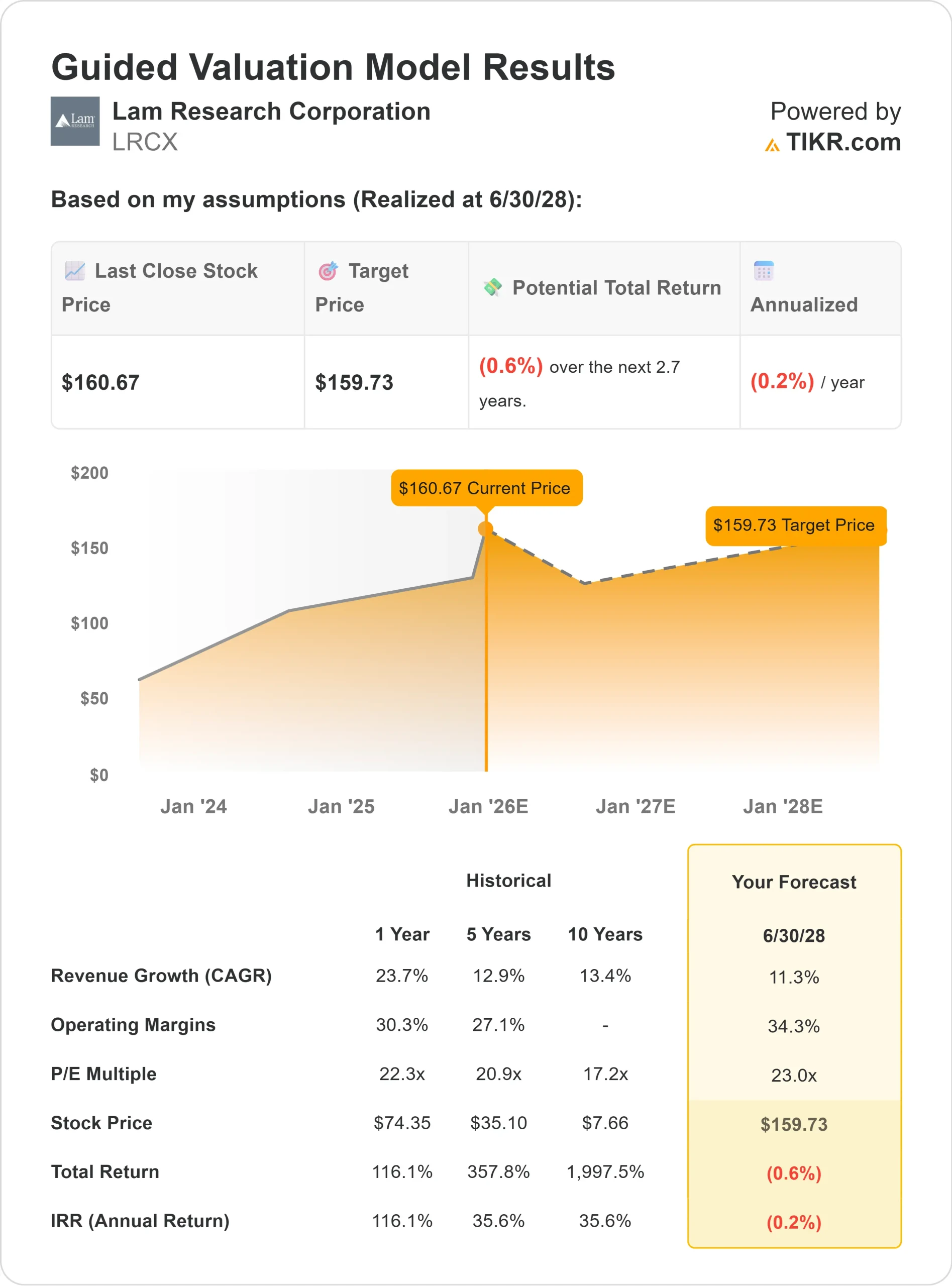
The 2024 outlook for Lam Research (LRCX) served as a foundational benchmark for assessing the company’s role in the global semiconductor manufacturing ecosystem through the 2030 horizon. As the industry moves further into 2026, the long-term forecast remains heavily tethered to advancements in sub-3nm chip production, the proliferation of High-NA EUV lithography, and the increasing complexity of 3D NAND architecture, which position Lam Research as a critical enabler of next-generation computing power.
The Role of Lam Research in Semiconductor Capital Equipment
To understand the 2030 potential of Lam Research, one must first recognize its specific niche: wafer fabrication equipment (WFE). Lam Research is not a chip manufacturer itself; rather, it provides the essential tools that allow companies like TSMC, Samsung, and Intel to create the circuitry on silicon wafers. Their dominance in deposition, etch, and clean technologies makes them a "picks and shovels" player in the semiconductor gold rush.
As of 2026, the primary trend driving demand for Lam’s equipment is the physical limitation of traditional planar transistors. The industry has moved toward Gate-All-Around (GAA) transistor architectures. In these configurations, the ability to deposit material with atomic-level precision and etch trenches that are impossibly narrow is the difference between a functional chip and a yield-killing defect. Lam Research’s focus on high-aspect-ratio (HAR) etching is the bedrock of its competitive moat, as this technology is required for the high-density memory stacks that power modern artificial intelligence and data center infrastructure.
Strategic Drivers for the 2030 Horizon
The forecast for 2030 is predicated on three major technological shifts that are currently playing out in the mid-2020s.
1. The Scaling of 3D NAND
Memory density is increasing exponentially. By 2030, we expect to see 500-layer and even 1,000-layer 3D NAND structures. Lam Research’s etch tools are fundamental to creating the vertical channels through these massive stacks. Any evolution in NAND memory capacity requires a corresponding improvement in etch speed and accuracy—a cycle that provides a recurring revenue opportunity for Lam through both initial tool sales and the necessary maintenance and optimization of installed systems.
2. Advanced Packaging and Heterogeneous Integration
As Moore’s Law slows in its ability to shrink individual components, the industry has shifted to advanced packaging. This involves stacking chips vertically (3D ICs) or placing multiple smaller chiplets on a single substrate. Lam’s role here is providing the tools for "back-end" processing—tsilicon via (TSV) etching and dielectric deposition—which are essential for the interconnects that link these chiplets together. The market for advanced packaging equipment is projected to grow significantly as data centers demand high-bandwidth memory (HBM) integration.
3. Transition to High-NA EUV Lithography
While lithography machines (provided by companies like ASML) define the pattern, the material processing tools provided by Lam Research translate those patterns into the physical structure of the chip. The arrival of High-NA (Numerical Aperture) EUV lithography requires new materials and chemical processes. Lam Research’s ability to align its R&D with these lithographic advancements ensures that its tools remain compatible with the most expensive and sophisticated production lines in the world.
Comparative Market Landscape
Understanding how Lam Research stacks up against its peers is vital for a long-term investment perspective. The semiconductor equipment market is oligopolistic, with high barriers to entry due to the extreme intellectual property requirements and the billions of dollars required for R&D.
| Company | Core Focus | 2030 Strategic Advantage |
|---|---|---|
| Lam Research | Etch & Deposition | Dominance in high-aspect-ratio memory structures. |
| Applied Materials | Materials Engineering | Breadth of portfolio covering almost every step of fabrication. |
| ASML | Lithography | Sole provider of EUV and High-NA systems. |
| KLA Corp | Process Control | Leader in yield management and metrology. |
While Applied Materials offers a broader array of tools, Lam Research maintains a "best-in-class" status in its specific niches. An investor looking toward 2030 must weigh Lam’s specialized focus against the diversified portfolios of its larger competitors.
Risks and Operational Considerations
While the tailwinds for Lam Research appear robust, there are material risks that could impact the 2030 forecast.
- Cyclicality of the Semiconductor Industry: Semiconductor equipment spending is historically cyclical. Despite the long-term secular growth trends of AI and IoT, companies in this space often face "inventory correction" periods where chipmakers pause capital expenditure.
- Geopolitical Constraints: As of 2026, export controls regarding advanced chipmaking technology to certain regions remain a major operational hurdle. Lam Research must navigate complex international trade regulations, which can abruptly limit its total addressable market in high-growth territories.
- Technological Disruptions: While unlikely, a major shift in how transistors are manufactured—perhaps moving away from silicon-based substrates entirely—could threaten the relevance of legacy etching processes. However, Lam’s active pivot toward "Materials to Logic" integration suggests they are aggressively hedging against such shifts.
Financial Sustainability and Shareholder Value
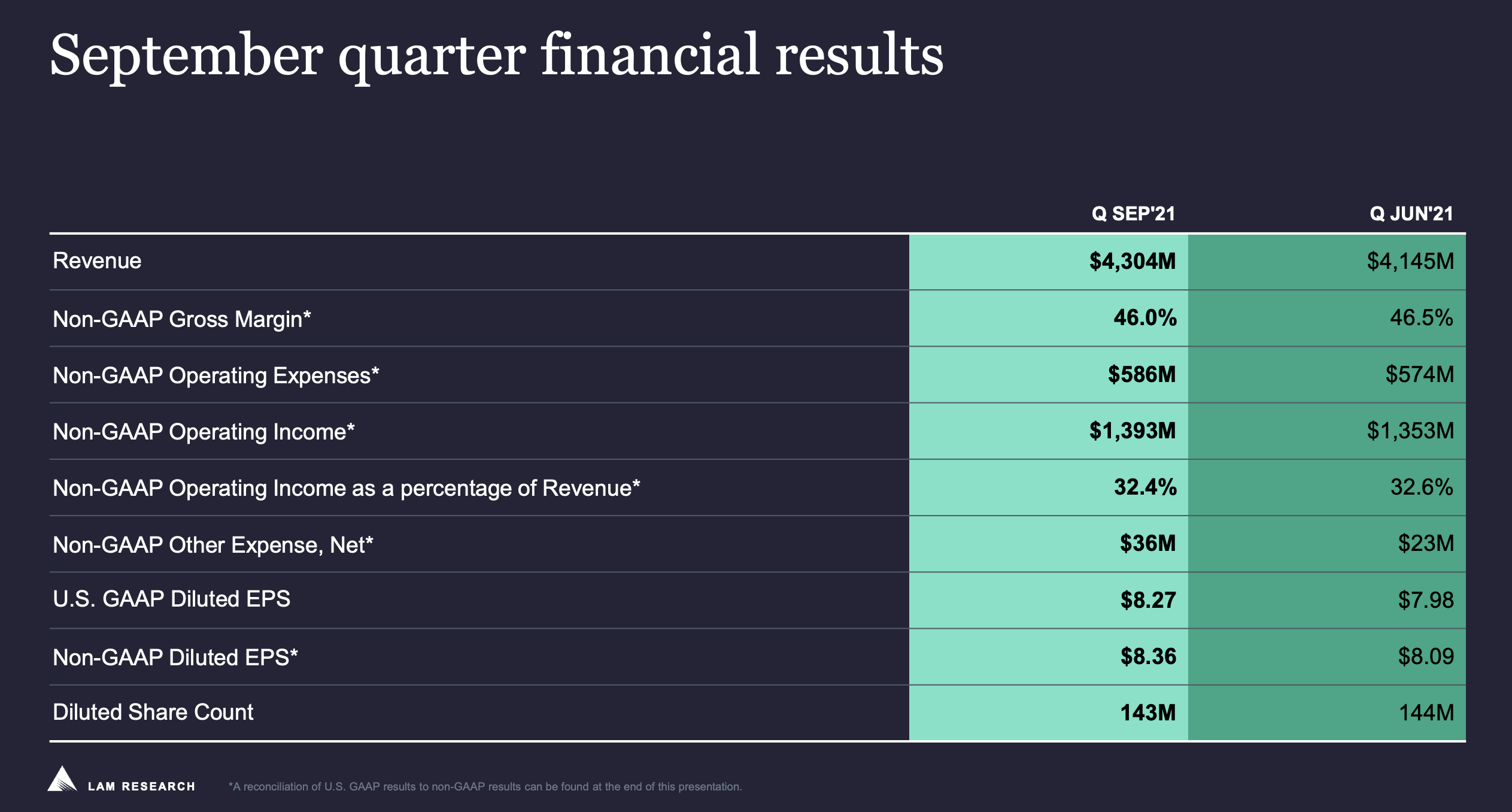
From a financial perspective, the 2030 outlook rests on the company’s ability to convert its high-margin revenue into free cash flow. Lam Research has historically demonstrated a commitment to returning capital to shareholders through both stock buybacks and consistent dividends. As the company matures, its R&D efficiency becomes the primary metric for long-term health. If the company can continue to lower the cost-per-wafer for its clients while maintaining its own profit margins, it creates a sustainable cycle of reinvestment and growth.
Investors should monitor the "Customer Support Business Group" (CSBG) segment of their revenue. This represents the service, spares, and software upgrades provided to the existing fleet of machines. As the total number of Lam tools installed globally grows, this recurring revenue stream provides a "cushion" that protects the company during periods of lower new equipment sales.
FAQ: Understanding Long-Term Growth
How does AI specifically impact Lam Research’s revenue? AI demand requires massive clusters of GPUs and HBM. These chips are significantly more complex and contain more layers than standard consumer-grade chips. This requires more processing steps per wafer, which directly increases the number of Lam Research tools required for every "AI-capable" chip produced.
What is the significance of the 2030 timeline? The 2030 target aligns with the anticipated deployment of "Angstrom-era" logic processes (chips measured in fractions of a nanometer). Most major foundry roadmaps target this timeframe for the next massive leap in compute density.
Are there competitors that could disrupt Lam’s position in 3D NAND? While Tokyo Electron (TEL) is a significant competitor in the etch space, Lam’s historical patent depth and deep integration with the major memory players (like SK Hynix and Micron) create a significant barrier to entry for any competitor looking to take market share in the high-stack memory segment.
Should I focus on quarterly results or the 2030 outlook? For long-term investors, quarterly volatility is often a result of cyclical market changes or supply chain timing. Focusing on the company’s R&D spend and its "design wins" (being selected for next-gen fabrication nodes) is a more accurate way to measure the 2030 potential than focusing on singular quarterly earnings beats.
Is it safe to assume steady growth for semiconductor stocks through 2030? Nothing in the equity market is "safe." While the macro trend of increasing silicon intensity is undeniable, the semiconductor industry is subject to regulatory, geopolitical, and economic shocks that can cause multi-year stagnation in stock performance.
Final Guidance for Market Participants
When evaluating Lam Research with a multi-year horizon, the focus should remain on the technical milestones of its primary customers. Monitor the foundry roadmaps of companies like Intel and TSMC. When these manufacturers announce the transition to a new fabrication node or an increase in the number of layers for their memory products, it serves as a "leading indicator" for demand for Lam Research’s capital equipment.
Investors should view Lam Research not merely as a ticker symbol, but as an infrastructure play on the digital future. The company’s ability to solve the "physics problems" of the next decade is the primary variable that will determine its value by 2030. For those looking for exposure to this sector, ensuring that your position size accounts for the inherent cyclicality of the chip-making equipment market is essential. Maintaining a long-term view allows investors to look past the inevitable mid-cycle corrections and focus on the company's central role in the foundational technology of the 2030s.