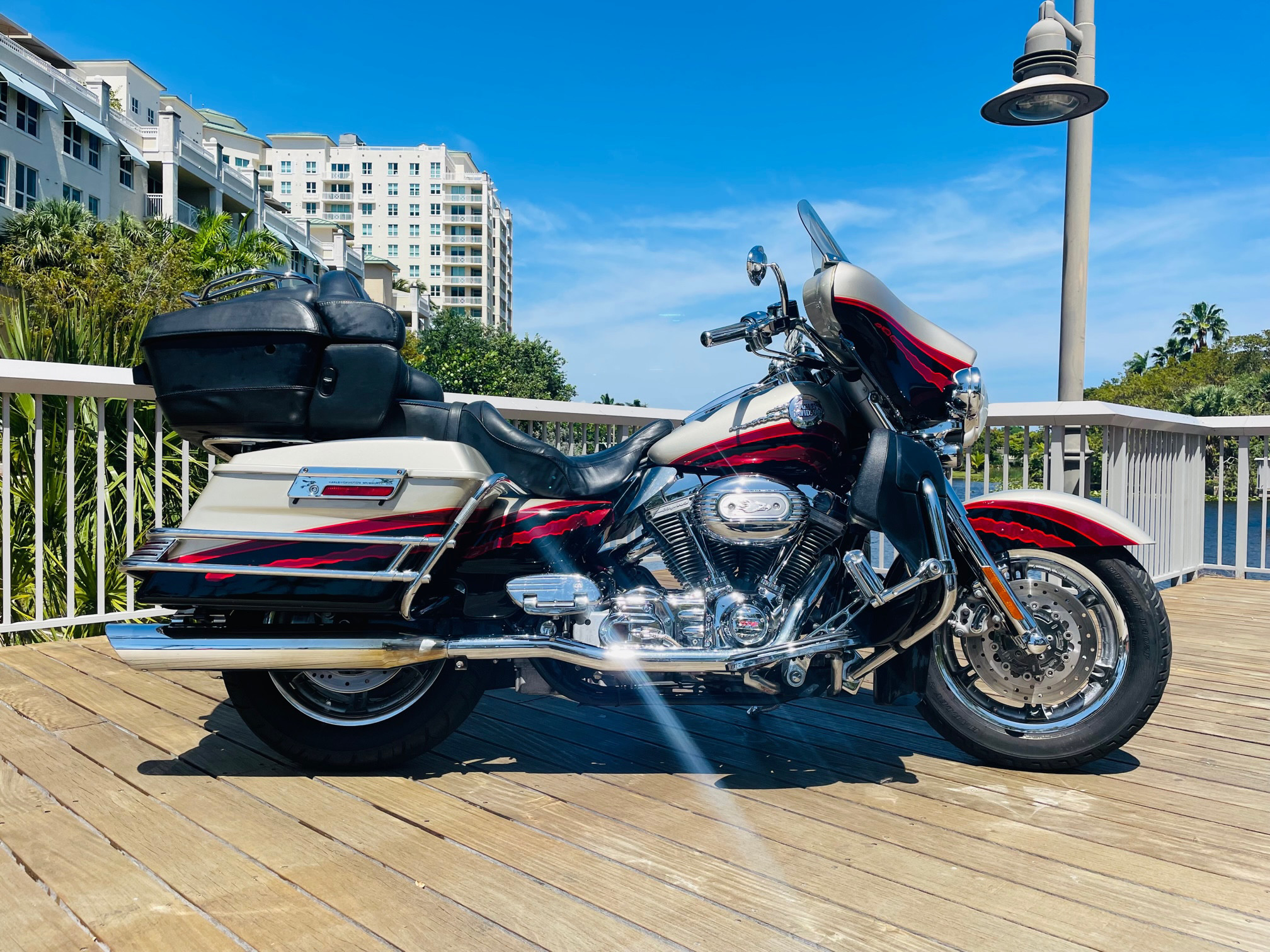
The 2006 Harley-Davidson Electra Glide Ultra Classic is defined by its air-cooled, Twin Cam 88 engine, five-speed Cruise Drive transmission, and a comprehensive suite of touring amenities. As a flagship long-distance motorcycle of the mid-2000s, it integrates a batwing fairing, integrated luggage system, and sophisticated electronic fuel injection, establishing a platform engineered for sustained comfort and reliability on the open road.
The Mechanical Foundation: Engine and Powertrain
At the heart of the 2006 Electra Glide Ultra Classic lies the Twin Cam 88 V-Twin engine. This 1,450cc (88 cubic inch) powerplant remains one of the most recognizable iterations of Harley-Davidson’s big-twin lineup before the transition to the 96 cubic inch engine in later years. The engine features an overhead-valve, pushrod-operated configuration, maintaining the classic air-cooled character that enthusiasts associate with the brand’s heritage.
The engine utilizes Electronic Sequential Port Fuel Injection (ESPFI), which provides consistent cold-start performance and altitude compensation. By 2006, this system had reached a high level of refinement, ensuring smoother throttle response compared to earlier carbureted models. The engine’s bore and stroke are measured at 3.75 inches by 4.00 inches, producing a torque output of approximately 86 foot-pounds at 3,500 RPM. This torque-heavy delivery is specifically tuned for low-to-mid-range power, allowing the heavy touring frame to accelerate effectively when fully loaded with a passenger and gear.
Coupled to the Twin Cam 88 is the five-speed Cruise Drive transmission. While later touring models moved to six-speed configurations, the five-speed setup in the 2006 model is widely noted for its durability and precise gear ratios tailored for highway cruising. The primary drive is a chain-driven system, while the final drive utilizes a carbon fiber-reinforced belt, which minimizes maintenance requirements and reduces noise compared to traditional chain drives.
Dimensions, Weight, and Chassis Geometry
The Electra Glide Ultra Classic is a substantial machine, designed with a focus on stability rather than agility. The motorcycle is built upon the classic Harley-Davidson touring frame, which is engineered to handle the stress of long-haul travel.
Key physical specifications include:
- Length: 98.3 inches.
- Seat Height (laden): 27.3 inches.
- Wheelbase: 63.5 inches.
- Ground Clearance: 5.1 inches.
- Dry Weight: 790 pounds.
- GVWR (Gross Vehicle Weight Rating): 1,280 pounds.
The 27.3-inch laden seat height is a critical feature for many riders, as it provides a low center of gravity that makes handling the bike at slow speeds more manageable. The front suspension consists of 41.3mm telescopic forks, while the rear features air-adjustable touring shocks. These shocks allow the rider to fine-tune the suspension preload based on total weight, which is essential for maintaining a level ride height and comfortable damping characteristics when touring with heavy cargo.
Touring Amenities and Ergonomics
The "Ultra Classic" designation implies a specific level of equipment that distinguishes this model from the base Electra Glide. For the 2006 model year, this included an extensive list of comfort and utility features:
- Fairing and Instrumentation: The iconic batwing fairing provides significant wind protection for the rider. The dashboard features a full suite of analog gauges: speedometer, tachometer, fuel, oil pressure, and voltmeter.
- Audio and Communication: The 2006 model came equipped with a standard AM/FM/Weather Band radio featuring an integrated CB radio and passenger/rider intercom system. This system was designed for compatibility with specific Harley-Davidson headsets.
- Storage Capacity: The motorcycle offers impressive utility through its "King Tour-Pak" trunk, which includes an integrated passenger backrest, and two color-matched, lockable hard saddlebags. This triple-luggage setup provides sufficient storage for extended trips.
- Lighting: For 2006, safety was bolstered by a standard light bar that complements the main headlamp, providing improved peripheral visibility during nighttime riding.
Technical Specifications Comparison
When evaluating the 2006 Electra Glide Ultra Classic against other contemporary models or subsequent versions, understanding the baseline specifications is vital. The following table provides a snapshot of the core mechanical figures.
| Feature | Specification |
|---|---|
| Engine Type | Twin Cam 88 V-Twin |
| Displacement | 1,450 cc (88 cu. in.) |
| Cooling System | Air-Cooled |
| Transmission | 5-Speed Cruise Drive |
| Fuel System | ESPFI |
| Fuel Capacity | 5.0 Gallons |
| Front Brakes | Dual 4-piston calipers |
| Rear Brakes | Single 4-piston caliper |
| Compression Ratio | 8.9:1 |
Maintenance Considerations and Real-World Performance
Operating a 2006 model in 2026 requires an understanding of long-term maintenance requirements. Because this model predates the adoption of the internal balance shaft systems found in later touring lines, owners often pay close attention to engine vibration, which is a characteristic of the rubber-mounted engine design.
One of the most significant technical points for potential owners or mechanics involves the cam chain tensioners. The 2006 Twin Cam 88 uses spring-loaded cam chain tensioners that are known to wear over time. Proactive inspection of these tensioners is a standard maintenance task for this specific engine family to prevent debris from circulating through the oil system.
Fuel efficiency for this model typically ranges between 35 and 45 miles per gallon, depending on riding style, load, and road conditions. With a 5.0-gallon fuel tank, this provides a realistic touring range of approximately 180 to 200 miles before the low-fuel light illuminates, making it a viable choice for riders who enjoy planning fuel stops around longer intervals.
Common Modifications and Upgrades
Given the age of the 2006 Electra Glide Ultra Classic, many units currently on the road have undergone modifications. The most common upgrades include:
- Exhaust Systems: Many owners install high-flow mufflers or full systems to enhance the exhaust note and allow the engine to breathe more freely.
- Stage Kits: "Stage" performance kits (intake, exhaust, and engine management re-tuning) remain popular. These modifications aim to improve throttle response and mid-range torque.
- Suspension Upgrades: Because the stock air-shocks can lose pressure over two decades, many riders upgrade to modern aftermarket cartridge fork internals and high-performance coil-over rear shocks to modernize the ride quality.
- Lighting: The transition from incandescent bulbs to LED headlamp and auxiliary lighting assemblies is a common safety upgrade that significantly increases visibility for night riding.
Troubleshooting and Diagnostic Guidance
When the Electra Glide displays issues, the diagnostic process often begins with the Electronic Control Module (ECM). The 2006 models feature a built-in diagnostic trouble code (DTC) system that allows owners to read codes directly through the speedometer display. By holding the trip odometer button and cycling the ignition, users can pull codes to troubleshoot sensor failures, such as the Oxygen sensor or Crank Position Sensor, without needing specialized diagnostic computers.
If the engine exhibits hesitation or poor fuel economy, the most common culprit is a dirty air cleaner element or a sensor issue within the ESPFI system. Maintaining the integrity of the fuel system is paramount; in 2026, it is highly recommended to use non-ethanol fuel whenever possible, as ethanol-blended fuels can accelerate the degradation of fuel lines and seals in motorcycles of this vintage.
Frequently Asked Questions
Does the 2006 Electra Glide Ultra Classic have a six-speed transmission? No. The 2006 model utilizes a five-speed transmission. The six-speed "Cruise Drive" transmission was introduced to the touring line in the 2007 model year.
What is the recommended fuel for this engine? The Twin Cam 88 engine requires high-octane gasoline (91 octane or higher). Due to the 8.9:1 compression ratio, using lower-octane fuel can result in pre-ignition (pinging), which may lead to engine damage over time.
How do I adjust the rear suspension? The rear shocks are air-adjustable. A specialized hand pump with a pressure gauge should be used to inflate the shocks to the manufacturer-recommended pressure based on the rider and passenger/cargo weight. Never use a high-pressure service station air compressor, as it can damage the shock seals.
Is this bike compatible with modern E15 or E85 fuels? No. The fuel system and engine components of the 2006 model are not designed for ethanol concentrations higher than E10. Using E15 or E85 can cause significant issues with fuel injectors, gaskets, and fuel pump longevity.
Where can I find an official service manual for this model? Official Harley-Davidson Service Manuals for the 2006 Touring family are available through authorized dealerships or authorized technical archives. These manuals contain the definitive torque specifications, wiring diagrams, and disassembly procedures for every component.
Recommended Next Steps
For those maintaining or restoring a 2006 Electra Glide Ultra Classic, the first priority is verifying the condition of the cam chain tensioners and ensuring all safety-related components, such as brake lines and tires, are current. If you have acquired a used unit, perform a full fluid change (engine, primary, and transmission) to establish a new baseline for your maintenance schedule. Always consult the original service manual for your specific VIN-range, as mid-year production changes can occur.