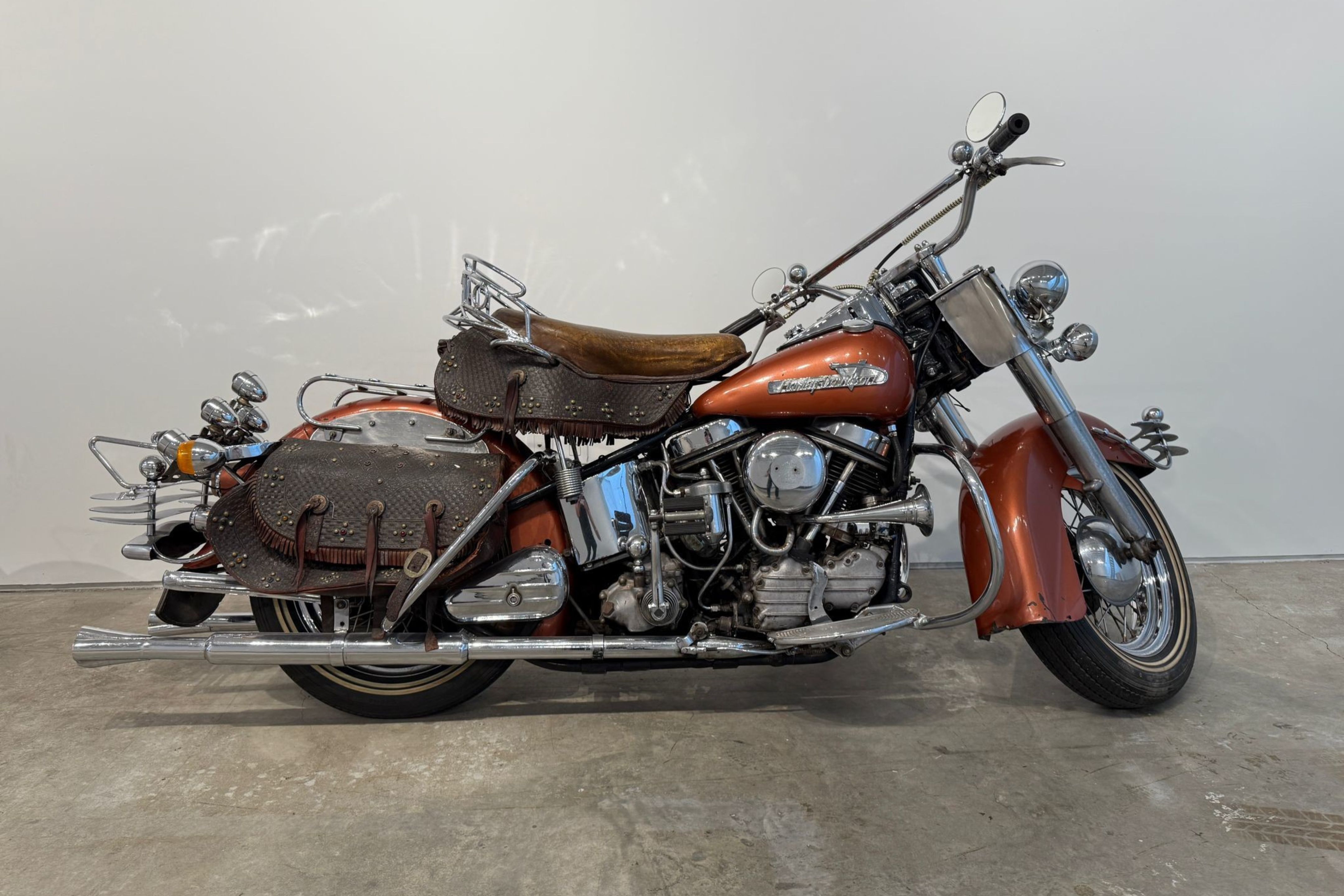
The 1955 Harley-Davidson Panhead represents a definitive mid-century milestone for the Milwaukee motor company, bridging the gap between post-war styling and the evolution of the iconic overhead-valve V-twin engine. Featuring the reliable hydraulic valve-lifter engine architecture, a rigid frame configuration, and classic 6-volt electrical systems, this machine holds a revered place among classic motorcycle collectors and vintage restoration enthusiasts.
Historical Context and Evolution of the Panhead Engine
The Harley-Davidson "Panhead" engine, introduced in 1948 as a successor to the Knucklehead, earned its nickname from the distinctive, pan-like rocker box covers designed to contain oil leaks and house the newly introduced hydraulic valve lifters. By 1955, the platform had matured significantly. The early teething problems associated with the 1948–1952 models—such as oil scavenging issues and top-end oil starvation—had been largely engineered out of the design by Harley-Davidson's factory technicians.
The 1955 model year arrived during a dynamic period in American motorcycling. Post-war prosperity was fueling leisure riding, and Harley-Davidson faced fierce competition from imported British motorcycles that boasted lighter weights and greater agility. To maintain its dominance on American highways, the Motor Company focused on refinement, durability, and touring comfort. The 1955 lineup retained the classic 74 cubic-inch (1,200cc) displacement, officially designated as the EL (OHV 61ci) and FL/FLH (OHV 74ci) series, with the FLH representing the higher-compression, performance-tuned variant of the big twin.
Technical Specifications and Mechanical Design
Understanding the mechanical anatomy of a 1955 Harley-Davidson Panhead requires examining its core powertrain, chassis, and electrical layout. Unlike later models that adopted electric starting and swingarm frames, the 1955 machine relies on a traditional hardtail frame and a kick-start mechanism.
The engine features an aluminum cylinder head paired with cast-iron cylinders, a bore of 3-7/16 inches, and a stroke of 3-31/32 inches. Power is transmitted through a foot-shifted, hand-clutched 4-speed trans-mission—commonly referred to as a "cowpie" or ratchet-top transmission depending on precise running changes, though the 1955 model utilized the reliable ratchet-top design introduced in 1952.
Key Technical Specifications Table
| Feature | Specification Details |
|---|---|
| Engine Type | Overhead-valve 45-degree V-twin (Panhead) |
| Displacement | 74 cubic inches (1,200 cc) |
| Compression Ratio | 7.0:1 (FL standard), higher on optional FLH |
| Fuel System | Linkert M-series carburetor |
| Electrical System | 6-volt battery ignition with circuit breaker |
| Transmission | 4-speed constant mesh, foot shift / hand clutch |
| Frame Type | Rigid (hardtail) tubular steel duplex cradle |
| Front Suspension | Hydra-Glide telescopic fork |
| Brakes | Mechanical expanding drum (front and rear) |
| Dry Weight | Approximately 585 lbs (265 kg) |
The Chassis, Suspension, and Handling Dynamics
The 1955 model year utilizes Harley-Davidson’s famous Hydra-Glide front telescopic fork, which had been standard equipment since 1949. This hydraulic front suspension transformed the ride quality compared to the earlier Springfork models, offering improved bump compliance and highway stability.
Because 1955 predated the introduction of the Duo-Glide rear swingarm suspension (which arrived in 1958), the rear wheel is mounted directly to a rigid hardtail frame. Riders must rely entirely on the sprung solo seat—often a Miller or Persons leather saddle suspended by mechanical springs and a plunger post—to absorb road shocks. Consequently, handling requires a deliberate, physical approach. The bike tracks exceptionally well in a straight line on long stretches of highway, but cornering demands respect, foresight, and an understanding of ground clearance limitations posed by the floorboards and fixed frame geometry.
Electrical Systems and Fuel Delivery
One of the most critical aspects of maintaining an authentic 1955 Panhead is managing its original 6-volt electrical system. Powered by a generator rather than an alternator, the system relies on a mechanical voltage regulator and a standard storage battery. Maintaining clean connections, properly polarized generators, and correctly gapped points is essential for reliable starting. Many modern riders convert these bikes to 12-volt systems for improved lighting and easier electric starting aids, though purists prefer the originality of the 6-volt setup.
Fuel is fed through a vintage Linkert carburetor, typically an M-35 or M-74b model, mated to a cast iron intake manifold. The Linkert carburetor requires a specific starting drill involving manual enrichment (choke), tickling the carburetor bowl where applicable, and a confident kick through the compression stroke. When properly tuned, a Linkert delivers a distinctive, sluggishly rich idle that settles into the classic "potato-potato" exhaust note unique to vintage Harley-Davidson V-twins.
Identifying Numbers and Authenticity Verification
For collectors, verifying the numbers matching status of a 1955 Panhead is paramount to establishing its market value and historical integrity. Harley-Davidson stamped vehicle identification numbers (VINs) on the left-hand engine case, located on the crankcase boss between the cylinders.
- Year Designation: A 1955 engine case will typically begin with the prefix
55FLor55EL, followed by sequential production numbers. - Frame Numbers: Original 1955 rigid frames often feature forged casting numbers, though Harley-Davidson did not consistently stamp matching VINs on frames during this era in the same manner as modern motorcycles.
- Component Integrity: Inspecting tinware (oil tanks, front and rear fenders, and instrument dashes), primary chain guards, and transmission stampings helps verify whether a machine is an authentic survivor or a composite restoration built from aftermarket replacement parts.
Restoration Challenges and Maintenance Considerations
Restoring or maintaining a 1955 Panhead involves balancing period-correct authenticity with modern reliability enhancements. Sourcing genuine OEM sheet metal, original cast iron cylinder heads, and correct cadmium-plated hardware can be difficult and expensive.
Common mechanical maintenance tasks for this era include:
- Oil Circulation Checks: Verifying that the wet-sump oil pump is adequately returning oil to the horseshoe oil tank and that the top-end rocker arms are receiving proper lubrication without flooding.
- Primary Chain Adjustment: Managing the enclosed or semi-enclosed primary drive chain and clutch basket alignment.
- Valve Adjustment: Inspecting and adjusting mechanical clearances, keeping in mind that the hydraulic lifters help compensate for thermal expansion once the engine reaches operating temperature.
- Leak Mitigation: Addressing typical gasket and seal seepage. While modern silicone sealants can help, authentic cork, paper, and copper gaskets require careful torque sequencing to minimize leaks.
Collecting, Market Value, and Investment Outlook
The market for vintage Panheads remains robust among global collectors, museum curators, and enthusiasts who appreciate mechanical transparency and rolling history. Values fluctuate based on degree of originality, documentation, and aesthetic condition.
- Original Survivor Bikes: Unrestored machines retaining factory paint, matching numbers, and patina command significant premiums among dedicated collectors.
- Full Restorations: Expertly restored motorcycles utilizing correct factory color schemes, OEM parts, and professional mechanical rebuilds provide reliable display and riding pieces.
- Custom Choppers/Bobbers: Many 1955 frames and engines were modified during the chopper boom of the 1960s and 1970s. While historically interesting, heavily customized examples generally hold a different market value compared to factory-spec restorations.
Frequently Asked Questions
How do I start a kick-start-only 1955 Harley-Davidson Panhead safely?
Starting a vintage Panhead requires a practiced routine: turn on the fuel petcock, retard the spark advance lever if equipped, enrich the carburetor mixture, prime the cylinder by kicking it through once with the ignition off, switch the ignition on, find top dead center on the compression stroke, and deliver a firm, fluid kick through the full sweep of the kickstarter arm to avoid kickback.
Is the 1955 Panhead a reliable motorcycle for modern highway riding?
With proper mechanical maintenance, a 1955 Panhead is capable of reliable operation, but it is not suited for modern sustained interstate speeds without frequent mechanical attention. Braking distances are significantly longer than modern motorcycles, and parts availability requires planning for long-distance touring.
What is the difference between an FL and an FLH model in 1955?
The FL model was Harley-Davidson’s standard 74 cubic-inch big twin utility and touring motorcycle, while the FLH designation denoted a higher-compression engine specification with improved porting and performance cams designed for riders seeking increased power output.
How often does the engine oil need to be changed on a 1955 Panhead?
Because vintage Panheads utilize a total-loss style gear-driven oil pump system circulating oil through an external tank without modern high-efficiency paper filtration (unless an aftermarket oil filter kit has been added), oil changes should be performed frequently—typically every 1,000 to 1,500 miles—to prevent sludge buildup and premature bearing wear.
Are replacement parts readily available for a 1955 Panhead restoration?
Yes, a thriving aftermarket industry supplies reproduction sheet metal, gaskets, gears, and electrical components, while specialized vintage swap meets and dedicated Harley-Davidson salvage specialists provide access to rare original equipment manufacturer (OEM) parts.
Practical Next Actions for Enthusiasts
If you are looking to acquire, restore, or ride a 1955 Harley-Davidson Panhead, begin by joining regional vintage motorcycle clubs such as the Antique Motorcycle Club of America (AMCA). Connect with experienced marque specialists who can assist with verifying engine stampings, evaluating frame integrity, and sourcing correct restoration parts before committing to a purchase.