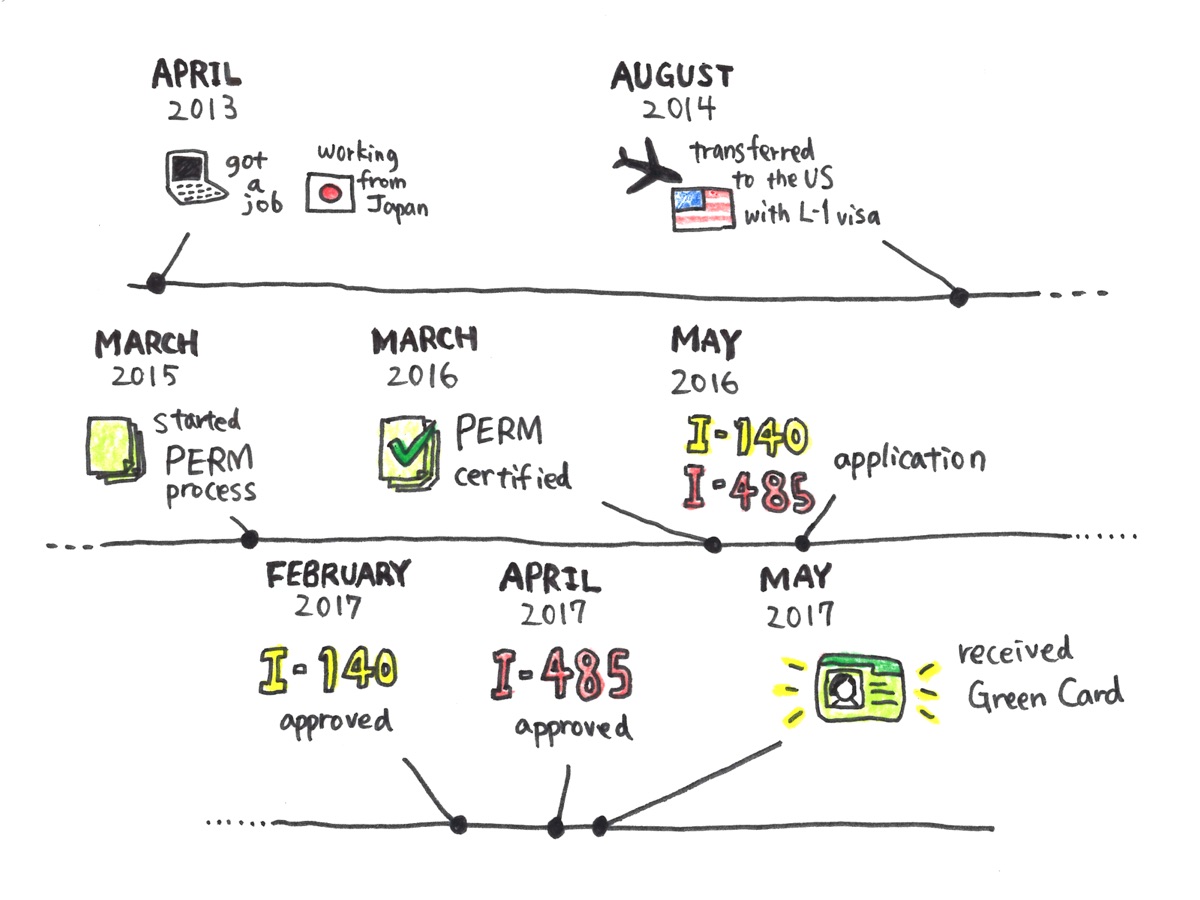
Transitioning from an H-1B visa to a Green Card typically requires an employer-sponsored process involving three main phases: obtaining a PERM Labor Certification, filing an I-140 petition, and submitting an I-485 Adjustment of Status application. This journey allows H-1B holders to move from temporary non-immigrant status to lawful permanent residency.
The transition from an H-1B temporary worker visa to a Green Card is a cornerstone of the United States immigration system for highly skilled professionals. Because the H-1B is a "dual intent" visa, holders are legally permitted to seek permanent residency while maintaining their non-immigrant status. As of 2026, the process remains complex, influenced by fluctuating processing times at the Department of Labor (DOL) and United States Citizenship and Immigration Services (USCIS).
Successfully navigating this path requires strategic planning between the employee, the sponsoring employer, and legal counsel. The following ten steps outline the standard employment-based (EB) pathway, which is the most common route for H-1B professionals.
1. Determining Eligibility and the Correct EB Category
The first step is identifying which employment-based preference category fits your qualifications and the requirements of the job being offered. This decision dictates the speed and requirements of the entire process.
- EB-1 (Priority Workers): Reserved for individuals with extraordinary ability, outstanding researchers, or multinational managers. This category often bypasses the Labor Certification process and has shorter wait times.
- EB-2 (Professionals with Advanced Degrees or Exceptional Ability): For jobs requiring a Master’s degree or a Bachelor’s plus five years of progressive experience. National Interest Waivers (NIW) also fall under this category.
- EB-3 (Skilled Workers, Professionals, and Other Workers): For jobs requiring at least two years of training or experience, or professionals holding a Bachelor’s degree.
As of 2026, the demand for EB-2 and EB-3 visas remains high, often leading to significant backlogs for individuals born in certain countries, such as India and China. Choosing the correct category early is vital to establishing the most favorable "Priority Date."
2. Obtaining a Prevailing Wage Determination (PWD)
Before an employer can file for a Green Card on your behalf, they must request a Prevailing Wage Determination from the Department of Labor. The DOL analyzes the job duties, geographic location, and required qualifications to set the minimum wage the employer must pay the Green Card holder once the residency is granted.
This step ensures that the employment of a foreign worker does not adversely affect the wages and working conditions of U.S. workers in similar positions. In 2026, PWD processing times often take six months or longer. It is crucial to start this early because the employer cannot begin the mandatory recruitment phase until the PWD is received and accepted.
3. The PERM Recruitment Process
Once the prevailing wage is established, the employer must test the local labor market. This is known as the Program Electronic Review Management (PERM) process. The employer must prove that there are no "able, willing, qualified, and available" U.S. workers to fill the position.
Recruitment typically involves:
- Placing two Sunday newspaper advertisements.
- Posting a job order with the State Workforce Agency for 30 days.
- Internal posting at the worksite.
- Three additional recruitment steps (such as ads on job websites, local journals, or campus recruitment).
If any qualified U.S. worker applies, the PERM process for that specific role must usually be halted or restarted. The employer must document all recruitment efforts and the reasons for rejecting any applicants based on objective, job-related criteria.
4. Filing the PERM Labor Certification (ETA Form 9089)
If no qualified U.S. workers are found, the employer files Form ETA 9089 with the DOL. This application details the job duties, the worker’s qualifications, and the recruitment results.
The DOL may approve the application, deny it, or select it for an "audit." An audit requires the employer to submit all recruitment evidence for review. As of 2026, standard PERM processing (without an audit) takes approximately 6 to 10 months. Once approved, the PERM certification is valid for 180 days, during which the next step must be taken.
5. Filing the I-140 Immigrant Petition for Alien Worker
With an approved PERM, the employer files Form I-140 with USCIS. This petition serves two purposes: it proves the employer has the financial ability to pay the offered wage, and it confirms the employee meets the requirements of the job.
You may choose to use Premium Processing for the I-140. In 2026, this service requires an additional fee (currently $2,805) but guarantees a response from USCIS within 15 to 45 calendar days, depending on the specific category. Approval of the I-140 is a major milestone, as it allows H-1B holders to extend their 6-year visa limit in three-year increments if their priority date is not yet current.
6. Monitoring the Visa Bulletin and Priority Dates
Your "Priority Date" is the day your PERM was filed with the DOL. Each month, the Department of State issues a Visa Bulletin that lists "Final Action Dates" and "Dates for Filing."
You can only proceed to the final step (Adjustment of Status) when your Priority Date is "current" according to the bulletin. For many H-1B holders, particularly those in the EB-2 and EB-3 categories from backlogged countries, this wait can last several years. During this period, maintaining your H-1B status is mandatory.
7. Filing Form I-485 (Adjustment of Status)
When your Priority Date becomes current, you (and your eligible dependents) can file Form I-485. This is the final application to change your status from H-1B to Lawful Permanent Resident.
If your Priority Date is current at the time of the I-140 filing, you may "concurrently file" the I-140 and I-485 together. Filing the I-485 grants you "Adjustment of Status Pending" status, which provides certain protections and allows you to apply for interim work and travel permits.
8. Applying for EAD and Advance Parole (The Combo Card)
While the I-485 is pending, you are eligible for an Employment Authorization Document (EAD) and Advance Parole (AP).
- EAD: Allows you to work for any employer (though it is often safer to remain with your sponsor).
- Advance Parole: Allows you to travel abroad and re-enter the U.S. without a valid H-1B visa stamp.
In 2026, USCIS often issues these as a "Combo Card." While these documents provide flexibility, many legal experts recommend maintaining H-1B status until the Green Card is physically in hand to provide a safety net in case the I-485 is denied for any reason.
9. Biometrics and the Medical Examination
After filing the I-485, USCIS will schedule a biometrics appointment at a local Application Support Center (ASC). Your fingerprints, photograph, and signature will be taken for background and security checks.
Additionally, you must submit Form I-693, the Report of Immigration Medical Examination and Vaccination Record. This must be completed by a USCIS-designated civil surgeon. The surgeon verifies that you have all required vaccinations and do not have communicable diseases of public health significance. As of 2026, the medical results are generally valid indefinitely once filed, provided they were signed by the doctor no more than 60 days before the I-485 filing.
10. The Interview and Final Adjudication
The final step is the I-485 interview at a USCIS field office. While interviews were waived for many employment-based applicants in previous years, USCIS in 2026 maintains the discretion to interview applicants to verify the legitimacy of the job offer and the applicant's qualifications.
If the officer is satisfied, they will approve the application. Once approved, your status officially changes to Lawful Permanent Resident. Your physical Green Card will typically arrive in the mail within a few weeks.
Comparison of Employment-Based Categories (2026 Estimates)
| Feature | EB-1 | EB-2 | EB-3 |
|---|---|---|---|
| Common Requirements | Extraordinary ability, Executives | Master’s Degree or Bachelor’s + 5 years | Bachelor’s Degree or Skilled Worker |
| PERM Required? | No | Yes (unless NIW) | Yes |
| Typical I-140 Speed | 15-45 days (Premium) | 15-45 days (Premium) | 15-45 days (Premium) |
| Wait for Green Card | Usually 1-2 years | 3-10+ years (Country dependent) | 3-10+ years (Country dependent) |
| Sponsorship | Required (except EB-1A) | Required | Required |
Frequently Asked Questions
Can I change jobs while my Green Card process is pending? Yes, under the AC21 (American Competitiveness in the 21st Century Act), you can change jobs if your I-485 has been pending for at least 180 days and the new job is in a "same or similar" occupational classification. This is known as "Green Card Portability." You must file Form I-485 Supplement J to notify USCIS of the job change.
What happens if I reach the 6-year H-1B limit before getting my Green Card? If your I-140 is approved and your priority date is not yet current, you can extend your H-1B status in three-year increments beyond the 6-year limit. If your PERM or I-140 was filed at least 365 days before your 6-year limit expires, you can extend your H-1B in one-year increments.
Does my spouse get a Green Card too? Yes. Spouses and unmarried children under the age of 21 are considered "derivative beneficiaries." They can file their I-485 applications concurrently with yours or at any time while yours is pending, provided your Priority Date is current.
What is the "Public Charge" rule in 2026? The Public Charge rule requires applicants to demonstrate they are not likely to become primarily dependent on the government for subsistence. For H-1B holders transitioning to Green Cards, this is rarely an issue as they are employed, but you must still disclose certain received public benefits on the I-485.
Are USCIS fees refundable if my application is denied? No, USCIS fees are non-refundable. They are considered processing fees for the adjudication of the petition, regardless of whether the outcome is an approval or a denial.
What is "Retrogression"? Retrogression occurs when the demand for visas exceeds the supply for a specific category and country. This causes the "Final Action Date" in the Visa Bulletin to move backward, meaning you may have to wait longer to file your I-485 even if you were previously eligible.
Practical Recommendation for 2026
Given the lengthy processing times for PERM and the potential for visa retrogression, the most critical action for any H-1B holder is to initiate the process as early as possible, ideally by the end of their second year of H-1B status. Ensure that your employer is willing to cover the costs they are legally required to pay (such as the PERM recruitment and filing fees) and maintain a digital "immigration portfolio" containing every I-797 approval notice, pay stub, and degree certificate you have ever received.
Disclaimer: This article is for informational purposes only and does not constitute legal advice. Immigration laws are subject to frequent change. Consult with a qualified immigration attorney for specific guidance on your case.