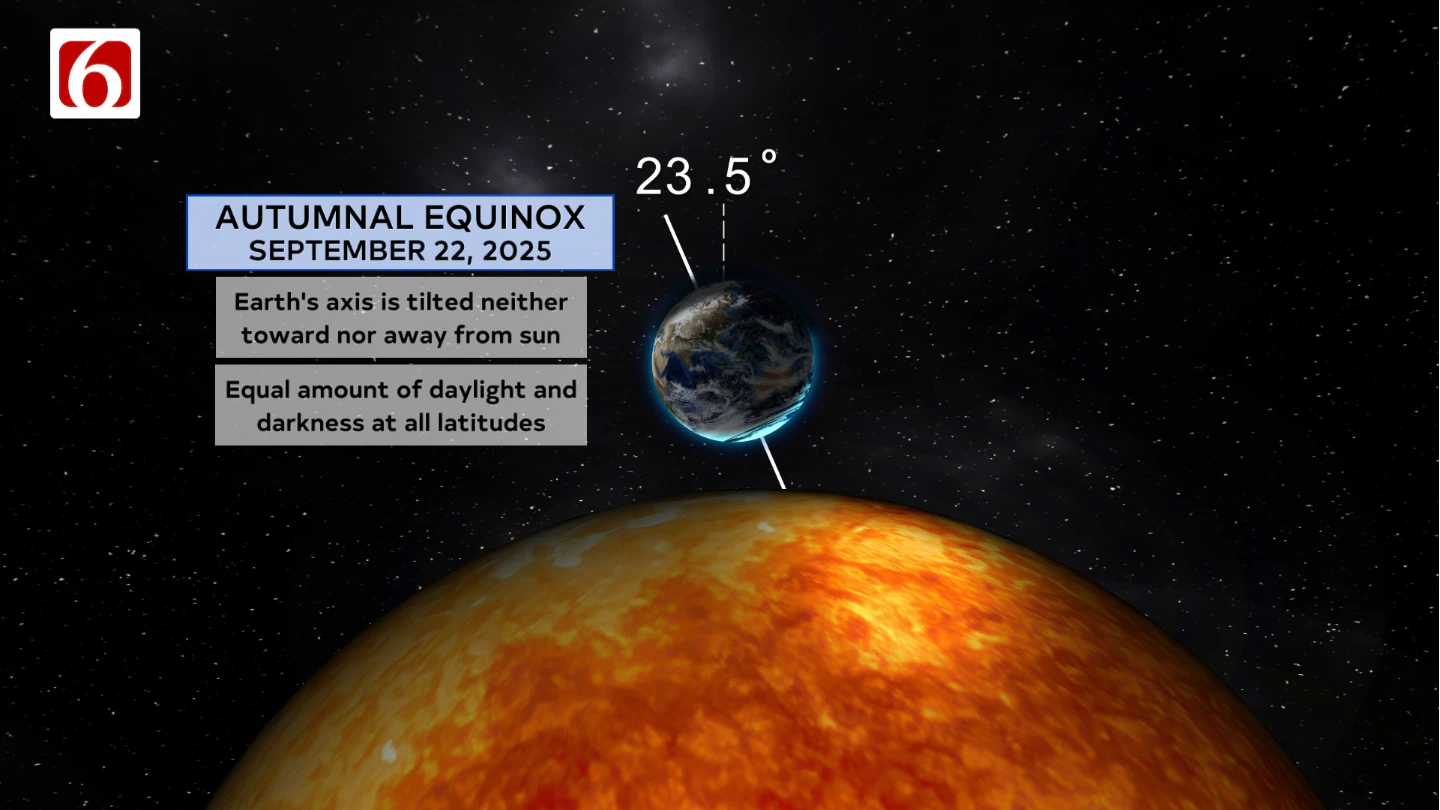
The fall equinox of 2025 served as a significant astronomical and energetic threshold, marking the moment the Sun crossed the celestial equator moving southward. Spiritually, this event is recognized as a period of profound equilibrium, representing the exact point where day and night are of equal length, prompting deep reflection on inner balance, the necessity of harvest, and preparation for the introspection of the coming winter.
Astronomical Foundations and the Spiritual Anchor
To understand the spiritual significance of the fall equinox—often referred to as the Autumnal Equinox—one must first acknowledge its objective astronomical reality. In 2025, this event occurred on September 22. Astronomically, an equinox is the point in the Earth's orbit where the tilt of the planet's axis is neither inclined away from nor toward the Sun.
From an observational standpoint, this date serves as a terrestrial anchor. For those seeking spiritual alignment with natural cycles, this astronomical precision is not merely a scientific curiosity but a foundational element of practice. It represents the "Great Pause." Because the lengths of light and dark are momentarily equal, the environment itself mirrors a state of perfect stillness. For individuals practicing seasonal awareness, this moment functions as a recalibration point, signaling that the chaotic growth of spring and the high-energy abundance of summer have concluded, giving way to a shift toward contraction and internal focus.
The Symbolic Duality: Light and Shadow
The core spiritual meaning of the fall equinox resides in the concept of duality. Throughout various historical traditions and contemporary mindfulness practices, the equinox is viewed as the "Day of Balance." Unlike the solstices, which represent the extremes of light (summer) or darkness (winter), the equinox acknowledges that both forces are currently equal.
This duality invites practitioners to perform an internal audit. In the context of 2025, many spiritual observers utilized this period to assess their own personal "light" and "shadow" aspects.
- The Light: Represents the achievements, social connections, and external projects cultivated throughout the active months of the year.
- The Shadow: Represents the hidden desires, dormant goals, or unresolved emotional states that require the slower, darker months of the year to process.
Recognizing that light and shadow are of equal importance is the central task of this season. Just as the Earth prepares to tilt toward the colder, darker months, the individual is encouraged to accept that their own "darker" aspects—rest, solitude, and reflection—are not deficiencies, but necessary components of a complete life cycle.
Harvest and Gratitude: Beyond the Physical
While historical agrarian societies utilized the fall equinox as a literal harvest festival, modern spiritual interpretation has evolved to focus on the metaphorical harvest. The "reaping" associated with the equinox is an act of inventory.
By late September, the intentions set during the spring equinox have matured. Evaluating these intentions is a critical spiritual exercise. This involves asking:
- What projects reached fruition?
- What seeds were planted that failed to grow, and why?
- What is the current state of my internal resources (emotional energy, mental clarity)?
Gratitude during this period is not merely about being thankful for what has been acquired; it is about acknowledging the process of growth itself. The spiritual practice of the fall equinox involves releasing the attachment to the outcome of the year’s efforts. If a "harvest" was not what was expected, the equinox provides the cosmic permission to let go of that disappointment, mirroring the way trees release their leaves to survive the coming frost.
Comparative Framework of Seasonal Transitions
To better navigate the energies associated with these dates, it is helpful to categorize the seasonal shifts. The table below outlines how the equinox functions in contrast to other major solar markers.
| Event | Primary Energy | Spiritual Focus | Practical Action |
|---|---|---|---|
| Spring Equinox | Awakening | New beginnings, growth | Planting seeds, setting intentions |
| Summer Solstice | Peak Expansion | Maximum external output | Celebrating achievements |
| Fall Equinox | Equilibrium | Releasing, gratitude | Assessing harvest, preparing for rest |
| Winter Solstice | Inward Reflection | Deep rest, regeneration | Stillness, planning for the next cycle |
Preparing for the Descent: Integration and Rest
The movement from the fall equinox toward the winter solstice is often described as a "descent." In a fast-paced, high-output society, this can feel counterintuitive. The spiritual meaning of this phase is the validation of slowing down. As the solar energy wanes, the human spirit is naturally invited to move away from the external performance of the summer and toward the interiority of the winter.
For many, the transition following the 2025 equinox involved setting boundaries. If the spring was about expanding one’s reach into the world, the post-equinox period is about consolidation. This involves:
- Decluttering the physical environment: Simplifying living spaces to foster mental clarity.
- Digitally disconnecting: Reducing the intake of external information to make room for intuition.
- Emotional processing: Allowing the "leaves" of past grievances or stagnant habits to fall away, ensuring they do not weigh down the spirit during the winter months.
Common Misconceptions About Seasonal Spirituality
A frequent error in applying the spiritual meanings of celestial events is the pressure to force a specific emotion or result. Some may feel they must be "productive" in their spiritual inventory or that the fall must be a time of sorrow due to the approaching darkness.
Authentic practice avoids this forced optimism or pessimism. The spiritual meaning of the equinox is rooted in neutrality—the acknowledgment that the world is in balance. If you feel tired, it is not a failure; it is a resonance with the natural waning of light. If you feel a surge of creative energy, it is not a contradiction; it is merely your own rhythm interacting with the season. The primary goal is observation rather than judgment.
Frequently Asked Questions
Why is the 2025 fall equinox significant even though the year has passed? The spiritual importance of the equinox lies in the repetition of the Earth's cycle. While the specific date (September 22, 2025) has passed, the archetypal lessons of balance, gratitude, and letting go that were highlighted during that specific window remain applicable as a foundational model for how to approach every subsequent autumn.
How can I practice "letting go" during the fall season? Letting go is a cognitive and emotional practice. It involves identifying one attachment (a habit, a grudge, or an unrealistic expectation) and consciously deciding that it no longer serves the version of yourself you are becoming. This can be supported by symbolic actions, such as writing down what you want to release and composting the paper or clearing out physical belongings that no longer align with your current needs.
Is there a specific way to meditate during the equinox? Meditation during the equinox should prioritize the theme of balance. A simple, effective method is to focus on breath work that emphasizes equal duration for inhalation and exhalation. This helps to center the nervous system and mirrors the equal length of day and night, physically anchoring the concept of equilibrium in your own body.
Does the spiritual meaning of the equinox change based on the hemisphere? Yes. The spiritual meaning is tied to the local experience of the seasons. While the Northern Hemisphere experiences the fall equinox in September, the Southern Hemisphere experiences the spring equinox. The themes of balance remain the same, but the directional energy—whether it is toward the harvest/darkness or the planting/light—is reversed based on the local climate.
Establishing Your Ongoing Practice
Moving forward, the lesson of the 2025 fall equinox is to maintain a rhythm that respects both your need for action and your need for rest. By treating the equinox as a yearly check-in, you develop a more resilient relationship with your own personal growth. Use this time not to measure yourself against others, but to verify that your internal pace is in alignment with the natural progression of the world around you.
If you find yourself disconnected from these cycles, start by simply tracking the solstices and equinoxes on your calendar. Observe the changes in the natural world during the weeks leading up to and following these dates. Over time, this observation will evolve into a personal, intuitive understanding of the energy each season requires, allowing you to move through the year with greater grace and intentionality.