Finding the single best auto insurance for a two adult household requires balancing shared multi-car discounts with individual driver risk profiles, coverage limits, and deductible structures. Because no single insurance carrier universally ranks first for every household composition, the ideal choice depends on whether both adults share driving responsibilities across all vehicles, maintain separate vehicles, or have distinct driving records that influence underwriting tiers.
Navigating the auto insurance market as a household of two adults demands a strategic approach to policy structuring. When two adults live under the same roof—whether they are married spouses, domestic partners, roommates, or family members—insurance carriers typically view them as part of the same "household risk pool." This means that even if only one person owns the car, most insurance companies require all licensed drivers living at the same address to be listed on the policy or explicitly excluded. Understanding how insurers evaluate two-adult households, how multi-car discounts interact with risk factors, and how to select the optimal coverage levels ensures that your household secures maximum protection without overpaying for redundant premiums.
Understanding Multi-Driver and Multi-Car Dynamics in a Two Adult Household
When two adults insure their vehicles together, insurance companies generally apply favorable underwriting assumptions. Grouping two vehicles and two drivers onto a single policy unlocks multi-car discounts, which typically range from 10% to 25% depending on the carrier and state regulations. However, combining policies also introduces shared risk.
Under standard auto insurance underwriting guidelines, insurers evaluate the driving history of every licensed driver in the household. If one adult maintains a pristine driving record with zero accidents or tickets, while the other has a recent speeding citation or an at-fault collision, the insurance carrier will calculate the household rate using a blended risk score or by rating the higher-risk driver on the primary vehicle they operate.
Policy Structures: Combined vs. Separate Policies
Deciding whether to place both adults on a single joint policy or maintain separate individual policies depends on legal relationships and vehicle ownership:
- Joint Policy (Single Policy, Multiple Drivers and Vehicles): This is the most common and cost-effective option for married couples and domestic partners who share financial responsibilities. It consolidates billing, maximizes multi-car discounts, and eliminates coverage gaps if one adult occasionally drives the other's vehicle.
- Separate Policies at the Same Address: Roommates or non-related adults living together often choose to maintain separate policies. However, most insurers still mandate that each roommate be listed as an excluded driver on the other's policy if they do not share vehicles, or added as a rated driver if they have access to both cars. Failing to disclose household drivers can lead to claim denials under material misrepresentation clauses.
Key Criteria for Evaluating Auto Insurance Providers
Selecting the best insurance provider for a two-adult household goes beyond hunting for the lowest initial quote. A comprehensive evaluation requires examining financial stability, claims handling efficiency, customer satisfaction ratings, and coverage flexibility.
1. Financial Strength and Stability
An insurance policy is only as reliable as the company backing it. Independent rating agencies such as A.M. Best, Standard & Poor's, and Moody's evaluate insurer financial strength. Look for carriers with an "A" (Excellent) rating or higher to ensure they possess adequate capital reserves to pay out major claims promptly, especially during catastrophic weather events or severe multi-car accidents.
2. Claims Satisfaction and Customer Service
When an accident occurs, the administrative burden falls on both household members. Top-tier insurers provide streamlined digital claims filing, 24/7 customer support, and robust networks of approved repair shops that offer lifetime guarantees on workmanship. Reviewing consumer satisfaction studies from organizations like J.D. Power provides objective insights into how smoothly a carrier handles property damage and bodily injury claims.
3. Comprehensive Discount Architecture
Beyond the standard multi-car discount, a two-adult household should evaluate carriers based on complementary discount opportunities:
- Multi-Policy (Bundle) Discounts: Combining auto insurance with homeowners, renters, or umbrella insurance often yields the largest single discount, frequently exceeding 20%.
- Paperless and Autopay Discounts: Small percentage reductions for managing policy documents digitally and setting up recurring electronic fund transfers.
- Telematics and Usage-Based Programs: Programs that track driving habits via mobile apps or plug-in devices. For a two-adult household, evaluate whether both drivers exhibit safe habits (low speed, smooth braking, minimal nighttime driving) before opting into telematics, as aggressive driving by one household member can raise the rate for both.
Coverage Essentials for Two Adults
Securing adequate protection requires looking past state-minimum liability limits, which are frequently insufficient to cover modern medical bills and vehicle replacement costs in a serious accident. A well-structured household policy should incorporate several layers of robust protection:
| Coverage Type | Recommended Minimum Limit | Purpose |
|---|---|---|
| Bodily Injury Liability | $100,000 per person / $300,000 per accident | Pays for medical expenses, legal fees, and lost wages of others if your household causes an accident. |
| Property Damage Liability | $50,000 to $100,000 per accident | Covers repairs or replacement of other vehicles and physical property damaged by a household driver. |
| Uninsured/Underinsured Motorist | Matches bodily injury limits | Protects both adults if hit by a driver with no insurance or insufficient coverage to pay medical bills. |
| Comprehensive & Collision | Actual cash value minus deductible | Covers physical damage to your own vehicles from collisions, theft, vandalism, and weather events. |
| Medical Payments (MedPay) / PIP | $5,000 to $10,000 per person | Covers immediate medical and funeral expenses for you and your passengers regardless of fault. |
Comparing Leading Auto Insurance Providers for Households
Different insurance carriers excel in distinct categories, making the "best" choice dependent on your household's specific operational priorities.
State Farm: Best for Personalized Agent Relationships
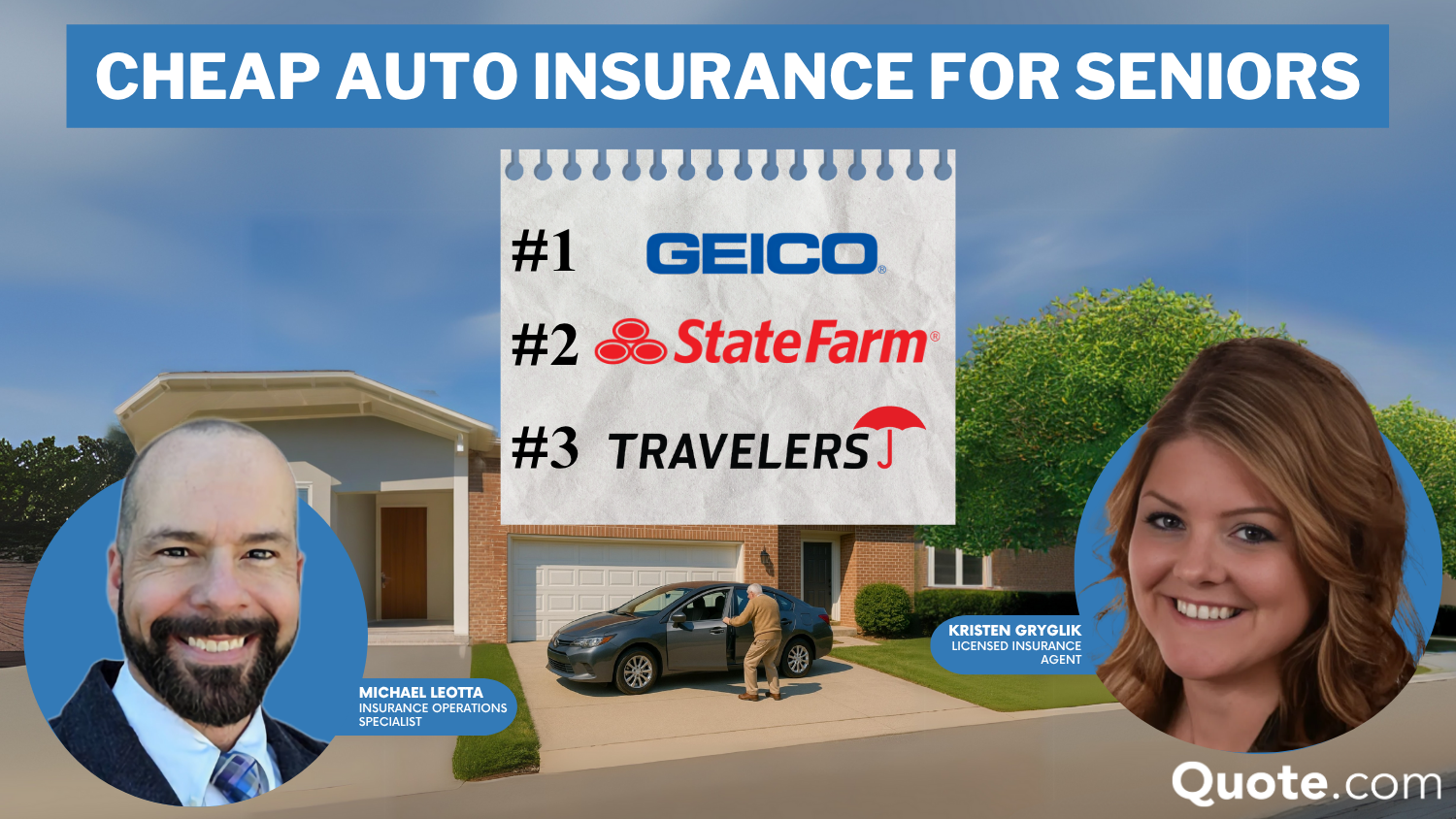
State Farm maintains one of the largest agent networks in the country, making it an ideal choice for two-adult households that prefer face-to-face consultations and personalized policy reviews. They offer competitive multi-car discounts and strong performance in J.D. Power customer satisfaction rankings across multiple regions. Their Steer Clear and Drive Safe & Save programs provide viable pathways for cost-conscious drivers to lower premiums through safe driving habits.
GEICO: Best for Digital-First Convenience and Value
For tech-savvy households looking for streamlined mobile app management and competitive baseline pricing, GEICO stands out. They frequently rank high in cost-competitiveness for clean-record drivers and offer robust digital tools for managing policy changes, adding drivers, and filing claims. However, households with complex risk profiles or recent accidents may find GEICO’s underwriting rules less flexible than specialized high-risk carriers.
Progressive: Best for Flexible Pricing and High-Risk Drivers
Progressive excels in accommodating mixed-risk households—such as a household where one adult has a clean record and the other has a minor violation or a less-established credit history. Their Name Your Price tool and Quote Comparison features allow consumers to see how adjusting deductibles and coverages impacts the household budget in real time. Progressive is also well-regarded for its handling of specialty vehicles, classic cars, and non-owner policies.
Travelers: Best for Bundling and Comprehensive Customization
Travelers offers an extensive suite of endorsements and optional coverages, such as gap insurance, new car replacement, and accident forgiveness. For two-adult households that own their home and seek to maximize multi-policy discounts while customizing coverage limits down to the exact dollar, Travelers provides a highly flexible platform backed by solid financial stability.
Strategic Steps to Lowering Household Auto Insurance Costs
Optimizing a two-adult policy involves proactive administrative steps that go beyond shopping for initial quotes. Implementing these strategies can yield substantial long-term savings:
- Consolidate All Vehicles Under One Roof: Even if one adult primarily drives a commuter sedan and the other drives a weekend truck, listing both vehicles on a single declarations page triggers multi-car credits that separate policies cannot match.
- Optimize Deductibles Based on Emergency Savings: Raising comprehensive and collision deductibles from $500 to $1,000 can reduce annual premium costs by 10% to 15%. Ensure the household maintains an emergency fund capable of covering the chosen deductible in the event of an unexpected claim.
- Review Credit-Based Insurance Scores (Where Permitted): In states that allow it, credit history significantly influences insurance premiums. Both adults should periodically review their credit reports to ensure accuracy, as improved credit tiers translate directly into lower underwriting rates.
- Re-evaluate Annual Mileage Disclosures: Underwriting models evaluate how many miles each vehicle travels annually. If commute patterns change—such as one adult transitioning to remote work—updating the estimated annual mileage can immediately reduce the vehicle's rating factor.
- Audit Optional Coverages Periodically: If a vehicle is fully paid off and its market value has depreciated significantly, paying for comprehensive and collision coverage may cost more than the car is worth. Assess vehicle depreciation annually against premium costs to determine whether to drop physical damage coverage on older vehicles.
Frequently Asked Questions
Do both adults in a household have to be on the same auto insurance policy?
No law forces two adults to share a single policy unless they co-own a vehicle. However, most insurance companies require all licensed drivers living at the same address to be disclosed. If they share vehicles, a joint policy is typically required. If they drive completely separate vehicles and have separate titles, they can maintain independent policies with the same or different carriers, though they may miss out on multi-car discounts.
What happens if one adult in the household has a bad driving record?
When two adults share a policy, the driver with the poorer record will impact the overall household rate. Insurers typically rate the higher-risk driver on the vehicle they drive most frequently, or factor their violations into the general household risk score. In some cases, if a driver poses an extreme risk, the household can list that driver as "excluded," meaning the insurer provides zero coverage if that person drives any vehicle on the policy.
Can unmarried partners living together get a multi-car discount?
Yes. Most major auto insurance carriers extend multi-car and multi-driver discounts to unmarried couples, domestic partners, and roommates as long as they reside at the same permanent address and the vehicles are registered to members of the household.
How does vehicle ownership affect a two-adult insurance policy?
The registered owner of a vehicle must generally be listed as the primary named insured or co-insured on the policy covering that specific vehicle. Insurers require the person with financial interest in the asset to be legally tied to the policy to satisfy insurable interest laws.
Is it cheaper to bundle auto insurance with renters or homeowners insurance?
In the vast majority of cases, bundling auto insurance with a renters or homeowners policy yields a significant discount from the same carrier. Insurers incentivize policy consolidation because it increases customer retention, passing those operational savings back to the household in the form of lower composite premiums.
Conclusion and Next Actions
Finding the optimal auto insurance for a two-adult household requires balancing combined discounts with individual driver risk assessments. Start by gathering current declarations pages for both drivers to compare existing coverage levels and deductibles. Obtain simultaneous quotes from at least three reputable carriers for both a joint policy and separate policies to mathematically verify which structure delivers the lowest total cost for equivalent coverage. Finally, verify that all resident drivers are accurately disclosed to your chosen insurer to guarantee full protection and prevent claims disputes down the road.