Article 6 of the Paris Agreement is the framework that allows countries to cooperate internationally to meet their climate targets, primarily through carbon markets and non-market approaches. By enabling the transfer of carbon credits across borders, it aims to increase global ambition by making it more cost-effective for nations to achieve their Nationally Determined Contributions (NDCs).
International climate policy can often seem like a labyrinth of technical jargon and bureaucratic procedures. However, at its core, Article 6 represents the "engine room" of the Paris Agreement. As of 2026, the operationalization of this article has become the primary driver for global carbon trading, providing the legal and technical infrastructure necessary for countries to trade emissions reductions. Without Article 6, the Paris Agreement would rely solely on domestic action; with it, the world creates a liquid, interconnected system where a ton of carbon reduced in one country can help satisfy the climate pledge of another.
The Fundamentals of Article 6: Bridging the Gap in Global Climate Action
To understand Article 6, one must first understand the concept of Nationally Determined Contributions (NDCs). Under the Paris Agreement, every signatory country sets its own targets for reducing greenhouse gas emissions. However, the cost and ease of reducing emissions vary wildly from one country to another. A developed nation might find it extremely expensive to squeeze out the last 5% of emissions from its heavy industry, while a developing nation might have untapped potential for massive emissions reductions through reforestation or renewable energy adoption that it cannot afford to fund alone.
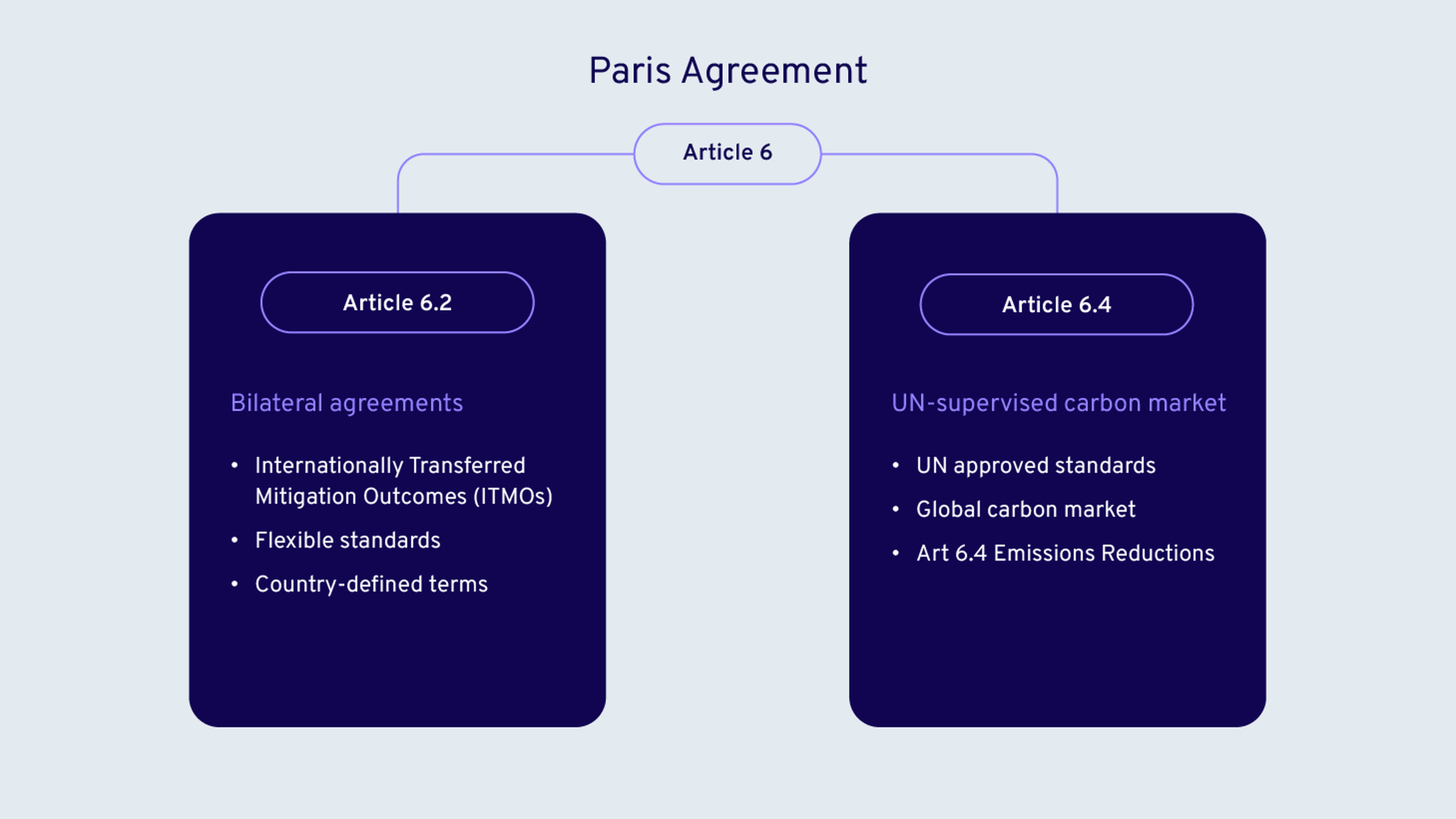
Article 6 provides the "cooperative approaches" to bridge this gap. It consists of three main pillars:
- Article 6.2: A decentralized framework for bilateral or multilateral cooperation.
- Article 6.4: A centralized UN-managed mechanism for trading emissions reductions.
- Article 6.8: A framework for non-market-based cooperation.
The overarching goal is to foster "high integrity" carbon markets. In the past, carbon trading was plagued by concerns over "double counting"—where two countries both claimed the same emissions reduction. Article 6 introduces rigorous accounting standards to ensure that when one country sells a credit, it "un-counts" that reduction from its own ledger, a process known as a Corresponding Adjustment.
Article 6.2: Decentralized Cooperation and ITMOs
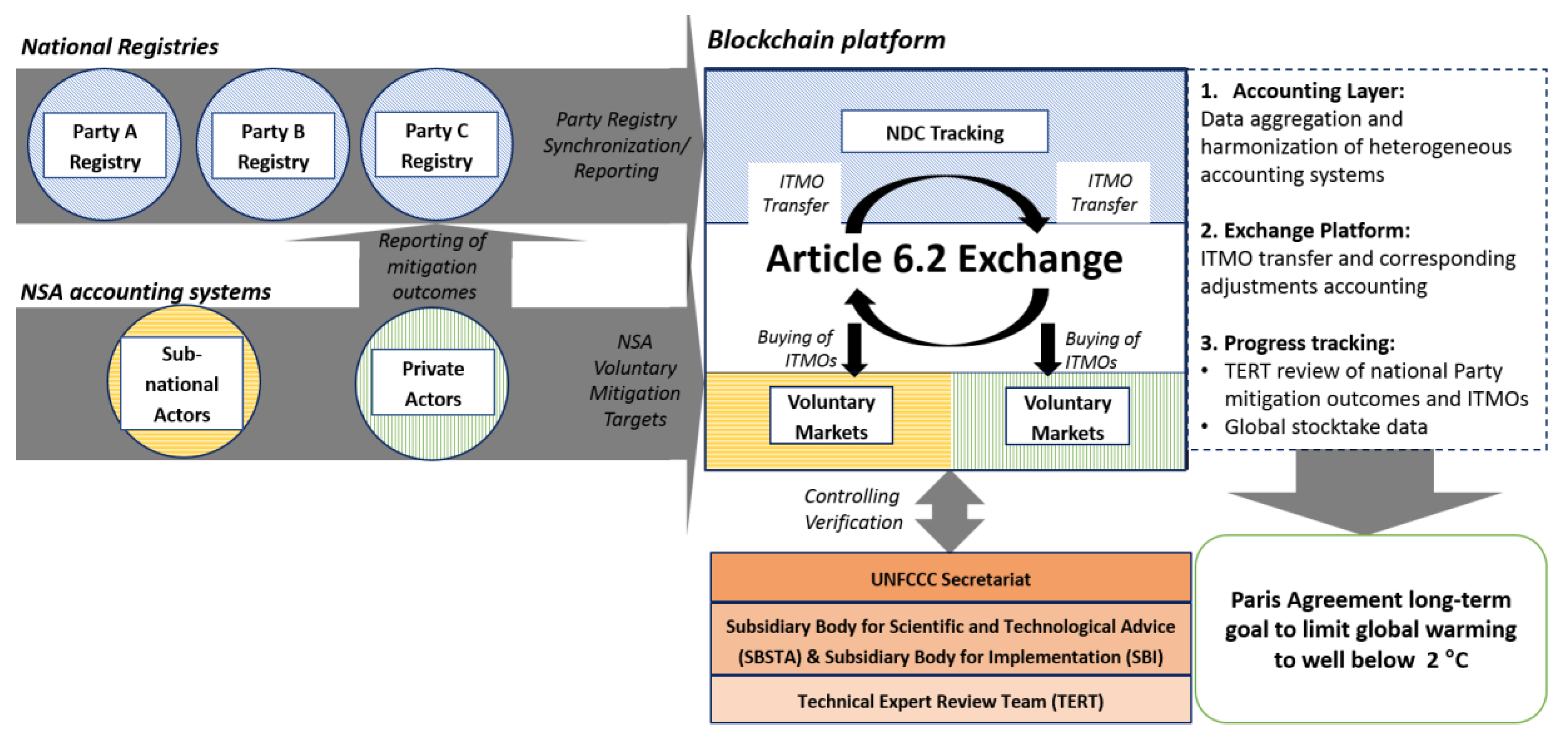
Article 6.2 is the most flexible part of the agreement. It allows two or more countries to strike their own deals to trade emissions reductions. These traded units are called Internationally Transferred Mitigation Outcomes (ITMOs).
How Article 6.2 Works in Practice
In an Article 6.2 arrangement, a host country (usually a developing nation) implements a project that reduces emissions beyond what it needs for its own NDC. It then sells these extra reductions to a buyer country (usually a developed nation or a corporation authorized by a state). The buyer uses these ITMOs to meet its own climate targets.
As of 2026, we have seen a significant rise in bilateral agreements. For instance, countries like Switzerland, Singapore, and Japan have been pioneers in establishing Article 6.2 frameworks with partners in Africa and Southeast Asia. These agreements are not just about carbon; they often include provisions for sustainable development, technology transfer, and biodiversity protection.
The Importance of "Authorization"
A critical development in recent years has been the formal process of Authorization. For an emissions reduction to become an ITMO, the host government must explicitly authorize its use for international targets. This authorization is the "point of no return" where the host country agrees to apply a corresponding adjustment. For investors and project developers, an "Authorized ITMO" is the gold standard of carbon credits because it carries the legal guarantee that the credit is recognized under the Paris Agreement.
Article 6.4: The New Global Carbon Market Mechanism
While Article 6.2 is decentralized, Article 6.4 creates a centralized global market under the direct supervision of the United Nations. It is often described as the successor to the Kyoto Protocol’s Clean Development Mechanism (CDM), but with much stricter rules.
The Supervisory Body and Methodology
The Article 6.4 mechanism is overseen by a dedicated Supervisory Body that approves methodologies for project activities. These methodologies ensure that emissions reductions are "additional"—meaning they would not have happened without the financial incentive provided by the carbon credit.
In 2026, the Article 6.4 registry is fully operational, allowing project developers to register activities ranging from green hydrogen production to advanced carbon capture and storage (CCS). Unlike the voluntary market, which operates independently, Article 6.4 credits (sometimes called A6.4ERs) are part of a regulated UN ecosystem.
Key Features of Article 6.4:
- Overall Mitigation in Global Emissions (OMGE): To ensure the atmosphere actually benefits, a portion of the credits (2%) is automatically cancelled. This means Article 6.4 isn't just a zero-sum game of shifting emissions; it results in a net reduction in global carbon levels.
- Share of Proceeds (SOP): 5% of the credits issued under Article 6.4 are set aside for the Adaptation Fund. This fund helps vulnerable developing nations build resilience against the physical impacts of climate change, such as rising sea levels and extreme weather.
Article 6.8: Non-Market Approaches for Climate Resilience
Not all climate cooperation involves trading carbon credits. Article 6.8 recognizes that some of the most effective climate actions are "non-market" based. This section is designed for countries that prefer to cooperate through policy coordination, technology transfer, or direct financial aid without the creation of tradable units.
Non-market approaches (NMAs) are particularly relevant for:
- Integrated Water Management: Transboundary cooperation on water resources in regions facing drought.
- Energy Efficiency Standards: Countries working together to align building codes or appliance standards to reduce regional energy demand.
- Circular Economy Initiatives: Collaborative efforts to manage waste and reduce the carbon footprint of manufacturing supply chains.
By 2026, the UNFCCC web-based platform for non-market approaches has become a vital hub for matching countries that have specific needs with those that can provide resources, expertise, or financing.
The Crucial Role of Corresponding Adjustments
The integrity of the Paris Agreement hinges on a single accounting rule: the Corresponding Adjustment. This is the mechanism that prevents "double counting," which was a significant flaw in earlier carbon trading schemes.
How the Adjustment Functions
Imagine Country A (the seller) reduces its emissions by 10 tons. It sells those 10 tons as ITMOs to Country B (the buyer).
- Country A must add 10 tons back to its emissions total when reporting its progress toward its NDC.
- Country B can subtract 10 tons from its actual emissions when reporting its progress.
Without this adjustment, both countries would claim the same 10-ton reduction, and the atmosphere would see a 10-ton reduction on paper but only a 10-ton reduction in reality. With the adjustment, the accounting reflects the physical reality. This process is documented in the Biennial Transparency Reports (BTRs) that countries submit to the UN.
Comparison of Article 6 Frameworks
| Feature | Article 6.2 (Bilateral/Multilateral) | Article 6.4 (Centralized Mechanism) | Article 6.8 (Non-Market) |
|---|---|---|---|
| Oversight | National Governments | UN Supervisory Body | UNFCCC Committee |
| Unit Type | ITMOs (Mitigation Outcomes) | A6.4ERs (Credits) | No tradable units |
| Primary Goal | Flexible, bilateral trading | Regulated, global market | Cooperation/Capacity building |
| Double Counting Prevention | Corresponding Adjustments | Corresponding Adjustments | N/A (No trading) |
| Levy for Adaptation | Encouraged (Voluntary) | Mandatory (5% of credits) | N/A |
| Net Mitigation | Encouraged | Mandatory (2% cancellation) | Direct (Through policy) |
Transitioning from the Clean Development Mechanism (CDM)
A major point of contention in the years following the 2015 Paris Agreement was what to do with the "legacy" credits from the Kyoto Protocol's CDM. Millions of Certified Emission Reductions (CERs) existed, but many were of questionable environmental integrity.
The "Glasgow Rulebook" finalized at COP26 set the stage for this transition. As of 2026, the transition period is nearing its end. Only specific CDM projects that met strict transition requirements were allowed to move into the Article 6.4 mechanism. Furthermore, use of pre-2020 CERs toward NDCs is heavily restricted, ensuring that the current global carbon market is powered by fresh, high-quality emissions reductions rather than old, "junk" credits.
The Impact on the Private Sector and Voluntary Carbon Markets
The implementation of Article 6 has sent shockwaves through the Voluntary Carbon Market (VCM). Previously, corporations bought carbon credits from private registries (like Verra or Gold Standard) to claim "carbon neutrality."
In 2026, the distinction between "voluntary" and "compliance" markets is blurring. Many corporations now seek "Article 6 aligned" credits. They want credits that have received a government authorization and are backed by a corresponding adjustment. This provides companies with a higher level of "claims integrity," protecting them against accusations of greenwashing.
The Rise of the "Contribution Claim"
Article 6 has also popularized the Contribution Claim model. Instead of a company claiming to "offset" its emissions (which implies the emissions no longer exist), it claims to have "contributed" to a country's climate goals. This model avoids the need for a corresponding adjustment because the host country keeps the reduction for its own NDC, and the company simply takes credit for funding it.
Challenges and Implementation Hurdles in 2026
Despite the progress made, several challenges remain in the full deployment of Article 6:
- Capacity Building: Many developing nations lack the complex institutional infrastructure required to track ITMOs, issue authorizations, and perform corresponding adjustments.
- Baselines and Additionality: Setting the "baseline" (what emissions would have been without the project) remains technically difficult. If a baseline is set too high, "hot air" (fake credits) can enter the market.
- Human Rights and Safeguards: There are ongoing concerns that large-scale carbon projects, such as massive reforestation or hydroelectric dams, could displace local communities or harm biodiversity. Article 6.4 now includes a formal grievance mechanism to address these issues.
- Market Liquidity: While bilateral deals are thriving, the centralized Article 6.4 market is still scaling up to reach the liquidity levels needed to drive a truly global carbon price.
Frequently Asked Questions
What is the difference between a carbon credit and an ITMO?
A carbon credit is a generic term for a tradable permit representing one ton of CO2 equivalent. An Internationally Transferred Mitigation Outcome (ITMO) is a specific type of unit defined under Article 6.2 of the Paris Agreement. All ITMOs are carbon credits, but not all carbon credits (such as those in some local voluntary markets) qualify as ITMOs because they may lack the necessary government authorization and corresponding adjustment.
Does Article 6 help or hurt developing countries?
If implemented correctly, Article 6 helps developing countries by funneling private and public finance into their green transitions. It provides a revenue stream for renewable energy, forest conservation, and sustainable agriculture. However, if a country sells too many of its "cheap" emissions reductions as ITMOs, it might find it harder and more expensive to meet its own NDC later—a risk known as "selling the low-hanging fruit."
Can I buy Article 6 credits as an individual?
Currently, Article 6 is primarily a "B2B" (Business-to-Business) and "G2G" (Government-to-Government) framework. However, as the market matures in 2026, some retail carbon offset providers are beginning to offer "Article 6.4 authorized" credits to individuals who want to ensure their personal carbon footprint is offset using the highest possible regulatory standards.
What happens if a country fails to make a corresponding adjustment?
If a country fails to perform a corresponding adjustment after authorizing an ITMO, it creates a "double counting" event. Under the Paris Agreement's transparency framework, this would be flagged during the technical expert review of the country's Biennial Transparency Report. This can lead to reputational damage and potential exclusion from future participation in international carbon markets.
Is the "Voluntary Carbon Market" dead because of Article 6?
No, the Voluntary Carbon Market (VCM) is not dead; it is evolving. In 2026, the VCM continues to exist alongside Article 6. Many projects still sell credits without Article 6 authorization for companies that want to support climate action without making official "offsetting" claims. However, the price premium for Article 6-authorized credits is significant, creating a tiered market based on the level of regulatory backing.
Final Recommendations for Stakeholders
For Government Officials, the priority should be the establishment of a "National Article 6 Framework." This includes creating a clear process for project authorization and a robust national registry to track ITMOs. Without these, a country cannot participate in the global trade that Article 6 enables.
For Project Developers and Investors, the focus should be on "Additionality" and "Permanence." Projects must be designed to meet the rigorous standards of the Article 6.4 Supervisory Body or the high-integrity requirements of Article 6.2 bilateral partners. In 2026, the market has no appetite for low-quality credits; value is now strictly tied to verifiable, permanent, and authorized emissions reductions.
For Corporate Sustainability Officers, the next step is to review your carbon procurement strategy. Distinguish between credits intended for "Contribution Claims" and those intended for "Offsetting Claims." If you are using credits to claim "Net Zero," ensure those credits are backed by Article 6 corresponding adjustments to avoid regulatory and reputational risks.