Most individuals qualify for Medicare benefits at age 65. You can typically enroll during a seven-month window surrounding your 65th birthday. However, you may qualify earlier if you have received Social Security disability benefits for 24 months or have specific medical conditions like End-Stage Renal Disease (ESRD) or ALS.
The Standard Qualifying Age: Turning 65
For the vast majority of Americans, the age of 65 remains the definitive gateway to Medicare eligibility. This threshold was established when the program was signed into law in 1965 and has remained consistent, even as the "Full Retirement Age" (FRA) for Social Security benefits has gradually increased. It is a common point of confusion for many: while you may have to wait until 66 or 67 to receive 100% of your Social Security retirement checks, your Medicare eligibility almost always triggers precisely at 65.
The process of qualifying at age 65 is governed by the Initial Enrollment Period (IEP). This is a seven-month window that includes:
- The three months before the month you turn 65.
- The month of your 65th birthday.
- The three months after the month you turn 65.
If your birthday falls on the first day of the month, Medicare treats you as if you turned 65 in the previous month. For example, if your 65th birthday is October 1, 2026, your IEP would begin on June 1 and your coverage could start as early as September 1.
Qualifying at 65 is not just about age; it is also about legal status. To be eligible, you must be a U.S. citizen or a lawfully admitted search resident who has lived in the United States continuously for at least five years before applying. This residency requirement ensures that the system is supported by those who have contributed to the infrastructure and tax base of the country.
Qualifying Before Age 65: Disability and Special Conditions
While 65 is the standard, hundreds of thousands of individuals qualify for Medicare earlier each year based on specific health criteria. These pathways are generally tied to the Social Security Administration’s (SSA) definition of disability or the diagnosis of specific life-altering conditions.
The 24-Month Disability Rule
If you are under 65 and have a disability, you generally qualify for Medicare after you have received Social Security Disability Insurance (SSDI) benefits for 24 months. It is important to note that the countdown starts from the month you receive your first disability check, not the month you became disabled. Because there is a five-month waiting period for SSDI checks to begin after the onset of a disability, the actual timeframe from the start of a disability to Medicare eligibility is often 29 months.
During this 24-month "waiting period," individuals must often rely on private insurance, COBRA, or Medicaid. Once the 25th month of SSDI payments arrives, enrollment in Medicare Part A (Hospital Insurance) and Part B (Medical Insurance) is usually automatic.
Amyotrophic Lateral Sclerosis (ALS)
A significant exception to the 24-month waiting period exists for those diagnosed with Amyotrophic Lateral Sclerosis (ALS), also known as Lou Gehrig’s disease. Recognizing the rapid progression of this condition, federal law mandates that individuals with ALS qualify for Medicare the very first month they begin receiving SSDI benefits. There is no waiting period for Medicare coverage once the disability benefits are approved.
End-Stage Renal Disease (ESRD)
Individuals of any age who have End-Stage Renal Disease (permanent kidney failure requiring dialysis or a kidney transplant) can qualify for Medicare. However, the start date for coverage depends on the type of treatment:
- Dialysis in a center: Coverage usually begins on the first day of the fourth month of dialysis treatments.
- Home dialysis: Coverage can begin as early as the first month of a regular course of dialysis if the patient participates in a self-dialysis training program.
- Kidney Transplant: Coverage begins the month the patient is admitted to a Medicare-certified hospital for a transplant or for healthcare services needed before the transplant, provided the transplant happens within that month or the following two months.
In 2026, those with ESRD have full access to Medicare Advantage (Part C) plans, a policy change that has expanded the options available to these beneficiaries for managing their complex care needs.
The Role of Work Credits and Taxes
Qualifying for Medicare age-wise is one step; qualifying for "premium-free" Medicare is another. Most people do not pay a monthly premium for Medicare Part A because they or their spouse paid Medicare taxes while working.
The system relies on "quarters of coverage" or work credits. To qualify for premium-free Part A at age 65, you generally need 40 credits (roughly 10 years of work). In 2026, the amount of earnings required for one credit is adjusted for inflation, but the 40-credit lifetime requirement remains static.
If you have between 30 and 39 credits, you can still qualify for Medicare at 65, but you will have to pay a pro-rated monthly premium for Part A. If you have fewer than 30 credits, the premium is higher. Regardless of work history, almost everyone must pay a monthly premium for Medicare Part B. These premiums are often deducted directly from Social Security checks.
Spousal Eligibility
If you have not worked enough to earn 40 credits, you may still qualify for premium-free Part A based on your spouse's work record. To do this, you must be 65, and your spouse must be at least 62 and eligible for Social Security retirement or disability benefits. This rule also applies to divorced spouses (if the marriage lasted at least 10 years and the applicant is currently unmarried) and widowed spouses.
Citizenship and Residency Requirements
Age and disability are the primary triggers, but your legal status in the United States is the final barrier to entry. To qualify for Medicare benefits, you must be:
- A U.S. citizen.
- OR a "lawfully admitted alien" (green card holder) who has resided in the U.S. for at least five continuous years immediately prior to the month you file for Medicare.
This five-year residency rule is strictly enforced. Non-citizens who have not met the five-year residency requirement cannot "buy into" Medicare even if they are over 65, unless they qualify through a different legal pathway or a specific international social security agreement.
Medicare vs. Social Security: Understanding the Age Gap
One of the most frequent mistakes people make is assuming that Medicare and Social Security are the same program with the same age requirements. In 2026, the Full Retirement Age (FRA) for Social Security for those born in 1960 or later is 67. However, the Medicare qualifying age remains 65.
If you choose to delay Social Security until 67 or even 70 to maximize your monthly payment, you still need to address Medicare at age 65. If you are not yet receiving Social Security benefits, you will not be automatically enrolled in Medicare. You must manually sign up through the Social Security Administration's website or at a local office. Failure to do so during your Initial Enrollment Period can lead to lifelong late-enrollment penalties for Part B and Part D.
Qualifying Pathways Comparison Table
| Qualification Path | Minimum Age | Key Requirement | Waiting Period |
|---|---|---|---|
| Standard Age | 65 | U.S. Citizenship/5-year residency | None (IEP window) |
| SSDI Disability | Any | 24 months of disability payments | 24 months |
| ALS Diagnosis | Any | Proof of diagnosis and SSDI approval | None |
| ESRD | Any | Permanent kidney failure/transplant | 0–3 months |
| Spousal Credit | 65 | Spouse must be 62+ with 40 credits | None |
Working Past Age 65: When to Delay Medicare
In 2026, more people than ever are working well into their late 60s and 70s. If you are still employed and have health coverage through your employer (or your spouse’s employer), you might not need to enroll in Medicare at 65.
However, your ability to delay Medicare without penalty depends entirely on the size of the employer:
- 20 or more employees: The employer’s group health plan is the primary payer. You can usually delay Medicare Part B and Part D without a penalty. You may still want to sign up for Part A at 65 because it is free for most people and acts as secondary insurance for hospital stays.
- Fewer than 20 employees: Medicare is generally the primary payer. This means that if you don't sign up for Medicare at 65, your employer’s insurance may refuse to pay your claims, leaving you with massive out-of-pocket costs.
If you have "creditable coverage" from a large employer, you will qualify for a Special Enrollment Period (SEP) later. This allows you to sign up for Medicare at any time while you are still covered by the group plan or within eight months of the employment ending or the coverage ending (whichever happens first).
The Importance of the Initial Enrollment Period (IEP)
Missing the age-65 deadline can be costly. If you do not qualify for a Special Enrollment Period (e.g., because you were working) and you miss your Initial Enrollment Period, you must wait for the General Enrollment Period (GEP), which runs from January 1 to March 31 each year. If you sign up during the GEP, your coverage will start the first day of the month after you sign up.
The real danger is the Late Enrollment Penalty. For Part B, the premium increases by 10% for every full 12-month period that you could have had Part B but didn't sign up. This penalty is not a one-time fee; it is added to your monthly premium for as long as you have Medicare. As of 2026, these penalties can add hundreds of dollars to annual healthcare costs for those who delayed enrollment without a valid reason.
Medicare Parts: What Are You Qualifying For?
When you reach the qualifying age, you are essentially gaining access to a four-part system. Understanding what each part does helps clarify why qualifying is so vital:
- Part A (Hospital Insurance): Covers inpatient hospital stays, care in a skilled nursing facility, hospice care, and some home health care. Most qualify for this for free based on work history.
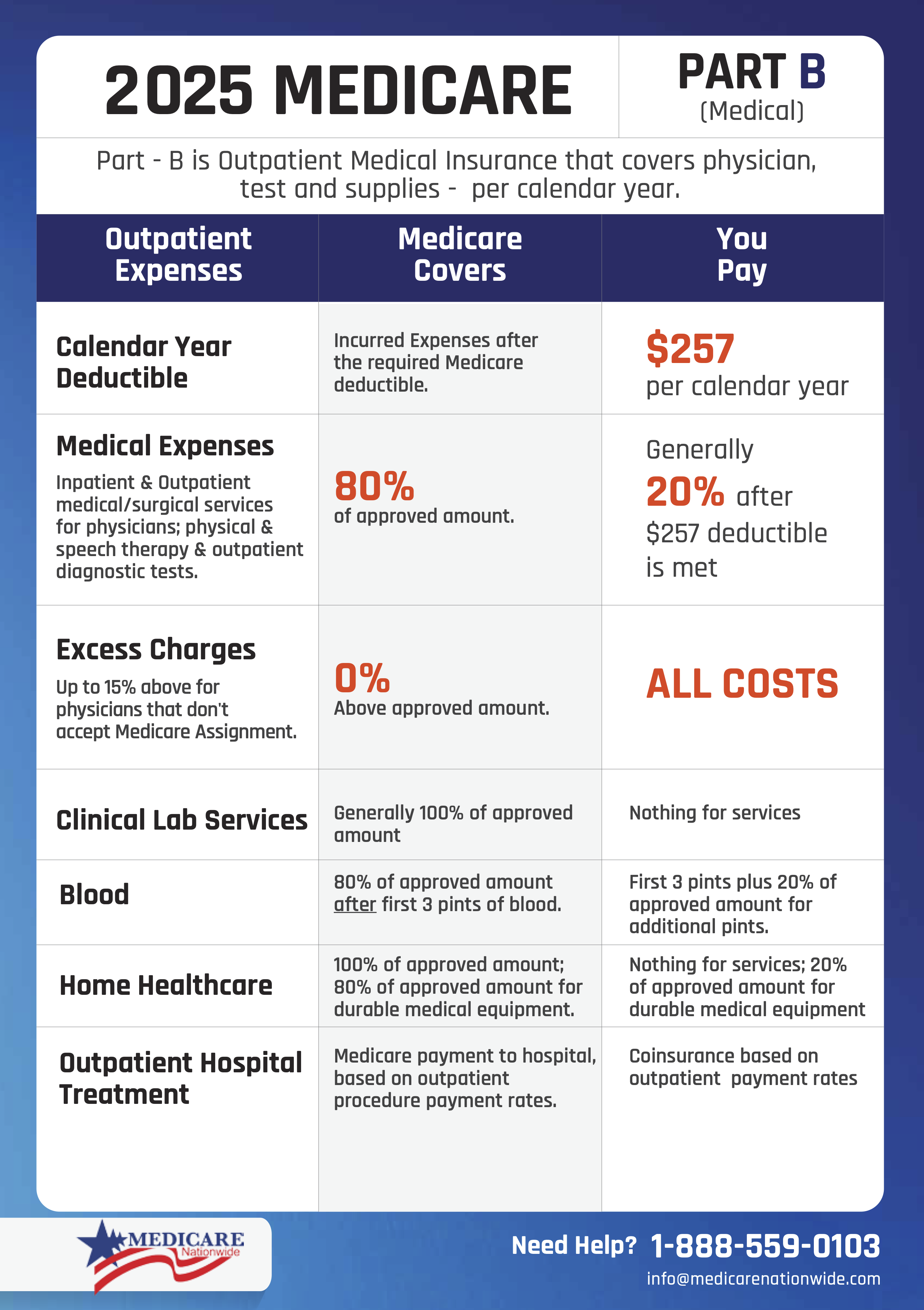
- Part B (Medical Insurance): Covers certain doctors' services, outpatient care, medical supplies, and preventive services. This requires a monthly premium.
- Part C (Medicare Advantage): An alternative to Original Medicare (A and B). These are private plans (like HMOs or PPOs) that often include drug coverage and extra benefits like dental or vision. You must be eligible for Parts A and B to join a Part C plan.
- Part D (Prescription Drug Coverage): Helps cover the cost of prescription drugs. In 2026, under the Inflation Reduction Act, Part D plans have a $2,000 annual out-of-pocket cap, making this coverage more valuable than ever for those with high medication costs.
Frequently Asked Questions
Can I qualify for Medicare at age 62?
No, you cannot qualify for Medicare at age 62 based on age alone. While you can begin receiving early Social Security retirement benefits at 62, Medicare eligibility remains fixed at age 65. The only way to receive Medicare at 62 is if you have been receiving disability benefits for at least 24 months or have ALS or ESRD.
What happens if I never worked? Can I still qualify?
Yes. If you do not have the 40 work credits and do not qualify through a spouse, you can still get Medicare at age 65, but you will have to pay the full premium for Part A. Additionally, you must still meet the citizenship or five-year residency requirements. Many people in this situation apply for Medicaid to help cover these costs if they have limited income and resources.
If I am already receiving Social Security at 65, do I need to apply?
No. If you are already receiving Social Security retirement or disability benefits at least four months before you turn 65, your enrollment in Medicare Parts A and B is automatic. You will receive your Medicare card in the mail about three months before your 65th birthday. However, you still have the option to turn down Part B if you have other creditable coverage.
Does my Medicare coverage also cover my younger spouse?
No. Medicare is individual insurance. Unlike employer-sponsored plans, there is no "family" or "spousal" coverage. Your spouse must wait until they reach age 65 or meet the disability requirements to qualify for their own Medicare benefits. This often requires couples with an age gap to find bridge insurance (such as COBRA or Marketplace plans) for the younger spouse.
Can I qualify for Medicare if I live outside the United States?
You can qualify for Medicare while living abroad if you are a U.S. citizen and age 65, but Medicare generally does not provide coverage for healthcare services received outside the 50 states, the District of Columbia, and U.S. territories. Most people living abroad delay Part B to avoid paying the premium for coverage they cannot use, but they must be careful about late enrollment penalties if they ever move back to the U.S.
Practical Recommendations for 2026
If you are approaching age 65 in 2026, the most critical step is to verify your "work credit" status. You can do this by creating a "my Social Security" account on the official SSA.gov website. This portal provides a personalized statement that confirms whether you have the 40 credits required for premium-free Part A.
Secondly, evaluate your current health coverage. If you are working for an employer with more than 20 employees, compare your current plan's costs and benefits against Medicare. In 2026, with the $2,000 cap on prescription drugs and expanded preventive services, Medicare often becomes the more cost-effective option, even if you are still working.
Finally, mark your calendar for your Initial Enrollment Period. Setting a reminder for three months before your 65th birthday ensures you have enough time to research Medicare Advantage versus Medigap (Medicare Supplement) plans, helping you choose the path that best fits your medical needs and budget.