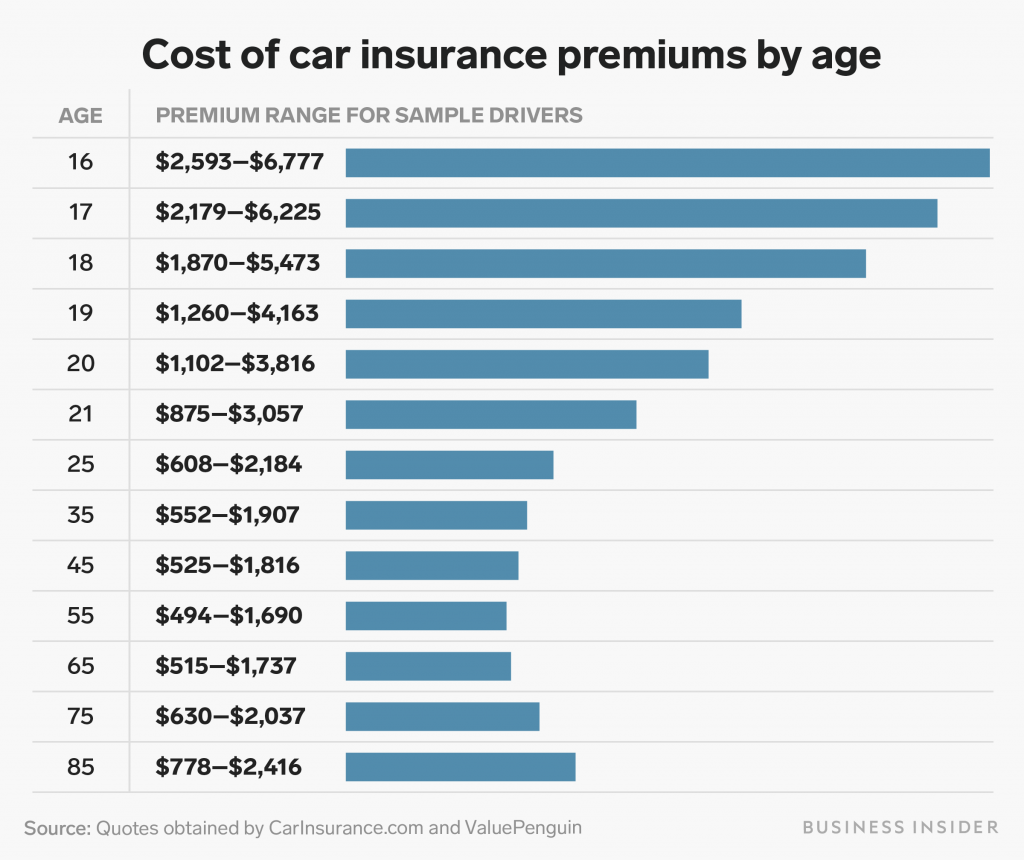
For most drivers, auto insurance premiums begin to decrease significantly at age 25. While minor price drops often occur at ages 21 and 24, the 25th birthday remains the industry’s primary milestone for transitioning from "high-risk" to "standard" risk categories. Rates typically continue to decline gradually until age 60, provided the driver maintains a clean record.
The relationship between age and insurance costs is one of the most consistent patterns in the actuarial sciences. Insurance companies rely on historical data to predict future claims, and statistics show a clear correlation between youth and increased accident frequency. As of 2026, while technology and vehicle safety have advanced, the human element of driving experience remains the most powerful predictor of risk for insurance underwriters.
The Significance of the 25-Year-Old Threshold
The reason age 25 is often cited as the "magic number" for insurance savings is rooted in both behavioral biology and statistical frequency. Actuaries—the professionals who calculate risk for insurance companies—have long observed that drivers under 25 are involved in significantly more accidents per mile driven than any other age group.
By age 25, most drivers have moved past the initial learning phase of vehicle operation. Furthermore, developmental psychology suggests that the prefrontal cortex—the part of the brain responsible for impulse control and complex decision-making—is fully developed by the mid-20s. From an insurance perspective, this translates to fewer speeding tickets, less reckless driving, and a lower likelihood of filing a claim.
Upon reaching 25, a driver with a clean record can expect their premiums to drop by 15% to 33%, depending on the carrier and location. This is often the single largest age-related price drop a person will experience in their lifetime.
The Progressive Decline: From 16 to 24
Insurance rates do not stay stagnant until age 25 and then suddenly plummet; rather, they undergo a series of incremental adjustments as a driver gains experience.
The High-Risk Years (16–19)
The period between 16 and 19 represents the most expensive years for auto insurance. According to data from the Insurance Institute for Highway Safety (IIHS), the fatal crash rate per mile driven is nearly three times higher for teens than for drivers aged 20 and older. During this phase, insurers charge high premiums to offset the mathematical certainty of frequent claims within this demographic.
The Transition Years (20–24)
As drivers enter their early 20s, rates begin to soften. At age 21, many insurers offer a modest discount, recognizing that the driver has likely had a license for five years. By age 23 and 24, the "inexperience penalty" begins to fade. However, even a 24-year-old will typically pay significantly more than a 26-year-old, even if all other factors (vehicle, location, driving history) are identical.
The "Golden Era" of Insurance: Ages 30 to 60
After the major drop at age 25, insurance premiums generally stabilize and enter a slow, downward trajectory that lasts for decades. During this "Golden Era," drivers are statistically at their safest. They are more likely to be experienced, settled in their careers, and driving vehicles with high safety ratings.
Between the ages of 30 and 60, rate changes are less about the driver's age and more about their "life stage" variables. These include:
- Marital Status: Statistically, married drivers are involved in fewer accidents than single drivers. Many insurers offer a discount of 5% to 15% for married couples.
- Homeownership: Bundling home and auto insurance is one of the most effective ways to lower rates during middle age.
- Credit Score: In most U.S. states (excluding California, Hawaii, Massachusetts, and Michigan), credit-based insurance scores are a major factor in pricing. Drivers in their 40s and 50s often have more established credit than younger drivers, leading to lower premiums.
- Employment and Education: Some carriers provide affinity discounts for specific professions (like educators or engineers) or for individuals with advanced degrees.
When Rates Start to Rise Again: The Senior Surge
While insurance becomes more affordable as you age, this trend reverses once a driver reaches their late 60s or early 70s. As of 2026, insurance companies have refined their models to account for the unique risks associated with aging, such as declining vision, slower reaction times, and increased physical fragility, which can lead to more expensive medical claims after an accident.
Typically, rates begin to creep upward around age 65. By age 75, many drivers find their premiums returning to levels they haven't seen since their late 20s. At age 80 and beyond, the risk of a fatal accident per mile driven increases sharply, leading to the highest premiums for any group other than teenagers.
To mitigate these increases, many seniors take "mature driver" safety courses. In many jurisdictions, completing a state-approved safety course entitles drivers over 55 or 65 to a mandatory discount on their liability coverage.
Factors That Influence Age-Based Pricing
It is important to understand that age does not exist in a vacuum. Several other factors can either accelerate the price drop at age 25 or prevent it from happening altogether.
Gender and the Gap
Historically, young men paid significantly more for insurance than young women because they were statistically more likely to engage in risky driving behaviors and have more severe accidents. While this gap narrows significantly by age 25, it still exists in many states. However, as mentioned earlier, several states have banned gender as a rating factor, making age the primary demographic driver of cost in those regions.
Geography and State Laws
Insurance is regulated at the state level, meaning the age at which insurance "comes down" can vary by location. For example, in states with higher minimum coverage requirements or "no-fault" systems, the baseline cost of insurance is higher, which can make the age-related discounts feel less impactful.
The Role of Telematics in 2026
In 2026, the traditional age-based model is being challenged by Telematics or Usage-Based Insurance (UBI). By using smartphone apps or plug-in devices to monitor actual driving behavior (braking, acceleration, speed, and time of day), insurers can now price risk based on how a person drives rather than how old they are. This has allowed responsible 20-year-olds to bypass the "youth tax" and secure rates traditionally reserved for older drivers.
Comparing Average Premium Changes by Age
The following table provides an estimate of how premiums change across different age brackets. These figures are based on national averages for a standard full-coverage policy in 2026.
| Age Bracket | Typical Risk Profile | Estimated Annual Premium Change |
|---|---|---|
| 16–19 | Extremely High Risk | Baseline (Highest Cost) |
| 20–24 | High Risk | 15% – 20% Decrease from Teen Rates |
| 25–30 | Standard Risk | 25% – 35% Decrease from Age 24 |
| 31–59 | Low Risk | 2% – 5% Annual Decrease or Stability |
| 60–69 | Lowest Risk | Rates hit their lifetime low |
| 70–79 | Moderate Risk | 10% – 15% Increase from Age 60 |
| 80+ | High Risk | 20% – 40% Increase from Age 70 |
Strategies to Lower Insurance Rates Regardless of Age
If you are currently in a high-cost age bracket, you do not necessarily have to wait until your 25th birthday to see relief. Several strategies can reduce premiums regardless of the driver's age.
1. Maintain a Clean Driving Record
The "age discount" at 25 is predicated on the assumption of a clean record. A single at-fault accident or a major speeding ticket can negate the savings you would otherwise receive. Most insurers look back three to five years; if you have violations on your record, you may not see a rate drop until those "age out" of your history.
2. Take Advantage of Student Discounts
Many insurance companies offer a "Good Student Discount" for drivers under 25 who maintain a 3.0 GPA (B average) or higher. This recognizes the statistical correlation between academic responsibility and responsible driving.
3. Adjust Your Deductibles
Raising your comprehensive and collision deductibles (the amount you pay out of pocket before insurance kicks in) can lower your monthly or annual premium. However, this should only be done if you have enough savings to cover the higher deductible in the event of an accident.
4. Choose Your Vehicle Wisely
A 22-year-old driving a high-performance sports car will pay exorbitant rates, whereas the same 22-year-old driving a sedan with top safety picks from the National Highway Traffic Safety Administration (NHTSA) will see much lower costs. The "age drop" is most noticeable when paired with a vehicle that is inexpensive to repair and has a low theft rate.
FAQ: Frequently Asked Questions
Does insurance go down exactly on my 25th birthday?
While the risk category changes at 25, you might not see the price drop until your policy renews. Some insurers will allow you to request a mid-term rate adjustment on your birthday, but most will apply the new, lower rate at the start of the next six-month or annual policy term.
Why did my insurance go up at 25 instead of down?
This usually happens due to external market factors. If your insurance company implemented a general rate increase across the board—often due to rising repair costs or inflation in 2026—this could offset your age-related discount. Additionally, if you moved to a high-crime zip code or had a recent accident, your rates could rise despite your age.
Can I get a discount for being a "Mature Driver"?
Yes. Most states encourage drivers over 55 or 65 to take an accident prevention course. Upon completion, you can present the certificate to your insurer for a discount that typically lasts for three years.
Is the age drop the same for men and women?
Historically, men saw a larger drop at age 25 because their starting rates were much higher. Women generally pay less than men in their teens and early 20s, so the decrease at 25, while still present, is often less dramatic in terms of total dollar amount.
How does credit score affect the age-related discount?
By age 25, many individuals have started building a credit history. If your credit score is poor, it may prevent you from receiving the full benefit of the age-based rate reduction. Improving your credit score can be just as effective as getting older when it comes to lowering insurance costs.
Summary and Next Actions
Auto insurance rates most commonly come down at age 25, marking the end of the high-risk developmental period for most drivers. While this is the most significant drop, drivers can expect additional stability and minor decreases throughout their 30s, 40s, and 50s. Conversely, drivers should prepare for rates to begin rising again once they enter their 70s.
If you are approaching age 25 or are currently facing high premiums, your best course of action is to shop around for quotes approximately 30 days before your 25th birthday. Different insurers weigh age differently; a company that was the most expensive for you at 21 might become the most affordable at 25. Additionally, consider enrolling in a telematics program if you are a safe driver, as this can provide immediate "behavior-based" savings that bypass traditional age-related pricing models.