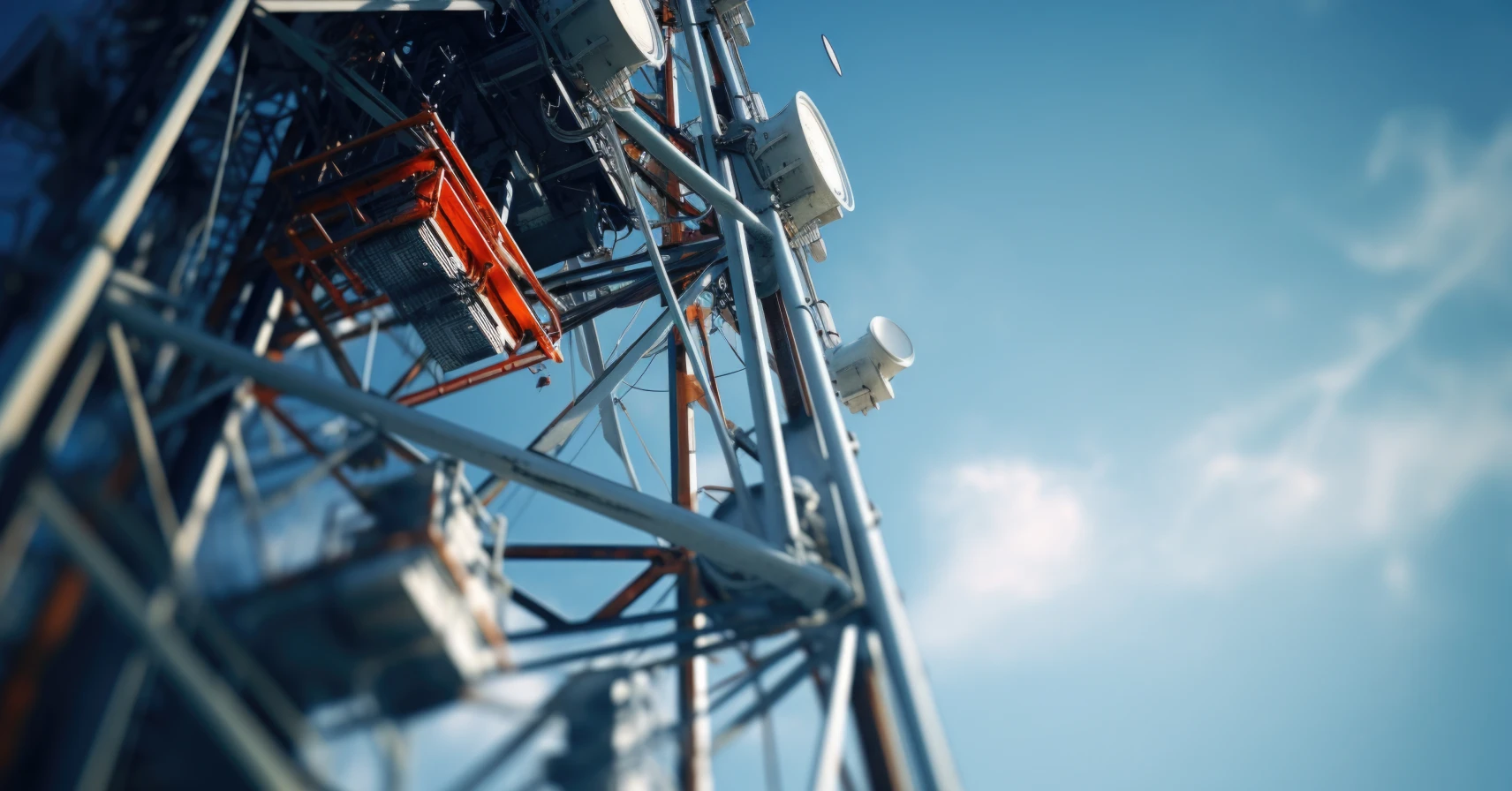
Atlantic Broadband, now rebranded as Breezeline, often misses the mark due to a combination of aging Hybrid Fiber-Coaxial (HFC) infrastructure, inconsistent customer support during corporate transitions, and aggressive pricing hikes after introductory periods. While they offer competitive download speeds, high latency and poor upload performance frequently frustrate users in high-demand households.
For residents in the Eastern United States and parts of the Midwest, Atlantic Broadband (Breezeline) is often the primary—or only—high-speed internet option. As we move through 2026, the demand for stable, symmetrical internet has never been higher. However, the gap between what the company advertises and what customers actually experience remains a significant point of contention. To understand why this provider often fails to meet expectations, one must look at the technical, structural, and administrative hurdles that define its service model.
The Rebranding Reality: Atlantic Broadband to Breezeline
In early 2022, Atlantic Broadband officially rebranded to Breezeline. While the name change was intended to signal a new era of "breeze-like" connectivity and improved customer service, many of the underlying issues persisted. By 2026, the brand identity remains somewhat fractured. Long-term customers still refer to the service by its original name, and the "missed mark" often starts with the confusion surrounding this transition.
The rebranding coincided with massive acquisitions, most notably the purchase of WOW! (WideOpenWest) assets in Ohio, Delaware, and Maryland. Rapid expansion often leads to "integration debt." When a company acquires thousands of miles of existing cable plant, they inherit the flaws of that specific infrastructure. In many regions, Breezeline is still struggling to standardize equipment and service protocols across these disparate networks. This lack of uniformity means a customer in New Hampshire might have a vastly different experience than one in Columbus, Ohio, leading to a reputation for inconsistency.
Infrastructure Constraints: The HFC Bottleneck
The primary technical reason Atlantic Broadband high-speed internet misses the mark is its reliance on Hybrid Fiber-Coaxial (HFC) technology. While fiber-optic lines carry data to a local node, the "last mile"—the connection from the street to your home—is typically an older copper coaxial cable.
Asymmetric Speeds and Upload Limitations
Most Breezeline plans are marketed based on download speeds (e.g., 500 Mbps or 1,000 Mbps). However, because they utilize the DOCSIS 3.1 standard (and in some areas, still 3.0), upload speeds are severely limited, often topping out at 30 or 50 Mbps. In 2026, where cloud backups, 4K video conferencing, and live streaming are standard, these low upload speeds create a bottleneck. When the upload channel is saturated, it can cause "bufferbloat," leading to high latency and disconnected sessions, even if your download speed looks fine on a test.
Node Congestion and Peak Hours
Cable internet is a shared medium. All the homes connected to a single local node share a specific amount of bandwidth. During peak hours—typically 6:00 PM to 11:00 PM—the neighborhood's collective usage can overwhelm the node. This results in "jitter" and packet loss. While fiber providers (FTTH) are less susceptible to this type of localized congestion, Breezeline users often see their 1 Gbps connection drop to a fraction of that speed when their neighbors start streaming movies in the evening.
The Cost-to-Value Disparity
A major reason customers feel the service "misses the mark" involves the financial experience. Breezeline, like many legacy cable providers, utilizes an aggressive introductory pricing model.
- The Promo Trap: New customers might sign up for a $40/month plan. However, after 12 or 24 months, that price can nearly double. In 2026, consumers are increasingly moving toward "flat-rate" or "no-contract" models offered by 5G home internet or newer fiber startups.
- Hidden Fees: Equipment rental fees for the "WiFi Your Way" system, regional sports surcharges (if bundled with TV), and "network enhancement" fees can inflate a bill significantly.
- Data Caps (Contextual): While many Breezeline plans are currently unlimited, certain legacy tiers or specific regions have historically experimented with data thresholds. The fear of overage charges adds a layer of stress that high-speed internet shouldn't have.
Equipment and Hardware Failures
Many users rely on the gateway (a combined modem and router) provided by the ISP. Historically, the hardware issued by Atlantic Broadband/Breezeline has been criticized for poor range and firmware instability.
The company has pushed its WiFi Your Way powered by Plume, which uses mesh pods to extend coverage. While this works well for some, it introduces an additional monthly subscription fee. For power users, these managed WiFi systems often lack the granular control needed for advanced gaming setups or complex smart home integrations. When the hardware fails to provide a consistent signal to the far corners of a house, the user blames the "internet speed," even if the raw signal coming into the house is adequate.
Customer Support and Technical Resolution
The "miss" isn't always technical; often, it is administrative. Reviews of Atlantic Broadband and Breezeline frequently highlight long wait times and a "scripted" approach to troubleshooting.
- The "Reboot" Loop: Customers often report that support agents require them to perform basic power cycles multiple times before escalating a ticket, even when the user has already identified a line issue or an outage.
- Dispatch Delays: In rural service areas, getting a technician on-site for a physical line repair can take days or even weeks. If the issue is a "noisy" line (ingress from a neighbor's bad cabling), it requires a specialized tech to identify and filter the interference—a process that often requires multiple visits.
Performance Comparison: Breezeline vs. Competitors
To see why the service feels like it is missing the mark, we must compare it to the standards set by contemporary fiber and 5G providers in 2026.
| Feature | Breezeline (Cable/HFC) | Fiber Competitors (FTTH) | 5G Home Internet |
|---|---|---|---|
| Download Speed | Up to 1,000 Mbps | Up to 2,000 - 5,000 Mbps | 100 - 300 Mbps |
| Upload Speed | 15 - 50 Mbps (Typical) | Symmetrical (1,000+ Mbps) | 10 - 30 Mbps |
| Latency (Ping) | 20 - 40ms | 2 - 10ms | 30 - 60ms |
| Reliability | Weather/Node Dependent | Highly Stable | Signal Strength Dependent |
| Pricing Model | Intro rates + Hikes | Generally Flat Rate | Fixed/Aggressive |
The table illustrates that while Breezeline is "high speed" in terms of downloads, it is fundamentally outclassed by Fiber in every technical metric, particularly upload speed and latency.
Common Troubleshooting: How to Close the Gap
If you are stuck with Atlantic Broadband/Breezeline as your only provider, there are steps you can take to minimize the "miss."
Bypass the ISP Gateway
If allowed in your region, purchase your own DOCSIS 3.1 modem (such as an Arris SURFboard SB8200) and a high-quality standalone WiFi 6E or WiFi 7 router. This eliminates the monthly rental fee and often provides a much more stable internal network. You can verify compatible devices on the official Breezeline equipment page.
Monitor Signal Levels
You can access your modem’s diagnostic page (usually at 192.168.100.1 in a web browser). Look for the Downstream Power Levels and Signal-to-Noise Ratio (SNR).
- Downstream power should ideally be between -7 dBmV and +7 dBmV.
- SNR should be above 35 dB. If your numbers are outside these ranges, there is likely a physical issue with the cabling or a splitter in your home that a technician needs to fix.
Use Ethernet for Critical Tasks
Because the HFC network is prone to jitter, using a wired Ethernet connection for gaming or video conferencing can bypass the added instability of WiFi. This doesn't fix the ISP's infrastructure, but it ensures you aren't adding more "noise" to an already sensitive connection.
Why Location Matters Most
The "miss" is highly localized. In areas where Atlantic Broadband was the legacy provider for decades (like parts of Pennsylvania), the lines may be old and prone to corrosion or weather damage. In the newer markets acquired from WOW!, the equipment may be newer but the integration into the Breezeline backhaul might be suboptimal.
Customers in Florida often complain about outages related to tropical weather and aging above-ground infrastructure. Conversely, those in newer housing developments with underground lines may find the service perfectly adequate. This geographical lottery is a major reason for the polarized reviews found online.
Frequently Asked Questions
1. Is Atlantic Broadband and Breezeline the same company?
Yes. Atlantic Broadband rebranded to Breezeline in early 2022 to reflect its expansion and a shift toward more modern service offerings. However, the core infrastructure and corporate ownership (Cogeco Communications) remain the same.
2. Why is my "Gigabit" internet only showing 400 Mbps on speed tests?
Several factors could be at play. First, ensure you are testing with a wired Ethernet connection; WiFi overhead often caps speeds well below 1 Gbps. Second, check for node congestion. If speeds are fine at 3 AM but slow at 8 PM, the neighborhood node is likely oversubscribed. Third, check if your router or network card supports 10/100/1000 Mbps throughput.
3. Does Breezeline have data caps?
As of 2026, most Breezeline residential plans do not have hard data caps, marketed instead as "unlimited." However, it is essential to check your specific service agreement, as business accounts or legacy plans in certain markets may still have "Fair Usage Policies" that throttle speeds after reaching a certain threshold.
4. Why does my internet cut out when it rains?
This is a common issue with cable internet. If there is a hairline crack in the coaxial cable leading to your house or if the "tap" on the utility pole is not properly sealed, moisture can enter the line. This causes signal "ingress" and can completely drop your connection. This requires a professional technician to replace the "drop" (the cable from the pole to the house).
5. Can I get symmetrical speeds with Breezeline?
Currently, Breezeline's HFC (cable) network does not support symmetrical speeds (where upload equals download). They have begun rolling out true Fiber-to-the-Home (FTTH) in very limited new-build markets. If you are on a standard cable plan, your upload will always be a small fraction of your download.
Practical Recommendation
If your Atlantic Broadband/Breezeline service is consistently missing the mark, the first step is to audit your hardware. Replacing a five-year-old ISP-rented gateway with a modern DOCSIS 3.1 modem and a dedicated mesh system can solve approximately 60% of common "speed" complaints.
However, if the issue is high latency and slow uploads during work hours, and a fiber-optic competitor (like Verizon Fios, AT&T Fiber, or a local utility fiber) is available at your address, switching is usually the most effective solution. In 2026, the technical limitations of copper-based cable are becoming increasingly difficult to ignore for high-bandwidth households.