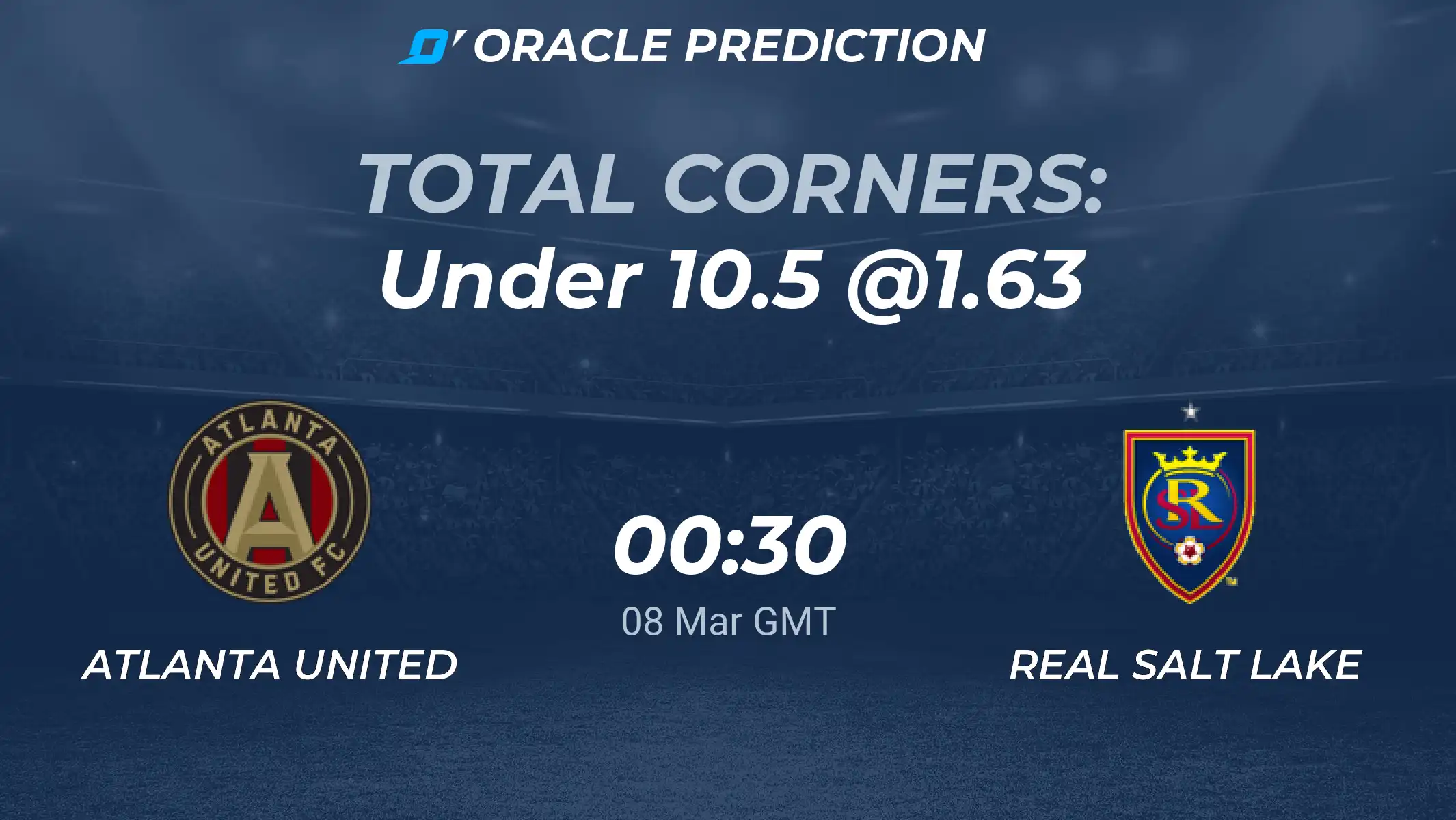
The cross-conference clash between Atlanta United and Real Salt Lake represents one of the most intriguing tactical chess matches in Major League Soccer. As we navigate the 2026 season, this matchup brings together two distinct philosophies: Atlanta’s high-spending, high-octane attacking identity and Real Salt Lake’s resilient, academy-driven, and tactically disciplined approach. While these teams only meet once a year in the regular season, the stakes are invariably high as both clubs fight for favorable playoff positioning in their respective conferences.
This "In Focus" analysis provides a deep dive into the historical context, current 2026 roster dynamics, tactical frameworks, and key individual matchups that define the encounter between the "Five Stripes" and the "Claret and Cobalt." Whether you are a season ticket holder at Mercedes-Benz Stadium or a member of the "Riot" in Utah, understanding the nuances of this fixture is essential for grasping the broader landscape of the league this year.
The Evolution of the Rivalry: East meets West
Historically, Atlanta United and Real Salt Lake have occupied different spheres of the MLS ecosystem. Atlanta entered the league in 2017 with a mandate to shatter attendance records and transfer fee benchmarks. Real Salt Lake, a league stalwart since 2005, built its reputation on the "RSL Way"—a commitment to collective effort and one of the most productive youth academies in North America.
By 2026, the gap in spending has narrowed slightly due to the league’s evolving roster rules, but the cultural differences remain. Atlanta continues to utilize its massive home-field advantage on the artificial turf of Mercedes-Benz Stadium, where the fast surface complements their transition game. Conversely, Real Salt Lake utilizes the unique atmospheric conditions of America First Field, where the altitude and tight-knit community create a fortress-like environment.
In previous meetings, this fixture has often been decided by which team can dictate the tempo. Atlanta thrives in chaos and high-speed exchanges, while RSL typically prefers a more structured game where they can exploit gaps left by Atlanta’s aggressive wingbacks.
Tactical Frameworks: The 2026 Perspective
Atlanta United’s Verticality and Possession
Under their current coaching staff in 2026, Atlanta United has doubled down on a hybrid 4-3-3 system that emphasizes "verticality." They do not just want possession for the sake of control; they want possession that breaks lines.
The "Five Stripes" rely heavily on their Designated Players to create 1v1 situations on the flanks. In 2026, the tactical emphasis is on "the half-spaces"—the vertical lanes between the opponent's fullbacks and center-backs. Atlanta’s midfielders are instructed to make late runs into these areas, forcing RSL’s defensive block to shift rapidly. This movement is designed to create a "gravity" effect, pulling defenders away from the center forward and allowing for high-percentage cutbacks.
Real Salt Lake’s Defensive Solidity and Transitional Threat
Real Salt Lake has maintained its identity in 2026 as a team that is extremely difficult to break down. Utilizing a flexible 4-2-3-1 or a 4-4-2 diamond depending on the personnel available, RSL focuses on "compactness." They allow the opposition to have the ball in non-threatening areas, waiting for a trigger—usually a heavy touch or a lateral pass in the middle third—to initiate a collective press.
The key for RSL in 2026 is their speed in transition. Once they win the ball, they look for immediate outlets to their creative engine in the number 10 role. RSL’s ability to turn a defensive recovery into a goal-scoring opportunity in under ten seconds remains their most dangerous attribute when facing high-pressing teams like Atlanta.
Key Matchups to Watch in 2026
To understand how "Atlanta United vs. Real Salt Lake in Focus" will play out on the pitch, one must look at the specific individual battles that will likely determine the outcome.
- Atlanta’s Playmaker vs. RSL’s Defensive Midfielders: The primary battleground is the "Zone 14"—the area just outside the penalty box. Atlanta’s creative force will be shadowed by RSL’s dual-pivot defensive midfielders. If RSL can neutralize the final pass, Atlanta’s attack often becomes predictable and forced to the wide areas.
- The Battle of the Flanks: Atlanta’s aggressive fullbacks often leave space behind them. RSL’s wingers are coached to exploit this "corridor of uncertainty." If Atlanta’s center-backs are forced to slide out to cover the wings, it opens up the middle for RSL’s late-arriving runners.
- Set Piece Specialization: In 2026, both teams have placed a premium on set-piece design. Atlanta utilizes their height in the box, while RSL is known for inventive, short-corner routines designed to catch the defense sleeping.
Comparative Overview: Atlanta United vs. Real Salt Lake
The following table highlights the core differences and similarities between the two organizations as they stand in the 2026 season.
| Feature | Atlanta United | Real Salt Lake |
|---|---|---|
| Primary Stadium | Mercedes-Benz Stadium (Atlanta, GA) | America First Field (Sandy, UT) |
| Surface Type | FieldTurf Core | Natural Grass |
| Average Attendance (2026) | 47,500+ | 20,000+ |
| Tactical Identity | Attacking Possession / High Press | Disciplined Block / Counter-Attack |
| Youth Integration | Targeted (High-potential signings) | Academy-First (Homegrown focus) |
| Key Advantage | Explosive offensive depth | Tactical cohesion and altitude |
| Historical MLS Cups | 1 (2018) | 1 (2009) |
The Role of the Academy and Roster Construction
A significant part of the "In Focus" lens involves how these teams are built. By 2026, the MLS roster rules have allowed for more flexibility in "U-22 Initiative" players and Designated Players.
Atlanta United has focused its 2026 strategy on identifying "bridge" players—young South American or European talents who view Atlanta as a stepping stone to the world's elite leagues. This creates a roster that is technically gifted and physically elite, though sometimes prone to inconsistencies if the chemistry hasn't fully gelled.
Real Salt Lake, conversely, is reaping the rewards of a decade-long investment in their academy. In 2026, a significant portion of their starting XI consists of players who have risen through the ranks in Herriman, Utah. This creates a high level of "tactical intelligence" and a deep-seated loyalty to the club's defensive structure. RSL doesn't just buy talent; they cultivate it to fit a specific system, making them one of the most cohesive units in the Western Conference.
Viewing and Accessibility: How to Follow the Action
For fans looking to catch this specific matchup in 2026, the primary gateway remains the MLS Season Pass on Apple TV. This partnership ensures that every second of the Atlanta vs. RSL match is available globally without local blackouts.
- Broadcast Quality: 2026 sees continued improvements in 4K streaming and multi-view options, allowing fans to track player-specific cameras—a feature particularly useful for analyzing the movements of star DPs in this fixture.
- Radio Coverage: Local broadcasts in both English and Spanish continue to provide the atmospheric "hometown" feel, with Atlanta's 92.9 The Game and RSL’s various radio partners providing deep pre-match analysis.
- Live Experience: For those attending in person, Mercedes-Benz Stadium offers a tech-forward experience with cashless payments and high-speed Wi-Fi, while America First Field is celebrated for its stunning mountain views and proximity to the pitch.
Environmental Factors and Travel Logistics
Travel is a frequently overlooked factor in cross-conference play. When Real Salt Lake travels to Atlanta, they deal with the humidity of the South and a loud, enclosed dome environment. When Atlanta travels to Utah, they must contend with the 4,450-foot elevation, which can significantly impact the aerobic capacity of players not accustomed to "thin air."
In 2026, sports science departments at both clubs use advanced biometric tracking to mitigate these factors. Atlanta players often arrive in Utah several days early to acclimate, while RSL focuses on hydration and cooling strategies when visiting Georgia’s "hot-lanta" climate. These logistical hurdles often mean that the home team holds a significant statistical advantage in this particular series.
Frequently Asked Questions
Which team has the better head-to-head record historically?
Historically, the series has been remarkably balanced, though the home team has traditionally dominated. Atlanta United holds a slight edge in total goals scored, largely due to a few high-scoring outbursts at Mercedes-Benz Stadium, but Real Salt Lake has been more successful at grinding out draws on the road.
Who are the "Players to Watch" in this 2026 matchup?
For Atlanta United, keep a close eye on their primary #10, whose ability to navigate tight spaces is world-class. For Real Salt Lake, the focus should be on their homegrown winger, who has become one of the league's most efficient creators of Expected Assists (xA).
Does the turf at Mercedes-Benz Stadium affect Real Salt Lake's play?
Yes. Natural grass players often find the ball moves faster on Atlanta's turf. RSL typically adjusts by shortening their passing distances and wearing specific footwear to handle the increased friction and bounce characteristics of the synthetic surface.
What is the significance of "In Focus" for this match?
"In Focus" refers to the deep-dive editorial and tactical preview provided to fans to highlight the technical nuances of the game. It moves beyond simple scores and standings to explain why certain tactical shifts occur and how the rosters were constructed to compete at the highest level of MLS in 2026.
Are there any specific injury concerns for the 2026 clash?
As of the current 2026 season timeframe, both teams have managed their loads effectively. However, fans should always check the official MLS Availability Report released 24 hours before kickoff, as late-stage muscle fatigue is common for teams playing cross-conference midweek matches.
Summary of the 2026 Outlook
The Atlanta United vs. Real Salt Lake fixture remains a highlight of the MLS calendar because it pits two different visions of American soccer success against one another. Atlanta represents the "Global Ambition" model, while Real Salt Lake represents the "Strategic Sustainability" model.
As we look toward their next meeting, expect a high-intensity battle where the first fifteen minutes will be crucial. If Atlanta can score early and force RSL to abandon their defensive shape, the "Five Stripes" are likely to run away with the result. However, if RSL can weather the initial storm and keep the game scoreless into the second half, their superior tactical discipline and transitional speed will give them a distinct advantage as Atlanta’s players begin to tire from their high-pressing demands.
For the best experience, fans should utilize the analytical tools available on MLS Season Pass to track the tactical shifts in real-time, as this is a game won and lost in the coaching box as much as it is on the field.