Navigating Aruba using public transportation is a reliable, cost-effective, and safe way to experience the island’s diverse landscapes, from the bustling streets of Oranjestad to the pristine shores of Eagle Beach. In 2026, the system remains centered around the Arubus network, supplemented by the iconic Oranjestad streetcar and a regulated taxi system, providing comprehensive coverage for both residents and international visitors.
Understanding the Arubus National Network
The backbone of Aruba’s public transit is Arubus N.V., the government-owned bus company. As of 2026, Arubus operates a modern fleet of large, air-conditioned buses that service nearly every major corner of the island. For most travelers, especially those staying in the High-Rise (Palm Beach) or Low-Rise (Eagle Beach) hotel districts, the bus is the most practical alternative to renting a car.
The main hub for the entire island is the Oranjestad Bus Terminal, located directly across from the Royal Plaza Mall and within walking distance of the cruise ship terminal. This central station serves as the starting and ending point for most major routes.
Major Routes and Connectivity
Arubus routes are designed to connect the primary residential areas with the major tourist and commercial centers. In 2026, the most significant routes for visitors include:
- Line 10 (Hotel Area): This is the most popular route, running between the Oranjestad terminal and the High-Rise hotel area (Palm Beach), passing through the Low-Rise area (Eagle Beach). During peak hours, these buses depart every 15 to 20 minutes.
- Line 1, 2, and 3 (San Nicolas): These lines connect the capital with the "Sunrise City" of San Nicolas on the southern end of the island. These routes are essential for those visiting Baby Beach or the vibrant street art district of San Nicolas.
- Line 7 & 8 (Inland Routes): These lines service the more residential, inland neighborhoods like Santa Cruz and Paradera, providing a glimpse of local life away from the coastline.
Payment Methods and Fare Structures in 2026
Aruba has significantly modernized its fare collection system. While cash was once common, the island has moved toward digital and prepaid options to increase efficiency.
- Smart Cards: For long-term visitors or residents, the Arubus Smart Card is the most economical choice. Users can load credit onto the card and enjoy reduced per-trip rates.
- Day Passes: The "Unlimited Day Pass" remains a favorite for tourists. For a flat fee (approximately $10.00 USD in 2026), riders can enjoy unlimited transfers across all Arubus lines for a full calendar day.
- Return Tickets: A standard round-trip ticket is available for those making a simple "there and back" journey from their hotel to downtown.
- Contactless Payment: By 2026, most Arubus vehicles have been equipped with NFC readers, allowing passengers to tap their international credit or debit cards for a single-fare entry, though this often carries a slight premium over the Smart Card rate.
Visit the official Arubus website for the most current fare tables and real-time route tracking.
The Oranjestad Streetcar (Tram)
One of the most unique aspects of Aruba's public transportation is the Oranjestad Streetcar, a state-of-the-art, eco-friendly rail system that began operations in late 2012. Powered by hydrogen and lithium-ion batteries, it is a testament to Aruba’s commitment to sustainability.
The streetcar serves a dual purpose: it is a functional transit link for cruise passengers and a scenic tour for visitors exploring the capital. The route starts at the Port of Call (Cruise Terminal) and travels through the pedestrianized shopping district of Caya Betico Croes.
Using the Streetcar
- Cost: As of 2026, the streetcar remains a complimentary service provided by the government to encourage exploration of the downtown area.
- Frequency: The tram typically runs every 25 to 30 minutes.
- Stops: Key stops include the Renaissance Mall, the Parliament building, and various points along the main shopping thoroughfare.
- Open-Air Experience: The fleet includes both double-decker and single-deck open-air cars, offering 360-degree views of the Dutch colonial architecture that defines Oranjestad.
Regulated Taxi Services and Fixed Rates
Unlike many other Caribbean destinations, Aruba does not use taxi meters. Instead, the government sets fixed rates based on the destination. This provides a high level of transparency and prevents price gouging.
2026 Taxi Guidelines
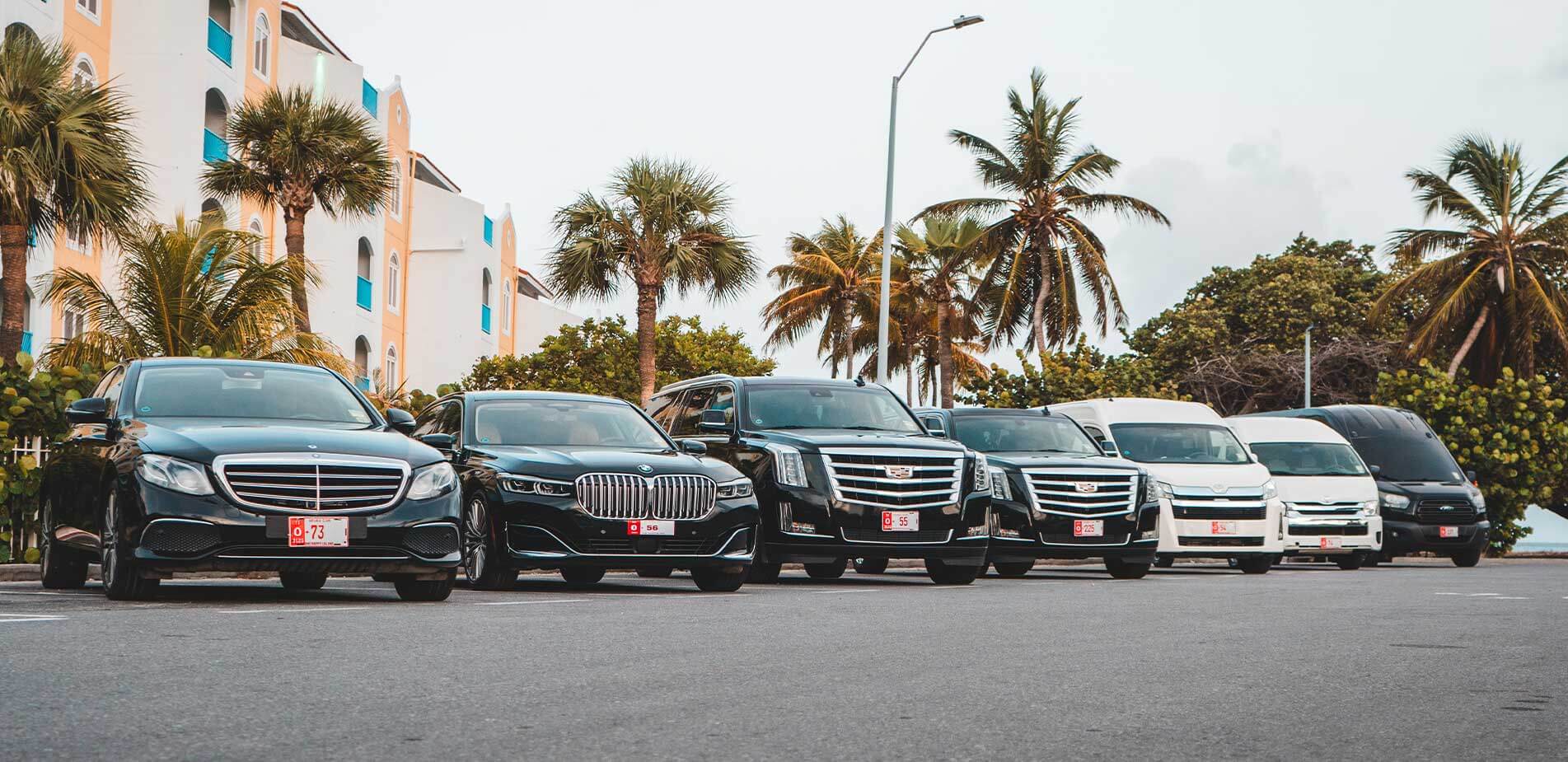
All authorized taxis in Aruba must have a "TX" on their license plates. Drivers are required to carry the official rate sheet, and passengers are encouraged to confirm the price before the journey begins.
- Standard Fares: A trip from Queen Beatrix International Airport (AUA) to the High-Rise hotel area generally costs between $30 and $35 USD in 2026.
- Surcharges: There are standard surcharges for trips made on Sundays, holidays, and late at night (usually after 11:00 PM).
- Passenger Limits: Taxis are typically limited to five passengers. Large groups may need to request a van-style taxi, which may incur an additional fee.
- Tipping: While not mandatory, a tip of 10% to 15% is customary for good service, particularly if the driver assists with heavy luggage.
For specific rate inquiries or to book a ride, the Aruba Taxi Address Service provides a directory of dispatchers and government-approved rate calculators.
The Role of "Mini-Buses" (Collectivos)
In addition to the large Arubus vehicles, you will notice smaller passenger vans known as mini-buses or collectivos. While they are privately owned, they are a semi-regulated part of the public transport ecosystem.
These vans typically display a sign in the front window indicating their destination (e.g., "Hotel Area" or "San Nicolas"). They often follow the same routes as the Arubus lines but offer more frequent departures and a faster trip, as they make fewer stops.
- Identification: Look for license plates that start with the letter "B" (for bus) rather than "TX."
- Fares: Fares are usually comparable to the standard Arubus fare and must be paid in cash (either Aruban Florin or US Dollars).
- Boarding: You can hail a mini-bus anywhere along its route by simply waving your hand. To exit, you simply notify the driver when you are approaching your destination.
Comparison of Transportation Options in Aruba (2026)
| Mode of Transport | Best For | Typical Cost (USD) | Reliability | Coverage |
|---|---|---|---|---|
| Arubus | Budget-conscious travelers | $2.50 - $5.00 (Single) | High | Excellent (Main Roads) |
| Streetcar | Sightseeing Oranjestad | Free | Medium | Limited (Downtown) |
| Taxi | Direct, private travel | $15.00 - $45.00 | Very High | Island-wide |
| Mini-Bus | Fast, frequent transit | $2.00 - $3.00 | High | Main Corridors |
| Walking | Oranjestad/Palm Beach | Free | N/A | Very Limited |
Accessibility and Special Considerations
Aruba has made significant strides in ensuring its public transportation is accessible to all. In 2026, a majority of the Arubus fleet is equipped with low-floor entry and ramps for wheelchair accessibility.
Travelers with Disabilities
The Oranjestad Bus Terminal is fully ADA-compliant, featuring tactile paving and accessible restrooms. The streetcar is also designed to accommodate wheelchairs, with level boarding at most major stops. However, passengers using the mini-buses (collectivos) should be aware that these vehicles are generally not equipped with lifts or ramps and may be difficult to navigate for those with significant mobility challenges.
Traveling with Luggage
If you are traveling with large suitcases, the Arubus is manageable but can be crowded during peak commuting hours (7:00 AM – 9:00 AM and 4:00 PM – 6:00 PM). Taxis remain the preferred method for airport transfers due to the dedicated trunk space and door-to-door service. Arubus drivers may occasionally restrict large luggage if the bus is at capacity for safety reasons.
Sustainability and the Future of Transit in Aruba
By 2026, Aruba’s "Green Island" initiative has deeply integrated into the transportation sector. The government has begun phasing out older diesel buses in favor of electric buses (EVs). This transition is part of a broader goal to reduce the island's carbon footprint and preserve its delicate ecosystem.
Visitors are encouraged to use public transit not just for cost savings, but as a way to support these environmental goals. The density of the hotel districts and the efficiency of the bus lines mean that a significant portion of visitors can enjoy a full vacation without ever needing a rental car, thereby reducing traffic congestion on the island’s main arteries like L.G. Smith Boulevard.
Tips for a Seamless Experience
To make the most of Aruba's public transportation system, keep these practical tips in mind:
- Download the App: By 2026, the Arubus mobile app provides real-time GPS tracking of all buses. This is invaluable for avoiding long waits at unsheltered stops.
- Currency: While US Dollars are widely accepted across the island, having small denominations (ones and fives) is essential for mini-buses and Arubus cash fares. Change is often given in Aruban Florin (AWG).
- Identify the "Bus Stop": Official Arubus stops are marked with signs that say "Bushalte." In many areas, these are accompanied by yellow-painted curbs or small shelters.
- Know the Return Times: While buses run late into the evening, the frequency drops significantly after 9:00 PM. Always check the last scheduled departure if you are heading to San Nicolas or more remote areas.
- Safety First: Aruba is one of the safest islands in the Caribbean. Using public transport at night is generally considered safe, especially on the main routes between the hotels and Oranjestad.
Frequently Asked Questions
Is there a train system in Aruba?
No, Aruba does not have a traditional heavy rail or commuter train system. The only rail-based transport is the Oranjestad Streetcar (Tram), which is a light-rail system primarily used for local transit and sightseeing within the capital city.
Can I get from the airport to my hotel by bus?
Yes, you can take an Arubus from the airport to the Oranjestad terminal and then transfer to Line 10 for the hotel areas. However, this is often inconvenient with heavy luggage. Most tourists prefer taking a taxi directly from the airport's regulated taxi stand, which is located immediately outside the arrivals hall.
How do I pay for the bus in Aruba in 2026?
The most common methods are using a pre-loaded Arubus Smart Card, purchasing a Day Pass at the main terminal, or using contactless "tap-to-pay" credit cards. While cash is still accepted on some routes, the system is moving toward a cashless model to improve boarding speeds.
Are the buses in Aruba air-conditioned?
Yes, all large Arubus vehicles are fully air-conditioned and maintained to a high standard. This makes the bus a very comfortable way to travel, even during the heat of the afternoon sun.
Do the buses run on Sundays and holidays?
Yes, but with a reduced schedule. On Sundays and public holidays, the frequency of the buses is lower (often once per hour for major routes). It is highly recommended to check the specific Sunday schedule on the Arubus website or app before planning your trip.
Is the Oranjestad streetcar really free?
As of 2026, the streetcar remains free of charge for all passengers. It is funded by the government to support downtown commerce and provide an eco-friendly transport option for cruise ship visitors and locals alike.
Final Recommendations
For the best experience using Aruba's public transportation, start your journey at the Oranjestad Bus Terminal. This allows you to purchase a Day Pass and speak with a dispatcher if you have questions about specific routes. If you are staying in the Palm Beach or Eagle Beach area, familiarize yourself with Line 10, as it will be your primary link to the rest of the island. By combining the efficiency of Arubus with the charm of the Oranjestad streetcar, you can explore the "One Happy Island" with ease and confidence.