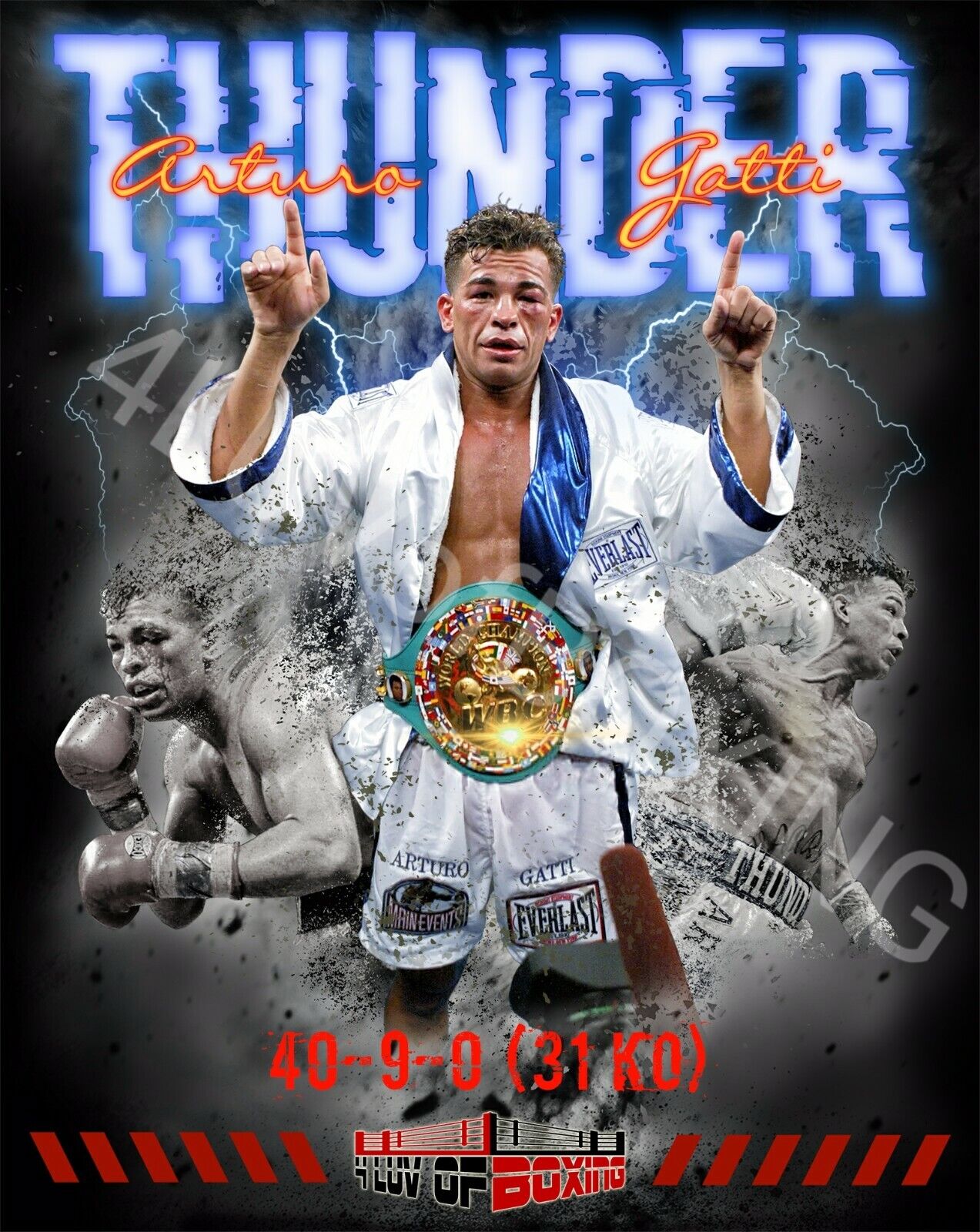
Arturo "Thunder" Gatti was a professional boxer whose career highlights and legacy are defined by unparalleled resilience, two world championships, and the legendary trilogy against Micky Ward. As of 2026, he remains the gold standard for "blood-and-guts" warriors, remembered more for his iron will than his defensive technicality.
The Early Life and Professional Ascent of Arturo Gatti
Born in Cassino, Italy, on April 15, 1972, Arturo Gatti moved to Montreal, Quebec, at a young age before eventually settling in Jersey City, New Jersey. This multicultural upbringing shaped the fighter who would become a beloved figure in both Canada and the United States. Gatti’s amateur career was distinguished, earning him a spot on the Canadian National Team, though he chose to turn professional in 1991 at the age of 19 rather than competing in the 1992 Olympics.
In the early 1990s, Gatti quickly gained a reputation as a heavy hitter with a vulnerable chin—a combination that made every one of his fights a "must-watch" event. Under the guidance of his early trainers and management, he climbed the ranks of the Junior Lightweight division. His power was evident from the start, racking up numerous first-round knockouts that caught the attention of major networks like HBO.
By 1994, Gatti captured his first significant title, the USBA Junior Lightweight belt, by defeating Pete Taliaferro. This win positioned him for a world title shot, but more importantly, it signaled the arrival of a fighter who was willing to walk through fire to land his own shots. This period established the "Thunder" persona: a fighter who could be blinded by swelling or dropped by a hook, only to roar back and finish his opponent.
World Championship Success: The IBF Junior Lightweight Reign
Arturo Gatti’s transition from a prospect to a world-class champion occurred on December 15, 1995. He challenged Tracy Harris Patterson for the IBF Junior Lightweight Championship at Madison Square Garden. Despite Patterson’s technical skills, Gatti’s relentless pressure and volume punching earned him a unanimous decision victory.
Gatti’s reign as IBF champion is often cited by boxing historians as the era where he earned the nickname "The Human Highlight Film." His title defenses were not mere sporting contests; they were visceral battles.
The Wilson Rodriguez Fight
On March 23, 1996, Gatti faced Wilson Rodriguez in what is widely considered one of the greatest one-sided comebacks in boxing history. Gatti’s eyes were swollen shut by the second round, and he was knocked down early. However, in a display of the fortitude that would define his legacy, Gatti landed a devastating left hook to the body followed by a headshot in the sixth round to knockout Rodriguez. This fight won the 1996 Ring Magazine Fight of the Year award.
Defending Against Gabriel Ruelas
Gatti continued his streak of dramatic victories against Gabriel Ruelas in 1997. In a back-and-forth war, Gatti was nearly out on his feet in the fourth round. He somehow remained upright, weathered the storm, and stopped Ruelas in the fifth. This victory solidified his status as HBO’s premier attraction, particularly at Boardwalk Hall in Atlantic City, which became Gatti’s unofficial "home" arena.
| Date | Opponent | Result | Title/Note |
|---|---|---|---|
| Dec 15, 1995 | Tracy Harris Patterson | Win (UD) | Won IBF Junior Lightweight Title |
| Mar 23, 1996 | Wilson Rodriguez | Win (KO) | Fight of the Year (1996) |
| Oct 4, 1997 | Gabriel Ruelas | Win (TKO) | Fight of the Year (1997) |
| May 18, 2002 | Micky Ward I | Loss (MD) | Fight of the Year (2002) |
| June 7, 2003 | Micky Ward III | Win (UD) | Fight of the Year (2003) |
| Jan 24, 2004 | Gianluca Branco | Win (UD) | Won WBC Super Lightweight Title |
The Mid-Career Crisis and the Robinson Rivalry
As 1998 approached, the physical toll of Gatti’s style began to manifest. He moved up to the Lightweight division, but his first major foray there resulted in back-to-back losses to Ivan Robinson. These fights were mirrors of Gatti’s earlier successes, but this time, he was on the losing end of the close decisions.
The Robinson fights were crucial to Gatti’s career highlights because they proved that fans would support him even in defeat. His "never-quit" attitude ensured that his market value remained high. However, critics began to argue that Gatti was taking too much punishment and that his career would be short-lived if he didn't adjust his defensive tactics.
Following these losses and a brief period of uncertainty, Gatti made a pivotal change by hiring James "Buddy" McGirt as his trainer. McGirt, a former world champion known for his technical wizardry, sought to transform Gatti from a pure brawler into a "boxer-puncher." This evolution allowed Gatti to revitalize his career and enter his second championship phase.
The Gatti-Ward Trilogy: A Defining Legacy
No discussion of Arturo Gatti’s career is complete without an in-depth look at his trilogy with Micky Ward. Occurring between 2002 and 2003, these three fights are often cited as the pinnacle of modern boxing heart and drama.
Gatti vs. Ward I
The first fight, held in May 2002 at Mohegan Sun, is frequently ranked among the top five fights in boxing history. The ninth round is legendary: Gatti was nearly stopped by a vicious body shot, yet he spent the final minute of the round trading power punches with Ward in a display of sheer willpower. Ward won a majority decision, but both men were immortalized.
Gatti vs. Ward II and III
Under Buddy McGirt’s guidance, Gatti utilized a more disciplined approach in the second fight, using his jab and movement to secure a unanimous decision. The third fight, the rubber match, returned to the high-intensity brawling of the first encounter. Gatti broke his hand early in the fight but fought through the pain to win a clear decision.
The legacy of the trilogy transcends the results. Gatti and Ward became the closest of friends after the fights, with Ward even joining Gatti’s camp as a trainer later on. The trilogy won consecutive Fight of the Year awards, a feat rarely seen in the sport.
Second World Title: WBC Super Lightweight Champion
After the Ward trilogy, many expected Gatti to retire. Instead, he moved up to the Super Lightweight (140 lbs) division. On January 24, 2004, he faced the undefeated Gianluca Branco for the vacant WBC title. Showing his improved technical skills under McGirt, Gatti controlled the pace and won a 12-round unanimous decision, becoming a two-division world champion.
Gatti defended this title successfully against "Leavander" Johnson and the legendary James "Jesse" James Leija. His victory over Leija in 2005 was particularly impressive, as he dominated a veteran who had shared the ring with the likes of Oscar De La Hoya and Shane Mosley. During this period, Gatti was one of the highest-paid fighters in the world outside of the heavyweight division, commanding massive gates in Atlantic City.
High-Profile Losses: De La Hoya and Mayweather
Gatti’s career also featured encounters with the pound-for-pound elites of his era. In 2001, he faced Oscar De La Hoya. Though Gatti was stopped in five rounds, the fight was a massive commercial success.
In June 2005, Gatti defended his WBC Super Lightweight title against Floyd Mayweather Jr. This fight highlighted the difference between a courageous warrior and a defensive genius. Mayweather dominated the bout, leading McGirt to pull Gatti out after six rounds. While Gatti lost decisively, his willingness to take on the best in the world only added to his legend. He never looked for "easy" fights, even when his physical peak had clearly passed.
Retirement and the Final Fights
Gatti’s final years in the ring were a mixture of grit and fading reflexes. He moved up to Welterweight to challenge Carlos Baldomir for the WBC title in 2006 but was stopped in nine rounds. After a comeback attempt against Alfonso Gomez in 2007, where he was also stopped, Gatti officially retired.
He finished his career with a professional record of 40 wins (31 by knockout) and 9 losses. While his record might not feature the undefeated streaks of some of his contemporaries, his impact on the sport's popularity and his ability to draw crowds was nearly unmatched during the early 2000s.
Tragic Passing and Controversy in Brazil
Arturo Gatti’s life ended under tragic and controversial circumstances on July 11, 2009. While on vacation in Porto de Galinhas, Brazil, with his wife Amanda Rodrigues and their son, Gatti was found dead in his hotel room.
Initial reports from Brazilian authorities suggested foul play, and Rodrigues was detained. However, after a brief investigation, the Brazilian police ruled the death a suicide. This finding was met with significant skepticism from Gatti’s family, friends, and the boxing community in New Jersey and Montreal. Private investigators hired by the Gatti family later presented evidence suggesting homicide, but the Brazilian government has largely maintained its original ruling. As of 2026, the case remains a point of sorrow and debate among his fans.
The Lasting Legacy and Hall of Fame Induction
Arturo Gatti’s legacy is preserved through the International Boxing Hall of Fame (IBHOF), into which he was inducted in 2013, his first year of eligibility. This induction was controversial to some "purists" who pointed to his losses, but the consensus was that Gatti’s contribution to the sport's excitement and his embodiment of the "warrior spirit" made him an essential Hall of Famer.
Gatti’s influence can be seen in several ways:
- The "Gatti List": For years, HBO boxing commentators used Gatti as the benchmark for excitement, often asking if a rising prospect could show "Gatti-like" heart.
- Atlantic City Boxing: He is credited with single-handedly keeping the Atlantic City boxing scene alive during a period when Las Vegas dominated the sport.
- Charity and Community: In his post-career years, Gatti remained a fixture in Jersey City, participating in youth boxing programs and community outreach.
Frequently Asked Questions
Why is Arturo Gatti’s trilogy with Micky Ward so famous?
The trilogy is famous because it featured an unprecedented level of sustained action and mutual respect. Fight 1 is widely considered one of the greatest sporting events of the 21st century. The ninth round of the first fight, in particular, is often used as a training tool to show aspiring boxers the meaning of "heart."
Did Arturo Gatti ever win a world title?
Yes, Gatti was a two-division world champion. He held the IBF Junior Lightweight title (130 lbs) from 1995 to 1998 and the WBC Super Lightweight title (140 lbs) from 2004 to 2005.
What was Arturo Gatti’s boxing style?
Gatti began his career as a "swarmer" or "slugger," relying on power and chin. Later in his career, under trainer Buddy McGirt, he evolved into a "boxer-puncher," utilizing a stiff jab and lateral movement to supplement his natural punching power.
Is the investigation into Arturo Gatti's death still active?
While the official Brazilian case is closed and ruled a suicide, the Gatti family and various independent investigators have consistently challenged these findings. In the court of public opinion and within the boxing community, the circumstances of his death remain a subject of significant controversy.
How many times did Arturo Gatti win Fight of the Year?
Arturo Gatti was a part of four Ring Magazine Fight of the Year selections: 1996 (vs. Wilson Rodriguez), 1997 (vs. Gabriel Ruelas), 2002 (vs. Micky Ward I), and 2003 (vs. Micky Ward III). This is a record shared by very few in boxing history.
Recommendations for Fans and Historians
To truly appreciate Arturo Gatti's legacy, viewers should look beyond the highlights and watch his full matches against Wilson Rodriguez and Micky Ward (Fight I). These bouts illustrate the technical transitions he made and the sheer physical punishment he was willing to endure. Furthermore, the documentary "Legendary Nights: The Tale of Gatti-Ward" provides an excellent behind-the-scenes look at the human side of his most famous rivalry.
For those interested in the technical aspects of boxing, studying Gatti’s fights after 2002 provides a masterclass in how a veteran fighter can adapt their style to protect a declining chin while still remaining effective at the world-championship level.