Navigating an Arkansas COVID workers compensation claim requires proving that the occupational exposure occurred directly within the course and scope of employment, meeting specific statutory thresholds for occupational diseases. Because general viral illnesses like COVID-19 are commonly contracted in the community, claimants face a rigorous standard of proof to establish liability under Arkansas workers' compensation law.
The intersection of public health crises and state labor laws has generated significant legal and administrative challenges for workers across Arkansas. When employees contract infectious diseases in high-risk environments—such as healthcare facilities, grocery stores, manufacturing plants, and public service positions—determining financial and medical liability is rarely straightforward. Understanding how the Arkansas Workers' Compensation Commission (AWCC) handles claims related to the coronavirus requires a close examination of state statutes, evidentiary burdens, and the practical steps necessary to secure benefits.
The Legal Framework of Workers' Compensation in Arkansas
To comprehend how COVID-19 claims are processed, one must first understand the foundational mechanics of the Arkansas workers' compensation system. Governed primarily by Arkansas Code Annotated § 11-9-101 et seq., the system is designed to provide medical treatment and partial wage replacement to employees who suffer accidental injuries or occupational diseases arising out of and in the course of their employment.
Unlike standard traumatic injuries—such as a broken bone from a fall or a laceration from machinery—viral infections fall under the legal category of occupational diseases or ordinary diseases of life. Under standard Arkansas law, an ordinary disease of life to which the general public is exposed outside of employment is not compensable, unless the disease follows as an incident of an occupational disease or meets specific statutory exceptions.
- Employee Contracts COVID-19
- File Form AR-C with AWCC
- Employer / Insurer Review
- Burden of Proof Met?
- Direct workplace trace
- Medical causation
- Claim Contested?
- Denied by Carrier
- Hearing before ALJ
- Burden of Proof Met?
- Employer / Insurer Review
- Benefits Approved / Denied
- File Form AR-C with AWCC
Occupational Diseases vs. Ordinary Diseases of Life
For a condition like COVID-19 to qualify for compensation, the claimant must typically demonstrate that the risk of contracting the virus was distinctly characteristic of or peculiar to their specific employment, rather than a hazard to which the public is equally exposed. This distinction is the primary battleground in COVID-19 workers' compensation litigation.
Healthcare workers, emergency medical technicians, and direct-care nursing home staff occupy a distinct legal standing compared to office workers or retail employees. While a bedside nurse caring for COVID-19 positive patients has a strong argument that their employment exposed them to a heightened, specialized risk, a remote worker or a retail clerk interacting with the general public faces a substantially higher hurdle in proving that workplace exposure was the definitive source of infection.
---\n\n## Establishing Compensability and Proving Causation
The burden of proof rests entirely on the claimant. In an Arkansas workers' compensation proceeding, an employee must establish several core elements by a preponderance of the evidence:
- Employment Relationship: A valid employer-employee relationship must exist at the time of exposure or contraction.
- Arising Out Of and In the Course of Employment: The infection must be causally connected to specific job duties.
- Medical Causation: Competent medical evidence, usually provided by a licensed physician, must link the diagnosis to the workplace exposure.
The Challenge of Community Spread
Because SARS-CoV-2 is highly transmissible in community settings—such as grocery stores, family gatherings, and public transit—insurers frequently argue that the virus was contracted outside of work. To overcome this defense, claimants and their legal counsel often rely on contact tracing records, documentation of known workplace outbreaks, internal employer safety logs showing lax protocols, and schedules proving close contact with infected coworkers or clients.
| Category of Worker | Presumed Workplace Risk | Evidentiary Burden | Common Insurance Defense |
|---|---|---|---|
| Healthcare Personnel | High (Direct exposure to COVID-19 patients) | Moderate (Requires establishing work contact) | Community exposure, off-site social contact |
| First Responders | Moderate to High (Emergency calls, transport) | Moderate (Logbooks, dispatch records) | Unknown origin, non-work social gatherings |
| General Essential Workers | Low to Moderate (Grocery, retail, manufacturing) | High (Strict proof of workplace transmission source) | General public exposure, widespread community spread |
| Remote / Office Workers | Extremely Low (Isolated or telecommuting) | Very High (Extraordinary proof of exposure) | Personal travel, household transmission |
Benefits Available Under Arkansas Workers' Compensation
When an Arkansas COVID-19 workers' compensation claim is successfully validated or accepted by the employer's insurance carrier, the injured or ill worker becomes eligible for standard statutory benefits. These benefits are structured to cover immediate medical needs and offset lost earning capacity.
Medical Benefits
All reasonable and necessary medical treatment related to the COVID-19 diagnosis is covered 100% by the workers' compensation carrier, with no deductibles or copayments for the worker. This includes:
- Emergency room visits and hospitalization fees.
- Physician consultations and diagnostic testing (PCR and antigen tests).
- Prescription medications administered during or after acute care.
- Specialized pulmonary or cardiac rehabilitation for long-haul COVID-19 symptoms.
Temporary Total Disability (TTD) Benefits
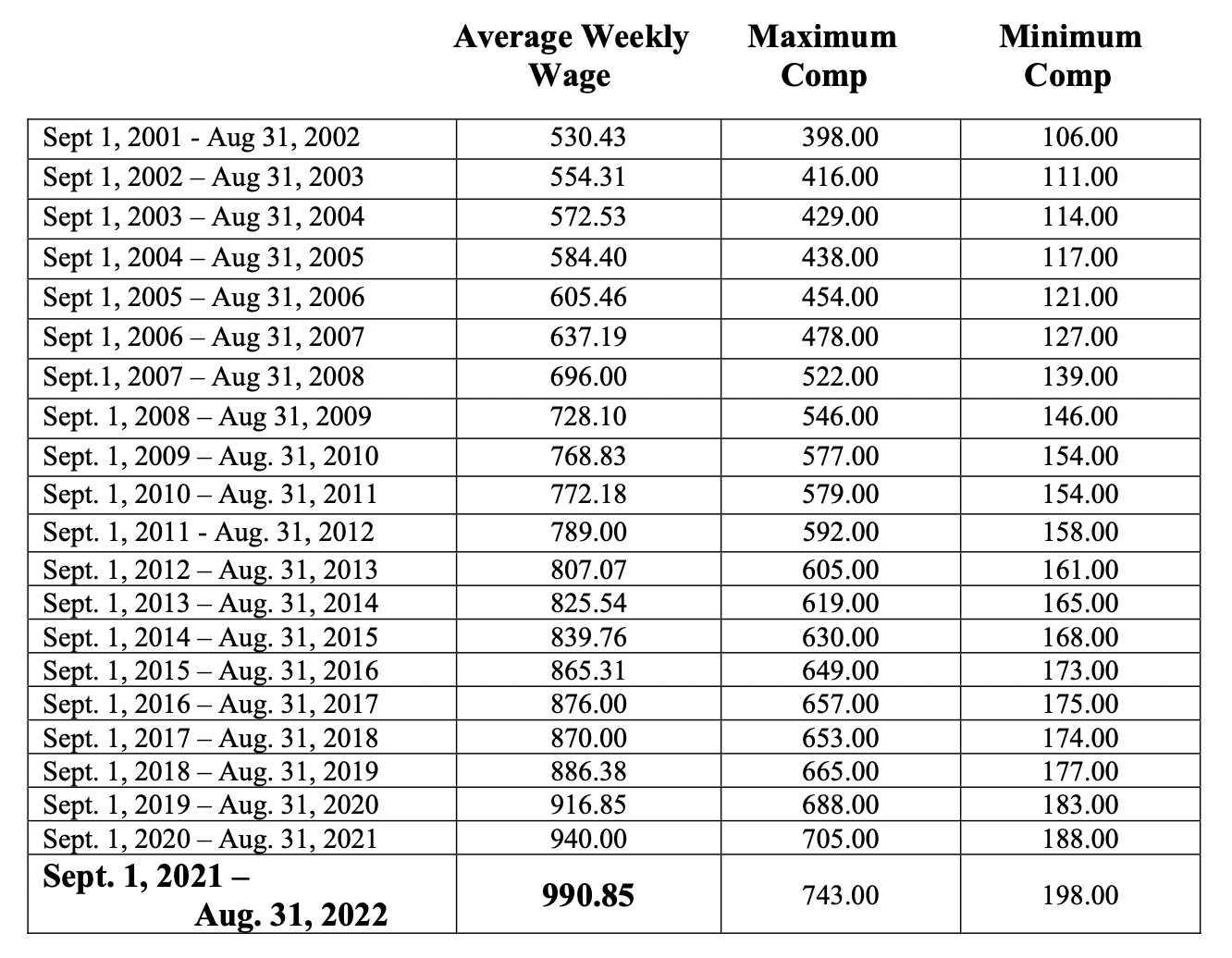
If a worker is ordered by a physician to quarantine or is hospitalized and unable to work, they may be eligible for Temporary Total Disability benefits. In Arkansas, TTD pays two-thirds (66.67%) of the employee's average weekly wage, subject to statutory maximums established annually by the Arkansas Workers' Compensation Commission. These benefits begin after a mandatory seven-day waiting period, though if the disability extends beyond fourteen days, compensation is retroactive to the first day of missed work.
Permanent Disability and Death Benefits
For individuals who suffer long-term, debilitating organ damage—such as chronic respiratory impairment, neurological deficits, or cardiovascular complications—permanent partial or total disability benefits may be available following a formal medical rating. In tragic cases where an employee passes away due to workplace-acquired COVID-19, surviving dependents may claim death benefits and reasonable funeral expense allowances as outlined in the Arkansas Workers' Compensation Commission statute guidelines.
Step-by-Step Guide: Filing a Claim in Arkansas
If you contracted COVID-19 due to workplace exposure and intend to seek compensation, following the precise procedural steps mandated by Arkansas law is critical to preserving your rights.
1. Notify Your Employer Immediately
Arkansas law requires prompt notice of an injury or occupational disease. You should notify your supervisor, human resources department, or employer safety coordinator in writing as soon as you receive a positive test result or a physician's diagnosis. Delaying notification can provide the insurance carrier grounds to contest or deny the claim.
2. Seek Medical Attention and Document the Exposure
Obtain proper medical evaluation from a licensed healthcare provider. Inform the physician that you believe the infection is work-related. Keep detailed records of:
- The exact dates and times you worked.
- Names of coworkers, supervisors, or clients who tested positive and with whom you had close contact.
- Copies of lab test results and physician notes detailing your diagnosis and quarantine orders.
3. File Form AR-C with the AWCC
To formally initiate a disputed claim or notify the commission of your injury, you or your legal representative must file Form AR-C (Claim for Compensation) with the Arkansas Workers' Compensation Commission. If your employer accepts the claim immediately, they will file Form AR-2, but filing Form AR-C is often necessary if the claim is denied or ignored.
4. Consult with a Qualified Attorney
Because insurance carriers routinely deny COVID-19 claims under the "ordinary disease of life" defense, retaining an experienced Arkansas workers' compensation attorney can significantly impact the outcome. Legal counsel can assist in subpoenaing employment records, deposing medical experts, and representing your interests at hearings before an Administrative Law Judge.
Common Mistakes to Avoid During the Claims Process
Navigating the workers' compensation system involves strict procedural deadlines and evidentiary hurdles. Claimants frequently make critical errors that jeopardize their right to compensation:
- Failing to Give Timely Notice: Waiting weeks to inform your employer that you contracted COVID-19 violates statutory notice requirements and gives insurers an immediate defense.
- Assuming Mild Cases Warrant Claims: If you contracted the virus, experienced minor symptoms for two days, and missed no work, filing a formal workers' compensation claim is generally impractical, as medical-only claims require demonstrable financial or medical loss. Conversely, failing to document moderate cases that evolve into long-term medical conditions is a severe misstep.
- Inconsistent Statements: Providing conflicting accounts of where you spent your time outside of work (e.g., telling a doctor you attended a large gathering while telling the adjuster you stayed home) can destroy your credibility during a commission hearing.
- Missing Statute of Limitations Deadlines: In Arkansas, a claim for compensation must generally be filed with the AWCC within two years of the date of the injury (or contraction of the disease), or within one year from the last payment of compensation. Missing this window bars recovery permanently.
Frequently Asked Questions
Can I file for workers' compensation if I caught COVID-19 at work in Arkansas?
Yes, you can file a claim, but compensability is not guaranteed. You must prove that your risk of contracting the virus was significantly greater due to your employment than that of the general public, supported by medical evidence linking the illness to your job duties.
What if my employer denies my Arkansas COVID workers compensation claim?
If your employer or their insurance carrier denies your claim, you have the right to file Form AR-C with the Arkansas Workers' Compensation Commission to request a formal hearing before an Administrative Law Judge. During this hearing, you can present evidence, medical records, and witness testimony to support your case.
Are long-term COVID-19 symptoms covered under Arkansas workers' compensation?
If your initial COVID-19 contraction is legally established as a compensable occupational disease, ongoing medical treatment and disability benefits for long-term complications (often called "long COVID") are generally covered, provided your authorized treating physician links those continuing symptoms directly to the original workplace infection.
Do I need to use my paid time off (PTO) while waiting for my workers' compensation claim to be processed?
Employers may require you to use sick leave or PTO while a claim is pending, but if your workers' compensation claim is ultimately accepted or adjudicated in your favor, the employer or insurer must typically reimburse your leave bank or pay retroactive TTD benefits according to statutory rules.
Conclusion and Next Actions
Pursuing an Arkansas COVID workers compensation claim demands rigorous documentation, prompt reporting, and a clear understanding of state occupational disease standards. Because insurers frequently contest these claims based on community spread defenses, securing comprehensive medical records and establishing a direct workplace transmission link are paramount. If you are facing a denial or need assistance filing your initial paperwork, consult with a licensed Arkansas workers' compensation attorney to protect your financial and medical well-being.