The record for the most strikeouts by a pitcher in a single nine-inning Major League Baseball (MLB) game is 20. This historic milestone is shared by three legendary pitchers: Roger Clemens, who achieved the feat twice, Kerry Wood, and Max Scherzer. While other pitchers have recorded more strikeouts in extra-inning contests, these four performances represent the gold standard for a standard nine-inning regulation game.
Understanding the Significance of the 20-Strikeout Game
In the world of professional baseball, the strikeout is the ultimate display of dominance by a pitcher over a hitter. It is a direct confrontation where the batter is given three chances to put the ball in play, and the pitcher’s objective is to prevent that from happening. Recording 20 strikeouts in a single game means that, mathematically, a pitcher has incapacitated nearly 75% of the 27 outs required to complete a nine-inning game.
This achievement requires a rare combination of elite "stuff"—high-velocity fastballs, deceptive breaking pitches, and impeccable command—alongside a favorable matchup against an aggressive lineup. It is a testament to longevity, stamina, and the ability to maintain peak performance under the immense pressure of a professional environment.
The Record Holders: A Detailed Breakdown
To understand the history of this record, one must distinguish between regulation games and games that extend into extra innings. The following pitchers represent the pinnacle of the nine-inning achievement.
1. Roger Clemens (1986 and 1996)
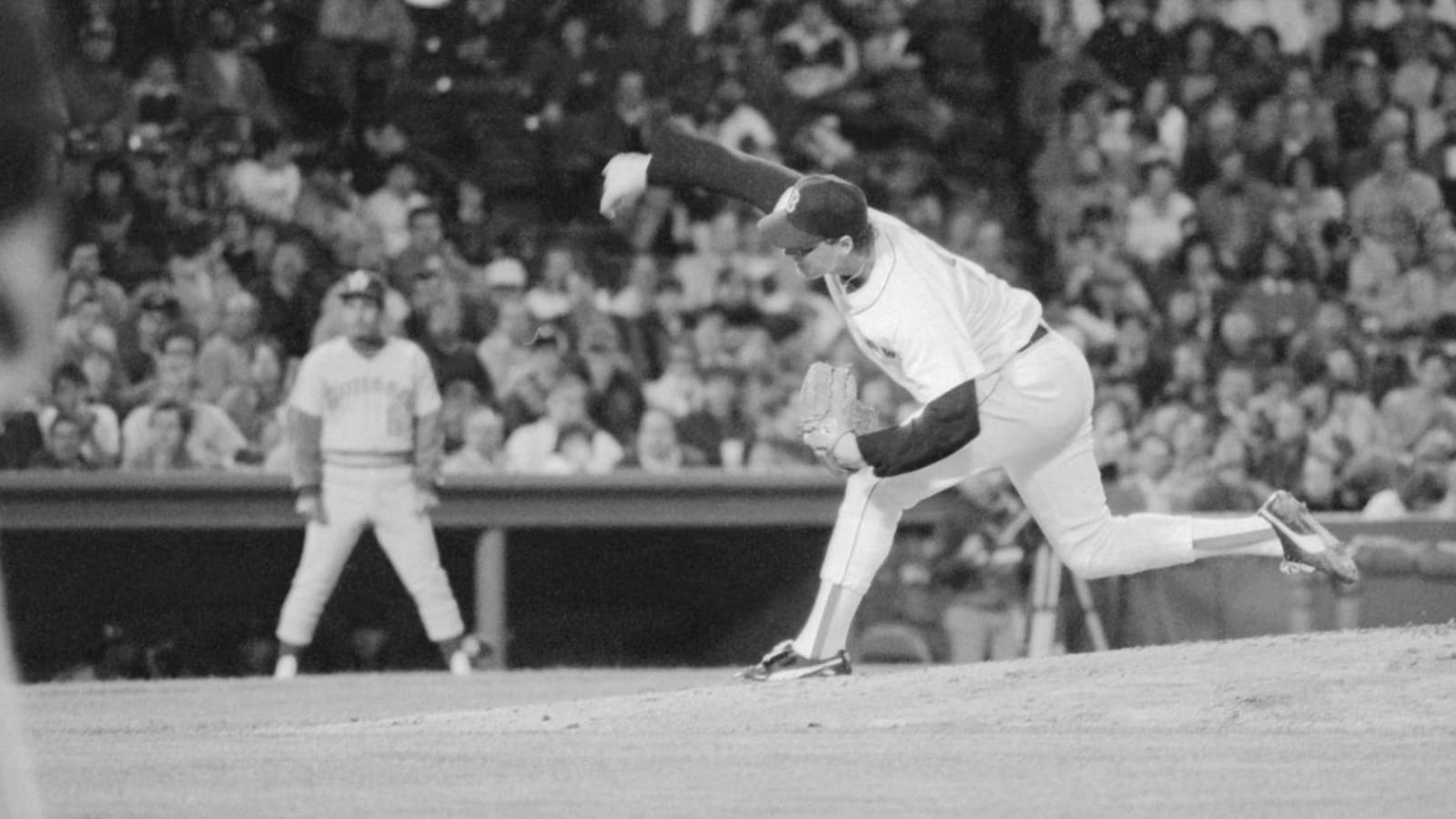
Roger Clemens was the first player to reach the 20-strikeout mark in a nine-inning game. He accomplished this feat on April 29, 1986, while pitching for the Boston Red Sox against the Seattle Mariners. It was a watershed moment in baseball history, proving that a pitcher could completely neutralize an entire lineup. Clemens repeated this performance a decade later on September 18, 1996, while playing for the Red Sox against the Detroit Tigers. By doing so, he became the only player to reach the 20-strikeout plateau twice in a standard nine-inning game.
2. Kerry Wood (1998)
On May 6, 1998, in only his fifth career start, Kerry Wood delivered what many baseball historians consider the most dominant pitching performance ever. Playing for the Chicago Cubs against the Houston Astros, Wood struck out 20 batters in a shutout victory. His performance is often cited as the most impressive because of his youth at the time; he had not yet fully developed the seasoned veteran’s understanding of the game, relying instead on raw, untouchable power.
3. Max Scherzer (2016)
Max Scherzer joined the exclusive 20-strikeout club on May 11, 2016, while pitching for the Washington Nationals against his former team, the Detroit Tigers. Scherzer’s performance was clinical; he didn’t issue a single walk throughout the game, highlighting a level of precision that complements his high-strikeout output.
Comparative Analysis: Regulation vs. Extra-Inning Records
While 20 is the magic number for a nine-inning game, there have been performances in extra-inning games that resulted in higher strikeout totals. However, these are categorized differently because the pitcher had the benefit of more than nine frames to reach their total.
| Pitcher | Date | Strikeouts | Innings | League/Team |
|---|---|---|---|---|
| Tom Cheney | Sept 12, 1962 | 21 | 16 | Washington Senators |
| Roger Clemens | April 29, 1986 | 20 | 9 | Boston Red Sox |
| Kerry Wood | May 6, 1998 | 20 | 9 | Chicago Cubs |
| Max Scherzer | May 11, 2016 | 20 | 9 | Washington Nationals |
| Roger Clemens | Sept 18, 1996 | 20 | 9 | Boston Red Sox |
It is crucial to note that Tom Cheney’s record of 21 strikeouts occurred in a 16-inning marathon. While technically a higher number, baseball analysts traditionally separate these records because the endurance factor and the number of opposing hitters faced are significantly different from a standard nine-inning game.
Prerequisites and Factors Contributing to a 20-Strikeout Game
Achieving such a milestone is not merely a matter of throwing hard. Several variables must align to make a 20-strikeout performance possible:
- Pitch Efficiency: To stay in a game long enough to record 20 strikeouts, a pitcher must avoid high pitch counts early. Efficiency allows the pitcher to remain in the game through the ninth inning without the manager needing to pull them for a relief pitcher.
- The "Put-Away" Pitch: Most pitchers who reach these heights possess a "wipeout" pitch—often a sharp slider or a biting curveball—that the batter cannot resist or make contact with once they are ahead in the count.
- Opponent Aggression: A lineup that is overly aggressive, swinging at pitches out of the zone, provides the necessary volume of opportunities for a pitcher to rack up strikeouts. A disciplined, patient lineup that takes walks and works the count makes reaching 20 strikeouts significantly harder.
- Home Plate Umpire Consistency: The "strike zone" as perceived by the umpire plays a subtle but vital role. A wider zone can assist a pitcher in painting the corners, making it more difficult for hitters to defend the plate effectively.
Common Misconceptions
A frequent point of confusion among casual fans is the difference between "strikeouts per nine innings" (a statistical average) and "strikeouts in a single game." The former is a measure of sustained excellence over a season or career, while the latter is a snapshot of one extraordinary night.
Furthermore, fans often confuse modern pitching usage—where starters are rarely allowed to pitch beyond the sixth or seventh inning—with the historical context of the records held by Clemens, Wood, and Scherzer. In the current era of baseball, "pitch counts" and "bullpen depth" make it increasingly unlikely that a starter will be left on the mound long enough to record 20 strikeouts, even if they are pitching exceptionally well. This makes the existing records even more untouchable as the sport continues to evolve toward shorter outings for starting pitchers.
Frequently Asked Questions
Has any pitcher ever struck out more than 20 batters in a game? No pitcher has recorded more than 20 strikeouts in a standard nine-inning MLB game. The only instance of a higher total is Tom Cheney’s 21-strikeout game, but that required 16 innings of work, a feat unlikely to be replicated in the modern era of baseball.
What is the difference between a nine-inning record and an extra-inning record? The nine-inning record is considered the standard for a "regulation" game. Extra-inning games allow pitchers more time on the mound, which changes the nature of the challenge. Most baseball record books list the 20-strikeout mark as the definitive benchmark for elite single-game performance.
Does a 20-strikeout game guarantee a win? Historically, yes. All of the pitchers who reached the 20-strikeout mark in a nine-inning game (Clemens, Wood, and Scherzer) won their respective games. It is virtually impossible to lose a game when the opposing offense is being neutralized at that frequency.
Why don't we see 20-strikeout games more often in 2026? The primary reason is the shift in baseball philosophy regarding pitch counts and pitcher workload. In 2026, most starting pitchers are limited to 100–110 pitches per outing, and teams rely heavily on specialized relief pitchers. It is difficult to record 20 strikeouts within the modern constraints placed on starting pitchers.
Can a pitcher who records 20 strikeouts still lose the game? While highly improbable, it is theoretically possible to lose such a game if the pitcher allows a run on a combination of walks, errors, and base hits, while their own team fails to score any runs. However, in the history of MLB, the 20-strikeout game has been synonymous with a dominant victory.
Final Perspective on the Record
The 20-strikeout game remains one of the most exclusive clubs in sports. It represents a rare alignment of human capability, strategic game planning, and game-time conditions. Whether it is the raw power of Kerry Wood as a rookie or the veteran mastery of Roger Clemens and Max Scherzer, these performances are frozen in time as the high-water mark for pitching dominance. For aspiring players and fans alike, studying these games provides a window into the absolute ceiling of what a pitcher can achieve in the modern era. If you are looking to appreciate the history of the sport, re-watching these specific performances offers the best insight into how a pitcher can command a game from the first inning to the last.