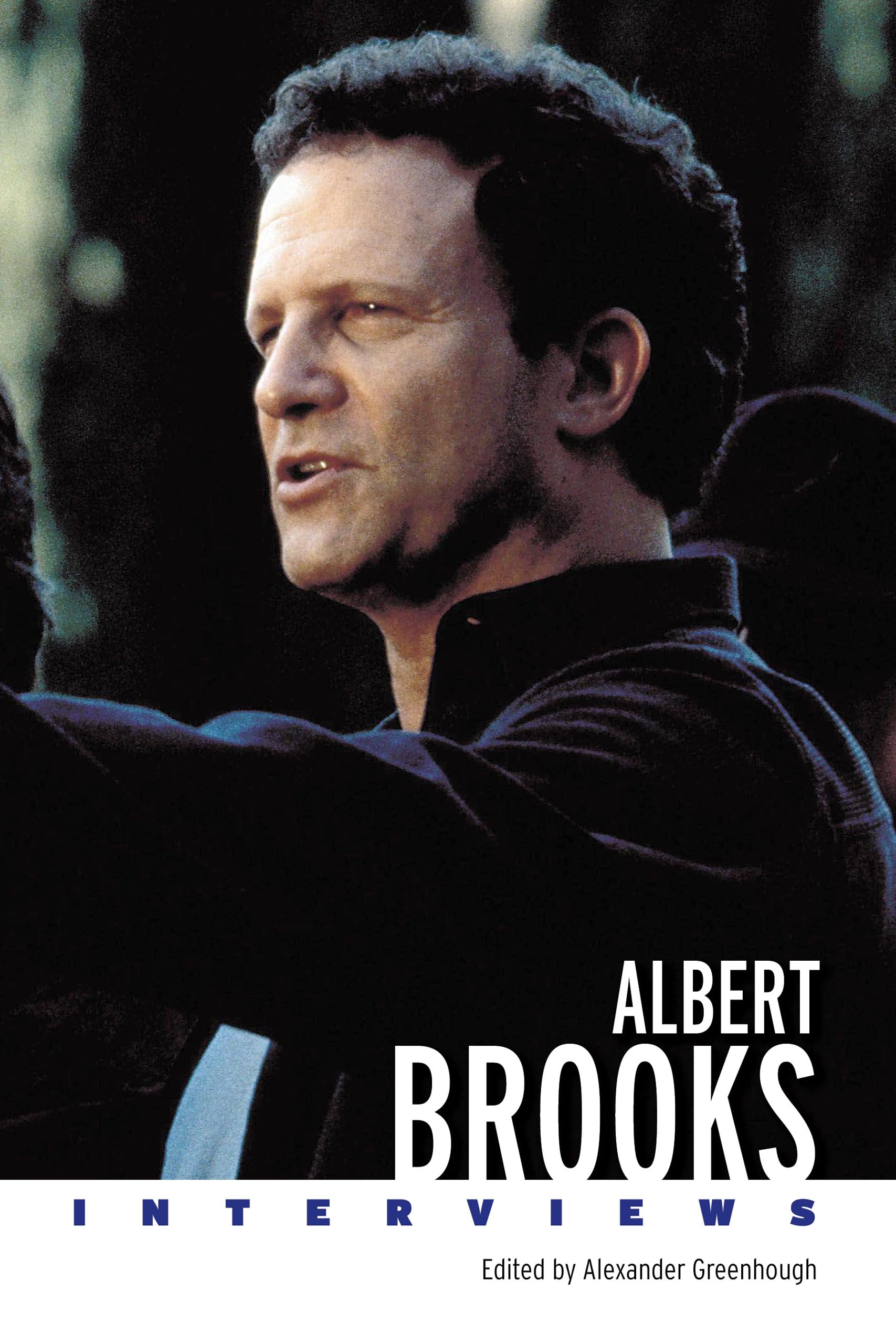
Albert Brooks, the legendary filmmaker and comedian, pivoted to literature with his 2011 debut novel, 2030: The Real Story of What Happens to America. The book is a satirical yet chillingly prescient exploration of a future U.S. struggling with national debt, generational warfare, and the unintended consequences of medical breakthroughs.
While Albert Brooks is primarily celebrated for his transformative work in stand-up comedy and iconic films like Modern Romance, Lost in America, and Broadcast News, his foray into the world of long-form fiction provided a new medium for his signature brand of observational neurosis. In the literary world, Brooks is best known for his high-concept speculative novel, which, as we navigate the landscape of 2026, feels more relevant than ever. This guide examines his bibliography, with a primary focus on the narrative depth, social commentary, and lasting impact of his novel 2030.
The Genesis of Albert Brooks as an Author
Albert Brooks has always been a writer first. His career began with intricately scripted comedy bits that deconstructed the very nature of performance. This evolved into screenwriting, where he crafted some of the most enduring satires of the late 20th century. However, the move to prose allowed Brooks to escape the budgetary and temporal constraints of filmmaking.
The publication of 2030: The Real Story of What Happens to America in 2011 was not merely a celebrity vanity project. Published by St. Martin’s Press, the novel demonstrated a sophisticated understanding of macroeconomics, demographics, and social psychology. Brooks spent years researching the projected state of the U.S. economy and medical field, ensuring that his satirical "future" was grounded in plausible, if exaggerated, reality.
2030: The Real Story of What Happens to America – A Comprehensive Analysis
At the heart of Albert Brooks’ literary output is this speculative vision of the United States. Set in a timeframe that is now only four years away from our current perspective in 2026, the book provides a fascinating look at what a satirist in 2011 thought our world might look like today.
The Central Premise: The Cure for Cancer
The catalyst for the novel's conflict is an event that occurred in the book’s past: the total cure for cancer in the year 2013. While this sounds like a utopian dream, Brooks explores it as a fiscal nightmare. By eliminating the primary cause of death for the middle-aged and elderly, the U.S. population explodes with "the Olds." This demographic shift places an unbearable strain on the Social Security and Medicare systems, as the younger generations are forced to work multiple jobs just to fund the unending retirements of their ancestors.
The Generational Divide: "The Olds" vs. "The Youngs"
Brooks masterfully captures the resentment brewing between age groups. In the novel, the youth—saddled with debt and facing a future where they can never afford homes or retirement—begin to harbor a quiet, and eventually loud, hostility toward the elderly. This is not just a backdrop; it is the driving force of the plot. Brooks characterizes the older generation not as villains, but as people who simply "won't go away," leading to a society that is literally and figuratively stuck.
Geopolitical Shifts and the "New" America
Another major pillar of the novel is the role of foreign debt. In Brooks' 2030, the United States is so deeply in debt to China that the geopolitical power balance has shifted entirely. Following a devastating earthquake that levels much of Los Angeles (the "Big One" that Californians have feared for a century), the U.S. government finds itself unable to fund the reconstruction. The solution—selling off portions of American infrastructure and allowing foreign entities to rebuild and manage major cities—serves as a biting critique of American exceptionalism and fiscal irresponsibility.
Key Characters and Plot Progression
The novel operates as a multi-perspective narrative, weaving together several lives to paint a portrait of a fractured nation.
- President Matthew Bernstein: A well-meaning but overwhelmed leader who is the first half-Jewish president. He must navigate the impossible math of a bankrupt nation while trying to maintain social order. His character serves as a vehicle for the book’s political satire, highlighting the paralysis of the American legislative system.
- Brad Miller: A representative of the younger generation who becomes disillusioned with the status quo. His arc represents the radicalization of the youth as they realize the "American Dream" has been consumed by those who came before them.
- Kathy Sullivan: An "Old" who is living the reality of the cancer cure. Her perspective provides the human element to the demographic crisis, showing the loneliness and purposelessness that can accompany a life extended indefinitely by medicine but stripped of economic security.
- The High-Tech Terrorists: The book takes a dark turn with the introduction of "youth terrorists" who target the elderly and the infrastructure that supports them. This escalation from resentment to violence is Brooks’ warning about the dangers of extreme inequality.
Stylistic Elements of Brooks' Prose
Readers familiar with Brooks' films will recognize his voice in 2030, but the novel allows for a broader canvas.
- Deadpan Realism: Even when describing absurd scenarios, such as the "Mall of America" becoming a sovereign-like entity or the specific mechanics of 24-hour surveillance, Brooks maintains a dry, matter-of-fact tone. This makes the satire more biting because it feels possible.
- Dialogue-Driven Narrative: Much of the book’s energy comes from sharp, witty dialogue. Brooks’ ear for how people justify their own selfishness is on full display here.
- Predictive Accuracy: Looking back from 2026, Brooks’ predictions about the "gig economy" (though he didn't use that exact term), the rise of digital resentment, and the intensification of the culture wars feel remarkably accurate, even if the "cure for cancer" remains elusive in our actual timeline.
Comparative Overview: The World of 2030 vs. Reality in 2026
To understand the impact of the novel, it is helpful to compare the fictional world Brooks created with the world we inhabit in 2026.
| Feature | The Novel 2030 (Published 2011) | Real World Status (2026) |
|---|---|---|
| Primary Health Event | Total cure for all cancers in 2013. | Significant advancements in mRNA and CRISPR, but no "total cure." |
| Demographics | Elderly population makes up nearly 50% of wealth/power. | Aging "Silver Tsunami" is a major economic factor, but balanced by immigration. |
| Economic State | National debt leads to selling parts of the U.S. to China. | High national debt remains a crisis; global trade is more fragmented. |
| Social Climate | Violent generational warfare and "youth" terror cells. | Intense political polarization, primarily along ideological rather than age lines. |
| Infrastructure | Los Angeles destroyed by an 8.2 earthquake; rebuilt by foreign aid. | L.A. remains standing, though infrastructure investment is a constant debate. |
Other Written Works and Contributions
While 2030 is his only full-length novel, Albert Brooks has a significant footprint in the written word through other formats.
Screenplays as Literature
Brooks’ screenplays, such as Modern Romance and Lost in America, are often studied for their structural perfection and dialogue. Published versions of these scripts are considered essential reading for students of comedy and screenwriting. They showcase his ability to find the profound in the mundane, a skill that he transitioned successfully into the prose of 2030.
The Documentary Context: Defending My Life
While not a book, the 2023 documentary Albert Brooks: Defending My Life, directed by Rob Reiner, is a critical companion piece to his writings. In the film, Brooks discusses his creative process and the anxieties that drive his work. For readers of 2030, the documentary provides essential context on why Brooks is so obsessed with death, legacy, and the breakdown of social norms.
Why Read Albert Brooks' Books Today?
In 2026, the themes Brooks explored in 2030 are no longer speculative fiction; they are our daily news cycle. The "burden of the elderly," the "struggle of the youth," and the "insolvency of the state" are the central pillars of modern political discourse.
Brooks offers a unique perspective that a standard political analyst cannot: he finds the humor in the horror. His writing suggests that even as the world falls apart due to demographic shifts or economic collapse, humans will remain neurotically obsessed with their personal comforts and petty grievances. This human-centric approach to the "end of the world" makes his work both accessible and deeply unsettling.
Frequently Asked Questions
Is Albert Brooks planning a sequel to 2030?
As of 2026, there has been no official announcement regarding a direct sequel to 2030: The Real Story of What Happens to America. Brooks has historically preferred to move between different creative mediums rather than sticking to a single franchise. However, his recent interviews suggest he continues to write shorter essays and observational pieces about the current state of the country.
Is the novel 2030 being turned into a movie?
There have been various rounds of development news since the book was published in 2011. While Brooks is a filmmaker himself, he originally stated that he wrote the book specifically because the story was "too big" for a movie budget. Given the current trend of high-concept limited series on streaming platforms, many critics believe the book is better suited for a television adaptation than a feature film.
How does the novel 2030 compare to other dystopian fiction?
Unlike The Hunger Games or 1984, 2030 is a "soft" dystopia. There is no totalitarian dictator; rather, the "villain" is the math of Social Security and the natural process of aging. It is often compared to the works of George Saunders or Kurt Vonnegut for its blend of suburban normalcy and high-concept satire.
Did Albert Brooks write any memoirs?
Brooks has not published a traditional "tell-all" autobiography. However, his novel 2030 and his various scripts are considered highly semi-autobiographical in their tone and neuroses. The 2023 documentary Defending My Life serves as the closest definitive "life story" available to the public.
What is the reading level of 2030?
The novel is written in an accessible, conversational style, typical of Brooks’ public persona. However, it deals with complex themes of economics, policy, and medical ethics, making it most suitable for adult readers or mature young adults interested in political satire.
Practical Recommendation for Readers
If you are new to Albert Brooks’ literary work, the best way to start is by securing a copy of 2030: The Real Story of What Happens to America. As we move closer to the actual year 2030, reading the book becomes a meta-experience, allowing you to check his predictions against the reality of 2026.
For the full experience, watch the documentary Defending My Life after finishing the book. Understanding Brooks’ lifelong obsession with the "rules" of society and his fear of being "left behind" will deepen your appreciation for the characters in his novel. His work reminds us that while the future may be daunting, there is always room for a well-timed, cynical joke.