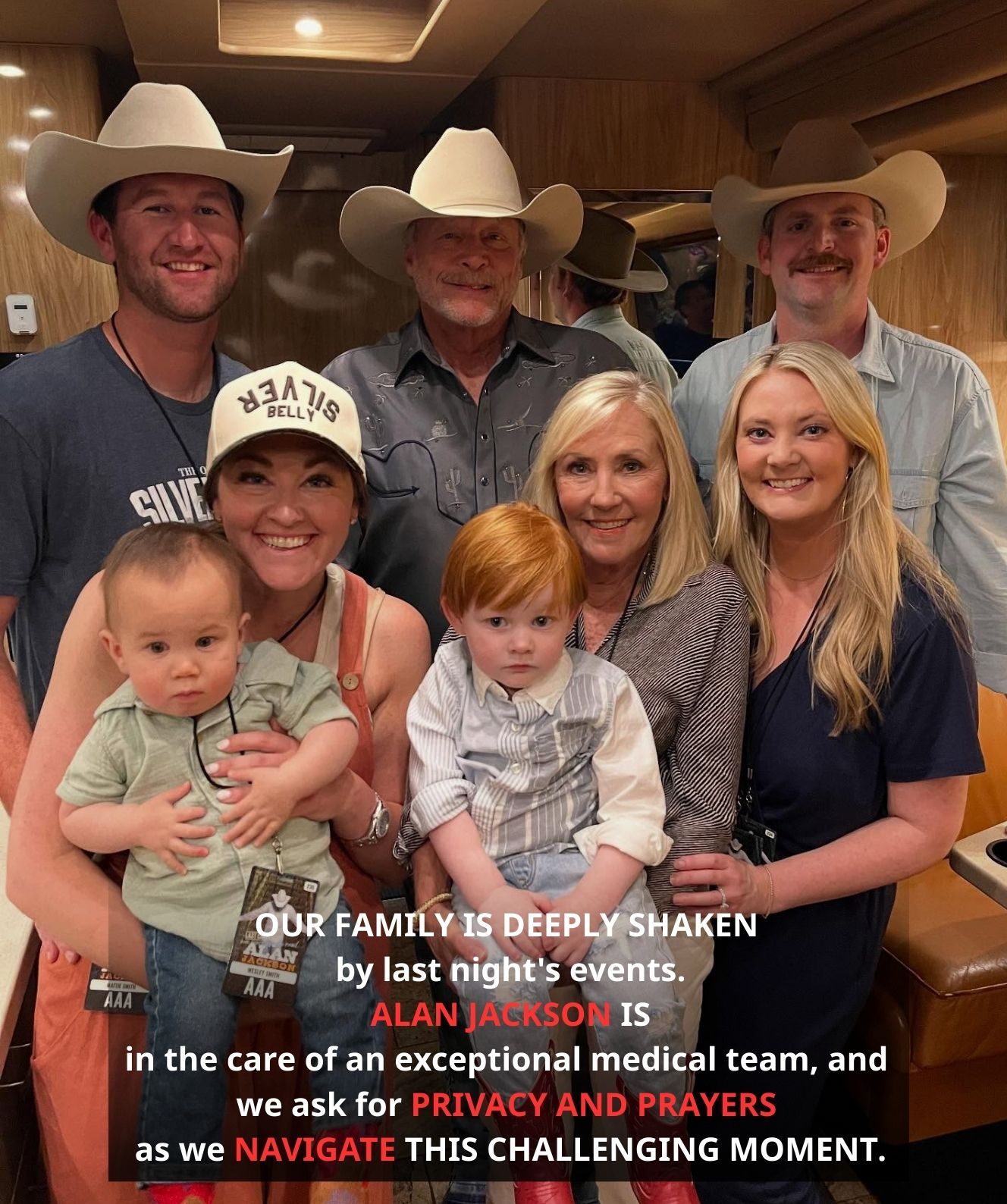
Alan Jackson’s career is managed through a sophisticated infrastructure centered around his own company, ACR (Alan Jackson Records) Management, in close collaboration with his wife, Denise Jackson, and a specialized team of Nashville-based industry veterans. This management structure oversees his recording rights, international touring logistics, brand extensions like Silverbelly Whiskey, and the strategic preservation of his legacy as a neotraditionalist country icon.
For over three decades, Alan Jackson has maintained one of the most stable and successful careers in country music history. Unlike many artists who cycle through various management firms and publicists, Jackson’s management strategy has been characterized by loyalty, family involvement, and a slow-but-steady transition toward full independence. In 2026, as he continues to navigate the complexities of a storied career while managing health-related performance constraints, the machinery behind the man remains a case study in effective artist representation.
The Foundations of Alan Jackson’s Management Strategy
The management of a superstar like Alan Jackson is not handled by a single individual but by a network of specialized entities. To understand how his career is managed, one must look at the three pillars of his professional life: the personal management team, the booking agency, and the business management firm.
The Role of ACR Management
At the heart of his operations is ACR Management. This internal organization serves as the hub for all professional activity. In the latter half of his career, Jackson moved away from traditional third-party management firms to bring his operations "in-house." This move allowed for greater control over his creative output and, more importantly, his schedule. ACR Management handles the day-to-day decision-making, from coordinating with his record label to managing his public image.
The Influence of Denise Jackson
While professional managers handle the technicalities, Denise Jackson, Alan’s wife, has played an indispensable role in his management strategy. Often described as his closest advisor, her role transcends that of a spouse. Historically, it was Denise who famously approached Glen Campbell’s manager to get Alan his first big break. In 2026, her influence remains a stabilizing force, ensuring that business decisions align with the family’s values and Alan’s physical well-being.
The Evolution of Jackson’s Management: From Discovery to Independence
To explain how Alan Jackson is managed today, we must examine the historical shifts that defined his professional trajectory. His management has evolved through three distinct phases: the Discovery Phase, the Major Label Dominance Phase, and the Independent Legacy Phase.
The Barry Coburn and Chip Peay Era
In the late 1980s and early 90s, Jackson was managed by industry heavyweights like Barry Coburn and later Chip Peay. During this time, the management's primary goal was "breaking" the artist. This involved heavy radio promotion, grueling tour schedules, and navigating the politics of Arista Nashville under the leadership of Tim DuBois. Peay, in particular, was known for his "quality over quantity" approach, a philosophy that still permeates Jackson’s management style today.
The Shift to Internalized Control
As Jackson moved from being a rising star to an established legend, the need for external management diminished. He reached a level of fame where he no longer needed to "hustle" for opportunities; instead, his management became about filtering the thousands of requests he received. This led to the formation of a tighter, more exclusive management circle that prioritized his desire for a traditional lifestyle over the constant pursuit of mainstream pop-crossover success.
The Role of the Talent Agency: WME and Touring
While management handles the overall career strategy, the William Morris Endeavor (WME) agency handles the specifics of his live performances. In 2026, the management of Jackson’s touring has become significantly more complex due to his diagnosis of Charcot-Marie-Tooth (CMT) disease.
Management and WME must coordinate:
- Reduced Performance Frequency: Rather than a standard 50-city tour, his "Last Call" and subsequent curated appearances are spaced out to allow for recovery and physical therapy.
- Venue Accessibility: Ensuring that venues can accommodate the specific stage setups required for his comfort.
- Insurance and Risk Management: Managing the high-level insurance policies required for a legacy artist with a known neurological condition.
The agency works under the direction of ACR Management to ensure that every live date is not just a concert, but a high-value "event" that maximizes revenue while minimizing physical strain on the artist.
Recording and Intellectual Property Management
In 2026, Alan Jackson’s management is as much about IP (Intellectual Property) management as it is about music. His move to create ACR Records was a pivotal management decision that allowed him to own his masters and control his distribution.
Navigating Label Partnerships
Even with his own label, Jackson’s management utilizes distribution partnerships with major entities like EMI Nashville or Universal Music Group. This "hybrid" management model allows him to retain the lion's share of his royalties while leveraging the global marketing muscle of a major corporation. The management team oversees the licensing of his catalog for use in films, television, and digital streaming platforms, ensuring that his neotraditional sound remains accessible to younger generations on platforms like TikTok and Spotify.
Managing the "Alan Jackson" Brand
Management extends beyond the music into various brand extensions. This includes:
- Silverbelly Whiskey: A premium bourbon brand that requires management of supply chains, liquor laws, and marketing campaigns.
- AJ’s Good Time Bar: His multi-story entertainment venue on Lower Broadway in Nashville.
- Merchandise and Licensing: Overseeing the sale of everything from signature Stetson hats to vintage-style tour shirts.
Key Components of Alan Jackson’s Management Team
The following table outlines the primary entities involved in the management and operation of Alan Jackson’s professional empire in 2026.
| Entity/Department | Key Function | Management Objective |
|---|---|---|
| ACR Management | Executive Oversight | Coordination of all business units and brand integrity. |
| Denise Jackson | Principal Advisor | Strategic alignment with personal/family goals. |
| WME (William Morris) | Booking & Live Events | Tour routing, contract negotiation, and venue logistics. |
| ACR Records | Label Operations | Ownership of master recordings and distribution strategy. |
| Publicity/PR Team | Media Relations | Managing the narrative around health and legacy. |
| Business Managers/CPAs | Financial Management | Tax planning, estate preservation, and investment oversight. |
| Legal Counsel | Rights & Contracts | Protection of trademarks and negotiation of licensing deals. |
The Impact of Health on Modern Management Decisions
The management of Alan Jackson in the 2020s has been defined by his public disclosure of Charcot-Marie-Tooth (CMT) disease. This hereditary condition affects the nervous system and impacts balance and muscle movement.
From a management perspective, this required a complete pivot:
- Transparency vs. Privacy: Management had to decide how much to share with the public. They chose a path of "graceful transparency," which bolstered fan loyalty and explained his limited mobility on stage.
- Scheduling Logistics: Tours are now managed with "hub-and-spoke" routing to minimize travel time, often allowing Alan to return to Nashville or a central location between shows rather than staying on a bus for weeks.
- Legacy Planning: Management has increased focus on "evergreen" projects—books, documentaries, and archival releases—that do not require Alan to be physically present or performing.
Management of the Fan Connection: "Alan's Angels"
A significant part of Jackson's management involves the "Alan's Angels" fan club and his digital footprint. In an era where social media engagement is mandatory, Jackson’s management maintains a presence that feels authentic to his "old school" persona. They eschew trendy, high-energy content in favor of nostalgia, behind-the-scenes glimpses into his car collection, and updates on his family. This strategic "slow-burn" digital management keeps the core demographic engaged while attracting "New-Country" listeners who crave authenticity.
Financial and Estate Management
Given his net worth—estimated to be well into the hundreds of millions—Jackson’s business management team is tasked with complex estate planning. This includes the management of his extensive real estate holdings in Tennessee and Florida, as well as his world-renowned collection of classic cars and boats.
His management ensures that his business ventures are "diversified," meaning the income from his whiskey brand or his Nashville bar provides a financial cushion that makes him independent of the need to tour for money. This financial freedom is a direct result of decades of conservative, disciplined management.
FAQs About Alan Jackson’s Management
Who is Alan Jackson’s current manager?
Alan Jackson is primarily managed by his own company, ACR Management, with significant strategic input from his wife, Denise Jackson. Unlike his early career when he was managed by Barry Coburn or Chip Peay, he now operates with an in-house team that handles his day-to-day business affairs.
Does Alan Jackson still have a record label?
Yes, he operates under his own label, ACR Records. While he has had long-standing relationships with Arista Nashville and EMI Nashville, the creation of ACR Records allowed him to have greater control over his recording process and the ownership of his master tapes.
How does management handle his CMT diagnosis?
Management has shifted his professional focus toward high-value, infrequent performances and brand-based revenue streams. They coordinate closely with medical professionals and venue staff to ensure his safety and comfort during public appearances, while also pivoting the brand toward legacy-building projects that do not require constant touring.
What is the role of WME in his career?
William Morris Endeavor (WME) serves as his booking agency. They are responsible for negotiating the contracts for his live appearances, ensuring he receives top-tier billing and compensation, and managing the logistics of his "Last Call" tour dates.
Is Silverbelly Whiskey part of his management's portfolio?
Yes. Silverbelly Whiskey is a key part of his brand diversification strategy. His management team oversees the marketing and partnership deals related to the spirits brand, integrating it into his tours and digital presence.
Practical Recommendations for Understanding Artist Management
For those looking to model a career or business after Jackson’s management style, several key takeaways emerge:
- Prioritize Ownership: Jackson’s move to own his masters and form his own management company was the most lucrative decision of his career.
- Build a Inner Circle: Loyalty is a hallmark of Jackson’s team. Many of his staff and partners have been with him for decades, reducing the friction often found in the music industry.
- Adapt to Limitations: Instead of hiding his health challenges, Jackson’s management integrated them into his story, turning a potential career-ender into a moment of connection with fans.
- Diversify Revenue: By expanding into hospitality and spirits, his management ensured that the "Alan Jackson" brand remains profitable even when he is not on stage.
Alan Jackson’s management is a blend of traditional Nashville loyalty and modern independent business savvy. By keeping his operations close to home and family-oriented, he has maintained a level of career longevity that is rare in the entertainment world.