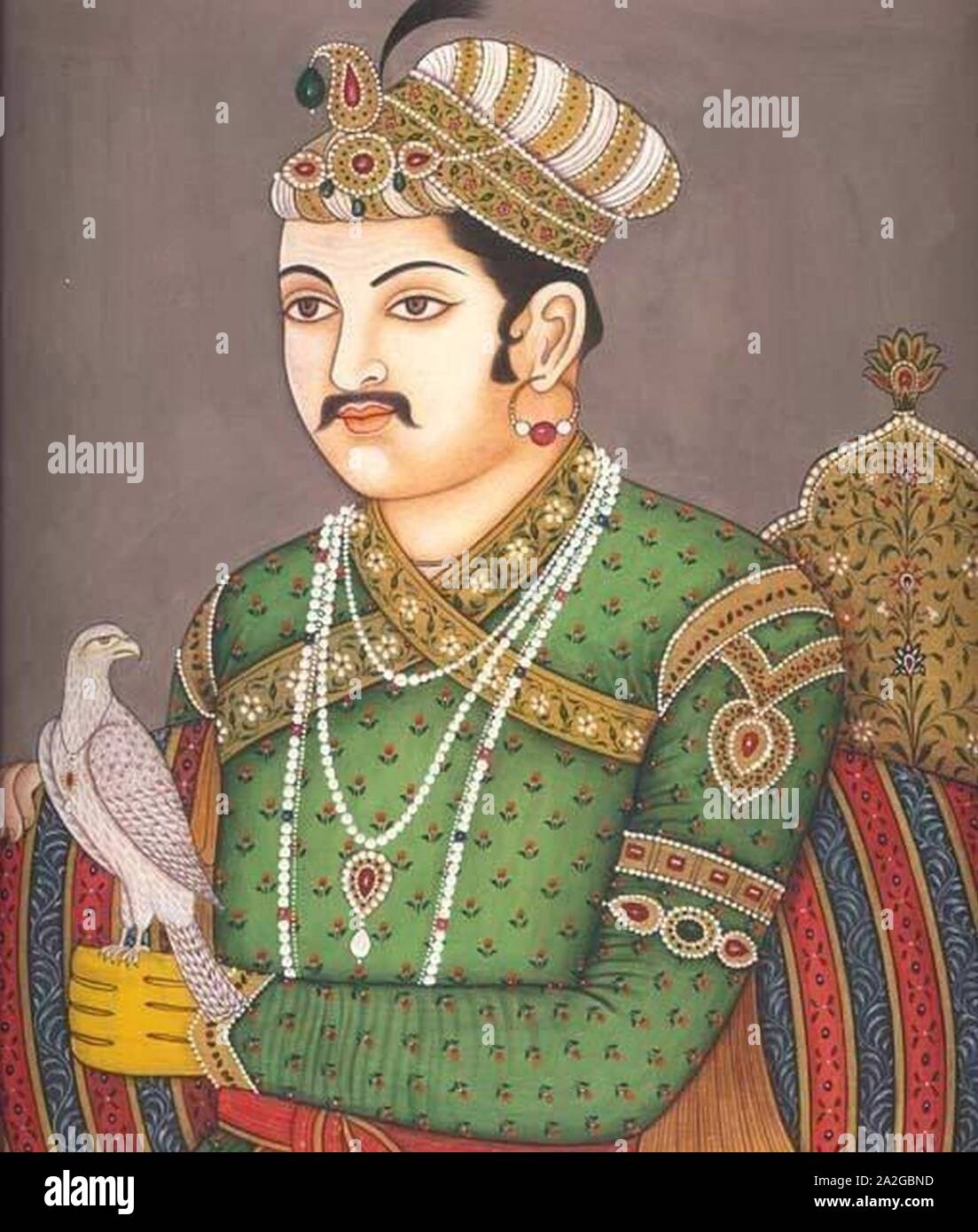
Akbar the Great, born Jalal-ud-din Muhammad Akbar, was the third emperor of the Mughal Dynasty, reigning from 1556 to 1605. He is defined by his unprecedented consolidation of the Indian subcontinent through military conquest, centralized administrative reforms, and a revolutionary policy of religious pluralism that integrated diverse cultures into a cohesive imperial identity.
Defining the Figure: Who Was Akbar the Great?
To understand the definition of Akbar the Great, one must look beyond the literal meaning of his name—"Akbar" itself translates to "Great" in Arabic, making his common title a linguistic tautology. He was the son of Humayun and the grandson of Babur, the founder of the Mughal Empire. Ascending the throne at the age of 13 under the regency of Bairam Khan, Akbar inherited a fragmented and fragile collection of territories. By the time of his death in 1605, he had transformed these holdings into a stable, wealthy, and culturally vibrant empire that stretched from modern-day Afghanistan in the west to Bengal in the east, and from the Himalayas in the north to the Godavari River in the south.
Akbar is distinguished in world history not merely for the size of his empire, but for the sophisticated systems he implemented to govern it. Unlike his predecessors, he recognized that a minority Muslim ruling class could not sustainably govern a majority Hindu population through force alone. This realization led to the development of "Sulh-i-kul" (universal peace), a philosophical framework that informed his legal, social, and religious policies.
The Early Reign and Consolidation of Power
The definition of Akbar’s early years is one of survival and rapid maturation. When Humayun died in 1556, the Mughal presence in India was precarious. The Afghan ruler Hemu posed an immediate threat, leading to the Second Battle of Panipat (1556). Under the guidance of Bairam Khan, Akbar’s forces secured a decisive victory, which effectively ended the Afghan challenge to Mughal hegemony in Northern India.
However, the definition of Akbar as an independent sovereign truly began in 1560 when he dismissed Bairam Khan and took personal control of the government. This transition marked the start of an aggressive expansionist phase. Akbar utilized a combination of matrimonial alliances and military might to bring the powerful Rajput kingdoms into the imperial fold. Rather than treating defeated Rajput kings as subjects, he often incorporated them into his high-ranking nobility, allowing them to retain their ancestral lands in exchange for loyalty and military service. This "Rajput Policy" was a cornerstone of his success, turning former enemies into the empire’s most staunch defenders.
The Technical Framework: Administrative and Economic Reforms
A critical part of the definition of Akbar the Great involves his technical contributions to governance. He moved the empire from a loosely organized military state to a centralized bureaucratic machine. Two primary systems define this era: the Mansabdari System and the Zabt System.
The Mansabdari System
The Mansabdari system was the structural backbone of the Mughal administration. It was a hierarchical grading system that determined the rank, salary, and military obligations of every officer (Mansabdar) in the imperial service.
- Zat Rank: This indicated the personal status of the officer and their position in the court hierarchy.
- Sawar Rank: This specified the number of cavalrymen the officer was required to maintain for the imperial army.
This system was meritocratic in theory; ranks were not hereditary and could be increased or decreased based on performance. It ensured that the nobility was dependent on the Emperor for their status, preventing the rise of powerful, independent feudal lords.
The Zabt and Dahshala Systems
Economically, Akbar’s reign was defined by the land revenue reforms spearheaded by his finance minister, Raja Todar Mal. Before Akbar, revenue was often collected arbitrarily. Todar Mal introduced a system based on rigorous survey and measurement of land.
The Dahshala system involved calculating the average produce of different crops and the average prices prevailing over the last ten years. One-third of this average produce was fixed as the state’s share, usually payable in cash. This provided the state with a predictable income and gave farmers some protection against sudden market fluctuations or crop failures.
| Feature | Pre-Akbar Administration | Akbar’s Administrative Reforms |
|---|---|---|
| Land Revenue | Irregular and often arbitrary | Dahshala System (10-year average) |
| Military Structure | Feudal levies and tribal loyalty | Mansabdari System (Rank-based) |
| Succession/Rank | Often hereditary | Meritocratic/Imperial appointment |
| Tax Base | Jizya tax on non-Muslims | Abolition of Jizya (1564) |
| Measurement | Varied local units | Standardized "Ilahi Gaz" (yard) |
Religious Policy and the Evolution of Sulh-i-Kul
Perhaps the most enduring definition of Akbar is that of a "philosopher-king" who sought religious synthesis. His spiritual journey began with orthodox Islam but evolved as he encountered the diverse faiths of his subjects.
In 1575, he constructed the Ibadat Khana (House of Worship) at Fatehpur Sikri. Initially intended for discussions among Muslim scholars, Akbar soon opened the doors to Hindus, Jains, Christians (Jesuits from Goa), Zoroastrians, and Sikhs. These debates convinced Akbar that no single religion possessed the absolute truth.
The Proclamation of Mahzar (1579)
Akbar issued the Mahzar, a decree that positioned the Emperor as the supreme arbiter in religious disputes, effectively diminishing the power of the orthodox Ulema (clerical class). This allowed him to implement social reforms that were often at odds with traditional religious interpretations.
Din-i-Ilahi
In 1582, Akbar formulated the Din-i-Ilahi (Divine Faith). It was not a religion in the traditional sense—it had no priesthood or scriptures—but rather an ethical code of conduct emphasizing piety, prudence, and kindness. While it gained few followers outside his immediate circle, it served as a symbolic representation of his desire for a unified imperial culture that transcended sectarian boundaries.
Cultural Synthesis and the "Nine Jewels"
The definition of Akbar’s era is incomplete without acknowledging the "Akbari Synthesis" in art and culture. He was a great patron of the arts, overseeing the fusion of Persian styles with indigenous Indian motifs. This is most visible in the architecture of Fatehpur Sikri, his capital for fifteen years, which features elements of both Islamic and Hindu design.
Akbar’s court was graced by the Navaratnas, or the Nine Jewels, a group of extraordinary individuals who excelled in various fields:
- Birbal: Known for his wit and administrative brilliance.
- Abu'l-Fazl: The court historian and author of the Akbarnama and Ain-i-Akbari.
- Faizi: A celebrated poet and scholar.
- Tansen: A legendary musician who revolutionized Indian classical music.
- Raja Todar Mal: The architect of the revenue system.
- Raja Man Singh: A trusted general and diplomat.
- Abdul Rahim Khan-i-Khana: A poet and translator.
- Fakir Aziao-Din: A mystic and advisor.
- Mulla Do-Piyaza: An advisor known for his intelligence.
Through these individuals, Akbar fostered an intellectual environment where the Mahabharata and Ramayana were translated into Persian, bridging the gap between the ruling elite and the cultural heritage of India.
Military Innovations and Expansion
While often remembered for his tolerance, Akbar was a formidable military strategist. He was one of the first Indian rulers to effectively utilize gunpowder and firearms on a massive scale. His use of heavy artillery and matchlock muskets gave the Mughal army a technological edge over rivals.
The definition of his military success also rested on logistics. He built a network of roads and established a robust supply chain that allowed for the rapid movement of troops across the vast subcontinent. His siege of Chittorgarh in 1567-1568 remains a primary example of his military determination; when the fortress fell, it signaled the end of major Rajput resistance and the beginning of a new era of cooperation.
Historical Criticism and Contemporary Perspectives
In 2026, historians continue to analyze the definition of Akbar’s "greatness" with a nuanced lens. While he is widely praised for his secularism, some critics point to the brutality of certain military campaigns, such as the massacre at Chittor following its fall, as a reminder of the harsh realities of medieval empire-building.
Furthermore, his religious policies, while celebrated today as a precursor to modern Indian secularism, were viewed by contemporary orthodox critics like Abdul Qadir Bada'uni as heretical. Understanding Akbar requires balancing his visionary social policies with the pragmatic, and sometimes ruthless, requirements of maintaining a centralized autocracy in the 16th century.
The Enduring Legacy of Akbar
The definition of Akbar the Great remains relevant because he provided the blueprint for the modern Indian state’s pluralistic identity. His ability to integrate diverse ethnicities and religions into a single administrative framework allowed the Mughal Empire to flourish for another century after his death.
He transformed the Mughal throne from a foreign occupying force into an indigenous institution. His influence is still seen in the revenue systems of South Asia, the architectural landscape of North India, and the syncretic traditions of Hindustani culture.
For more information on the historical sites associated with Akbar, you can visit the UNESCO World Heritage Centre page for Fatehpur Sikri or the Archaeological Survey of India for details on the Agra Fort.
Frequently Asked Questions
Why is he called "Akbar the Great"?
He is called "the Great" because he expanded the Mughal Empire to cover most of the Indian subcontinent and established administrative and social systems that ensured stability and prosperity for decades. His policy of religious tolerance (Sulh-i-kul) was revolutionary for his time.
Was Akbar the Great illiterate?
Yes, historical evidence suggests that Akbar was likely dyslexic and never learned to read or write. However, he possessed a prodigious memory and a deep love for learning. He had books read aloud to him daily and built one of the largest libraries of the medieval world, containing over 24,000 volumes.
What was the main goal of the Din-i-Ilahi?
The primary goal of the Din-i-Ilahi was to create a common ethical ground for the diverse religious groups within the empire. It aimed to unify the ruling elite under a shared loyalty to the Emperor, bridging the divide between Muslims, Hindus, and other faiths.
How did Akbar treat the Rajputs?
Akbar treated the Rajputs with a combination of military pressure and diplomatic respect. He entered into matrimonial alliances with Rajput families and appointed Rajput kings to the highest positions in his military and civil administration, rather than treating them as conquered subjects.
What is the significance of Fatehpur Sikri?
Fatehpur Sikri was a planned city built by Akbar to serve as his capital. Its significance lies in its architectural style, which seamlessly blends Islamic, Hindu, and Jain elements, reflecting Akbar's vision of a culturally integrated empire.
Who succeeded Akbar the Great?
Akbar was succeeded by his son, Prince Salim, who took the regnal name Jahangir. While Jahangir inherited a stable empire, he faced the challenge of maintaining the complex balance of power his father had established.
Practical Recommendation for Further Study
To truly grasp the definition of Akbar the Great, students and history enthusiasts should consult the primary source of his reign, the Akbarnama, written by his vizier Abu'l-Fazl. While hagiographic, it provides unparalleled detail on the administrative and philosophical underpinnings of the empire. Additionally, visiting the "Golden Triangle" of India—Delhi, Agra, and Jaipur—offers a physical encounter with the forts and cities that define his architectural legacy.