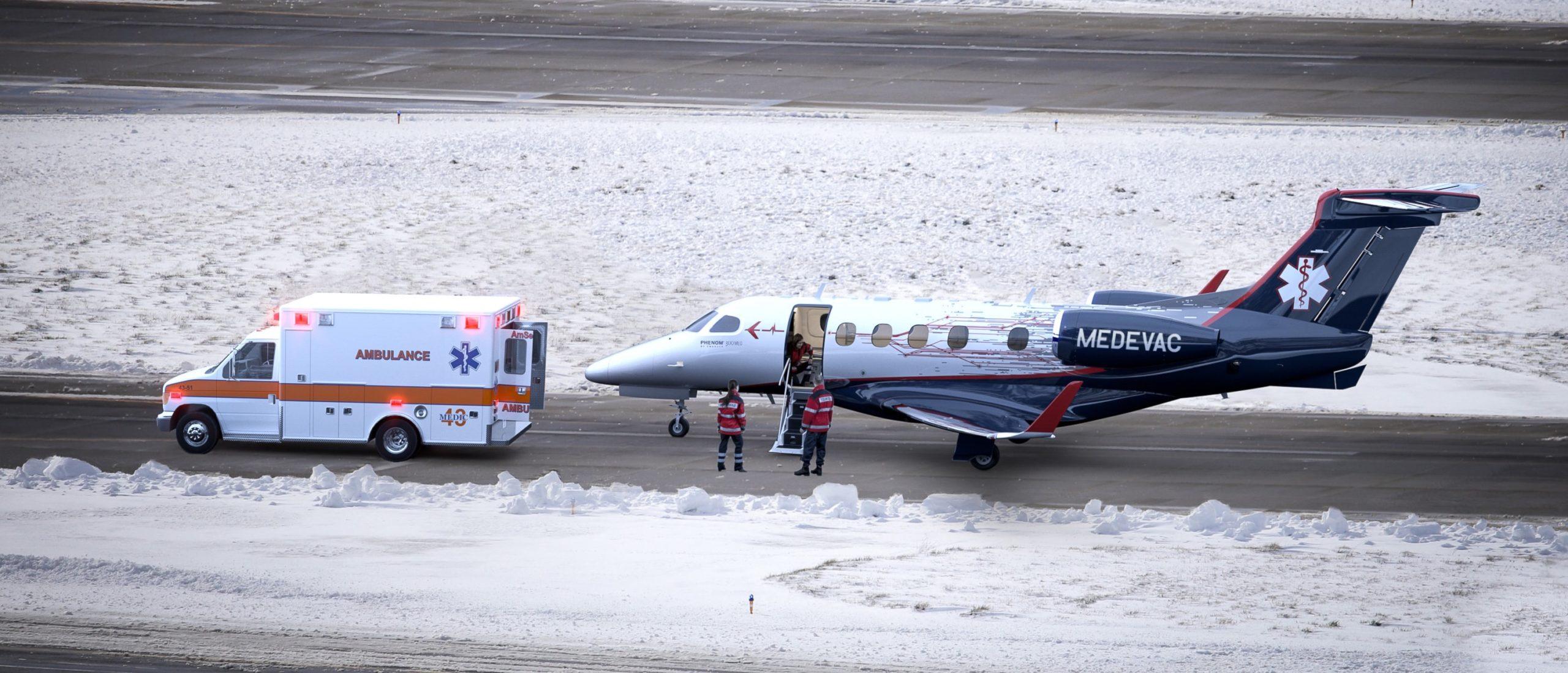
Air medivac operations involve the specialized transport of patients via aircraft equipped with life-support systems and staffed by highly trained medical personnel. These operations bridge the gap between critical injury or illness and definitive hospital care, utilizing both rotor-wing (helicopters) and fixed-wing (airplanes) platforms to navigate geographical barriers and time constraints. In 2026, air medivac has evolved into a highly integrated component of global health systems, combining advanced tele-health, rapid-response logistics, and mobile intensive care unit (ICU) capabilities.
Understanding the Scope of Air Medivac Operations
Air medical evacuation, commonly referred to as medivac or medevac, is a multifaceted discipline that extends beyond simple transportation. It represents a mobile extension of the hospital’s emergency department or intensive care unit. The primary objective is to provide a level of care during transit that is equal to or greater than what the patient was receiving at the point of origin.
In the civilian sector, these operations are typically categorized into two types: Primary Missions and Secondary Missions. Primary missions, often called "scene calls," involve responding directly to the site of an accident or medical emergency. These are almost exclusively the domain of rotor-wing aircraft due to their ability to land in unprepared clearings, highways, or hospital helipads. Secondary missions involve inter-facility transfers, moving a patient from one hospital to another—often a higher-level trauma center or a specialty facility like a burn unit or neonatal intensive care unit (NICU).
It is essential to distinguish between MEDEVAC and CASEVAC. While the terms are sometimes used interchangeably in casual conversation, they have distinct meanings in professional and military contexts. MEDEVAC (Medical Evacuation) refers to the transport of patients on vehicles specifically equipped for medical care with dedicated medical providers. CASEVAC (Casualty Evacuation) involves the transport of wounded personnel by non-medical vehicles or aircraft, often without specialized medical equipment or providers on board, typically moving patients from the point of injury to the first stage of medical care.
Aircraft Platforms: Rotor-Wing vs. Fixed-Wing
The choice of aircraft is the most significant operational decision in air medivac, dictated by distance, urgency, and the patient’s clinical status.
Rotor-Wing Operations (HEMS)
Helicopter Emergency Medical Services (HEMS) are the "first responders" of the sky. In 2026, these operations remain the standard for short-range missions, typically within a 150-mile radius.
- Operational Advantages: The ability to hover and land vertically allows HEMS to reach remote mountains, rural highways, and urban rooftops where no runway exists. This "point-to-point" capability minimizes the time between the injury and the operating room.
- Common Aircraft: Models like the Airbus H145, Leonardo AW169, and the Bell 429 are industry standards. These twin-engine aircraft offer the redundancy required for safety in congested areas and enough cabin volume to allow medical crews 360-degree access to the patient.
- Limitations: Helicopters are significantly more affected by weather—specifically icing and low visibility—than fixed-wing aircraft. They also have limited range and payload capacity compared to airplanes.
Fixed-Wing Air Ambulance (FWAA)
Fixed-wing operations are the workhorses of long-distance medical transport and international repatriation.
- Operational Advantages: Airplanes can fly faster, further, and in more diverse weather conditions. They offer a pressurized, climate-controlled environment that is much quieter and smoother than a helicopter, which is critical for patients with neurological injuries or those requiring delicate procedures during flight.
- Common Aircraft: The Pilatus PC-12 and Beechcraft King Air series are favored for shorter runways and regional hops, while the Learjet 45/75 and Gulfstream series are used for transcontinental and transoceanic transfers.
- Limitations: Fixed-wing aircraft require airports or prepared strips. This necessitates ground ambulance transport at both ends of the flight, adding "touchpoints" where the patient must be moved from bed to stretcher, increasing the logistical complexity and potential risk.
The Air Medivac Clinical Team
The success of air medivac operations depends on the synergy between flight operations and clinical expertise. Unlike ground ambulances, which may be staffed by Basic Life Support (BLS) or Advanced Life Support (ALS) crews, air medivac is almost universally a Critical Care Transport (CCT) service.
Personnel Qualifications
A standard flight crew typically consists of two pilots (for fixed-wing or complex HEMS) and a two-person medical team. The medical team is usually composed of a Flight Nurse and a Flight Paramedic.
- Flight Registered Nurses (FRN): Generally required to have a minimum of 3 to 5 years of experience in high-acuity environments such as the ICU or Emergency Department. They often hold specialized certifications like the Certified Flight Registered Nurse (CFRN) designation.
- Flight Paramedics (FP-C): These providers bring expertise in pre-hospital trauma management and airway control. In 2026, the Flight Paramedic-Certified (FP-C) credential is the gold standard for these professionals.
- Specialty Teams: For high-risk neonatal or pediatric transfers, a specialized NICU/PICU team including a respiratory therapist or a neonatologist may replace or augment the standard crew.
Flight Physiology: The "Invisible" Challenge
Medical crews must be experts in flight physiology. As altitude increases, barometric pressure decreases, causing gases to expand (Boyle’s Law). This can lead to life-threatening complications such as a tension pneumothorax (collapsed lung) expanding, or increased intracranial pressure. Furthermore, the "Stressor of Flight"—vibration, noise, and hypoxia—can degrade a patient's condition rapidly. Air medivac providers are trained to anticipate these physiological changes and intervene before the patient compensates.
Onboard Medical Technology and Equipment
Modern air medivac aircraft are essentially flying intensive care units. The weight and footprint of every piece of equipment are strictly regulated to ensure aircraft performance and safety.
| Equipment Category | Standard Devices in 2026 | Purpose |
|---|---|---|
| Monitoring | Multi-parameter monitors (e.g., Zoll X Series) | Continuous ECG, SpO2, EtCO2, invasive and non-invasive blood pressure. |
| Ventilation | Portable ICU ventilators (e.g., Hamilton-T1) | Supports various modes of ventilation for neonates through adults. |
| Infusion | Multi-channel smart pumps | Precise delivery of vasopressors, sedatives, and paralytics. |
| Diagnostics | Handheld Point-of-Care Testing (POCT) | Real-time blood gas analysis, electrolytes, and ultrasound (POCUS). |
| Life Support | ECMO / IABP / Impella | Advanced cardiac and respiratory support for the most critical patients. |
| Blood Products | Climate-controlled blood coolers | Carrying Whole Blood or PRBCs/Plasma for immediate trauma resuscitation. |
In 2026, many providers have integrated augmented reality (AR) and tele-medicine interfaces. This allows the flight crew to consult with a board-certified trauma surgeon or cardiologist in real-time, transmitting live ultrasound feeds and high-definition video from the cabin.
Operational Prerequisites and Dispatch Logistics
Launching an air medivac mission is a complex logistical dance that begins long before the turbines start spinning.
- Medical Necessity Review: Not every patient who needs to move requires an aircraft. Dispatchers and medical directors must determine if the time saved by air transport justifies the cost and inherent risks of flight.
- Weather Minimums: Pilots have the final "Go/No-Go" authority. They evaluate ceiling heights, visibility, wind shear, and icing potential. In the U.S., these standards are strictly governed by Federal Aviation Administration (FAA) Part 135 regulations.
- Weight and Balance: The pilot must calculate the weight of the patient, the medical crew, the equipment, and the fuel. On hot days or at high altitudes (high density altitude), the aircraft's lift capability is reduced, which may require leaving a crew member behind or taking less fuel (resulting in more fuel stops).
- Bed-to-Bed Coordination: For inter-facility transfers, the air medivac provider coordinates with the sending and receiving hospitals. This includes ensuring a bed is available and that ground ambulances are staged at both airports to handle the "first and last mile."
The Economics of Air Medivac: Costs and Insurance
Air medivac is one of the most expensive services in the healthcare ecosystem. In 2026, the average cost for a HEMS mission ranges from $25,000 to $50,000, while international fixed-wing repatriations can easily exceed $100,000.
Why is it so expensive?
The cost reflects the 24/7/365 readiness required. A single medivac helicopter can cost between $6 million and $10 million to purchase. Maintaining a crew of highly specialized pilots and clinicians around the clock, combined with aviation fuel, specialized insurance, and rigorous maintenance schedules, creates a massive overhead.
Insurance and the "No Surprises Act"
In the United States, the No Surprises Act has significantly changed how air medivac is billed. Previously, patients often received massive "balance bills" when an out-of-network air ambulance was used. Current regulations generally limit patient responsibility to their in-network cost-sharing amounts, with insurers and providers resolving payment disputes through independent arbitration.
For international travelers, purchasing Travel Insurance with Medical Evacuation coverage is essential. Without it, an individual may be required to pay the full cost upfront via credit card or wire transfer before an aircraft is dispatched.
Safety Standards and Accreditations
Safety is the paramount concern in air medivac operations. The industry has moved toward a "Culture of Safety" that prioritizes risk mitigation over mission completion.
- CAMTS Accreditation: The Commission on Accreditation of Medical Transport Systems (CAMTS) is a global leader in auditing and accrediting air medical programs. Their standards cover everything from pilot flight hours and medical crew training to maintenance logs and fatigue management.
- Safety Management Systems (SMS): Leading operators utilize SMS to identify hazards before they lead to accidents. This includes mandatory reporting of "near misses" and the use of Flight Data Monitoring (FDM) to analyze flight parameters.
- Night Vision Imaging Systems (NVIS): The use of Night Vision Goggles (NVGs) is now standard for most HEMS operations, allowing pilots to see terrain and obstacles in near-total darkness, significantly reducing the risk of Controlled Flight Into Terrain (CFIT).
Common Challenges in Air Medivac
Despite technological advancements, several factors can still impede operations:
- Fuel Availability: In remote areas or developing nations, high-quality Jet-A fuel can be difficult to source, necessitating complex "fuel hops" that prolong the mission.
- Regulatory Barriers: Crossing international borders requires overflight permits and landing rights. While medical missions are often prioritized, bureaucratic delays can still occur, especially in geopolitically sensitive regions.
- Patient Stability: If a patient is too hemodynamically unstable to survive the stressors of flight (vibration and pressure changes), the mission may be delayed until the sending facility can achieve a higher level of stabilization.
Frequently Asked Questions
What is the difference between a flight nurse and a flight paramedic?
While both are critical care providers, flight nurses typically focus on long-term clinical management, medications, and hospital-based ICU protocols. Flight paramedics are experts in rapid-sequence intubation (RSI), trauma stabilization, and scene management. In 2026, most programs use a "dual-provider" model where both roles are trained to cross-cover many skills.
Can family members fly with the patient?
In rotor-wing operations, there is rarely room for a passenger due to weight and space constraints. In fixed-wing operations, one or two family members can often accompany the patient, provided they have valid travel documents and do not interfere with medical care.
How do I arrange an air medivac?
For emergencies (scene calls), local emergency services (911 or equivalent) will coordinate the dispatch. For inter-facility transfers or international repatriation, you should contact a private air ambulance provider or your travel insurance company's emergency assistance department.
Are there weight limits for patients in air medivac?
Yes. Every aircraft has a maximum takeoff weight and a physical door/stretcher width limit. "Bariatric" medivac aircraft are available, specifically modified with heavy-duty loaders and wider cabins to accommodate patients weighing up to 600 lbs or more.
Does Medicare or Medicaid cover air medivac?
Medicare Part B covers air ambulance services if they are deemed "medically necessary"—meaning ground transport would endanger the patient's life or health. However, specific criteria regarding the destination and the patient's condition must be met for full reimbursement.
Future Directions: The Horizon of 2026 and Beyond
As we move through 2026, the industry is seeing the rise of Electric Vertical Takeoff and Landing (eVTOL) aircraft. These "air taxis" promise to reduce the noise and environmental footprint of HEMS while lowering operational costs. Additionally, the integration of AI-driven dispatch algorithms is helping to predict where accidents are likely to occur based on weather and traffic patterns, allowing aircraft to pre-position for even faster response times.
Professional Advice Limitation: This article is for informational purposes only and does not constitute medical or legal advice. Air medivac protocols and insurance regulations vary by jurisdiction. Always consult with a qualified medical professional or insurance representative regarding specific emergency transport needs.