Advanced auto insurance fraud detection link analysis artificial intelligence refers to sophisticated computational systems that map and analyze hidden connections among people, entities, vehicles, and events to uncover complex, organized criminal rings. By processing vast networks of unstructured claims data, telematics feeds, and historical records, these AI frameworks identify abnormal structural patterns that traditional rule-based filters routinely miss.
Understanding the Anatomy of Auto Insurance Fraud
Auto insurance fraud remains a persistent financial drain on the global insurance industry, driving up premium costs for honest policyholders and destabilizing underwriting portfolios. Traditional detection methods historically relied on isolated data points. An adjuster might look at a single claimant's driving record, a specific repair estimate, or a singular police report. However, modern fraudulent operations have evolved far beyond isolated opportunistic claims. Today's fraud often involves sophisticated, organized crime rings consisting of staged accidents, corrupted medical providers, dishonest legal representation, and shell entities.
To combat these multi-layered schemes, carriers must move past single-record evaluations. This is where advanced network analytics enters the operational workflow. By treating claims data as a massive, interconnected web rather than a series of independent spreadsheets, investigators can view the broader ecosystem surrounding a loss event. Recognizing this shift is the first step toward implementing graph-based artificial intelligence solutions that surface systemic risk before payouts occur.
Core Technologies: Graph Databases and Machine Learning
The foundation of advanced link analysis lies in the convergence of graph database architecture and machine learning algorithms. Unlike relational databases that store information in rigid rows and columns, graph databases use nodes, edges, and properties to represent and store data. Nodes represent distinct entities—such as claimants, phone numbers, vehicle identification numbers (VINs), addresses, bank accounts, and medical clinics. Edges represent the relationships or interactions between those entities, such as "shared a phone number," "registered at the same address," or "treated by the same physician."
Graph Neural Networks (GNNs)
Graph Neural Networks represent a specialized class of deep learning methods designed to perform inference on graph data structures. While standard neural networks process fixed-size vectors, GNNs propagate node features across neighboring connections via message-passing algorithms.
- Neighborhood Aggregation: A GNN updates the representation of a specific node by aggregating information from its immediate neighbors, allowing the model to understand the broader context of a claim.
- Structural Embedding: The system converts complex network topologies into dense vector spaces, enabling classifiers to distinguish between normal clustered behavior and malicious syndicates.
- Inductive Learning: Advanced GNN models can generalize to entirely new nodes and edges entering the graph in real-time, making them valuable for streaming claims adjudication.
Mapping the Connections: Key Data Vectors for Analysis
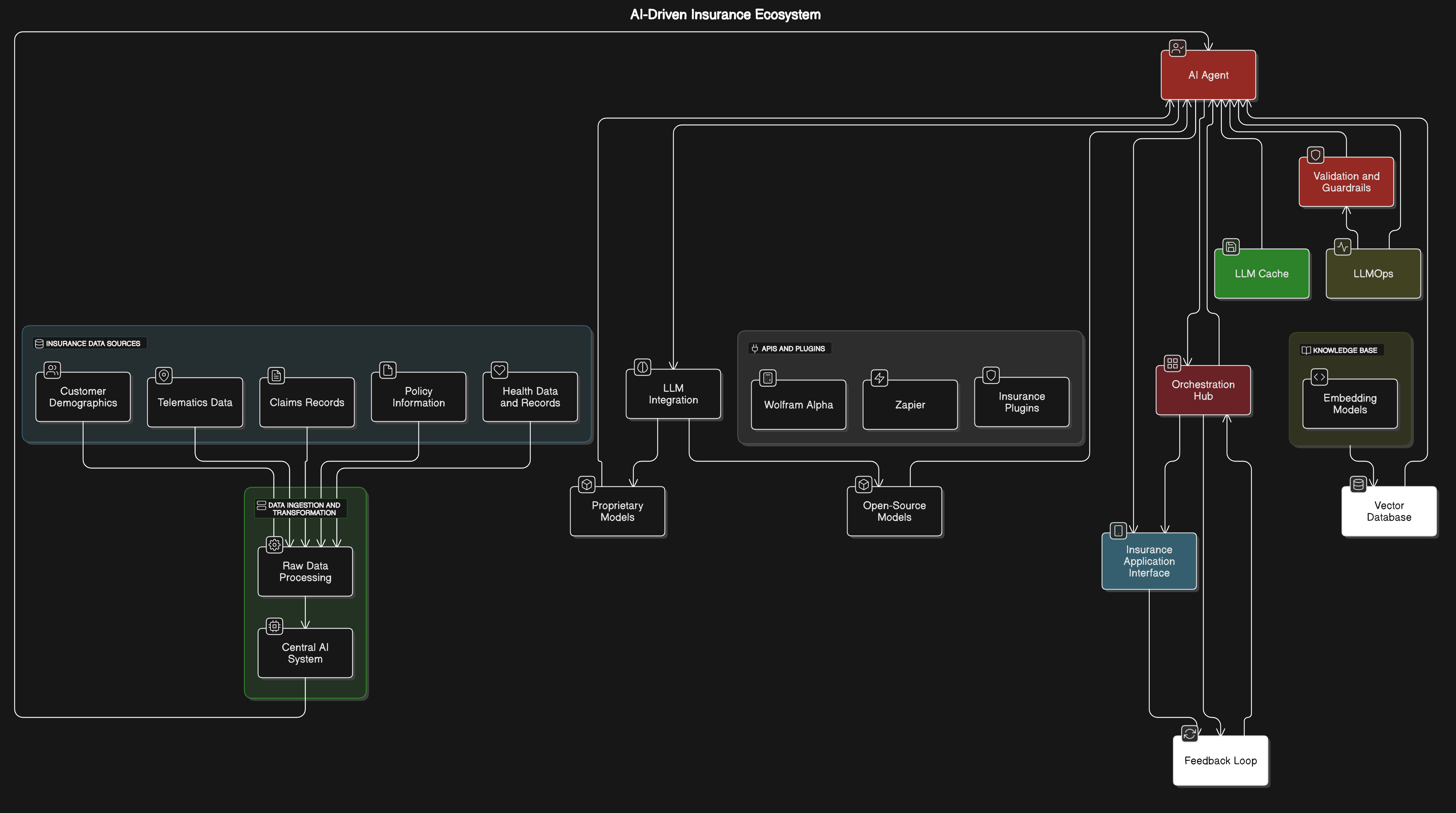
Effective link analysis requires a diverse ingestion pipeline capable of normalizing and correlating unstructured and structured data sources. If the ingestion pipeline misses critical data vectors, the resulting network graph will contain blind spots that criminal rings can exploit.
- Telematics Data
- [Graph Ingestion Engine]
- [GNN & Entity Resolution]
- [Risk Score & Alert]
- [GNN & Entity Resolution]
- [Graph Ingestion Engine]
- Medical Records
- [Graph Ingestion Engine]
- [GNN & Entity Resolution]
- [Risk Score & Alert]
- [GNN & Entity Resolution]
- [Graph Ingestion Engine]
- Public Records
- [Graph Ingestion Engine]
- [GNN & Entity Resolution]
- [Risk Score & Alert]
- [GNN & Entity Resolution]
- [Graph Ingestion Engine]
Telematics and Connected Vehicle Data
Modern vehicles generate massive streams of telematics data, including GPS coordinates, accelerometer readings, speed profiles, and impact severity metrics. Link analysis algorithms cross-reference this telemetry against historical incident locations and known accident hotspots. If multiple unrelated claims feature identical GPS deceleration trajectories, or if vehicles registered to different individuals display identical movement patterns prior to an impact, the graph engine flags the cluster for investigation.
Provider and Vendor Networks
Medical providers, auto body repair shops, and towing companies often act as the centralized hubs of organized fraud rings (frequently referred to as "chiro-cops" or "paper-shop" operations). Link analysis examines the degree of connectivity between specific claimants and specific service providers. An abnormally high concentration of claims pointing to a single physical address or utilizing the same tax identification number serves as a primary indicator of systemic collusion.
Identity Resolution and Synthetic Profiles
Fraudsters frequently employ synthetic identities or slightly modified personal information to bypass standard identity verification checks. Entity resolution algorithms combine deterministic matching (such as exact social security number matches) with probabilistic matching (such as phonetic name variations, historical IP addresses, and shared device fingerprints) to collapse duplicate nodes into a single true entity, revealing hidden relationships across multiple policies.
Operational Workflow of an AI-Driven Link Analysis System
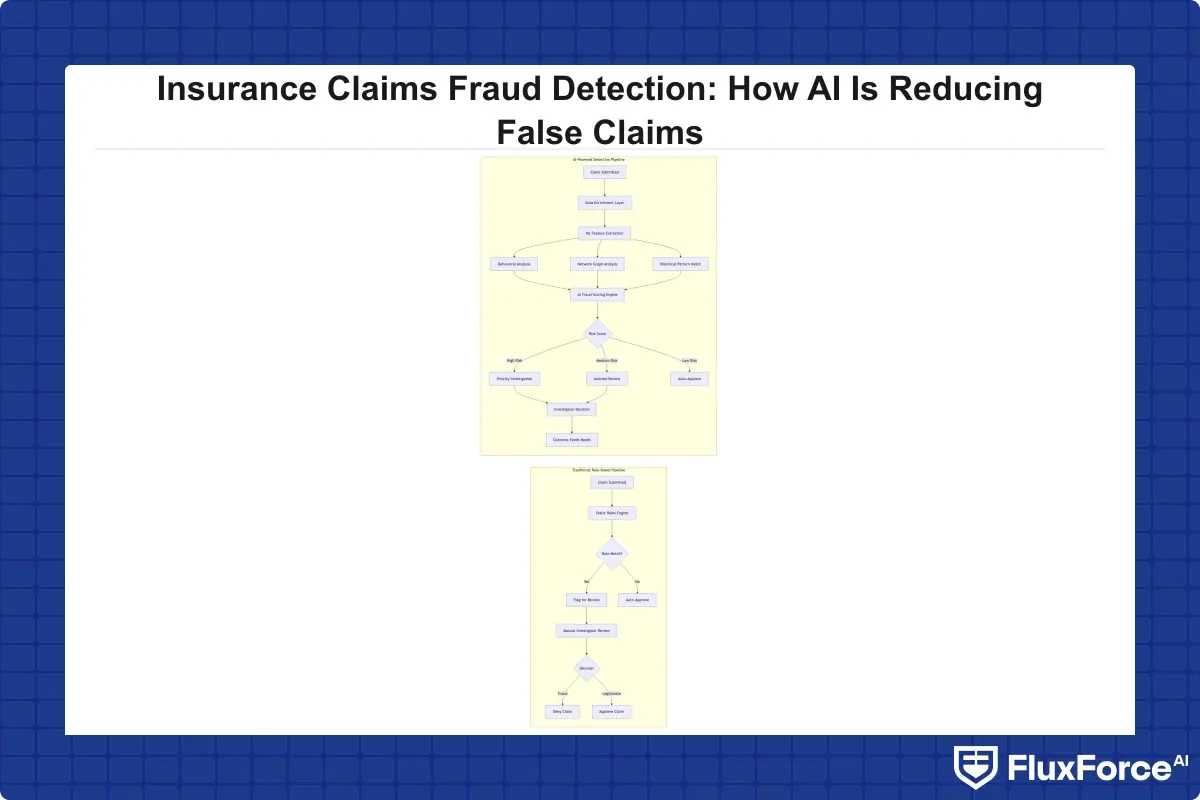
Deploying an advanced link analysis framework requires a structured operational pipeline that integrates smoothly with existing core insurance platforms. The journey from raw intake to final investigative triage involves several distinct technical phases.
- Data Ingestion and Cleansing: Incoming claims data, third-party feeds, and historical databases are ingested via streaming pipelines (such as Apache Kafka), where they undergo schema normalization, deduplication, and anomaly scrubbing.
- Entity Resolution and Disambiguation: The system resolves disparate records into unified entities, creating or updating nodes and edges within the enterprise graph database.
- Feature Engineering and Graph Traversal: Machine learning models traverse the local and global neighborhoods of the newly updated nodes, calculating centrality metrics, community detection scores, and path lengths.
- Scoring and Triage: Risk scoring engines evaluate the structural anomaly scores. Low-risk claims proceed through automated straight-through processing (STP), while high-risk clusters generate prioritized investigative alerts.
- Human-in-the-Loop Investigation: Fraud analysts access interactive visual graph dashboards to explore the flagged clusters, review evidentiary trails, and make final disposition decisions.
Comparing Detection Methodologies
To understand the value proposition of graph-based AI, it is useful to compare it against traditional fraud detection paradigms.
| Detection Paradigm | Core Mechanism | Primary Advantage | Key Limitation |
|---|---|---|---|
| Rule-Based Systems | If/Then statements based on predefined thresholds (e.g., claim filed within 30 days of policy inception). | Highly predictable, easy to audit, low initial computational overhead. | High false-positive rates; easily circumvented by adaptive fraudsters who alter tactics slightly. |
| Supervised Machine Learning | Classification models trained on historical labeled fraud data to predict individual claim risk. | Excellent at catching known fraud patterns and scoring large volumes of transactions quickly. | Struggles with novel, unseen fraud schemes (zero-day fraud) and ignores broader multi-party context. |
| Graph-Based Link Analysis AI | Network topology analysis, community detection, and Graph Neural Networks mapping multi-entity relationships. | Exposes complex, organized rings and synthetic identity networks invisible to isolated data views. | Requires significant data engineering, robust entity resolution, and specialized infrastructure. |
Regulatory, Privacy, and Ethical Considerations
While advanced link analysis provides robust defense capabilities, deploying artificial intelligence in insurance underwriting and claims processing introduces significant regulatory and ethical responsibilities. Carriers must navigate complex compliance frameworks to ensure fair treatment of policyholders.
Data Privacy and Compliance
Aggregating vast amounts of consumer data—including telematics, financial histories, and medical records—raises significant privacy concerns. In many jurisdictions, regulations such as the European Union's General Data Protection Regulation (GDPR) or state-level consumer privacy acts mandate strict data minimization, consent management, and the right to explanation for automated decisions. Insurers must ensure that their graph analytics pipelines anonymize or pseudonymize sensitive personally identifiable information (PII) wherever possible and maintain strict access controls over investigative dashboards.
Mitigating Algorithmic Bias
Graph algorithms can inadvertently perpetuate or amplify historical biases if the underlying training data reflects systemic prejudices in law enforcement reporting or socio-economic profiling. For example, if a specific neighborhood has historically faced higher rates of investigatory scrutiny, models relying on geographic nodes may assign artificially inflated risk scores to innocent policyholders residing in that area. Data science teams must perform rigorous fairness audits, monitoring disparate impact ratios across demographic segments to ensure that algorithmic flags are driven by behavioral anomalies rather than demographic correlations.
Implementation Challenges and Mitigation Strategies
Integrating advanced AI link analysis into legacy insurance architectures presents notable technical and organizational hurdles. Overcoming these challenges requires careful planning and phased execution.
- Legacy System Friction: Many carriers operate on aging mainframe policy administration systems that struggle to support real-time graph traversal. Mitigation: Implement a decoupled microservices architecture with a dedicated graph layer that syncs asynchronously via change data capture (CDC) pipelines.
- Data Silos: Claims data, underwriting data, and billing records often reside in separate silos managed by different business units. Mitigation: Establish a centralized enterprise data lakehouse with unified master data management (MDM) protocols prior to graph deployment.
- Analyst Alert Fatigue: Poorly calibrated models can flood special investigation units (SIUs) with low-confidence alerts, leading to burnout and ignored warnings. Mitigation: Utilize multi-tier scoring thresholds and active learning feedback loops where investigator dispositions continually retrain and refine the underlying models.
Frequently Asked Questions
How does link analysis differ from traditional predictive modeling in insurance fraud?
Traditional predictive modeling evaluates each claim as an independent data point, analyzing attributes like vehicle type, driver age, and loss description. Link analysis examines the relational ecosystem surrounding the claim, mapping connections between people, addresses, phone numbers, and vendors to uncover organized rings that look normal when viewed in isolation.
What types of data formats are required to build a fraud detection graph?
Graph databases ingest structured data (relational tables, CSV exports), semi-structured data (JSON logs, XML policy files), and unstructured data (adjuster notes, police reports, medical narratives parsed via Natural Language Processing). The critical requirement is consistent entity identifiers that allow the system to link records together accurately.
Can link analysis AI operate in real-time during initial claim intake?
Yes. While deep graph neural network training occurs offline or in batch schedules, modern graph engines can perform sub-second sub-graph queries and real-time scoring as new claim records enter the intake portal, flagging suspicious applications before initial reserve funds are allocated.
What is entity resolution, and why is it critical for link analysis?
Entity resolution is the computational process of determining whether two or more records in different databases refer to the exact same real-world entity despite spelling variations, typos, or updated contact details. Without accurate entity resolution, duplicate nodes fragment the network graph, allowing criminal rings to conceal their true scale.
How do insurers prevent false positives from ruining the customer experience?
Insurers mitigate false positives by utilizing layered scoring systems. Instead of automatically denying or aggressively investigating a claim based on a single graph alert, low-to-medium confidence flags are routed to frictionless verification queues or soft-touch reviews, reserving intensive SIU investigations for high-confidence structural anomaly clusters.
Conclusion and Next Actions
Implementing advanced auto insurance fraud detection link analysis artificial intelligence transforms an insurer's defensive posture from reactive isolation to proactive network disruption. By mapping the hidden connections that bind organized fraud rings together, carriers can protect their loss ratios while streamlining legitimate claims processing.
To begin this journey, data science and claims leadership teams should conduct a comprehensive data readiness audit, identify high-leakage product lines for a targeted proof-of-concept pilot, and establish cross-functional governance frameworks that balance analytical power with regulatory compliance.