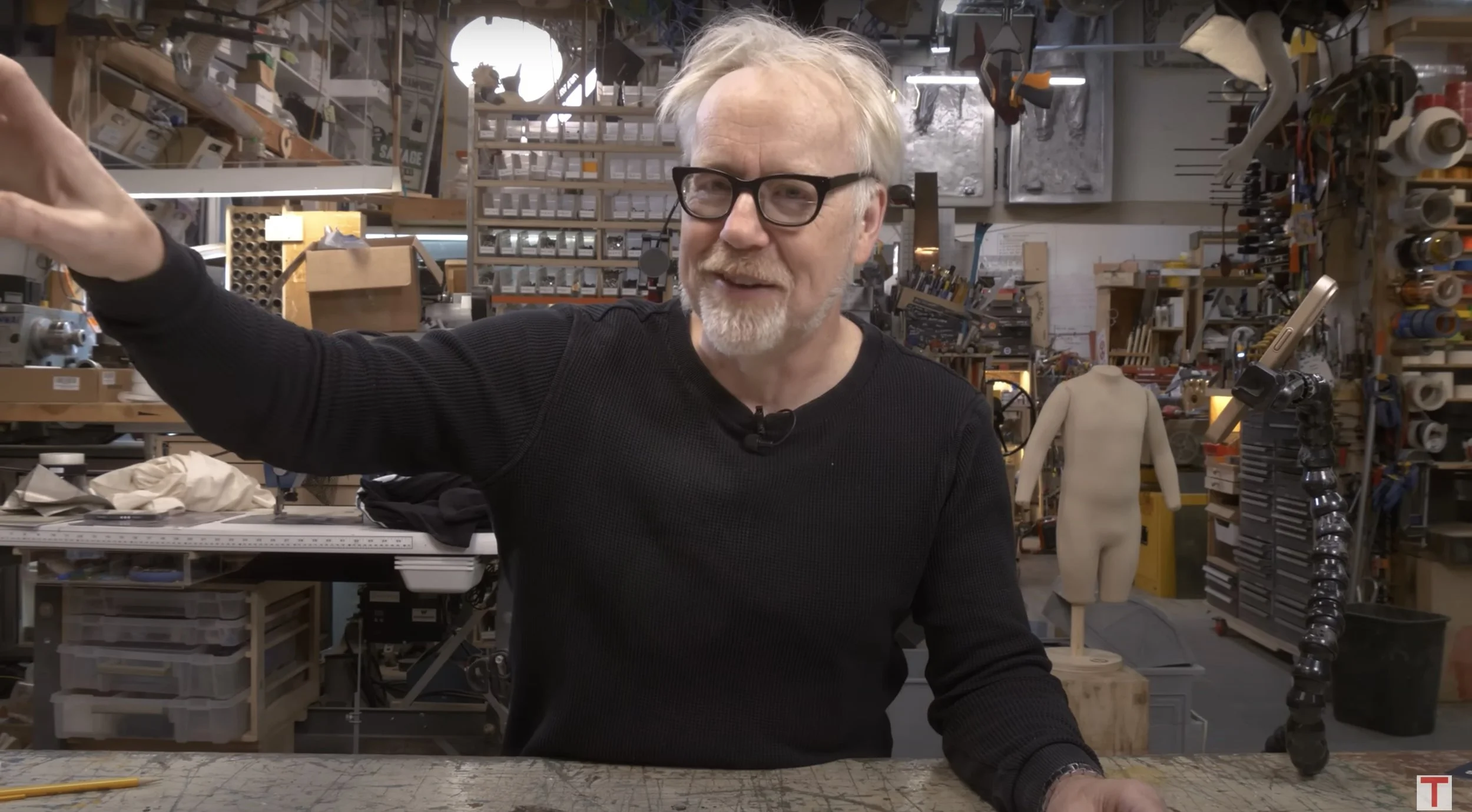
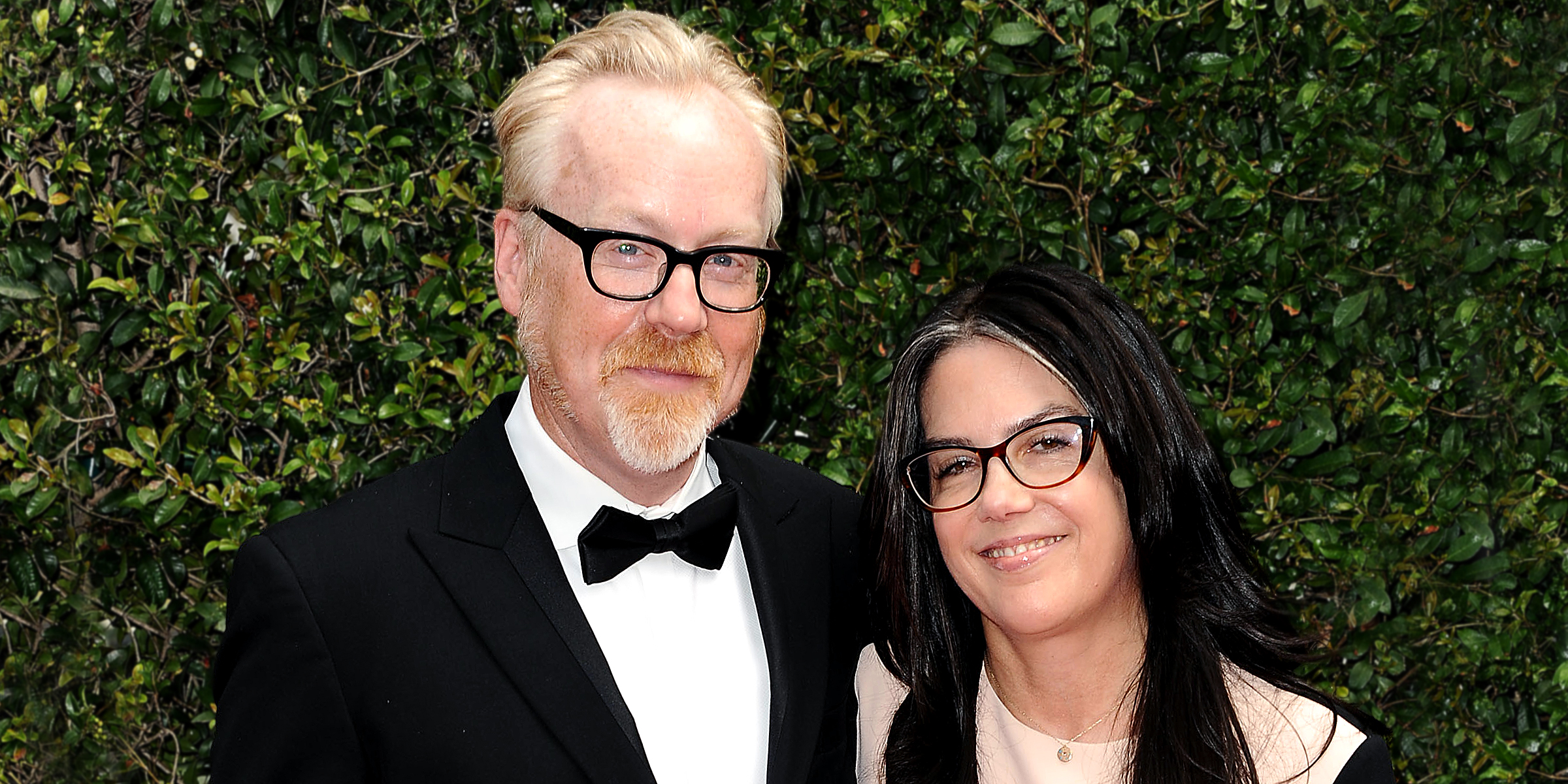
As of 2026, Adam Savage is 59 years old. Born on July 15, 1967, in New York City, he has spent over two decades in the public eye as a maker, industrial designer, and iconic science communicator. His age often serves as a focal point for fans reflecting on the decades of technological evolution he has navigated and documented throughout his prolific career.
Early Life and the Foundations of a Maker
Adam Savage’s journey into the public consciousness did not begin with television, but rather with a lifelong obsession with how things work. Growing up in Westchester County, New York, he was immersed in a creative environment that encouraged technical exploration. His father, Lee Savage, was a painter, filmmaker, and animator, which provided a unique backdrop for young Adam to experiment with various artistic and mechanical mediums.
By his own account, his interest in special effects and physical fabrication was sparked during his childhood, a period he credits as the foundation for the skills he would later display on global television. This early exposure to the intersection of art and engineering set the trajectory for his professional life. Before he was a household name, he worked as a professional model maker in the film industry, contributing to blockbuster productions such as Star Wars: Episode II – Attack of the Clones, The Matrix Reloaded, and The Mummy. His tenure in these workshops provided him with the high-level technical discipline required to troubleshoot complex mechanical problems—a trait that would later define his pedagogical approach to science.
The MythBusters Era: Defining a Career
The most significant chapter in Adam Savage’s career began in 2003 when he was cast as co-host of MythBusters. Alongside Jamie Hyneman, Savage became the face of a program that utilized scientific methodology to test urban legends, movie tropes, and scientific myths. The show’s premise was simple yet revolutionary: demonstrate the scientific method in a way that is entertaining, high-energy, and accessible to viewers of all ages.
During the show's 14-season run, which concluded in 2016, Savage was in his late 30s to late 40s—a prime period for the physical and mental demands of the role. The intensity of MythBusters required not only theoretical knowledge but also extreme fabrication skills. Savage frequently operated high-powered tools, managed pyrotechnics, and engaged in structural testing, all while maintaining a narrative that explained the physics behind the results. His approach to aging—or rather, his transition from a younger, more daring host to a more seasoned, safety-conscious mentor—mirrored the show's own evolution. Over the years, the audience witnessed his shift from pure experimentation to a more philosophical outlook on the importance of curiosity and failure in the creative process.
The Transition to Savage Industries and Tested
Since the conclusion of MythBusters, Savage has successfully leveraged his personal brand to create a decentralized media empire centered on the "maker" community. At 59, his role has shifted significantly from the high-octane environment of television stunts to the thoughtful, reflective content found on his digital platform, Tested.
Tested represents a maturation of the science communication style he helped pioneer. Here, Savage focuses on the "why" and "how" of fabrication, delving into prop building, complex costume design, and deep-dive interviews with experts in various fields. This phase of his career highlights a deep commitment to lifelong learning. By documenting his own building processes—often including mistakes and failures—he provides an educational template that encourages others to pursue their own technical interests. In 2026, he remains an active, hands-on practitioner, proving that his expertise has only deepened with time.
Scientific Communication and the Role of Mentorship
An essential aspect of Adam Savage’s public persona is his role as a bridge between specialized technical knowledge and public interest. As he has aged, his communication style has moved away from the "shock and awe" of explosive testing toward a more nuanced, pedagogical approach.
In his books and public appearances, he frequently discusses the concept of "the maker’s mindset." This philosophy asserts that the age of the individual is less important than their willingness to disassemble objects to understand their internal logic. He argues that scientific literacy is not a static achievement but a continuous process. By treating every project—whether it is a complex space suit replica or a simple household gadget—as an opportunity for exploration, he has maintained a level of engagement that transcends traditional celebrity.
Table: Key Milestones in the Career of Adam Savage
| Era | Focus | Primary Medium | Key Contribution |
|---|---|---|---|
| 1990s | Special Effects | Film Production | Model making for major motion pictures |
| 2003–2016 | Scientific Testing | Television | MythBusters and science communication |
| 2017–Present | Maker Culture | Digital/Web | Tested platform and independent media |
| Ongoing | Education/Writing | Books & Live Events | Advocacy for STEAM and maker literacy |
Challenges of Sustained Public Scrutiny
Living one’s life in the public eye for over two decades introduces unique challenges. For figures like Savage, the public’s perception of his age often becomes a commentary on the endurance of a specific brand of television science.
When people ask about "Adam Savage’s age," it is often an implicit acknowledgement of a sense of shared time. Many viewers grew up watching him and have matured alongside him. Maintaining a reputation for accuracy and safety in the realm of high-risk experimentation requires a level of consistency that is difficult to sustain. Savage has navigated this by pivoting toward content that relies less on physical risk and more on intellectual rigor and community building. This evolution has allowed him to avoid the pitfalls of being "stuck" in his most famous persona, effectively allowing his professional output to age gracefully alongside him.
Scientific Literacy in the Modern Era
In 2026, the demand for clear, objective science communication is arguably higher than ever. Savage has positioned himself as an advocate for the integration of technology and the humanities, often referred to as STEAM (Science, Technology, Engineering, Arts, and Math).
His work today focuses on the democratization of high-end tools. With the rise of accessible 3D printing, laser cutting, and CNC machining, the barriers to entry for makers have lowered significantly. Savage uses his platforms to highlight these advancements, showing that his expertise is not just about historical knowledge, but about staying at the bleeding edge of available technology. This forward-looking stance ensures that his relevance remains tied to his contributions rather than his chronological age.
Frequently Asked Questions
How does Adam Savage keep his skills sharp?
Adam Savage maintains his technical proficiency through constant daily practice. He treats his studio as a laboratory, where he takes on projects that push him into unfamiliar territory, such as new software, unique material science, or novel assembly techniques. By challenging himself to "fail forward," he ensures his skills remain relevant in a rapidly changing technical landscape.
Is Adam Savage still involved with scientific television?
While he is no longer hosting MythBusters, he remains an active participant in media. His involvement has shifted to long-form digital content, documentaries, and collaborative projects that prioritize deep-dive educational experiences over the episodic, stunt-based television format of the early 2000s.
What is the most important lesson in Adam Savage’s books?
A central theme in his work, such as Every Tool’s a Hammer, is the idea that the process of making is a legitimate form of thinking. He teaches that through the manual manipulation of physical objects, we gain a deeper cognitive understanding of the world, regardless of one's background or formal education.
How has the "maker movement" changed since he started?
When Savage began his career, specialized fabrication was largely restricted to professional film shops. Today, the movement has become decentralized and global, thanks to the internet and affordable desktop manufacturing tools. Savage has played a pivotal role in this shift by documenting his workflow, making professional-grade techniques accessible to the average hobbyist.
Does Adam Savage offer advice for aspiring science communicators?
His primary advice is to lead with curiosity rather than authority. He suggests that the most effective communication happens when the host is genuinely learning alongside the audience. By being transparent about what he does not know, he creates an inclusive environment that encourages viewers to engage with complex topics without fear of judgment.
Final Recommendations for Aspiring Makers
If you are looking to emulate the career path or the technical mindset of Adam Savage, the most effective next step is to initiate your own project-based learning. Do not wait for specialized tools or a professional workshop; start by identifying a mechanical or creative problem in your immediate environment and commit to solving it using the resources currently available to you.
Document your process—even the failures—as this is where the most significant learning occurs. Whether through digital documentation or personal journaling, capturing your methodology allows you to reflect on your progress and refine your skills over time. By focusing on the consistency of your output and the depth of your research, you can build a sustainable practice that evolves as you do, mirroring the lifelong dedication to inquiry that has defined Adam Savage’s career.