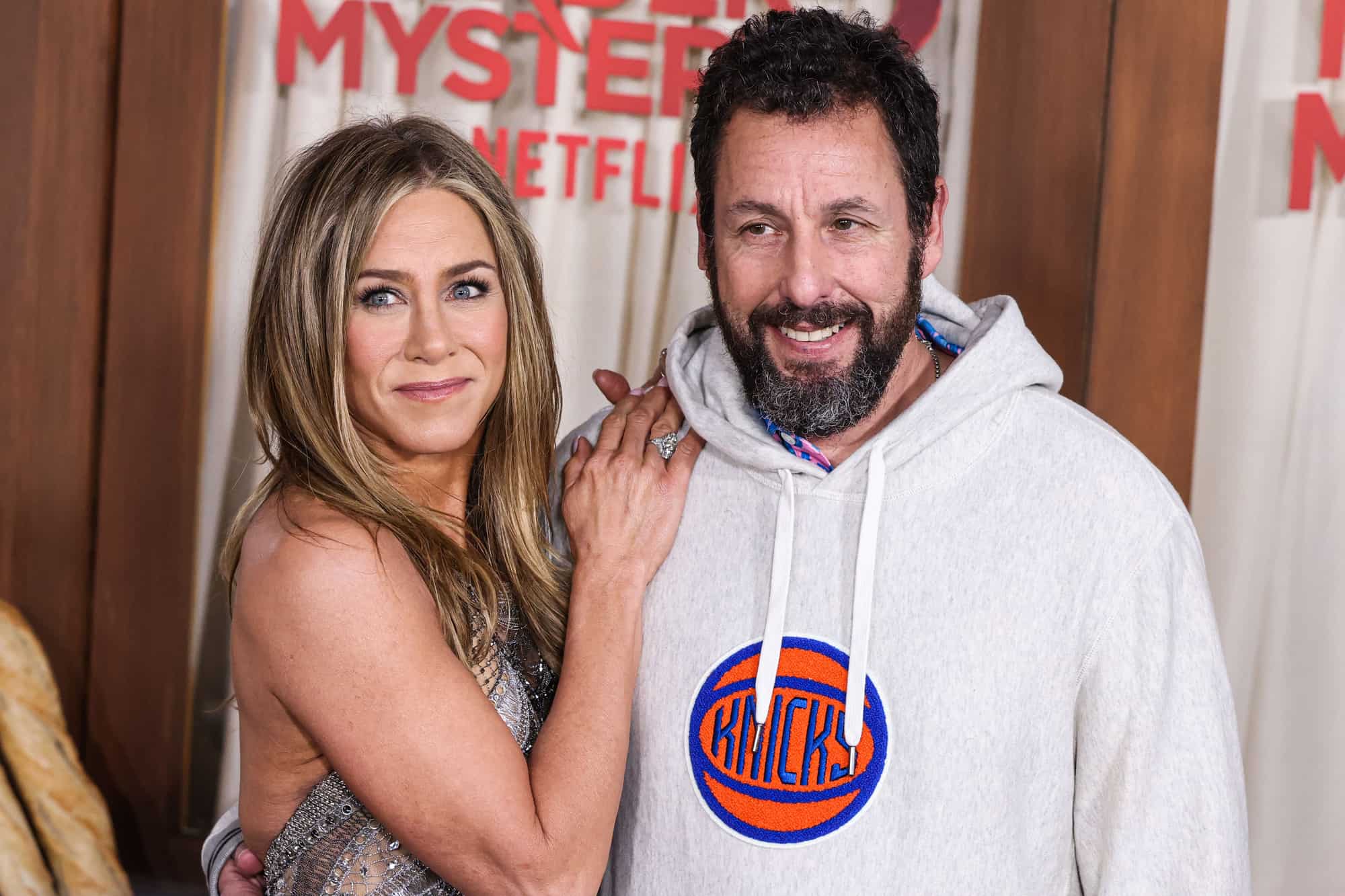
Adam Sandler’s estimated net worth is approximately $440 million. The actor, comedian, writer, and producer built his fortune through high upfront movie salaries, lucrative backend gross-profit agreements, his production company Happy Madison Productions, a multi-million-dollar real estate portfolio, and landmark distribution contracts with Netflix worth hundreds of millions of dollars.
Financial Snapshot: Understanding Adam Sandler's Wealth
Adam Sandler consistently ranks among the highest-paid actors and media executives in the global entertainment industry. Over a career spanning more than three decades, Sandler transformed his early success as a stand-up comedian and sketch writer into an enduring business enterprise.
Unlike many actors who rely solely on performance fees, Sandler established an ecosystem where he retains creative oversight, production fees, and distribution profits.
- ESTIMATED NET WORTH: ~$440M
- Film Salaries & Backends (1995–Present)
- Happy Madison Productions (Est. 1999)
- Netflix Deals & Streaming (2014–Present)
- Real Estate & Assets ($50M+ Portfolio)
Financial Disclaimer: Net worth estimates are derived from public disclosures, studio reporting, tax assessments, real estate registry data, and financial analysis. Figures represent gross asset valuations less known liabilities and should be viewed as calculated estimates rather than absolute audit values.
The Early Years: SNL and First Breakout Deals
Sandler began his career on the comedy club circuit before being discovered by Dennis Miller, who recommended him to Saturday Night Live (SNL) producer Lorne Michaels. Sandler joined SNL in 1990 as a writer, quickly transitioning to a featured cast member by 1991.
During his five-season run on Saturday Night Live, Sandler’s cast earnings fit the standard NBC salary scale for new talent:
- Starting Cast Salary: Approximately $5,000 to $8,000 per episode.
- Peak SNL Salary: Reaching roughly $25,000 per episode by his final seasons.
While his SNL salary provided financial stability, his departure from the show in 1995 marked the true acceleration of his net worth. His transition to feature films delivered immediate commercial victories that established his leverage with major Hollywood studios.
- [1990–1995] SNL Cast Member
- ~$5K–$25K / episode
- [1995–1996] Breakout Films
- Billy Madison ($26M BO)
- Happy Gilmore ($41M BO)
- [1998] "The Waterboy"
- $161M Global Box Office
- $20M Base Salary Era Begins
The $20 Million Club: Traditional Box Office Era
By the late 1990s, Sandler entered an elite group of Hollywood stars capable of commanding a $20 million upfront base salary per film, alongside "first-dollar gross" backend points. First-dollar gross means the actor receives a agreed-upon percentage of the studio's revenues from day one of release, before the studio deducts marketing or production expenses.
Key Financial Milestones in Sandler's Studio Era
- Billy Madison (1995) & Happy Gilmore (1996): Produced on modest budgets ($10 million to $12 million), these films generated $26 million and $41 million at the global box office, proving his viability as a leading man.
- The Waterboy (1998): Made for $23 million, the film grossed over $185 million worldwide. Sandler’s deal included substantial backend compensation, pushing his total payout for the project beyond $20 million.
- Big Daddy (1999): Grossing $234 million globally against a $34 million budget, Big Daddy solidified Sandler's status as a dependable box office draw, earning him roughly $8 million upfront plus a large slice of theatrical profits.
- Anger Management (2003): Sandler negotiated a $25 million upfront fee plus 25% of the gross profits, resulting in a total payout estimated at over $60 million for a single film.
Throughout the 2000s, hits such as Click (2006), I Now Pronounce You Chuck & Larry (2007), Grown Ups (2010), and Grown Ups 2 (2013) repeatedly crossed the $100 million domestic theatrical mark. This string of box-office hits generated hundreds of millions in cumulative gross earnings for Sandler long before streaming became the dominant revenue model.
Happy Madison Productions: Vertical Integration
In 1999, Sandler founded Happy Madison Productions, taking its name from two of his early flagship films. Establishing his own production company allowed Sandler to transition from an hired performer into an executive who controls production budgets, licensing fees, and syndication rights.
- Happy Madison Productions
- Sandler Starring Vehicles
- High upfront talent fees
- Executive producer overhead
- Retained IP & backend rights
- Ensemble & Partner Projects
- Executive producer fees
- Studio overhead allowances
- Low-risk production margins
- Sandler Starring Vehicles
Strategic Benefits of Happy Madison
- Dual Income Streams: For films he stars in, Sandler collects both his primary acting salary and executive producer fees paid directly to Happy Madison.
- Roster Projects: The company produces films starring Sandler’s long-time friends and collaborators (such as Kevin James, David Spade, and Rob Schneider), including Paul Blart: Mall Cop and The Benchwarmers. These titles produced high returns on low production budgets, generating steady overhead fees for Happy Madison.
- Control of Production Costs: By keeping production within his own infrastructure, Sandler controls locations, crew hiring, and scheduling, preserving maximum capital within his operational ecosystem.
The Netflix Era: Transforming Streaming Finance
In October 2014, Sandler altered the financial landscape for mid-budget film comedies by signing a historic, exclusive four-film distribution deal with Netflix, estimated to be worth $250 million. At the time, theatrical comedy box office returns were declining across the industry, making the guaranteed funding model of direct-to-streaming highly attractive.
- 2014 Contract: Initial 4-Film Streaming Deal — Est. $250 Million
- 2017 Renewal: Extended 4-Film Streaming Deal — Est. $250 Million
- 2020 Renewal: Extended 4-Film Streaming + Film/TV Rights Deal — Est. $275 Million
Key Netflix Contracts Breakdown
- The 2014 Initial Deal: Netflix funded four original films starring Sandler (The Ridiculous 6, The Do-Over, Sandy Wexler, and The Week Of). Netflix paid Happy Madison upfront buyout fees that accounted for expected global viewership, eliminating theatrical distribution risks.
- The 2017 Extension: Following high viewership figures—Netflix disclosed that subscribers had logged over half a billion hours watching Sandler films by 2017—the streaming giant renewed the partnership for four additional titles, including Murder Mystery co-starring Jennifer Aniston.
- The 2020 Major Renewal: In early 2020, Netflix extended the deal once again, committing an estimated $275 million for four more movies, including Hubie Halloween, Hustle, and Leave the World Behind (as executive producer).
The financial mechanism of streaming buyout contracts differs from traditional backend deals: rather than receiving uncertain box office royalties over time, Sandler secures guaranteed, fully funded budgets and substantial producer/actor payouts upfront.
Real Estate Holdings and Asset Portfolio
Sandler has allocated a significant portion of his earnings into high-end residential real estate, predominantly in Southern California and Florida. His combined real estate portfolio is conservatively valued between $50 million and $60 million.
| Property Location | Year Acquired | Estimated Market Value |
|---|---|---|
| Pacific Palisades Main Estate | 2004 | $28M – $35M |
| Pacific Palisades Secondary Home | 2022 | $4.1M |
| Malibu Oceanfront Residence | 2001 | $10M – $12M |
| Boca Raton Condominiums | Various | $3M – $5M |
Prime Properties
- Pacific Palisades Primary Estate: In 2004, Sandler purchased a 12,000-square-foot mansion in the Pacific Palisades neighborhood of Los Angeles from actors Goldie Hawn and Kurt Russell for $12 million. Ongoing upgrades and rising market values in the area have pushed the property's value well past $28 million.
- Pacific Palisades Adjacent Residence: Sandler purchased a neighboring property for approximately $4.1 million to expand his local land holdings and maintain privacy.
- Malibu Oceanfront Property: Acquired in 2001 for around $3.1 million, this beachfront cottage sits on exclusive Malibu coast land, significantly increasing its value over time.
- Boca Raton Real Estate: Sandler purchased residential units in Boca Raton, Florida, primarily for extended family members.
Auxiliary Revenue Sources: Live Comedy, Voice Acting, and Licensing
While feature films form the core of Sandler's fortune, secondary income streams generate tens of millions in supplemental cash flow.
- Auxiliary Income Streams
- Animated Movies (Hotel Transyl.)
- Arena Stand-Up Comedy Tours
- Catalog Sync & Music Royalties
1. Animated Franchises (Hotel Transylvania)
Sandler voiced the lead character, Dracula, in the first three installments of Sony Pictures Animation’s Hotel Transylvania franchise. The trilogy grossed over $1.3 billion globally. Sandler received upfront voice talent fees, executive producer compensation, and box office bonuses, earning an estimated $40 million to $50 million across the three films.
2. Stand-Up Comedy Tours
Sandler regularly returns to live stand-up comedy, performing short, high-grossing arena tours. Unlike traditional film sets, arena comedy tours carry low production expenses relative to ticket prices. Top-tier comedy acts running multi-city arena tours can gross between $300,000 and $1 million per night, providing high profit margins directly to the artist.
3. Music and Syndication Royalties
Sandler's early comedy albums (They're All Gonna Laugh at You! and What the Hell Happened to Me?) achieved multi-platinum RIAA certifications. His musical comedy catalog, alongside long-term cable syndication rights for classic 1990s and 2000s films, continues to generate residual royalties.
Detailed Breakdown: Sandler’s Primary Revenue Streams
The following table summarizes the structural mechanics, historical returns, and current status of Sandler's major revenue channels.
| Revenue Category | Primary Era | Operational Structure | Estimated Value / Historic Return | Financial Risk Level |
|---|---|---|---|---|
| Traditional Studio Salaries | 1995–2014 | $20M upfront base + 20% first-dollar gross profits | $20M–$60M per major studio release | Medium (dependent on box office) |
| Netflix Distribution Contracts | 2014–Present | Exclusive multi-picture production buyouts | $250M (2014), $250M (2017), $275M (2020) | Very Low (guaranteed corporate payouts) |
| Happy Madison Overhead & Profits | 1999–Present | Producer fees, crew/overhead allocations, IP ownership | Tens of millions in cumulative annual profit | Low (spread across studio/partner budgets) |
| Real Estate Portfolio | 2001–Present | Direct equity investment in primary coastal markets | $50M+ aggregate property valuation | Very Low (long-term real estate holdings) |
| Voice Acting & Animation | 2012–2018 | Direct salary + backend residuals (Hotel Transylvania) | $40M–$50M total across franchise | Low (studio-backed animation) |
| Live Stand-Up & Tour Earnings | Ongoing | Direct ticket revenue, arena sales, live special licensing | $300K–$1M+ per major market performance | Low (minimal overhead cost) |
Business Strategy: How Sandler Built Long-Term Financial Security
Analyzing Sandler's career reveals several strategic decisions that protected and built his net worth over three decades:
SANDLER'S WEALTH RETENTION MODEL
- Creative Ownership: Production via Happy Madison limits third-party margins.
- Direct Distribution: Shifted early to streaming before comedy box office fell.
- Collaborative Network: Casts recurring friends, reducing talent overhead costs.
- High Capital Retention: Reinvested stable liquid cash into real estate.
1. High Equity and Backend Participation
Rather than accepting fixed salary offers, Sandler consistently negotiated backend participation during his peak box office period. By taking a percentage of first-dollar gross profits, he capitalized directly on the commercial success of hits like The Waterboy and Anger Management.
2. Early Adaptation to Market Shifts
When mid-budget studio comedies began losing theatrical ground to superhero franchises and international action blockbusters in the early 2010s, Sandler shifted his primary distribution model to streaming services. Securing guaranteed funding from Netflix protected his company from theatrical losses while guaranteeing high personal compensation.
3. Reinvestment in Tangible Real Estate
By allocating profits into high-demand California coastal real estate, Sandler built a secondary reserve of tangible wealth, protecting his assets against market volatility in the entertainment industry.
Frequently Asked Questions
What is Adam Sandler's total net worth?
Adam Sandler’s net worth is estimated at approximately $440 million. His wealth is derived primarily from feature film payouts, distribution contracts with Netflix, ownership of Happy Madison Productions, and real estate investments.
How much does Adam Sandler make per film?
During his peak theatrical era, Sandler earned a base salary of $20 million per film, plus up to 20–25% of backend gross profits. Under his exclusive Netflix arrangement, his earnings are structured as part of multi-film contracts valued at tens of millions per project.
How much is Adam Sandler's deal with Netflix worth?
Sandler’s partnership with Netflix has involved three major deal cycles: an initial four-film deal in 2014 worth approximately $250 million, an extension in 2017 for a similar amount, and a 2020 extension estimated at $275 million. Combined, these production deals total over $775 million in contractual commitments to Sandler and his production outfit.
Does Adam Sandler own his movies through Happy Madison?
Happy Madison Productions produces his film projects, allowing Sandler to collect executive producer fees, retain creative control, and maintain overhead allowances. However, ultimate master distribution rights are typically owned by the financing studios or streaming networks funding the project (such as Netflix or Sony Pictures).
What is Adam Sandler's most profitable movie?
In terms of traditional theatrical payouts, Anger Management (2003) stands out as one of Sandler's lucrative arrangements. He received a $25 million upfront salary plus 25% of the gross revenues, resulting in a total personal payout estimated at over $60 million.
Core Takeaways for Financial Analysts and Industry Observers
Understanding Adam Sandler's wealth accumulation offers valuable insights into Hollywood finance and individual brand management:
- Prioritize Ownership Over Single Paychecks: Establishing Happy Madison Productions allowed Sandler to generate income as both an executive producer and an actor, capturing revenue at multiple points in the production cycle.
- Identify Market Transitions Early: Sandler's shift to streaming distribution in 2014 secured long-term funding right as traditional mid-budget comedy theatrical box office receipts began to contract.
- Diversify into Low-Risk Assets: Reinvesting liquid earnings into prime residential real estate provided capital preservation independent of film industry trends.