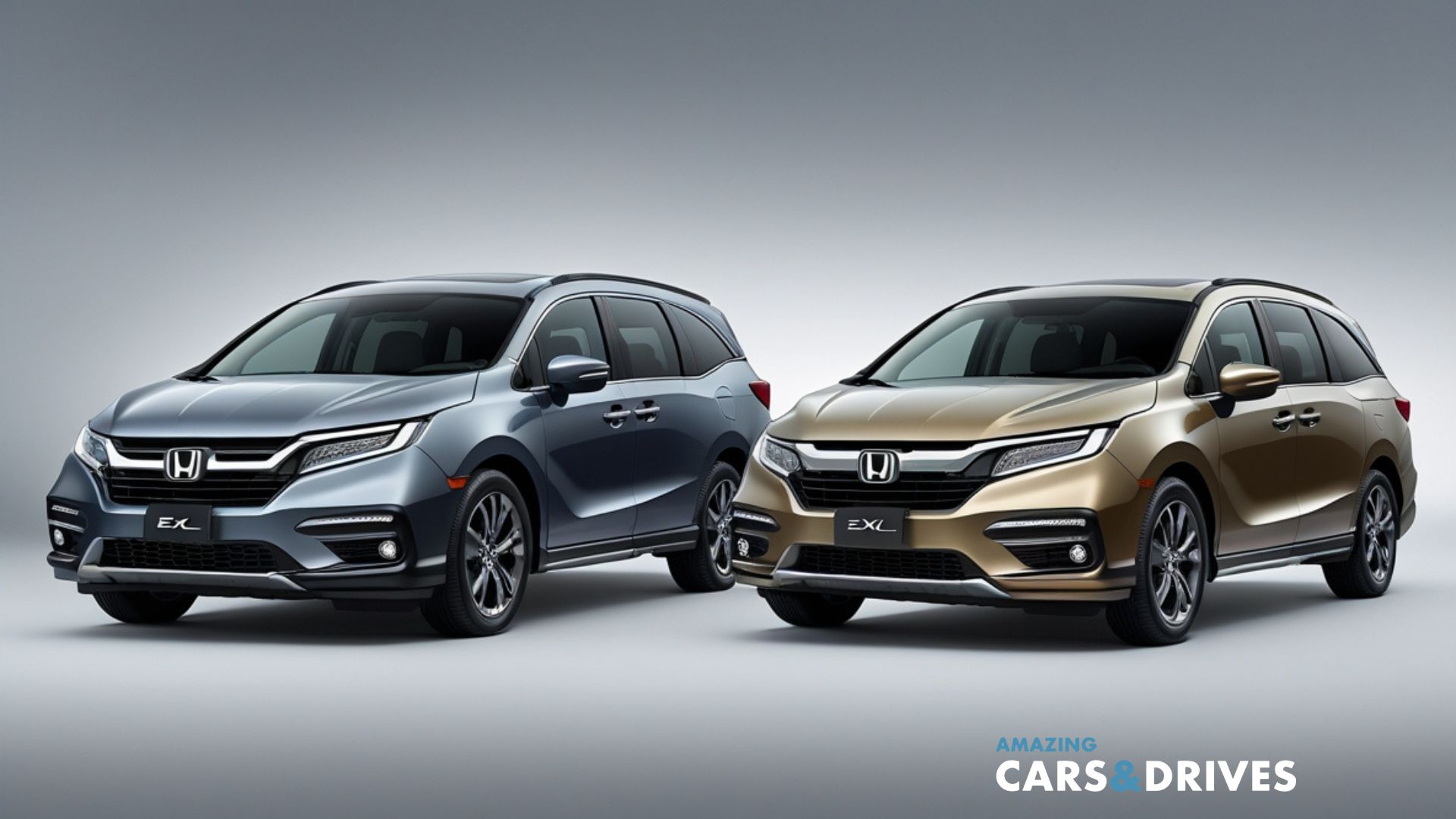
Choosing between the Honda Accord Touring and the EX-L requires evaluating your priorities regarding integrated technology, premium interior amenities, and long-term value. While the EX-L serves as a sophisticated, feature-rich trim focusing on comfort, the Touring represents the pinnacle of the lineup, incorporating exclusive digital interfaces and advanced acoustic refinements designed for maximum driver convenience.
The Role of Trim Levels in the Honda Accord Ecosystem
In the 2026 Honda Accord lineup, the distinction between the EX-L and the Touring is rooted in the manufacturer's philosophy of balancing accessible luxury with high-end technological integration. The EX-L has historically functioned as the "luxury-lite" bridge, offering leather-trimmed interiors and significant creature comforts without the added cost of the flagship-level digital infrastructure.
The Touring trim, conversely, acts as the showcase for Honda’s most advanced software and hardware implementations. When comparing these two, it is essential to understand that both vehicles share the same foundational chassis, powertrain options, and primary safety architecture. The disparity lies almost entirely in the "lived-in" experience—how the car feels to touch, how the infotainment system manages your digital life, and how effectively the cabin isolates the driver from external road noise.
Performance Foundations and Powertrain Parity
A common misconception among prospective buyers is that the higher trim level implies a more powerful engine. For the current generation of the Honda Accord, the EX-L and the Touring share the same hybridized powertrain architecture. You are not choosing between engine outputs or suspension stiffness, as both trims prioritize the efficiency and linear power delivery of the hybrid system.
The performance experience is effectively identical. Both vehicles utilize the same electronic continuously variable transmission (eCVT) and regenerative braking systems. If your primary motivation for selecting a trim is mechanical performance, you may find that the financial delta between the EX-L and the Touring is better allocated toward optional dealer-installed accessories or extended protection plans, as the kinetic driving experience remains consistent across these two top-tier trims.
Interior Appointments and Comfort Metrics
The interior is where the divergence between the EX-L and the Touring becomes tactile. The EX-L is designed for the driver who values durability and traditional comfort. You receive high-quality leather-trimmed seating, power-adjustable configurations, and sufficient acoustic dampening for highway commuting. It is a mature, restrained cabin environment that emphasizes ergonomics over flair.
The Touring trim elevates this environment through the addition of specialized acoustic glass, intended to minimize wind and road noise, and premium audio integration. Furthermore, the seating materials in the Touring often feature more nuanced ventilation or heating configurations that go beyond the standard offerings found in the EX-L. If you spend upwards of an hour in your vehicle daily, the acoustic isolation and seat-comfort features of the Touring are the primary value-adds that justify the premium price tag.
Infotainment and Digital Interface Disparities
The most significant technical difference between these two trims involves the center console and the digital driver information interface. Honda reserves its most robust infotainment suites for the Touring trim. While the EX-L provides a highly capable system—complete with essential smartphone integration, navigation, and intuitive menu structures—the Touring often integrates proprietary digital services and more sophisticated voice-recognition hardware.
When evaluating the Touring, consider whether you rely on built-in native applications or if you prefer to project your smartphone via wireless interfaces. If you are a "power user" who wants the vehicle’s operating system to handle complex tasks like over-the-air updates, advanced telematics, and seamless cloud connectivity, the Touring is engineered to support these workflows more effectively. The EX-L provides a streamlined experience that is less prone to the complexity of a fully integrated digital ecosystem, which some drivers find more reliable and user-friendly in the long term.
Comparative Feature Matrix
The following table highlights the core differences that typically define the user experience between these two trim levels.
| Feature Category | EX-L Trim | Touring Trim |
|---|---|---|
| Audio System | Standard Premium Audio | Bose Premium Sound System |
| Acoustic Glass | Standard | Enhanced Acoustic Glass |
| Connectivity | Standard Wireless Integration | Native App Suite & Advanced Telematics |
| Interior Materials | Leather-Trimmed | High-Grade Leather/Premium Accents |
| Climate Comfort | Heated Front Seats | Heated & Ventilated Front Seats |
| Primary Value | Best Cost-to-Feature Ratio | Maximum Technological Integration |
Cost-of-Ownership and Long-Term Value
When calculating the total cost of ownership for a 2026 Honda Accord, depreciation and maintenance are key factors. The EX-L, by virtue of having fewer high-end electronic components, may theoretically have a slightly lower long-term maintenance cost. Sophisticated infotainment systems and advanced acoustic dampening hardware are complex to repair outside of the original warranty period.
The Touring, however, often maintains a specific appeal in the secondary market due to its "fully loaded" status. Buyers looking for used vehicles years down the line often prioritize the top-tier trim because it contains the features they perceive as "future-proof," such as the premium audio and advanced driver-assist configurations. If you intend to trade in your vehicle within 3–5 years, the resale value of the Touring generally absorbs a significant portion of its initial price premium.
Safety and Driver Assistance Technology
Both the EX-L and the Touring are built upon the same safety framework, which includes the full suite of Honda’s collision mitigation and driver-assist technologies. From lane-keeping assist to adaptive cruise control, you will find no compromise in safety regardless of your trim choice.
The difference in the Touring trim is usually found in the utility of these systems—such as higher-resolution camera feeds, more nuanced parking sensors, or heads-up display integration. These features do not make the car "safer" in a crash-test sense, but they provide a higher degree of situational awareness for the driver, which can reduce fatigue and assist in navigating tight urban environments.
Practical Considerations for the Daily Driver
Before finalizing your decision, consider your specific daily requirements. Ask yourself the following questions:
- What is my primary commute profile? If you drive long distances on highways, the acoustic glass in the Touring is a tangible quality-of-life improvement.
- How much do I value high-fidelity audio? The gap between the standard premium audio in the EX-L and the Bose-engineered system in the Touring is significant for audiophiles.
- Am I comfortable with high-tech interfaces? If you find complex digital dashboards overwhelming, the slightly simpler interface of the EX-L may actually result in a more pleasant daily ownership experience.
- Does the climate in my region justify ventilation? If you live in an area with extreme summer temperatures, the ventilated seats in the Touring can be a deciding factor that the EX-L simply cannot match.
Common Mistakes When Comparing Trims
The most common error buyers make is assuming that the top trim is objectively "better." In reality, a trim is only better if it aligns with your specific usage patterns. Do not pay for advanced telematics or complex digital services if your habits revolve around simple Bluetooth audio and standard navigation.
Another mistake is neglecting to account for the insurance implications. Higher-trim vehicles with more advanced electronic sensors and premium cabin components can sometimes command higher insurance premiums. Before settling on the Touring, it is prudent to check with your insurance provider to see if the increased replacement value of the vehicle hardware significantly impacts your monthly rates.
Final Recommendation
If your budget allows and you prioritize the absolute best in sound quality, acoustic comfort, and the latest in cabin technology, the Touring is the logical choice. It provides a cohesive, premium experience that feels like a flagship product. However, if you are looking for the "sweet spot" of the Accord lineup—where you receive all the essential luxury features like leather seating, power-adjustable comforts, and high-efficiency hybrid performance without paying for the technological complexity of the Touring—the EX-L offers a more balanced value proposition.
Evaluate your needs based on the time spent in the driver's seat. If that time is a significant portion of your day, the Touring’s refinements are worth the investment. If the vehicle is primarily a tool for reliable transportation, the EX-L will provide everything you need without the additional complexity.
FAQ
Does the Accord Touring have a different engine than the EX-L? No, both the EX-L and the Touring share the same hybridized powertrain. Performance metrics, including horsepower and torque, are identical across both trims.
Is the audio system quality noticeably different? Yes, the Touring trim features a premium Bose sound system specifically tuned for the vehicle's interior, offering superior clarity and range compared to the standard premium system found in the EX-L.
Do both trims include the same safety features? Yes, both trims include the full Honda Sensing suite of driver-assist technologies. You do not sacrifice core safety features by opting for the EX-L.
Which trim has better resale value? The Touring trim typically holds a higher dollar value on the secondary market due to its status as the top-of-the-line model, though the EX-L often depreciates at a slightly slower rate in terms of percentage.
Are the leather seats different between the two? While both utilize high-quality leather, the Touring often includes additional functional enhancements, such as ventilation, which provides a significant comfort difference in warmer climates.