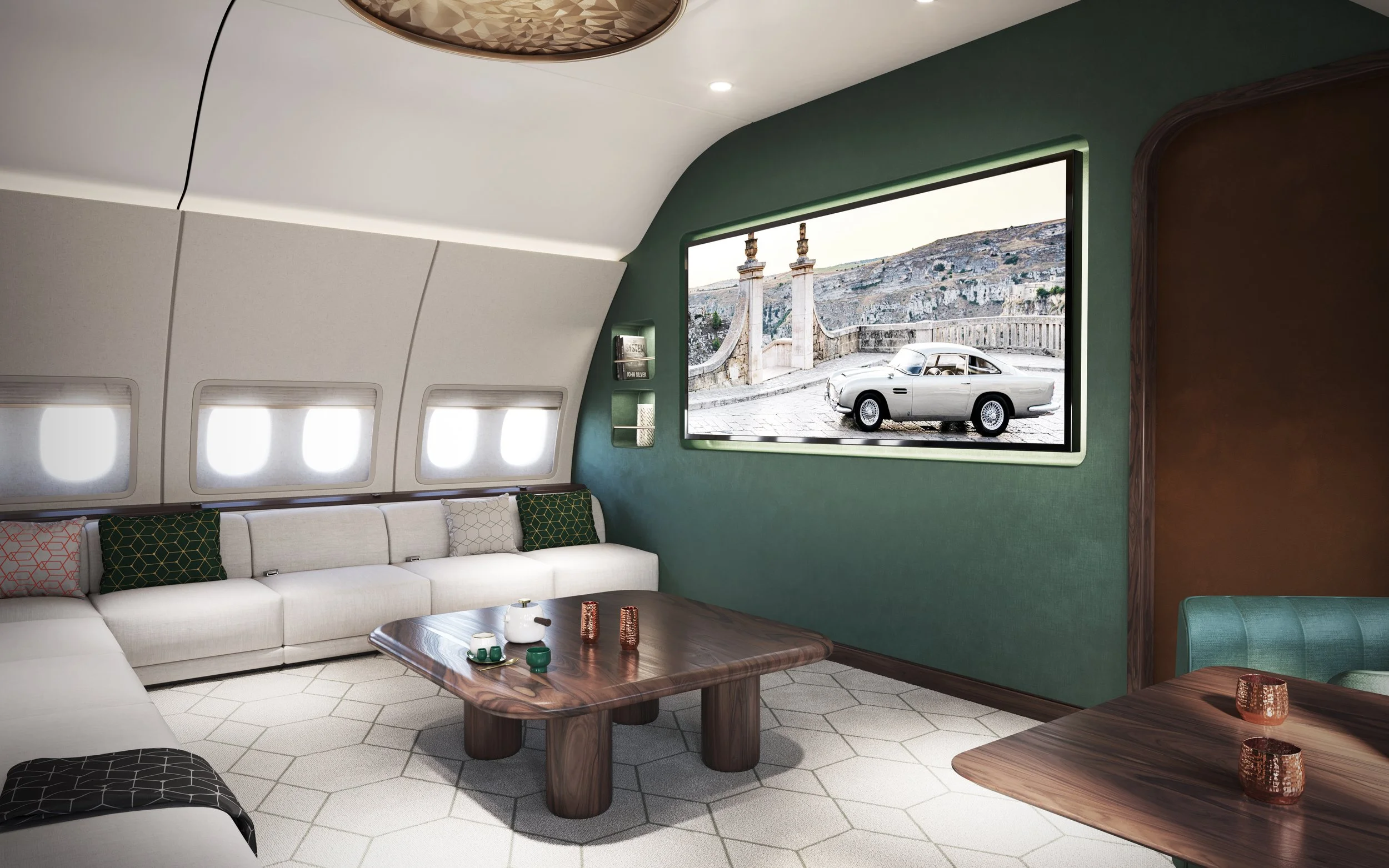
When discussing the baseline figures behind ultra-long-range luxury travel, the baseline acquisition and outfitting costs associated with widebody commercial airliners converted into VIP transports captivate aviation enthusiasts and prospective buyers alike. While a base Boeing 787-8 Dreamliner carries a list price starting around $239 million according to historical manufacturer catalog listings, purchasing a commercial airliner for private use represents only the first step in a complex, multi-year financial commitment. Transforming a massive commercial transport into a private sanctuary requires specialized modifications, bespoke interior completions, and rigorous regulatory compliance that can easily double or triple the initial capital outlay.
To understand the true scope of a private Boeing 787, one must look far beyond the sticker price. This comprehensive analysis breaks down the baseline acquisition costs, the staggering realities of VIP interior completions, ongoing operational expenditures, and how the Dreamliner compares to other elite private jets on the global market.
The Foundation: Understanding the $239 Million Baseline Price
The figure of $239 million frequently associated with a private 787 Dreamliner stems from historical manufacturer list prices for the Boeing 787-8, the smallest variant in the Dreamliner family. In commercial aviation, list prices represent the baseline cost of a "green" aircraft—an airplane delivered directly from the factory with standard flight decks, engines, and primary systems, but completely devoid of passenger seating, interior paneling, galleys, entertainment systems, and custom avionics.
When a high-net-worth individual, corporate entity, or head of state acquires a Dreamliner through Boeing Business Jets (BBJ) or via the secondary pre-owned market, they are purchasing a blank aerodynamic canvas. The $239 million baseline covers:
- The structural airframe, predominantly constructed from advanced composite materials.
- Next-generation turbofan engines (either General Electric GEnx-1B or Rolls-Royce Trent 1000).
- Advanced flight deck avionics and fly-by-wire control systems.
- Basic environmental control systems designed for commercial passenger densities, which must later be re-engineered for lower cabin altitudes.
However, no buyer ever takes delivery of a $239 million green aircraft and flies it away. The aircraft must immediately be ferried to a specialized completion center—such as Jet Aviation, Lufthansa Technik, or AMAC Aerospace—where it undergoes an extensive transformation process.
The True Cost of Completion: Interiors, Engineering, and Certification
While the airframe acquisition cost is substantial, the VIP interior completion often represents the most financially demanding and time-consuming phase of owning a widebody private jet. Fitting a massive cabin measuring roughly 2,400 square feet requires architectural precision, engineering certification, and FAA or EASA regulatory approvals.
Interior Design and Materials
A custom VIP interior for a Boeing 787 can easily cost between $100 million and $150 million, depending on the complexity and exclusivity of the materials. Unlike narrowbody business jets like a Gulfstream or Bombardier, a widebody aircraft allows for multi-zone configurations. Typical layouts feature:
- A master suite with a private bedroom, ensuite bathroom, and walk-in shower.
- A spacious executive lounge or boardroom for meetings in flight.
- Dedicated crew rest areas and multi-zone seating for security personnel and guests.
- Commercial-grade galleys equipped for Michelin-star culinary preparation.
Engineering and Supplemental Type Certificates (STCs)
Installing custom bulkheads, heavy stone countertops, custom entertainment networks, and specialized security hardening alters the weight, balance, and electrical load of the aircraft. Developing and certifying these modifications requires engineering Supplemental Type Certificates (STCs). Because the 787 utilizes a composite carbon-fiber fuselage rather than traditional aluminum, drilling, fastening, and electrical grounding require highly specialized aerospace engineering protocols, driving up labor costs significantly.
Operational Economics: Running a Widebody Private Jet
Owning a Boeing 787 Dreamliner privately incurs massive ongoing operational expenses far exceeding those of traditional super-midsize or ultra-long-range business jets. Operating a widebody aircraft requires a dedicated infrastructure, including specialized flight crews, maintenance technicians, hangar space, and global logistics support.
| Expense Category | Estimated Annual Cost | Primary Drivers |
|---|---|---|
| Fuel and Trip Costs | $5M – $10M+ | Flight hours, global jet fuel pricing, route distances |
| Crew and Staffing | $1.5M – $3M | Captains, First Officers, flight attendants, maintenance engineers |
| Maintenance & Reserves | $3M – $6M | Scheduled airframe checks, engine overhauls, parts replacement |
| Insurance & Hangarage | $1M – $2M | Hull and liability insurance, specialized widebody hangar leasing |
| Management & Administration | $500K – $1M | Flight dispatch, regulatory compliance, trip planning |
Furthermore, finding suitable infrastructure presents a challenge. Major international airports can accommodate the 787's 197-foot wingspan, but smaller executive airfields (FBOs) lack the ramp space, taxiway weight capacity, and heavy towing equipment required to handle a widebody airliner.
Boeing 787 Dreamliner vs. Traditional Ultra-Long-Range Business Jets
When evaluating the $239 million price tag and subsequent completion costs, buyers often weigh the Dreamliner against traditional ultra-long-range business jets. The table below highlights the operational and spatial differences between a BBJ 787 and a flagship traditional private jet.
| Metric | Boeing 787-8 BBJ (Completed) | Gulfstream G800 / Bombardier Global 7500 |
|---|---|---|
| Initial Acquisition & Completion | $350M – $400M+ | $75M – $85M |
| Cabin Floor Area | ~2,400 sq ft | ~350 – 400 sq ft |
| Passenger Capacity (VIP) | 25 – 40+ passengers | 14 – 19 passengers |
| Maximum Range | ~9,500+ nautical miles | ~7,700 – 8,000 nautical miles |
| Cabin Altitude Experience | 6,000 feet | 4,000 – 4,800 feet |
| Airport Access | Major international hubs only | Global access to regional and international airports |
While traditional business jets offer vastly superior airport flexibility and lower operating costs, the Dreamliner provides unmatched interior volume, allowing owners to travel across continents without experiencing spatial fatigue. Additionally, the 787's advanced composite fuselage allows for a lower cabin altitude and higher humidity levels than older metal aircraft, significantly reducing jet lag on ultra-long-distance intercontinental flights.
Frequently Asked Questions
Can anyone buy a Boeing 787 Dreamliner as a private jet?
Yes, private entities, corporations, and governments can purchase Boeing aircraft through the Boeing Business Jets division or acquire them via commercial airlines and brokerages for private conversion. However, the vetting process, financial disclosures, and export compliance checks are exceptionally rigorous.
Why is the cabin pressure and altitude better on a 787 Dreamliner?
Traditional aluminum aircraft maintain a cabin pressure altitude equivalent to 8,000 feet. Because the 787's composite fuselage does not fatigue from corrosion or metal stress in the same way, engineers designed it to maintain a cabin altitude of 6,000 feet with higher moisture levels, resulting in significantly less dehydration and fatigue for passengers.
How long does it take to convert a green 787 into a VIP private jet?
The completion process is a massive undertaking that typically takes between 18 to 30 months. This timeline includes engineering design, regulatory approval, custom interior manufacturing, installation, and rigorous flight testing before the aircraft is cleared for operational use.
What is the maximum range of a private Boeing 787?
Depending on payload, interior weight, and auxiliary fuel configurations, a BBJ 787-8 can fly in excess of 9,500 nautical miles. This allows for non-stop global routes such as Tokyo to New York or Sydney to London without refueling.
Are there pre-owned private Dreamliners available on the market?
Occasionally, pre-owned VIP widebody aircraft become available through specialized brokers. Purchasing a pre-owned completed Dreamliner can bypass the multi-year completion wait times, though prices fluctuate based on the age of the airframe, engine cycles, and the condition of the bespoke interior.
Practical Next Steps for Prospective Widebody Buyers
Acquiring an aircraft in the class of the Boeing 787 requires assembling a specialized advisory team long before contacting manufacturers or brokers. Prospective buyers should retain independent aviation attorneys, experienced aircraft management consultants, and technical inspectors who specialize in widebody completions. Evaluating mission profiles—such as typical passenger counts, preferred global routes, and home-base airport infrastructure—will determine whether a multi-hundred-million-dollar widebody investment aligns with your long-term travel requirements or whether a traditional ultra-long-range business jet offers a more practical operational solution.