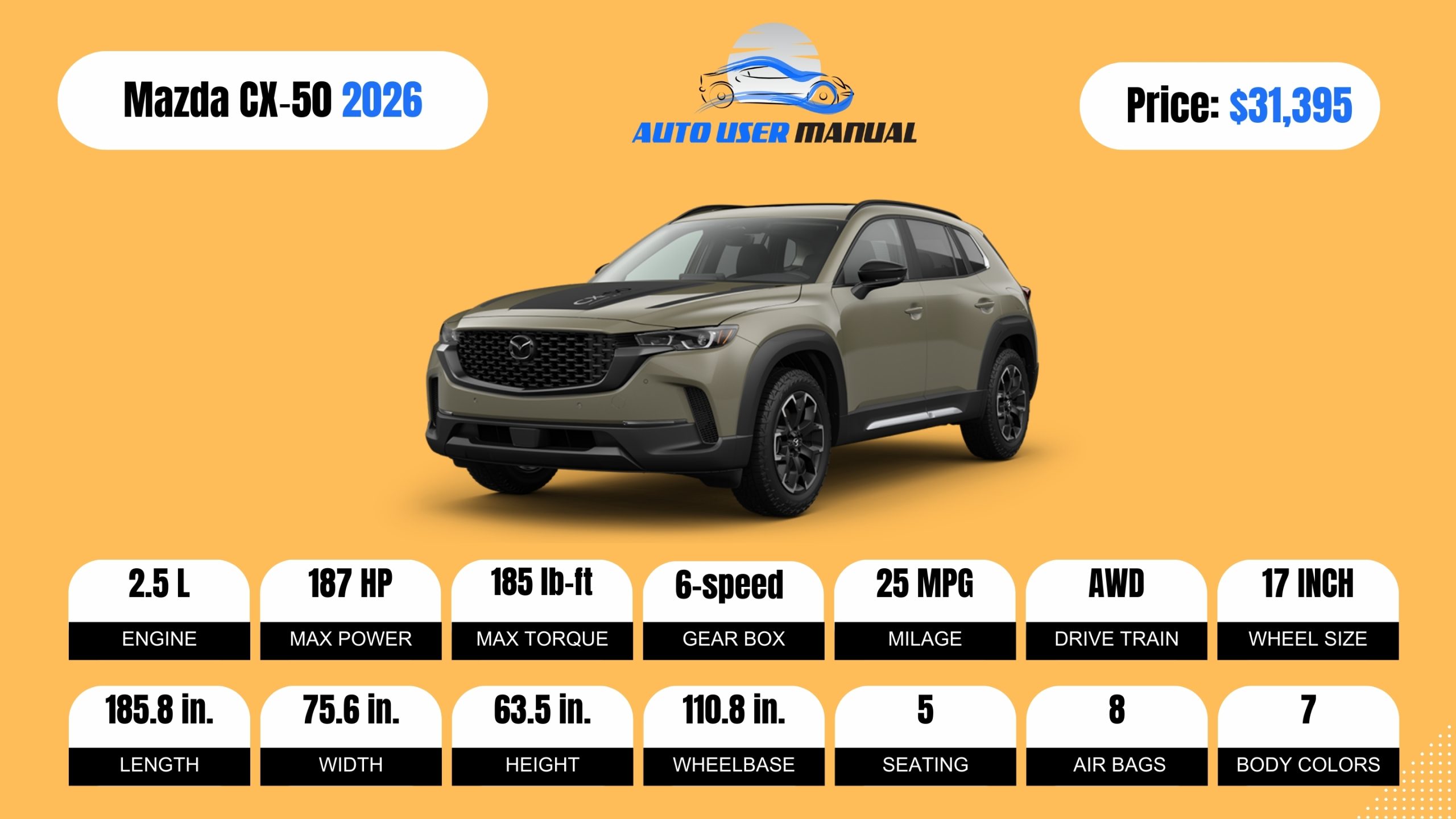
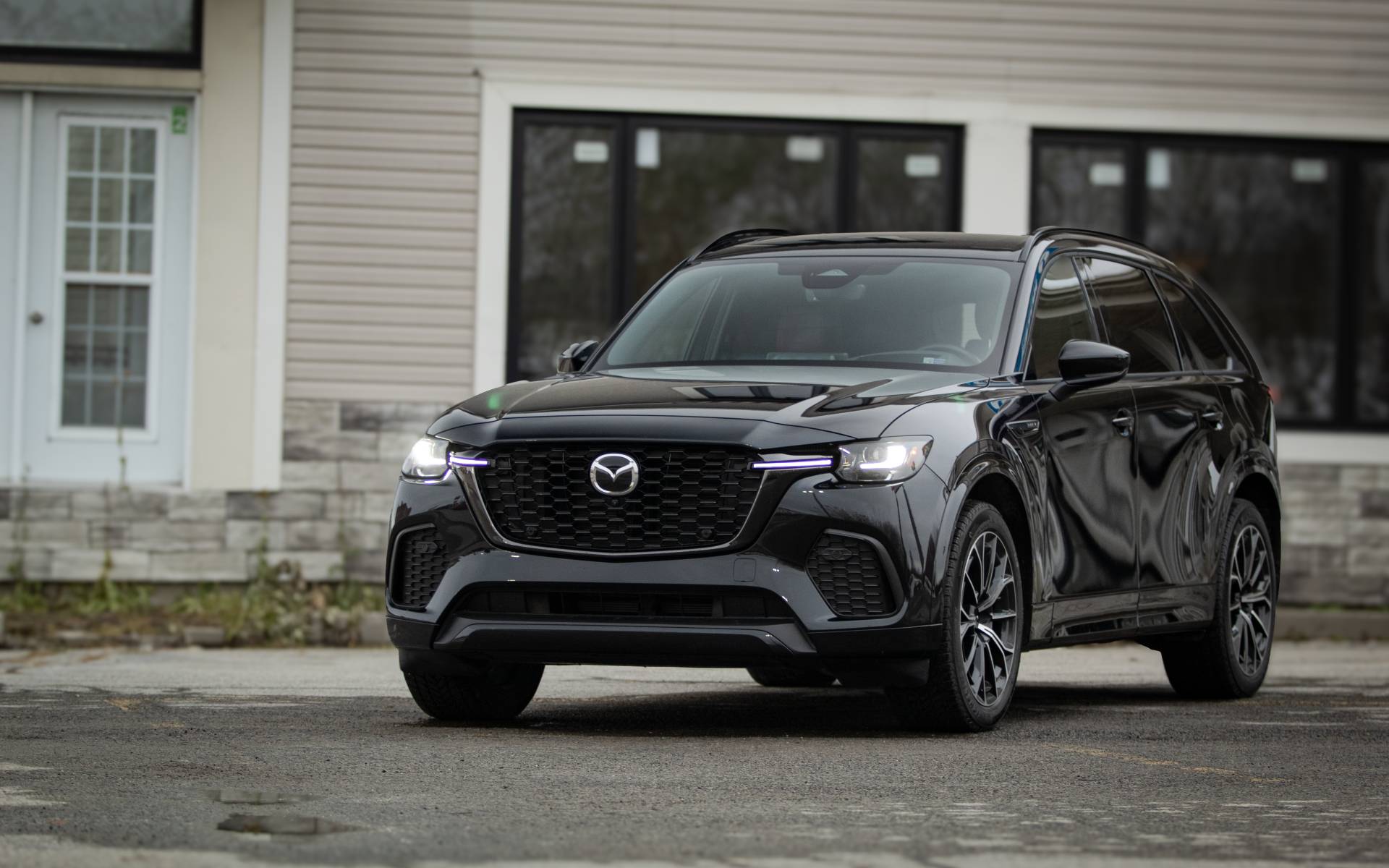
The 2026 Mazda CX-5 delivers an EPA-estimated 26 city / 31 highway MPG for the standard 2.5L engine and 22 city / 27 highway MPG for the Turbo variant. The newly introduced 2026 CX-5 Hybrid achieves a significantly improved 38 combined MPG, finally bridging the efficiency gap with its primary compact SUV competitors.
For years, the Mazda CX-5 has been celebrated for its premium interior and engaging driving dynamics, often at the slight expense of class-leading fuel economy. However, with the 2026 model year, Mazda has refined its Skyactiv-G internal combustion engines and integrated a long-awaited hybrid powertrain. This move addresses the primary concern of efficiency-minded buyers while maintaining the "Zoom-Zoom" DNA that defines the brand. Understanding the nuances of these ratings requires a look at the specific configurations, wheel sizes, and the technology behind the numbers.
The 2026 Mazda CX-5 Powertrain Lineup
The 2026 CX-5 offers three distinct levels of performance and efficiency. Unlike some competitors that have moved exclusively to small-displacement turbocharged engines or hybrids, Mazda continues to offer a variety of choices to suit different driving priorities.
The Standard 2.5L Skyactiv-G (Naturally Aspirated)
The workhorse of the lineup remains the 2.5-liter four-cylinder engine. For 2026, Mazda has implemented minor tweaks to the cylinder deactivation system, allowing the engine to run on two cylinders more frequently during low-load highway cruising. This engine is designed for drivers who prioritize reliability and a linear power delivery. While its peak output remains steady, the efficiency gains are found in real-world "steady-state" driving.
The 2.5L Skyactiv-G Dynamic Pressure Turbo
For those seeking a more spirited experience, the Turbo models provide a significant bump in horsepower and torque, particularly when using 93-octane premium fuel. However, this performance comes with a measurable "tax" at the pump. The turbocharger requires a richer fuel mixture under load to manage temperatures, which is why the city MPG drops noticeably compared to the naturally aspirated version.
The New 2026 CX-5 Hybrid
The most significant update for 2026 is the official introduction of the CX-5 Hybrid. Utilizing a specialized version of Mazda’s hybrid system—distinct from the Toyota-sourced system found in the CX-50—this powertrain focuses on seamless transitions between electric and gasoline power. By recapturing kinetic energy during braking and using an electric motor to assist during high-load acceleration, the Hybrid model transforms the CX-5 into a genuine commuter-friendly option without sacrificing the chassis balance Mazda owners expect.
2026 Mazda CX-5 Fuel Economy Comparison Table
The following table breaks down the EPA-estimated fuel economy ratings for the various 2026 CX-5 configurations. All models listed come standard with Mazda’s i-Activ All-Wheel Drive (AWD) system.
| Powertrain Configuration | City MPG | Highway MPG | Combined MPG | Estimated Range (Miles) |
|---|---|---|---|---|
| 2.5L S (Naturally Aspirated) | 26 | 31 | 28 | 428 |
| 2.5L Turbo | 22 | 27 | 24 | 367 |
| 2.5L Hybrid | 39 | 37 | 38 | 581 |
| 2.5L S (with 19-inch wheels) | 25 | 30 | 27 | 413 |
Note: Estimates are based on standard 15.3-gallon fuel tank capacity. The Hybrid model may utilize a slightly smaller tank to accommodate the battery pack, though its total range remains higher.
Factors Influencing 2026 CX-5 MPG Ratings
While the EPA numbers provide a standardized baseline, real-world fuel economy for the 2026 Mazda CX-5 is influenced by several technical and environmental factors. Mazda’s approach to engineering often results in "honest" numbers that are achievable in daily driving, but certain variables can cause fluctuations.
Wheel and Tire Size
The trim level you choose has a direct impact on efficiency. The entry-level trims typically feature 17-inch alloy wheels with higher-profile tires. These are lighter and offer less rolling resistance. Conversely, higher trims like the 2.5 Turbo Signature come with 19-inch wheels. The increased rotational mass and wider contact patch of the 19-inch tires can result in a loss of approximately 1 MPG across all categories.
i-Activ All-Wheel Drive (AWD)
Every 2026 CX-5 sold in North America comes standard with i-Activ AWD. Historically, AWD systems were a major drain on fuel economy because of the friction inherent in turning extra gears and shafts. Mazda’s system uses a "power take-off" unit that can almost completely decouple the rear axle when traction is not needed, minimizing mechanical drag. However, the system still adds roughly 100–150 pounds to the vehicle's curb weight compared to a theoretical front-wheel-drive version, which slightly affects city stop-and-go efficiency.
Aerodynamics and G-Vectoring Control
The 2026 model features subtle aerodynamic refinements, including active grille shutters on the Hybrid and Turbo models. These shutters close at highway speeds to reduce drag, forcing air around the vehicle rather than through the engine bay. Additionally, Mazda’s G-Vectoring Control Plus works behind the scenes to make minute engine torque adjustments. While primarily a handling feature, by reducing the need for constant steering corrections, it helps maintain a more consistent momentum, indirectly benefiting highway fuel consumption.
The Role of Skyactiv Technology
Mazda’s "Skyactiv" philosophy is not a single component but a holistic approach to vehicle efficiency. In the 2026 CX-5, this involves high compression ratios (up to 13:1 in the naturally aspirated engine) and incredibly precise multi-hole fuel injectors.
- High Compression: By compressing the air-fuel mixture to a higher degree, the engine extracts more energy from every drop of fuel.
- Exhaust Manifold Design: The 4-2-1 exhaust system prevents hot exhaust gases from being forced back into the cylinders, which allows the high compression ratio to work without "knocking" or pre-ignition.
- Weight Reduction: Mazda engineers use ultra-high-tensile steel in the frame to keep the CX-5 lighter than many of its competitors, such as the Honda CR-V or Volkswagen Tiguan, which helps the engine work less during acceleration.
Real-World Driving: How to Achieve EPA Ratings
Many drivers find it difficult to match EPA ratings, but the 2026 CX-5 is engineered to be efficient under specific conditions. To hit the 31 MPG highway mark in the non-turbo model, drivers should utilize the Mazda Radar Cruise Control (MRCC) with Stop & Go. This system manages throttle inputs more smoothly than most humans can, maintaining the engine’s "sweet spot."
Furthermore, the 2026 CX-5 features an improved i-Stop (Idle Stop-Start) system. In previous years, some drivers found this feature intrusive. For 2026, Mazda has integrated a more robust starter-generator that restarts the engine in a fraction of a second, making it easier to leave the system active. Using i-Stop in heavy city traffic can improve urban fuel economy by as much as 5% to 7% over the course of a tank.
Comparing the 2026 CX-5 to Competitors
To understand if the 2026 Mazda CX-5 MPG is "good," it must be viewed alongside its rivals. Mazda has traditionally occupied a "premium-alternative" niche, where it competes with both mainstream SUVs and entry-level luxury crossovers.
- Honda CR-V: The CR-V Hybrid (40 city / 34 highway) remains slightly more efficient in the city than the CX-5 Hybrid, but the Mazda offers a more traditional "connected" driving feel.
- Toyota RAV4: The RAV4 Hybrid (41 city / 38 highway) is still the efficiency leader, but the 2026 CX-5 Hybrid has narrowed the gap significantly compared to previous gas-only Mazda models.
- Hyundai Tucson: The Tucson Hybrid offers similar numbers to the CX-5 (around 37-38 combined), making the choice between them more about interior preference and warranty than fuel costs.
While Mazda might not win the "highest MPG" trophy, the 2026 CX-5 is often praised for its "MPG-to-Horsepower" ratio. The 2.5L Turbo, for instance, offers significantly more torque (320 lb-ft) than most competitors, making its 24 combined MPG more palatable for those who need towing capacity or highway passing power.
Maintenance and Its Impact on MPG
For 2026 CX-5 owners, maintaining the vehicle’s rated efficiency requires adherence to the specific maintenance schedule. Because Mazda uses high-compression engines, the quality of oil and the condition of spark plugs are paramount.
- Tire Pressure: The CX-5's TPMS (Tire Pressure Monitoring System) should be checked monthly. Even a 5 PSI drop can result in a 2% loss in fuel economy.
- Air Filters: A clogged engine air filter restricts the Skyactiv engine’s ability to breathe, forcing the throttle to open wider and consuming more fuel for the same power output.
- Fuel Quality: While the standard 2.5L engine runs perfectly on 87-octane regular gas, the 2.5L Turbo model's efficiency and power are optimized for 93-octane. Using lower-grade fuel in the Turbo model results in the ECU retarding timing, which can slightly decrease fuel efficiency during high-load driving.
Frequently Asked Questions
Does the 2026 Mazda CX-5 require premium fuel?
No, the standard 2.5L and the new 2.5L Hybrid are designed to run on 87-octane regular unleaded gasoline. The 2.5L Turbo engine can also run on regular gasoline, but for maximum horsepower (256 hp) and peak torque (320 lb-ft), 93-octane premium fuel is recommended. Using regular fuel in the Turbo slightly reduces performance but does not harm the engine.
How much does the Hybrid version save in fuel costs annually?
Based on 15,000 miles per year and an average fuel price of $3.50 per gallon, the 2026 CX-5 Hybrid (38 MPG combined) would cost approximately $1,381 in fuel annually. The standard 2.5L S (28 MPG combined) would cost approximately $1,875. This represents an annual saving of nearly $500, meaning the Hybrid typically pays for its price premium within 4 to 6 years of ownership.
Is the 2026 CX-5 Hybrid a Plug-In Hybrid (PHEV)?
The standard 2026 CX-5 Hybrid is a "traditional" or "closed-loop" hybrid, meaning it does not need to be plugged in. It charges its battery through regenerative braking and the gasoline engine. While Mazda offers a PHEV version of the larger CX-90 and CX-70, the 2026 CX-5 focuses on a simpler, lighter hybrid setup to keep the entry price competitive.
Why is the Turbo MPG so much lower than the standard engine?
Turbocharging forces more air into the engine, which requires more fuel to maintain the correct air-fuel ratio for combustion. Additionally, the Turbo model is tuned for performance, featuring different gear ratios in its 6-speed automatic transmission that favor acceleration over hyper-miling. The Turbo also lacks the aggressive cylinder deactivation mapping found in the naturally aspirated 2.5L engine.
Does the 2026 CX-5 have a "Green" or "Eco" driving mode?
Yes, Mazda includes a "Mi-Drive" selector on most trims. Switching the vehicle to "Normal" or a specific "Eco" mode (on Hybrid models) adjusts the throttle mapping and transmission shift points to prioritize lower RPMs and earlier upshifts, helping drivers stay closer to the EPA's highway estimates.
Final Recommendation for Buyers
When evaluating the 2026 Mazda CX-5 MPG ratings, the best choice depends on your primary driving environment. If your daily commute involves heavy stop-and-go city traffic, the 2026 CX-5 Hybrid is the clear winner, offering a nearly 50% improvement in city efficiency over the base gas model. However, for those who primarily drive on the highway and value a lower purchase price, the standard 2.5L S remains a highly efficient and mechanically proven option. The 2.5L Turbo should be reserved for those who prioritize the driving experience and towing capability (up to 2,000 lbs) over maximum fuel economy. Regardless of the trim, the 2026 CX-5 continues to prove that efficiency doesn't have to come at the cost of style or soul.